




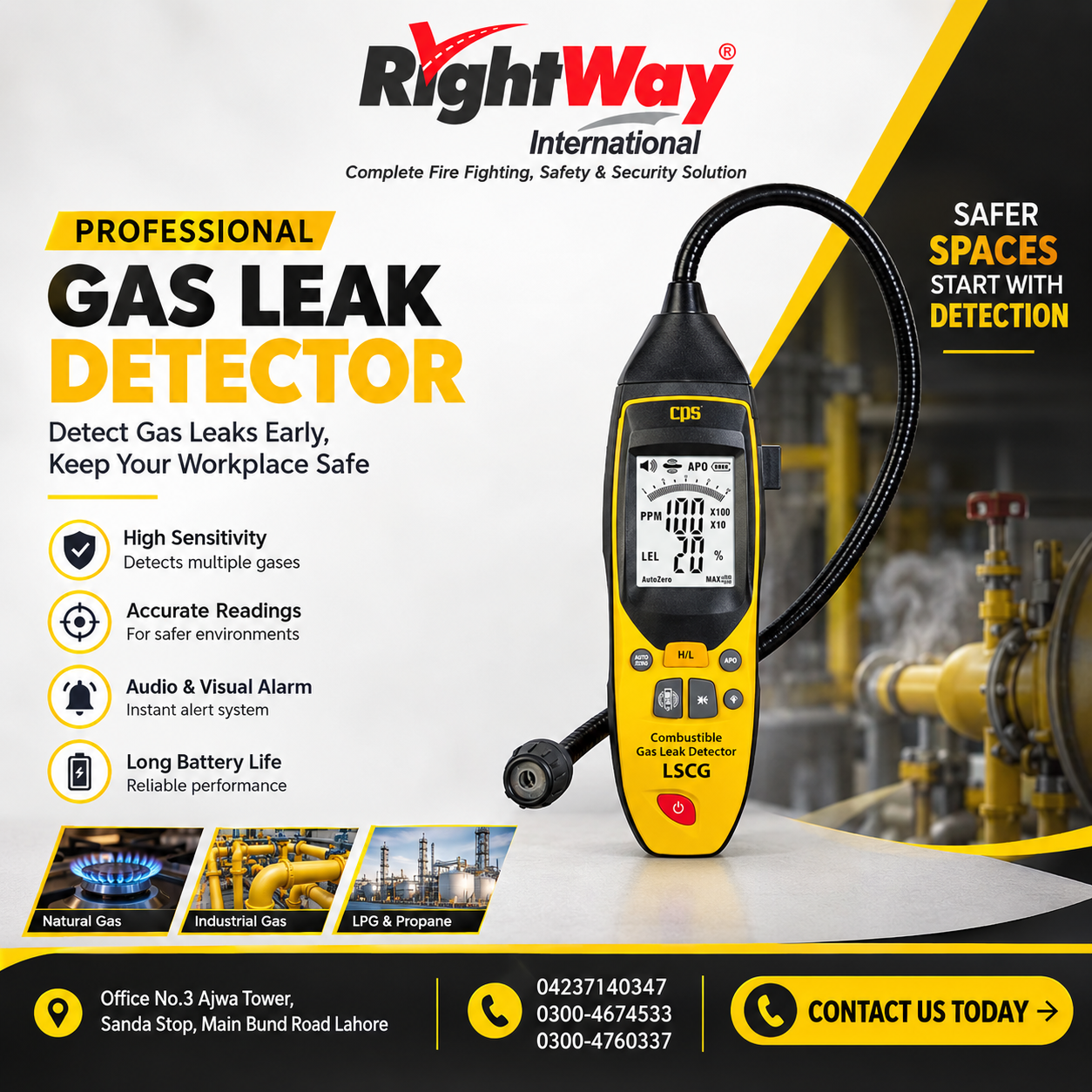
Importance Of Gas Leak Detector is an important safety device used to detect the presence of hazardous or combustible gases in the air. It helps identify gas leaks before they become a serious fire, explosion, poisoning, or health hazard.
Gas leak detectors can monitor different gases, including LPG, natural gas, methane, propane, carbon monoxide, hydrogen, and other combustible or toxic gases, depending on the detector type.
When the concentration of a specific gas reaches a dangerous level, the detector can activate an alarm, warning occupants to take immediate action. Some advanced gas detection systems can also connect with control panels, ventilation systems, gas shut-off valves, and other safety equipment.
How Does a Gas Leak Detector Work?
A gas leak detector uses a sensor to monitor the surrounding air for specific gases. When the sensor detects a gas concentration above its configured alarm level, it sends a signal to the detector’s alarm circuit or connected control system.
Depending on the model, the device may produce a loud audible alarm, flashing visual indication, digital reading, or signal to a gas detection control panel.
For example, if a detector designed for methane detects a dangerous concentration of methane, it can activate an alarm to warn people in the area. Some systems can also trigger ventilation or automatically close a gas shut-off valve.
Therefore, gas leak detectors provide an early warning that can help reduce the risk of fire, explosion, and gas exposure.
Types of Gas Leak Detectors
Gas leak detectors are available in different types according to the gas being detected, installation environment, sensor technology, and application.
The main types include:
- LPG Gas Detector – Designed to detect liquefied petroleum gas such as propane and butane.
- Natural Gas Detector – Commonly used to detect methane and other components associated with natural gas.
- Methane Gas Detector – Designed specifically for methane detection.
- Carbon Monoxide Detector – Detects dangerous concentrations of carbon monoxide.
- Combustible Gas Detector – Detects flammable gases that can create fire or explosion hazards.
- Toxic Gas Detector – Designed to detect hazardous gases that may be harmful when inhaled.
- Portable Gas Detector – A handheld device used for inspection and personal gas monitoring.
- Fixed Gas Detector – Permanently installed in areas where continuous gas monitoring is required.
- Single-Gas Detector – Designed to monitor one specific gas.
- Multi-Gas Detector – Can monitor multiple gases using different sensors.
- Industrial Gas Detector – Designed for factories, plants, workshops, and other industrial environments.
- Residential Gas Detector – Used in homes, kitchens, apartments, and other residential areas.
The correct detector depends on the type of gas, expected concentration, application, environmental conditions, and safety requirements.
Benefits of Gas Leak Detectors
A gas leak detector provides several important safety benefits:
- Detects dangerous gas concentrations
- Provides early warning of gas leaks
- Helps reduce fire and explosion risks
- Helps protect people from hazardous gas exposure
- Provides audible and visual alarms
- Supports continuous gas monitoring
- Can connect with gas detection control systems
- Can activate ventilation or shut-off systems in compatible installations
- Helps improve workplace safety
- Supports gas safety in residential and commercial buildings
Moreover, early detection can give occupants and workers more time to respond safely before a gas leak develops into a dangerous situation.
Where Are Gas Leak Detectors Used?
Gas leak detectors are commonly used in homes, kitchens, restaurants, hotels, hospitals, laboratories, factories, warehouses, boiler rooms, gas plants, chemical facilities, industrial facilities, and commercial buildings.
For example, an LPG detector may be installed in a commercial kitchen where LPG cylinders are used. Similarly, industrial gas detectors can monitor areas where combustible or toxic gases may be released during normal operations or equipment failure.
Fixed gas detectors are often installed in locations where continuous monitoring is necessary. Portable detectors, on the other hand, are useful for workers who need to check different areas or enter potentially hazardous locations.
Gas Leak Detector and Gas Detection Control Panel
A Gas Detection Control Panel acts as the central monitoring unit for compatible fixed gas detection systems. It receives signals from connected gas detectors and displays alarm or fault conditions.
When a detector identifies a dangerous gas concentration, it sends a signal to the control panel. The panel can then activate connected alarm devices or other safety equipment, depending on the system design.
For example, a gas detection system may be connected to:
- Gas detectors
- Audible sounders
- Visual flashers
- Ventilation systems
- Exhaust fans
- Gas shut-off valves
- Emergency shutdown systems
- Building management systems
Therefore, integrating gas detectors with a suitable control system can provide a more comprehensive gas safety solution.
Gas Leak Detector Sensor Technologies
Gas detectors use different sensor technologies depending on the type of gas and application.
Common technologies include:
- Catalytic Bead Sensors – Commonly used for detecting combustible gases.
- Infrared Sensors – Used for detecting certain combustible gases and can be suitable for specific industrial applications.
- Electrochemical Sensors – Commonly used for toxic gases such as carbon monoxide.
- Semiconductor Sensors – Used in certain residential and commercial gas detection devices.
Each sensor technology has different characteristics, operating requirements, and applications. Therefore, the sensor should be selected according to the gas being monitored and the requirements of the installation.
Gas Leak Detector Installation
Proper installation is essential for reliable gas detection. The detector location should be selected according to the type of gas, gas density, potential leak sources, ventilation, room layout, and manufacturer’s instructions.
For example, gases with different densities may accumulate in different areas. LPG is heavier than air and can collect near lower areas, while methane is lighter than air and can rise toward higher areas.
Therefore, detector placement should not be based on a one-size-fits-all approach.
Installers should also consider:
- Gas appliances and equipment
- Gas pipelines and connections
- Ventilation patterns
- Possible leak points
- Room size
- Environmental conditions
- Sensor specifications
- Alarm levels
- Local safety requirements
Always follow the manufacturer’s installation instructions and applicable standards when installing a gas detection system.
Testing and Maintenance
Regular testing and maintenance help ensure that gas leak detectors remain ready to operate when required.
During maintenance, technicians should check:
- Sensor operation
- Audible alarm operation
- Visual alarm indication
- Wiring and electrical connections
- Detector condition
- Control panel communication
- Alarm and fault signals
- Sensor calibration
- Mounting and physical condition
- Battery or power supply where applicable
- Gas concentration readings
Gas detectors may also require calibration and sensor replacement according to the manufacturer’s recommendations and the type of sensor being used.
A detector should not be considered reliable simply because its indicator light is on. Regular inspection, testing, and calibration are important parts of maintaining a gas detection system.
Gas Leak Detector vs. Smoke Detector
A gas leak detector and smoke detector perform different safety functions.
A smoke detector is designed to detect smoke or combustion-related particles, while a gas leak detector is designed to detect specific gases.
For example, a smoke detector may identify smoke from a developing fire, while an LPG detector can identify an accumulation of LPG before ignition occurs.
Therefore, gas detectors and fire alarm devices can complement each other, but one should not be considered a replacement for the other.
Gas Leak Detector in Pakistan
Gas leak detectors are increasingly important for residential, commercial, industrial, and public safety applications in Pakistan.
They can be used in homes, restaurants, hotels, commercial kitchens, factories, warehouses, laboratories, hospitals, boiler rooms, and industrial facilities where gas systems are present.
For example, LPG and natural gas detection can provide an additional safety layer in areas where gas appliances, cylinders, pipelines, or industrial gas equipment are installed.
Before purchasing or installing a gas leak detector in Pakistan, consider the gas that needs to be detected, detector type, sensor technology, installation environment, alarm requirements, and compatibility with the overall safety system.
Frequently Asked Questions
What is a Gas Leak Detector?
A gas leak detector is a safety device that detects specific gases in the surrounding air and provides an alarm when the gas concentration reaches a defined level.
What gases can a Gas Leak Detector detect?
Depending on the model, gas detectors can detect LPG, methane, propane, carbon monoxide, hydrogen, and other combustible or toxic gases.
How does a Gas Leak Detector work?
A gas detector uses a sensor to monitor the surrounding air. When the detected gas reaches a configured alarm level, the device activates an alarm or sends a signal to a connected control system.
Where should a Gas Leak Detector be installed?
The installation location depends on the type of gas, its density, possible leak sources, ventilation, room design, and manufacturer’s installation instructions.
Can a Gas Leak Detector detect LPG?
Yes. Gas detectors specifically designed for LPG can detect gases such as propane and butane associated with LPG.
Can a Gas Leak Detector detect natural gas?
Yes. Detectors designed for natural gas can detect methane and other relevant components depending on the detector specification.
What is the difference between a Gas Detector and a Smoke Detector?
A gas detector detects specific gases, while a smoke detector detects smoke or combustion particles. Both devices provide different types of safety protection.
Does a Gas Detector need maintenance?
Yes. Regular inspection, testing, calibration, and sensor maintenance should be performed according to the manufacturer’s recommendations and applicable requirements.
Can Gas Detectors connect to a control panel?
Yes. Compatible fixed gas detectors can connect to gas detection control panels or other monitoring systems.
Are Gas Leak Detectors useful for homes?
Yes. Gas detectors designed for residential use can provide an additional warning layer in homes where LPG or natural gas is used.
Conclusion
A Gas Leak Detector is an important safety device for identifying dangerous gas concentrations before they can develop into a serious fire, explosion, poisoning, or health hazard.
Furthermore, selecting the correct detector, installing it in a suitable location, and carrying out regular testing and calibration can support reliable gas monitoring.
Whether used in a home, restaurant, hotel, commercial kitchen, factory, warehouse, laboratory, or industrial facility, a properly selected gas detection system can provide an important layer of protection.
When integrated with a suitable Gas Detection Control Panel, alarm system, ventilation system, or automatic gas shut-off valve, gas detectors can become part of a comprehensive gas safety solution.