




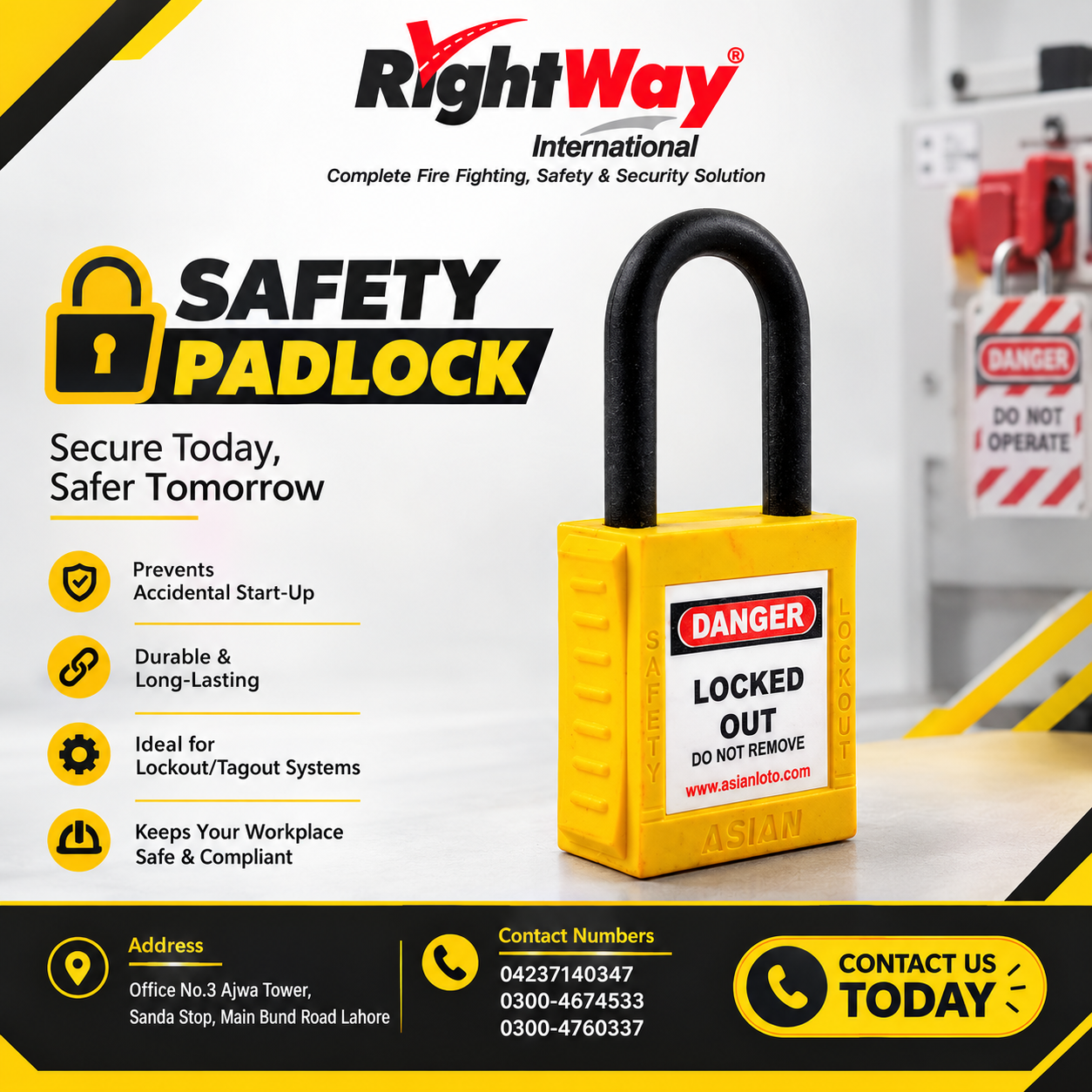
Importance Of Safety Padlock is an essential safety device for workplaces that use Lockout/Tagout (LOTO) procedures. It helps workers secure machinery, electrical equipment, valves, and other hazardous energy sources during maintenance and repair work.
Unlike ordinary padlocks, safety padlocks support workplace safety procedures. Workers can use them with lockout devices, safety tags, hasps, and lockout stations to help prevent accidental equipment operation.
What Is a Safety Padlock?
A safety padlock is a specialized lock that workers use to secure an isolated energy source during maintenance or servicing.
For example, an authorized worker can shut down a machine, isolate its energy source, and attach a lockout device. The worker then places a safety padlock on the device. This action helps prevent another person from restoring power or starting the machine accidentally.
Moreover, many safety padlocks use bright colors. Therefore, workers can easily identify them in busy industrial environments.
How Does a Safety Padlock Work?
A safety padlock physically secures a lockout point and helps prevent unauthorized operation.
For example, consider an electrical machine that needs maintenance. First, the worker shuts down the machine. Next, the worker isolates the electrical supply and applies a compatible breaker lockout device. The worker then attaches a safety padlock and warning tag.
After that, the worker verifies that the machine no longer receives energy. Once the worker completes the maintenance, they follow the workplace procedure to remove the lock and restore the equipment.
As a result, the safety padlock provides a physical barrier against accidental re-energization.
Types of Safety Padlocks
Manufacturers offer safety padlocks in different designs for various workplace applications.
Electrical Safety Padlock
An Electrical Safety Padlock works with compatible electrical lockout devices. Workers can use it to secure circuit breakers, disconnect switches, and other electrical isolation points.
LOTO Safety Padlock
A LOTO Safety Padlock supports Lockout/Tagout procedures. Workers commonly use it with lockout hasps, breaker lockouts, valve lockouts, and other LOTO equipment.
Nylon Shackle Safety Padlock
A Nylon Shackle Safety Padlock uses a non-metallic shackle. Some electrical applications may benefit from this design because the shackle does not provide the same conductive path as a metal shackle.
Steel Shackle Safety Padlock
A Steel Shackle Safety Padlock provides a strong metal shackle for suitable industrial lockout applications.
Personal Safety Padlock
A Personal Safety Padlock belongs to an individual authorized worker. The worker keeps control of the key and follows the organization’s lockout procedure when applying or removing the lock.
Keyed-Alike Safety Padlocks
Keyed-alike padlocks allow multiple compatible locks to operate with the same key. Organizations may choose this arrangement for specific applications.
Keyed-Different Safety Padlocks
Each keyed-different padlock uses its own key. This arrangement can provide individual control over separate lockout points.
Group Lockout Padlocks
Workers can use group lockout equipment when several people work on the same equipment. Each worker should follow the organization’s approved group lockout procedure.
Benefits of Safety Padlocks
A Safety Padlock offers several important workplace safety benefits.
- Helps prevent accidental equipment operation
- Supports Lockout/Tagout procedures
- Helps prevent unexpected energization
- Provides clear visual identification
- Supports maintenance worker safety
- Works with compatible lockout devices
- Supports personal accountability
- Helps improve workplace safety
- Provides a physical method of energy isolation
Furthermore, organizations can use different colors and identification markings to manage their lockout systems more effectively.
Safety Padlock and Lockout/Tagout
A Safety Padlock plays an important role in a Lockout/Tagout (LOTO) system.
LOTO procedures help workers control hazardous energy during maintenance and servicing. Hazardous energy can come from several sources, including:
- Electrical energy
- Mechanical energy
- Hydraulic energy
- Pneumatic energy
- Chemical energy
- Thermal energy
- Stored energy
- Pressurized energy
For example, a worker can isolate an electrical circuit and attach a breaker lockout device. The worker can then secure that device with a safety padlock.
Similarly, workers can use compatible valve lockout devices to isolate gas, water, steam, or other energy sources.
Therefore, safety padlocks help workers maintain control over isolated energy sources during maintenance.
Safety Padlock vs. Ordinary Padlock
A safety padlock and an ordinary padlock both provide physical locking. However, they serve different purposes.
A safety padlock supports workplace safety procedures and commonly provides features such as:
- High-visibility colors
- Personal identification
- LOTO compatibility
- Workplace durability
- Safety identification
- Compatibility with lockout equipment
In contrast, ordinary padlocks usually protect doors, gates, lockers, storage areas, and other property.
Therefore, workplaces should select padlocks that meet their established lockout procedures instead of using ordinary security locks as a substitute.
Where Are Safety Padlocks Used?
Safety padlocks are widely used in workplaces where employees need to control hazardous energy.
Common applications include:
- Factories
- Manufacturing plants
- Construction sites
- Warehouses
- Workshops
- Power plants
- Electrical facilities
- Oil and gas facilities
- Chemical plants
- Maintenance departments
- Industrial machinery areas
- Commercial facilities
For example, workers can use safety padlocks to secure circuit breakers, valves, disconnect switches, machinery isolation points, and other compatible lockout devices.
How to Use a Safety Padlock
Workers should always follow the organization’s approved Lockout/Tagout procedure when using a safety padlock.
A typical process includes the following steps:
- Identify the equipment and energy sources.
- Shut down the equipment safely.
- Isolate every relevant energy source.
- Apply the correct lockout device.
- Attach the safety padlock.
- Apply the required safety tag.
- Release or control stored energy.
- Verify that the equipment remains isolated.
- Complete the maintenance or repair work.
- Remove the lock according to the approved procedure.
Most importantly, only authorized workers should apply or remove personal safety padlocks according to the workplace’s energy-control procedure.
Safety Padlock Colors and Identification
Manufacturers commonly produce safety padlocks in bright colors such as red, yellow, blue, green, and orange.
Organizations can use color coding to identify workers, departments, equipment, or specific procedures. However, each organization should establish its own color-coding system because color meanings can vary between workplaces.
In addition, companies can identify safety padlocks using:
- Employee names
- Employee numbers
- Department names
- Company names
- Identification codes
- Safety labels
As a result, clear identification can make workplace lockout procedures easier to manage.
Safety Padlock Installation and Maintenance
A safety padlock does not require complicated installation. Instead, workers attach it to a compatible lockout device or isolation point.
However, proper selection matters. The padlock must fit the lockout device and suit the workplace environment.
During regular inspections, workers should check:
- Lock body condition
- Shackle condition
- Key operation
- Locking mechanism
- Corrosion
- Physical damage
- Identification markings
- Signs of tampering
- Compatibility with lockout equipment
If a padlock shows serious damage or does not operate correctly, remove it from service and replace it according to the company’s safety procedure.
Safety Padlock and OSHA Lockout/Tagout
OSHA provides requirements for controlling hazardous energy during servicing and maintenance activities.
The OSHA Lockout/Tagout requirements focus on preventing unexpected machine startup and the release of hazardous energy.
Therefore, organizations should develop written energy-control procedures and train authorized workers before they perform lockout activities.
In addition, workplaces should consider applicable local regulations, industry requirements, equipment instructions, and project-specific safety requirements.
Safety Padlock in Pakistan
Safety Padlocks provide an important safety solution for industrial and commercial workplaces across Pakistan.
Factories, construction sites, workshops, warehouses, manufacturing plants, power facilities, and maintenance departments can use safety padlocks as part of a properly designed Lockout/Tagout system.
For example, a factory may use safety padlocks to secure electrical breakers before machine maintenance. Similarly, an industrial facility may use them with valve lockout devices to isolate pipelines or other energy sources.
Before purchasing a safety padlock in Pakistan, consider the energy source, lockout device, shackle material, keying system, workplace environment, identification requirements, and applicable safety procedures.
Frequently Asked Questions
What is a Safety Padlock?
A Safety Padlock is a specialized padlock that workers use in workplace Lockout/Tagout procedures. It helps secure isolated energy sources during maintenance and servicing.
What is the purpose of a Safety Padlock?
A safety padlock helps prevent accidental equipment operation or unexpected energization while an authorized worker performs maintenance.
What does LOTO mean?
LOTO means Lockout/Tagout. This safety procedure helps workers control hazardous energy before they service or maintain equipment.
Can I use a Safety Padlock for electrical equipment?
Yes. Workers can use compatible safety padlocks with electrical lockout devices to secure isolated electrical energy sources.
What colors are available for Safety Padlocks?
Manufacturers commonly offer safety padlocks in red, yellow, blue, green, and orange. However, companies should define the meaning of each color within their own safety program.
Can several workers use one Safety Padlock?
Personal lockout procedures normally assign individual locks to individual workers. For group maintenance, workers should use suitable group lockout equipment and follow the approved group lockout procedure.
What is the difference between a Safety Padlock and a normal padlock?
A safety padlock supports workplace Lockout/Tagout procedures, while a normal padlock usually protects property such as doors, gates, lockers, or storage areas.
Where are Safety Padlocks used?
Workers use safety padlocks in factories, workshops, construction sites, warehouses, power plants, manufacturing facilities, electrical areas, and other workplaces that require hazardous energy control.
Why are Safety Padlocks important?
Safety padlocks provide a physical method for securing isolated energy sources. Therefore, they can help reduce the risk of accidental equipment operation during maintenance.
Do Safety Padlocks require maintenance?
Yes. Workers should regularly inspect padlocks for physical damage, corrosion, faulty locking mechanisms, and other problems. Replace damaged locks according to the workplace safety procedure.
A Safety Padlock provides an important layer of protection during equipment maintenance and servicing. It helps workers secure isolated energy sources and reduce the risk of accidental machine operation or unexpected energization.
Moreover, organizations can improve their energy-control procedures by using safety padlocks with lockout devices, safety tags, lockout hasps, breaker lockouts, valve lockouts, and group lockout equipment.
Finally, always select the correct safety padlock for the application and follow the manufacturer’s instructions and workplace Lockout/Tagout procedures. Proper training, identification, inspection, and safe lockout practices can further strengthen workplace safety.