




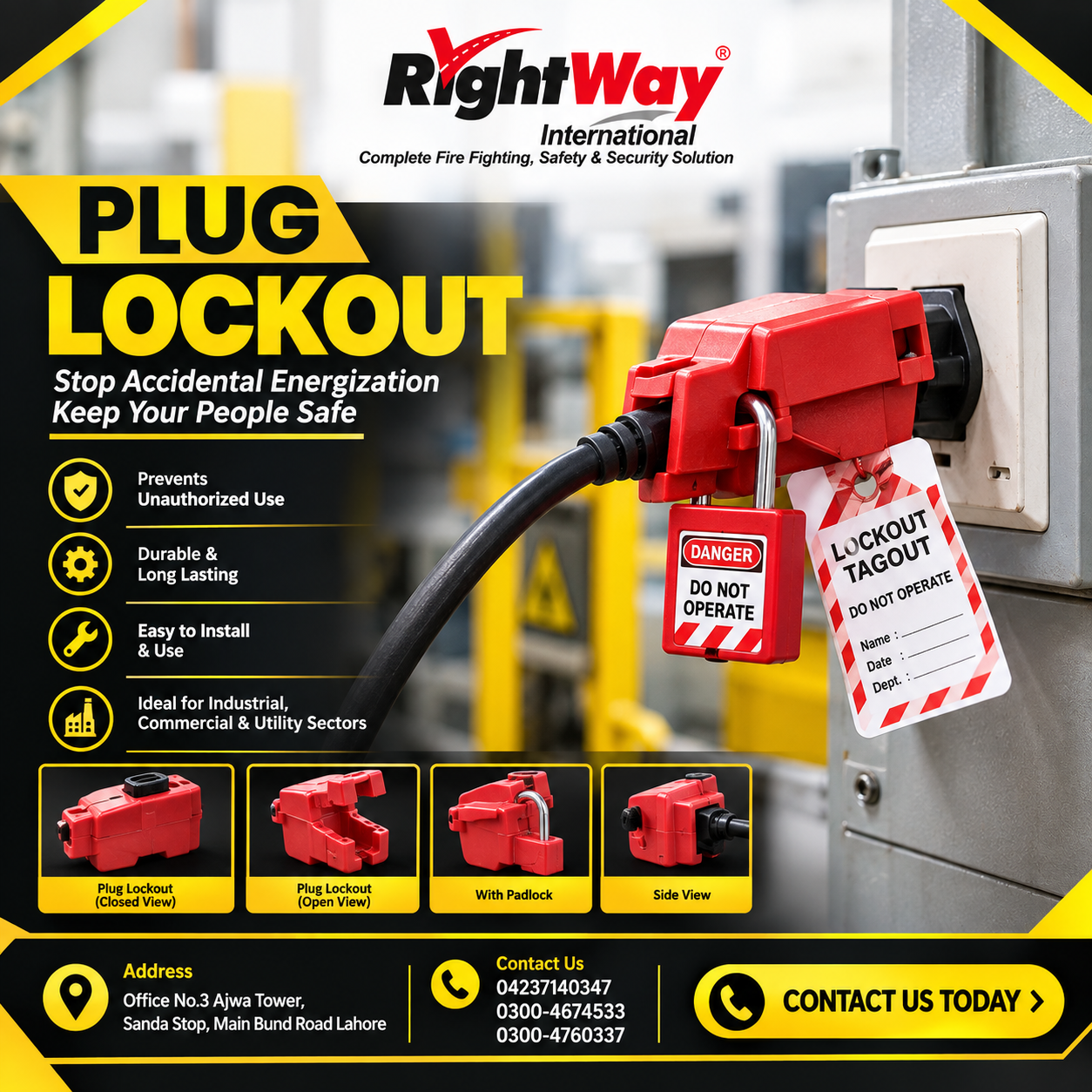
Importance of Plug Lockout is an important Lockout/Tagout (LOTO) device that helps prevent the accidental connection or operation of electrical plugs during maintenance and repair work. Workers use it to keep equipment disconnected from its electrical power source while servicing takes place.
The main importance of a Plug Lockout includes:
- Prevents accidental energization: A plug lockout helps stop workers from reconnecting equipment while maintenance is in progress.
- Supports LOTO procedures: It provides a physical means of controlling electrical energy as part of an established Lockout/Tagout procedure.
- Protects maintenance workers: By restricting access to the plug, it helps reduce the risk of unexpected equipment startup.
- Provides clear identification: Workers can attach a safety padlock and tag to identify equipment under maintenance.
- Improves workplace safety: Plug lockouts create a more controlled approach to electrical equipment isolation.
- Supports multiple industries: Facilities can use them for power tools, machinery, industrial equipment, and other cord-connected electrical devices.
- Helps maintain personal control: An authorized worker can secure the lockout with their assigned safety padlock according to the site’s LOTO procedure.
Why Is Plug Lockout Important?
During maintenance, simply unplugging equipment may not provide enough control if another person can reconnect the plug. Therefore, a Plug Lockout physically restricts access to the plug and helps prevent unauthorized reconnection.
For effective electrical safety, workers should follow the facility’s approved Lockout Tagout Procedure, identify all applicable energy sources, apply the correct lockout device, and verify isolation before starting work.