




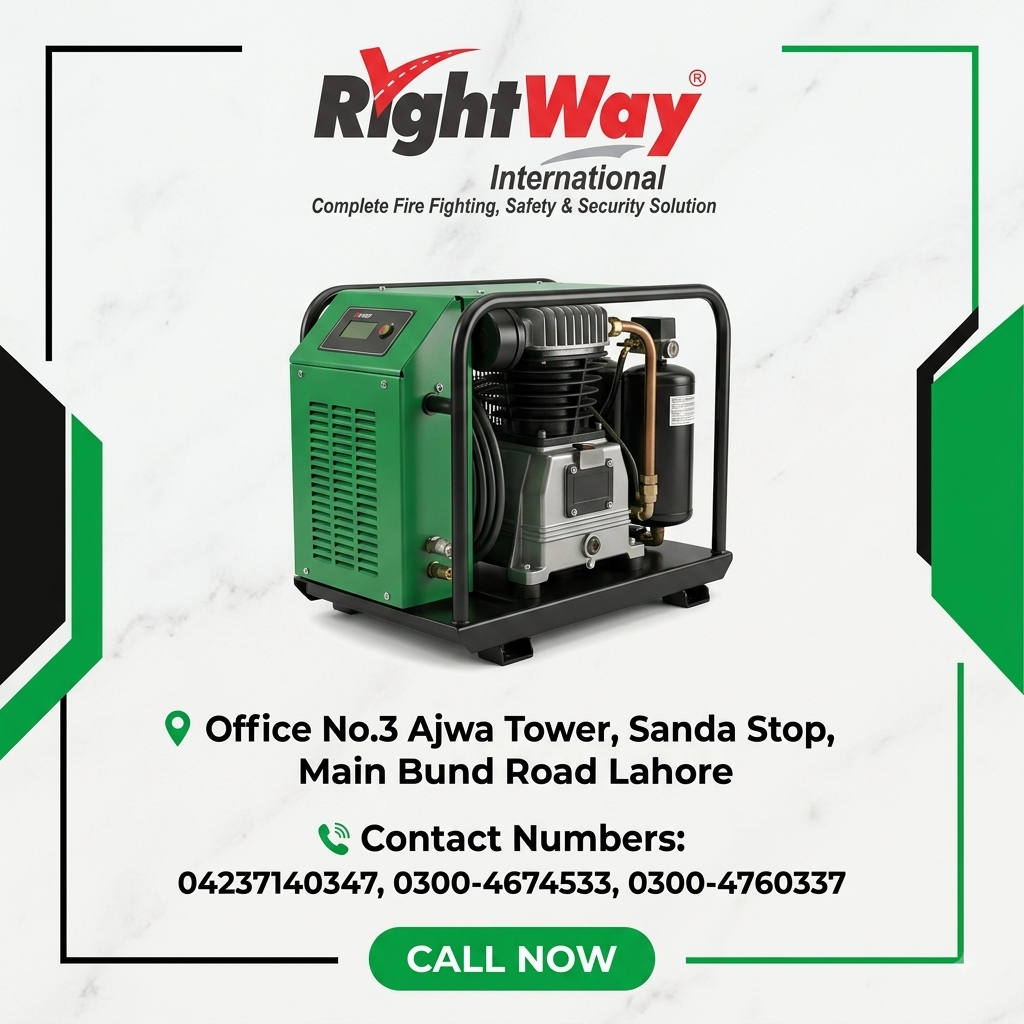
Breathing Air Compressor in Pakistan supplies clean, compressed air for respiratory protection systems such as Supplied-Air Respirators (SAR) and certain breathing-air applications. Unlike a standard industrial air compressor, a breathing air compressor must provide air that meets the required breathing-air quality specifications.
Therefore, organizations should select a compressor specifically designed and configured for breathing-air applications.
What Is a Breathing Air Compressor?
A breathing air compressor takes atmospheric air, compresses it, and passes it through filtration and purification systems before supplying it for respiratory use.
For example, workers can use breathing air from a suitable compressor with an approved supplied-air respirator. NIOSH describes supplied-air respirators as systems that receive clean breathing air from a source such as a compressor or breathing-air cylinder.
However, the compressor intake location remains important. Contaminated intake air can enter the breathing-air system and create a serious safety risk.
How Does a Breathing Air Compressor Work?
First, the compressor draws air from a suitable intake location. Next, the compressor increases the air pressure.
After compression, the air passes through appropriate filters, moisture separators, and purification systems. These components help remove contaminants and moisture.
Finally, the purified breathing air travels through the approved breathing-air system to the respirator or storage cylinder.
Therefore, the complete system—not just the compressor—must maintain the required breathing-air quality.
Main Components
A typical breathing air compressor system may include:
- Air compressor
- Intake filter
- Moisture separator
- Air purification filters
- Carbon monoxide monitoring
- Pressure regulator
- Air receiver
- Breathing-air outlet
- Hoses and couplings
- Filtration and purification cartridges
Furthermore, manufacturers may provide different configurations depending on the required airflow, pressure, application, and certification.
Breathing Air Quality
Breathing-air quality is one of the most important considerations when selecting a compressor.
For example, OSHA requires compressed breathing air used with atmosphere-supplying respirators to meet at least Grade D breathing-air requirements under 29 CFR 1910.134. These requirements include limits for oxygen, carbon monoxide, carbon dioxide, hydrocarbons, and odor.
Therefore, organizations should never assume that ordinary workshop compressor air is suitable for breathing.
Benefits of a Breathing Air Compressor
A suitable breathing air compressor can provide several benefits.
First, it can supply a continuous source of breathing air for compatible supplied-air respirators. In addition, it can support applications where workers need a clean air supply for extended periods.
Furthermore, a properly configured system can include filtration, moisture control, and carbon monoxide monitoring.
As a result, breathing air compressors can support respiratory protection programs in demanding industrial environments.
Common Applications
Breathing air compressors can support respiratory protection in:
- Oil and gas facilities
- Refineries
- Chemical plants
- Manufacturing facilities
- Paint-spraying operations
- Pharmaceutical plants
- Industrial maintenance
- Sandblasting applications
- Confined-space operations
- Emergency-response facilities
However, organizations must select the complete breathing-air system according to the specific workplace hazard.
Breathing Air Compressor Safety
Organizations should inspect and maintain breathing-air compressors regularly.
In particular, they should:
- Keep the compressor intake away from contamination.
- Maintain filters and purification systems.
- Check moisture levels.
- Monitor carbon monoxide where required.
- Follow manufacturer maintenance schedules.
- Replace filters according to instructions.
- Keep maintenance records.
- Use compatible breathing-air hoses and couplings.
OSHA also requires compressor systems supplying respirators to prevent contaminated air from entering the system and to use suitable in-line filters and sorbent beds.
Breathing Air Compressor in Pakistan
Breathing Air Compressors in Pakistan can support respiratory protection programs in industries such as oil and gas, chemical processing, refineries, manufacturing, painting, pharmaceuticals, and industrial maintenance.
When selecting a breathing air compressor in Pakistan, organizations should consider air quality, compressor capacity, working pressure, filtration, moisture removal, carbon monoxide monitoring, certification, maintenance requirements, and manufacturer specifications.
Most importantly, a breathing-air compressor should provide air suitable for the specific respirator and application. Therefore, organizations should verify the complete system before putting it into service.
Frequently Asked Questions
What is a breathing air compressor?
A breathing air compressor supplies compressed air that has been processed and purified for approved respiratory protection applications.
Is a normal air compressor suitable for breathing air?
Not necessarily. A standard industrial compressor may introduce oil, carbon monoxide, moisture, or other contaminants. Therefore, use only a system designed and configured for breathing-air applications.
Where are breathing air compressors used?
They are used in industries such as oil and gas, refineries, chemical plants, manufacturing, painting, pharmaceuticals, and industrial maintenance.
What is Grade D breathing air?
Grade D is a commonly referenced breathing-air quality specification under OSHA 29 CFR 1910.134. It sets limits for oxygen, carbon monoxide, carbon dioxide, hydrocarbons, and odor.
Do breathing air compressors need filters?
Yes. A suitable breathing-air compressor system normally uses appropriate filtration and purification equipment. In addition, organizations must maintain and replace these components according to manufacturer requirements.
Escape Breathing Apparatus (EBA)
An EBA provides several important benefits. First, it can provide respiratory protection during emergency evacuation. In addition, it can provide an independent breathing supply, depending on the equipment design.
Furthermore, EBA can help workers escape from areas affected by:
- Toxic gases
- Smoke
- Chemical vapors
- Oxygen deficiency
- Industrial gas releases
- Read More