




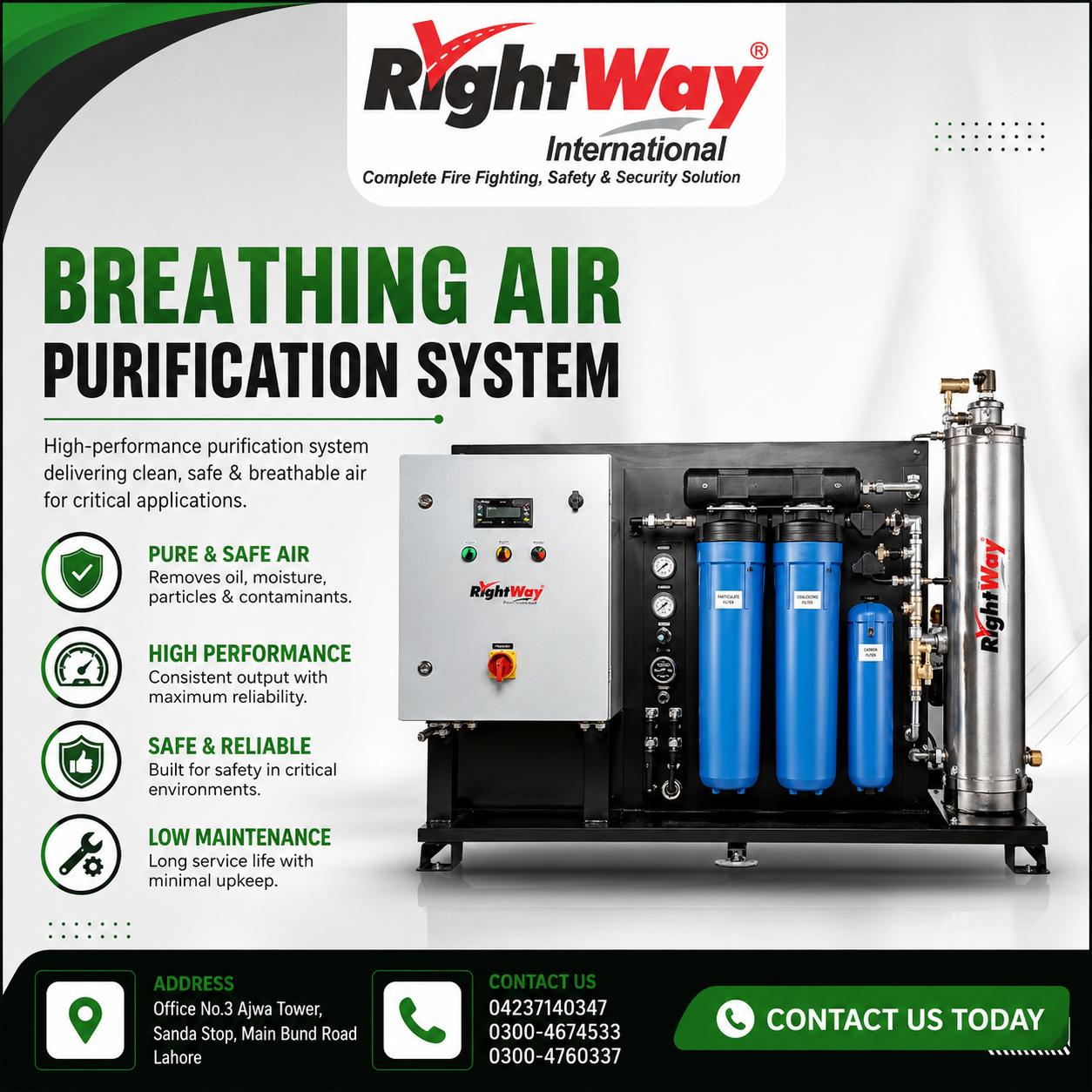
Breathing Air Purification System is an essential safety solution designed to remove harmful contaminants from compressed air before it is supplied for human breathing. These systems are commonly used with breathing air compressors, supplied-air respirators, SCBA cylinder filling systems, and other respiratory-protection equipment where clean and suitable breathing air is required.
Firefighters, rescue teams, industrial workers, emergency-response personnel, diving operations, and respiratory-protection programs may rely on properly designed breathing air purification systems to help control contaminants such as oil vapors, moisture, carbon monoxide, carbon dioxide, hydrocarbons, particles, and other impurities.
Furthermore, a suitable purification system can help improve the quality of compressed breathing air by using multiple filtration and purification stages. The exact purification requirements depend on the compressor, application, breathing-air standard, operating conditions, and manufacturer specifications.
What Is a Breathing Air Purification System?
A Breathing Air Purification System is a combination of filters, separators, adsorbent materials, drains, monitoring devices, and other components used to treat compressed air intended for breathing applications.
Compressed air generated by a compressor may contain contaminants originating from the surrounding environment, compressor intake, lubrication system, moisture, piping, or storage equipment. Therefore, simply compressing air does not automatically make it suitable for breathing.
A properly designed breathing air purification system helps process compressed air through several treatment stages before the air reaches the breathing-air outlet or storage cylinder.
Depending on the system design, purification stages may include:
- Moisture separation
- Oil separation
- Particle filtration
- Coalescing filtration
- Activated carbon filtration
- Carbon monoxide removal or monitoring
- Carbon dioxide reduction
- Hydrocarbon removal
- Odor removal
- Final filtration
- Moisture adsorption
- Air-quality monitoring
However, the exact configuration varies according to the manufacturer and intended application.
Why Is Breathing Air Purification Important?
Breathing air quality is particularly important because contaminated compressed air can present serious risks when supplied directly to a person.
A Breathing Air Purification System can help control contaminants generated or introduced during the compression process.
Key benefits include:
- Helps provide cleaner compressed breathing air
- Removes moisture and water vapor
- Helps reduce oil contamination
- Filters particles and impurities
- Helps control odors and hydrocarbons
- Supports respiratory-protection programs
- Improves compressed-air quality
- Helps protect breathing-air equipment
- Supports safer industrial operations
- Helps maintain consistent air quality
- Provides multiple purification stages
- Supports SCBA cylinder filling applications
Moreover, regular inspection and maintenance are necessary because filters and purification media have service limitations.
Components of a Breathing Air Purification System
A professional Breathing Air Purification System may contain several components working together to treat compressed air.
Common components include:
1. Moisture Separator
A moisture separator removes liquid water and condensed moisture from compressed air.
Removing bulk moisture at an early stage helps reduce the load on downstream filters and purification media.
2. Coalescing Filter
A coalescing filter is designed to capture fine liquid aerosols and particles from compressed air.
It can help reduce oil aerosols, water droplets, and fine particulate contamination before the air reaches additional purification stages.
3. Activated Carbon Filter
Activated carbon is commonly used for adsorption of certain hydrocarbons, oil vapors, odors, and other contaminants.
The carbon element must be replaced according to the manufacturer’s recommended service interval and operating conditions.
4. Desiccant Filter
A desiccant stage can reduce moisture and water vapor in compressed air.
This is particularly useful where low humidity or controlled dew-point performance is required.
5. Fine Particle Filter
A final filtration stage can help remove fine particulate contamination that remains after previous treatment stages.
6. Carbon Monoxide Monitoring
Some breathing-air systems incorporate carbon monoxide monitoring or alarms to identify potentially dangerous CO levels.
Monitoring requirements depend on the system design, applicable standard, and intended application.
7. Pressure Gauges
Pressure gauges allow operators to monitor pressure at different stages of the purification system.
8. Automatic or Manual Drain
Drains help remove accumulated condensate from filters, separators, and other components.
9. Air Quality Monitoring System
Advanced systems may include sensors or monitoring equipment for checking selected breathing-air quality parameters.
How Does a Breathing Air Purification System Work?
The working principle depends on the system configuration. However, a typical purification process can involve several stages.
Stage 1: Air Compression
First, atmospheric air enters a suitable compressor through an intake system.
The compressor increases the air pressure for storage, distribution, or breathing-air applications.
Stage 2: Moisture and Condensate Separation
The compressed air passes through a separator or filtration stage designed to remove liquid water and condensate.
Stage 3: Coalescing Filtration
Next, the air may pass through a coalescing filter that captures fine liquid aerosols and particles.
Stage 4: Adsorption and Purification
The air then passes through purification media such as activated carbon or desiccant materials.
These stages can help reduce specific contaminants and moisture according to the system design.
Stage 5: Final Filtration
A final filter may remove remaining fine particles before the treated air enters the breathing-air distribution system.
Stage 6: Monitoring
Where required, air-quality monitoring equipment can check selected parameters and alert operators when conditions fall outside specified limits.
Stage 7: Breathing Air Supply
Finally, the purified compressed air can be supplied to the intended respiratory-protection equipment or breathing-air storage system.
The complete process must be designed and maintained according to the applicable breathing-air requirements and equipment manufacturer’s instructions.
Breathing Air Purification System for SCBA
A Breathing Air Purification System for SCBA is used in applications where compressed air is prepared for filling SCBA cylinders.
Fire departments, rescue organizations, industrial emergency teams, and training centers may use breathing-air compressor systems equipped with appropriate purification equipment.
The purification system can help control contaminants before compressed air enters SCBA cylinders.
A typical SCBA breathing-air setup may include:
- Breathing air compressor
- Intake filtration
- Moisture separator
- Coalescing filter
- Purification cartridge
- Activated carbon
- Desiccant
- Final filter
- Pressure monitoring
- Carbon monoxide monitoring
- Cylinder filling station
- Air-quality testing equipment
However, the complete configuration should be selected according to the compressor manufacturer, cylinder requirements, applicable standards, and operating environment.
Breathing Air Purification for Breathing Air Compressors
A Breathing Air Compressor Purification System is an important part of a breathing-air compressor installation.
The compressor itself generates pressure, but the purification system performs the additional treatment required to help control contaminants in the compressed air.
A suitable system may help manage:
- Moisture
- Oil aerosols
- Oil vapors
- Dust
- Fine particles
- Hydrocarbons
- Odors
- Carbon monoxide
- Carbon dioxide
- Other contaminants
The compressor intake location is also important. Air should be drawn from a suitable location away from vehicle exhaust, engine emissions, chemical vapors, industrial fumes, and other contamination sources.
Breathing Air Purification System for Firefighters
Firefighters depend on SCBA equipment when operating in smoke-filled or oxygen-deficient environments.
Before SCBA cylinders are filled, the compressed air should be processed using an appropriate breathing-air purification system.
A Firefighter Breathing Air Purification System can therefore support fire departments, fire stations, emergency-response teams, and training facilities.
Applications may include:
- SCBA cylinder filling
- Firefighter training
- Emergency-response operations
- Rescue operations
- Fire station compressor systems
- Breathing-air storage
- Cylinder refill stations
Regular maintenance, filter replacement, air-quality testing, and inspection are essential for maintaining the intended performance of the system.
Industrial Breathing Air Purification System
Industrial facilities may require breathing-air systems for emergency response, maintenance, confined-space work, or supplied-air respiratory protection.
Industries where breathing-air purification systems may be used include:
- Oil and gas
- Refineries
- Petrochemical plants
- Chemical plants
- Pharmaceutical facilities
- Manufacturing plants
- Power plants
- Steel mills
- Cement plants
- Mining operations
- Industrial warehouses
- Marine facilities
- Emergency-response centers
- Confined-space rescue operations
Furthermore, industrial facilities should establish appropriate inspection, maintenance, air-quality testing, and documentation procedures.
Supplied Air Respirator Purification System
A Supplied Air Respirator Purification System can be used with breathing-air compressors that provide compressed air to supplied-air respirators.
Supplied-air respirators receive breathing air from an external source rather than carrying the complete air supply on the user’s back.
The purification system helps treat the compressed air before it reaches the respirator.
Depending on the application, the system may include:
- Compressor
- Air receiver
- Moisture separator
- Coalescing filters
- Activated carbon
- Desiccant
- Final filter
- Air-quality monitor
- Pressure regulator
- Breathing-air outlet
The entire system should be designed to provide the required air quality, pressure, flow, and capacity for the selected respirator.
Breathing Air Filtration System
A Breathing Air Filtration System uses one or more filtration stages to remove contaminants from compressed air.
Different filters perform different functions.
For example:
| Filter Type | Typical Function |
|---|---|
| Moisture Separator | Removes liquid water and condensate |
| Coalescing Filter | Reduces fine liquid aerosols and particles |
| Activated Carbon | Helps remove oil vapors, hydrocarbons and odors |
| Desiccant | Reduces moisture and water vapor |
| Fine Particle Filter | Removes remaining fine particles |
| Final Filter | Provides additional downstream filtration |
The exact filter arrangement depends on the compressor, operating pressure, air-quality requirements, and manufacturer design.
Breathing Air Purification Cartridge
A Breathing Air Purification Cartridge contains specialized filtration or adsorption media used to treat compressed breathing air.
Cartridges may contain materials such as:
- Activated carbon
- Desiccant
- Molecular sieve
- Fine filtration media
- Other manufacturer-specific purification materials
The cartridge has a finite service life. Therefore, it should be replaced according to the manufacturer’s recommendations and operating conditions.
Factors that can affect cartridge life include:
- Compressor capacity
- Operating pressure
- Ambient temperature
- Humidity
- Contamination level
- Operating hours
- Filter design
- Air consumption
- Purification media
Breathing Air Quality
Breathing-air quality should be managed according to the applicable regulatory and technical requirements for the specific application.
Important parameters may include:
- Oxygen concentration
- Carbon monoxide
- Carbon dioxide
- Oil mist
- Oil vapor
- Water content
- Moisture
- Hydrocarbons
- Particulates
- Odor
The required limits depend on the applicable breathing-air standard and application.
Therefore, organizations should not rely only on visual inspection. Where required, breathing-air quality should be tested using suitable equipment and an appropriate testing procedure.
Breathing Air Quality Testing
Breathing Air Quality Testing is an important part of a professional respiratory-protection program.
Testing can help verify whether the supplied compressed air meets the required specification.
- Carbon monoxide
- Carbon dioxide
- Oxygen
- Oil
- Hydrocarbons
- Moisture
- Particulates
- Odor
Testing frequency should follow applicable regulations, standards, organizational procedures, and equipment manufacturer’s recommendations.
Breathing Air Purification System Maintenance
Regular maintenance is essential for reliable purification performance.
Maintenance activities may include:
- Inspecting filters
- Checking pressure gauges
- Inspecting drains
- Checking hoses and connections
- Replacing purification cartridges
- Replacing filter elements
- Checking monitoring equipment
- Inspecting compressor intake conditions
- Testing breathing-air quality
- Recording maintenance activities
- Checking for leaks
Furthermore, maintenance personnel should follow the manufacturer’s service instructions and avoid unauthorized modifications.
When Should Purification Filters Be Replaced?
Filter and purification cartridge replacement depends on several factors.
These can include:
- Manufacturer recommendations
- Operating hours
- Airflow
- Compressor capacity
- Ambient conditions
- Contamination level
- Humidity
- Pressure
- Filter type
- Cartridge capacity
A filter should not automatically be considered suitable simply because it still looks clean.
Therefore, users should follow the manufacturer’s replacement schedule and applicable maintenance requirements.
Breathing Air Purification System Safety Guidelines
Proper operation of a breathing-air purification system requires appropriate safety procedures.
Users should:
- Follow the manufacturer’s instructions
- Use compatible filters and cartridges
- Maintain the compressor properly
- Keep compressor intake air clean
- Inspect filters regularly
- Replace purification media as recommended
- Check drains and separators
- Inspect hoses and fittings
- Monitor pressure
- Conduct required air-quality testing
- Keep maintenance records
- Use trained personnel for servicing
- Remove defective components from service
In addition, operators should never bypass purification stages or replace specified filtration components with unsuitable alternatives.
How to Choose a Breathing Air Purification System
Selecting the right Breathing Air Purification System requires consideration of the complete application.
1. Identify the Application
First, determine whether the system will be used for:
- SCBA cylinder filling
- Supplied-air respirators
- Firefighting
- Industrial respiratory protection
- Rescue operations
- Training
- Emergency response
2. Check Compressor Specifications
Review:
- Compressor capacity
- Operating pressure
- Airflow
- Compressor type
- Lubrication system
- Operating hours
3. Determine Air Quality Requirements
Identify the applicable breathing-air specification and required contaminant limits.
4. Select Appropriate Filtration
Choose filtration and purification stages according to the contaminants and air-quality requirements.
5. Consider Monitoring
Where required, include appropriate air-quality monitoring and alarm systems.
6. Check Replacement Parts
Confirm that replacement filters and purification cartridges are readily available.
7. Consider Maintenance
Select a system that allows convenient inspection, servicing, and replacement of consumable components.
Breathing Air Purification System Price in Pakistan
The Breathing Air Purification System Price in Pakistan varies depending on several factors.
These may include:
- Manufacturer
- Purification capacity
- Compressor compatibility
- Operating pressure
- Number of filtration stages
- Filter type
- Purification media
- Air-quality monitoring
- Cartridge size
- System configuration
- Replacement-part availability
- Installation requirements
A basic filtration arrangement may cost less than a complete industrial breathing-air purification package with multiple filtration stages and monitoring equipment.
Therefore, buyers should compare technical specifications rather than selecting equipment solely according to price.
Breathing Air Purification System in Pakistan
A Breathing Air Purification System in Pakistan can support fire departments, industrial facilities, rescue organizations, oil and gas companies, refineries, chemical plants, manufacturing facilities, and other organizations that require professional breathing-air equipment.
When requesting a quotation, buyers should provide information such as:
- Compressor manufacturer
- Compressor model
- Compressor capacity
- Working pressure
- Required airflow
- Intended application
- Number of SCBA cylinders
- Required breathing-air quality
- Existing filtration arrangement
- Operating environment
Providing these details helps suppliers recommend a suitable purification configuration.
Common Applications
Breathing air purification equipment can support:
- Fire departments
- Fire stations
- SCBA cylinder filling stations
- Firefighter training centers
- Rescue teams
- Industrial emergency-response teams
- Oil and gas facilities
- Refineries
- Petrochemical plants
- Chemical plants
- Power plants
- Manufacturing facilities
- Mining operations
- Confined-space rescue
- Hazardous-material response
- Supplied-air respirators
- Emergency-response operations
- Marine and offshore applications
However, each application requires appropriate equipment selection and maintenance procedures.
Frequently Asked Questions
What is a Breathing Air Purification System?
A Breathing Air Purification System is a combination of filtration and purification components designed to treat compressed air intended for breathing applications.
What does a breathing air purification system remove?
Depending on its design, the system may help reduce moisture, oil aerosols, oil vapors, particles, hydrocarbons, odors, and other contaminants. Some systems also incorporate monitoring for contaminants such as carbon monoxide and carbon dioxide.
Is a breathing air compressor the same as a purification system?
No. A breathing-air compressor generates compressed air, while the purification system treats the compressed air to help achieve the required breathing-air quality.
Can a breathing air purification system be used for SCBA?
Yes. Suitable purification systems can be integrated with SCBA cylinder filling systems when correctly matched to the compressor, cylinder-filling equipment, and applicable breathing-air requirements.
How often should breathing-air filters be changed?
Filter and purification cartridge replacement depends on the manufacturer, operating hours, airflow, contamination, humidity, and other operating conditions. Users should follow the manufacturer’s recommended replacement schedule.
Why is activated carbon used in breathing-air purification?
Activated carbon can adsorb certain oil vapors, hydrocarbons, and odors from compressed air. Its effectiveness depends on the media, system design, operating conditions, and contaminant concentration.
Is air-quality testing necessary?
Air-quality testing requirements depend on the applicable standard, regulations, and application. For professional breathing-air systems, organizations should establish an appropriate testing program and maintain records.
Can the system be used with supplied-air respirators?
Yes, a properly designed breathing-air purification system can be used as part of a supplied-air respirator system when the pressure, airflow, air quality, and equipment compatibility requirements are satisfied.
What information is needed when purchasing a purification system?
Buyers should provide the compressor model, operating pressure, airflow, intended application, existing filtration arrangement, and required breathing-air quality. This information helps determine a suitable configuration.
Where can I buy a Breathing Air Purification System in Pakistan?
Organizations should contact a reputable fire-safety, breathing-air, or respiratory-protection equipment supplier. Buyers should provide complete compressor and application details to ensure the recommended purification equipment is compatible with their system.
Breathing Apparatus Cleaning Kit
Breathing Apparatus Cleaning Kit in Pakistan
A Breathing Apparatus Cleaning Kit in Pakistan can support fire departments, industrial safety teams, rescue organizations, training facilities, and companies that use professional SCBA and breathing apparatus equipment.
When purchasing, buyers should provide the supplier with the equipment manufacturer and model. This information helps identify suitable cleaning products and accessories.
Moreover, buyers should prioritize compatible and manufacturer-approved products for professional respiratory-protection equipment. Read More