




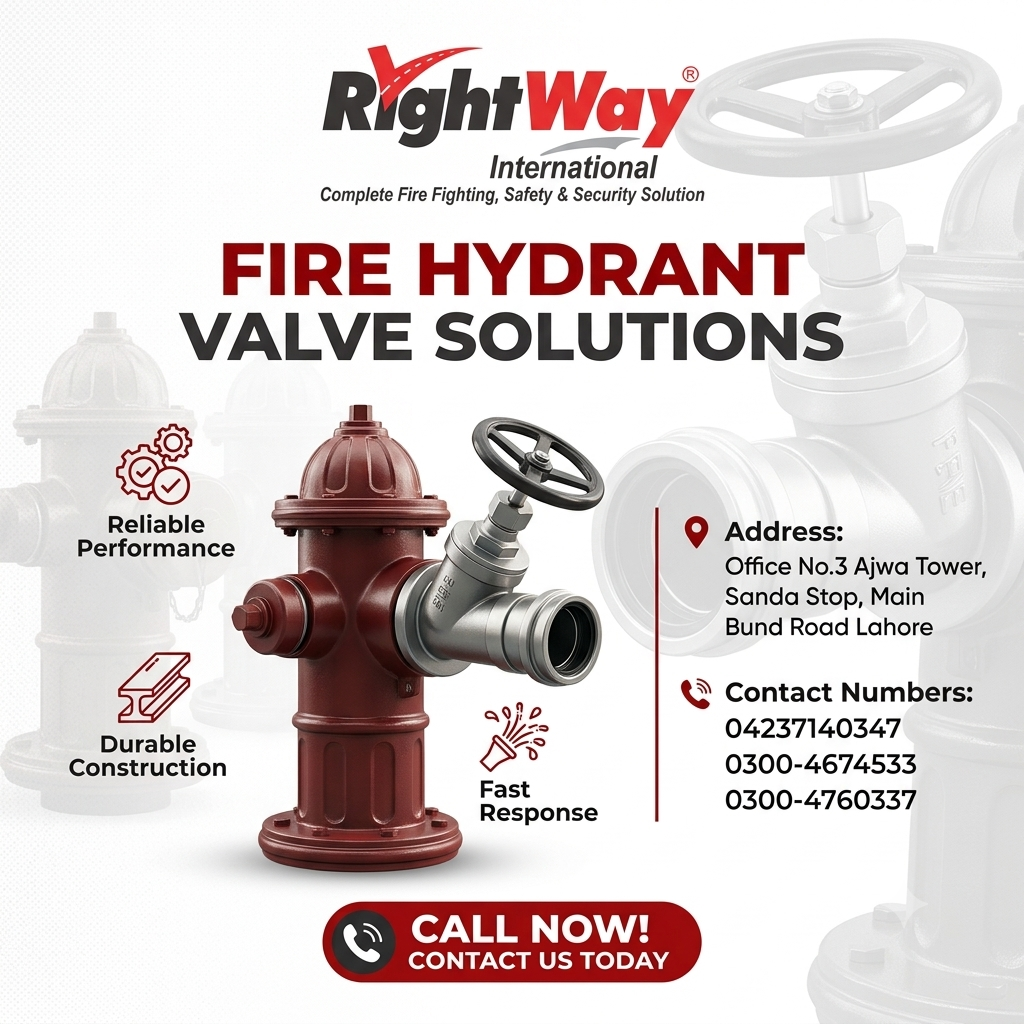
Fire Hydrant Valve in Pakistan are essential components of fire protection systems designed to control and regulate the flow of water from fire hydrant pipelines during firefighting operations. Installed on fire hydrant landing valves, wet riser systems, dry riser systems, and fire water distribution networks, fire hydrant valves provide firefighters with immediate access to a reliable and controlled water supply during fire emergencies.
Fire hydrant valves serve as the connection point between the fire hydrant piping system and firefighting hoses, allowing emergency responders to quickly connect hoses and begin fire suppression. These valves are manufactured from high-quality materials such as brass, gunmetal, bronze, cast iron, ductile iron, and stainless steel to withstand high water pressure, corrosion, harsh environmental conditions, and continuous industrial use.
Designed in accordance with National Fire Protection Association (NFPA) recommendations, British Standards (BS 5041), EN Standards, and local fire safety regulations, fire hydrant valves play a critical role in ensuring efficient firefighting operations, protecting lives and property, and maintaining compliance with occupational health and safety requirements.
Fire hydrant valves are widely installed in industrial facilities, commercial buildings, hospitals, shopping malls, airports, seaports, warehouses, factories, educational institutions, oil and gas facilities, power plants, residential communities, pharmaceutical industries, logistics centers, government buildings, and high-rise buildings throughout Pakistan.
Proper selection, installation, inspection, pressure testing, and routine maintenance ensure that fire hydrant valves perform reliably whenever a fire emergency occurs.
Benefits of Fire Hydrant Valves
1. Reliable Water Flow Control
Fire hydrant valves regulate water flow efficiently, allowing firefighters to control water discharge safely during emergency operations.
2. Immediate Firefighting Access
Hydrant valves enable rapid hose connection, minimizing response time during fire emergencies.
3. Improved Fire Protection
A properly functioning hydrant valve supplies sufficient water pressure to suppress fires before they spread.
4. Enhanced Life Safety
Fast water delivery protects occupants, emergency responders, and surrounding properties.
5. Supports Fire Departments
Firefighters can connect hoses directly to hydrant valves for uninterrupted firefighting operations.
6. Compliance with Fire Safety Standards
Fire hydrant valves help organizations comply with NFPA standards, building regulations, occupational safety requirements, and local fire codes.
7. Long Service Life
High-quality fire hydrant valves provide dependable performance for many years with minimal maintenance.
8. Low Maintenance Cost
Routine inspection and servicing keep hydrant valves operational while reducing maintenance expenses.
Types of Fire Hydrant Valves
1. Landing Valve
Installed on wet riser systems for easy hose connection during firefighting.
2. Oblique Fire Hydrant Valve
Designed with an angled outlet to provide efficient water flow.
3. Angle Fire Hydrant Valve
Commonly installed inside buildings as part of internal hydrant systems.
4. Screw Down Landing Valve
Operated using a threaded spindle for smooth opening and closing.
5. Single Outlet Hydrant Valve
Provides one outlet connection for firefighting hoses.
6. Double Outlet Hydrant Valve
Allows two hose connections simultaneously for improved firefighting efficiency.
7. Flanged Fire Hydrant Valve
Connected to pipelines using flange joints for industrial applications.
8. Threaded Fire Hydrant Valve
Installed using threaded pipe connections in smaller fire protection systems.
9. Gunmetal Fire Hydrant Valve
Highly resistant to corrosion and suitable for marine and industrial environments.
10. Brass Fire Hydrant Valve
Offers excellent corrosion resistance and long service life.
11. Stainless Steel Fire Hydrant Valve
Designed for corrosive environments requiring superior durability.
12. Cast Iron Fire Hydrant Valve
Suitable for municipal and industrial fire protection systems.
13. Ductile Iron Fire Hydrant Valve
Provides higher mechanical strength and impact resistance.
14. Pressure Reducing Fire Hydrant Valve
Controls excessive water pressure while maintaining firefighting efficiency.
15. UL/FM Approved Fire Hydrant Valve
Manufactured and tested according to internationally recognized fire protection certification standards.
Common Fire Hydrant Valves
Modern fire protection systems commonly include:
- Landing Valve
- Angle Fire Hydrant Valve
- Oblique Landing Valve
- Double Outlet Hydrant Valve
- Single Outlet Hydrant Valve
- Gunmetal Hydrant Valve
- Brass Fire Hydrant Valve
- Stainless Steel Hydrant Valve
- Flanged Fire Hydrant Valve
- Threaded Fire Hydrant Valve
- Pressure Reducing Valve
- Wet Riser Landing Valve
- Dry Riser Landing Valve
- Industrial Fire Hydrant Valve
- Municipal Fire Hydrant Valve
- High Pressure Hydrant Valve
- BS Standard Fire Hydrant Valve
- UL Listed Fire Hydrant Valve
- FM Approved Fire Hydrant Valve
These valves ensure safe, efficient, and reliable firefighting operations.
Common Uses of Fire Hydrant Valves in Pakistan
Fire hydrant valves are installed across Pakistan wherever dependable fire protection systems are required.
Industrial plants install fire hydrant valves to protect production equipment, storage areas, machinery, and manufacturing facilities.
Commercial buildings utilize hydrant valves to provide emergency water access throughout the building.
Hospitals rely on fire hydrant valves to safeguard patients, medical staff, and critical healthcare equipment.
Shopping malls, hotels, airports, warehouses, educational institutions, residential communities, office buildings, government facilities, and transportation terminals depend on hydrant valves to improve emergency response.
Oil refineries, chemical plants, LNG terminals, power stations, pharmaceutical industries, logistics hubs, ports, railway stations, and construction projects also utilize fire hydrant valves to reduce fire risks and improve operational safety.
Benefits Compared to Fire Hose Reels
Continuous High Water Flow
Fire hydrant valves deliver significantly higher water flow than standard fire hose reels.
Suitable for Large Fires
Hydrant valves are designed for major firefighting operations.
Professional Firefighter Support
They allow fire departments to connect multiple hoses simultaneously.
Better Pressure Control
Fire hydrant valves maintain consistent water pressure throughout firefighting operations.
Greater Coverage
Hydrant systems protect larger facilities than portable firefighting equipment.
How Fire Hydrant Valves Work
First, the fire hydrant valve remains connected to the building’s fire water distribution system or municipal water supply.
During an emergency, firefighters attach fire hoses to the valve outlet using standard hose couplings.
The operating wheel or spindle is rotated to gradually open the valve.
Pressurized water flows through the valve body into connected firefighting hoses.
Firefighters use the continuous water supply to extinguish or control the fire.
Once operations are complete, the valve is closed, inspected, cleaned, and prepared for future emergencies.
Components of a Fire Hydrant Valve
A typical fire hydrant valve consists of:
- Valve Body
- Bonnet
- Valve Seat
- Valve Disc
- Spindle
- Hand Wheel
- Operating Stem
- Hose Coupling
- Outlet Connection
- Inlet Connection
- Rubber Gasket
- O-Ring Seals
- Packing Gland
- Flange Connection
- Threaded Connection
- Drain Port
- Protective Cap
- Identification Plate
- Pressure Rating Marking
- Corrosion Resistant Coating
These components ensure durability, reliable sealing, smooth operation, and efficient water flow.
Maintenance Requirements
Routine inspection and maintenance are essential for dependable operation.
Maintenance activities include:
- Inspecting valve condition
- Checking for corrosion
- Operating valve periodically
- Pressure testing
- Flow testing
- Leak inspection
- Lubricating spindle threads
- Inspecting seals and gaskets
- Cleaning outlet connections
- Replacing damaged components
- Verifying pressure ratings
- Confirming compliance with fire safety standards
- Maintaining inspection records
Regular maintenance extends valve lifespan and ensures emergency readiness.
Advantages of Fire Hydrant Valves
Fire hydrant valves provide numerous advantages, including:
- Reliable water flow control
- Immediate firefighting access
- Improved fire suppression
- Increased firefighter safety
- Better emergency preparedness
- Continuous water supply
- High pressure capability
- Durable construction
- Corrosion resistance
- Easy operation
- Long service life
- Low maintenance
- Cost-effective fire protection
- Regulatory compliance
- Industrial reliability
- Enhanced public safety
- Improved building protection
- Reduced fire damage
- Faster emergency response
Applications of Fire Hydrant Valves
Fire hydrant valves are commonly installed in:
- Industrial Facilities
- Manufacturing Plants
- Warehouses
- Shopping Malls
- Hospitals
- Airports
- Seaports
- Hotels
- Schools
- Universities
- Government Buildings
- Residential Communities
- Commercial Buildings
- Office Towers
- Oil Refineries
- Gas Processing Plants
- Chemical Plants
- Pharmaceutical Industries
- Power Plants
- Logistics Centers
- Railway Stations
- Metro Stations
- Bus Terminals
- Data Centers
- Cold Storage Facilities
- Food Processing Plants
- High-Rise Buildings
- Construction Projects
Fire Hydrant Pillar
These Pillars in Pakistan are essential firefighting systems that provide a dependable, high-capacity water supply for emergency fire suppression. Their durable construction, rapid accessibility, and compliance with international fire safety standards make them indispensable for protecting industrial, commercial, institutional, and residential properties.
Why Choose High-Quality Fire Hydrant Valves?
Selecting premium-quality fire hydrant valves ensures dependable performance during emergencies. Certified valves manufactured according to NFPA, BS, EN, UL, and FM standards offer superior durability, corrosion resistance, pressure performance, and operational reliability. Professional installation and routine maintenance further enhance system efficiency and extend service life.
Fire Hydrant Valves in Pakistan are indispensable components of modern fire protection systems, providing controlled, high-pressure water delivery for effective firefighting operations. Their robust construction, reliable performance, ease of operation, and compliance with international fire safety standards make them essential for protecting industrial, commercial, institutional, and residential properties.
Properly selected, professionally installed, regularly inspected, pressure-tested, and well-maintained fire hydrant valves improve emergency response, support firefighters, minimize fire damage, strengthen regulatory compliance, protect valuable assets, and safeguard lives throughout Pakistan.