




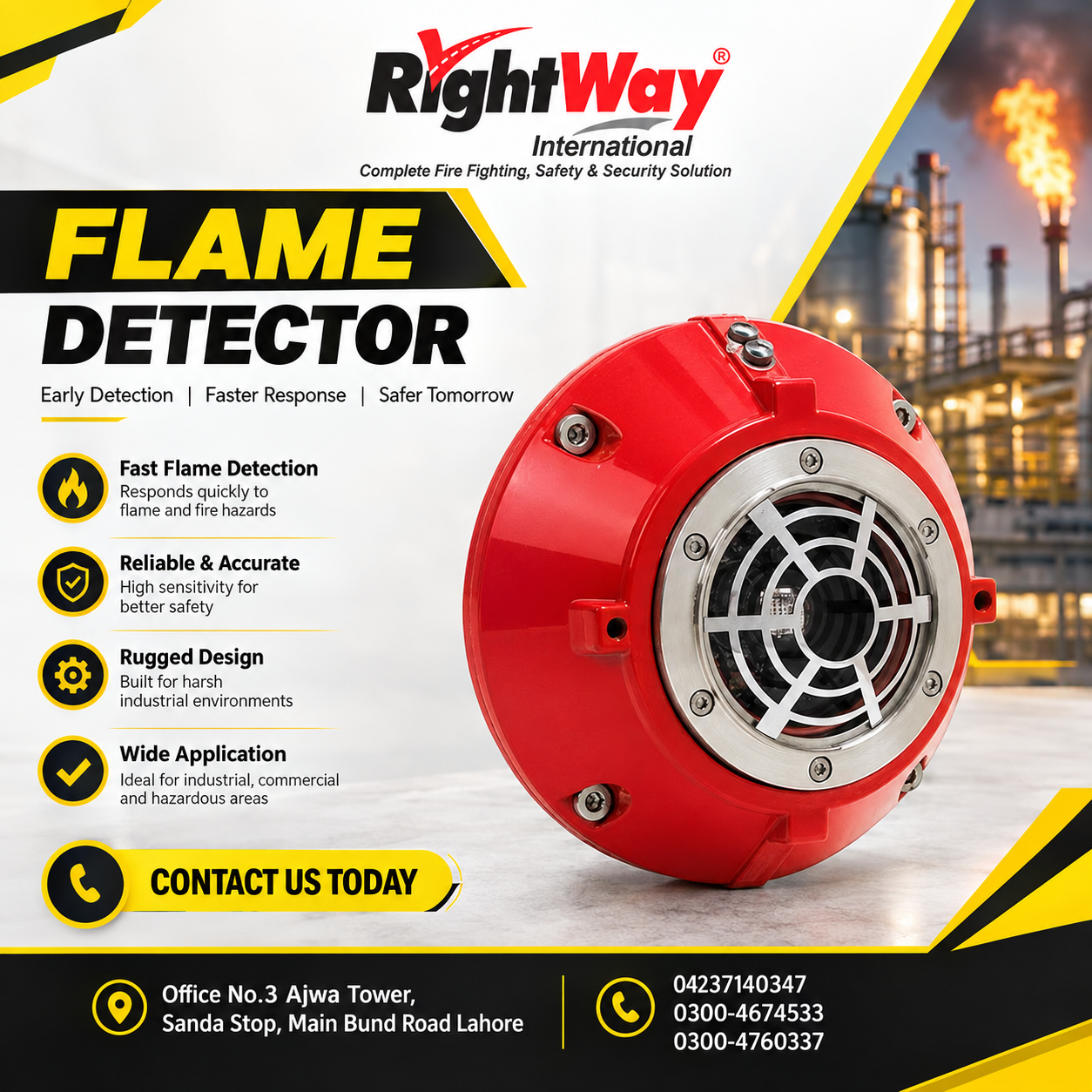
Importance of Flame Detector comes from its ability to detect radiant energy associated with flames and provide an early warning of a potential fire. Unlike smoke detectors and heat detectors, flame detectors respond primarily to radiation produced by a flame. Therefore, they can be particularly useful in environments where fires may develop rapidly.
Flame detectors play an important role in many fire detection systems. For example, they can be used in oil and gas facilities, chemical plants, fuel storage areas, power plants, warehouses, manufacturing facilities, and other high-risk environments. In these locations, a rapidly developing fire can cause serious damage within a short period.
Moreover, flame detectors can identify a suitable flame signature without waiting for smoke or heat to reach the detector. As a result, they can provide valuable information to a fire alarm or safety system when rapid fire detection is required.
Why Is Flame Detection Important?
Fire can spread quickly when flammable liquids, gases, fuels, or other combustible materials are present. Therefore, early detection can give personnel valuable time to recognize a dangerous condition and follow established emergency procedures.
A properly selected flame detector continuously monitors its field of view for radiation associated with flames. When the detected radiation meets the device’s programmed criteria, the detector can generate an alarm signal.
Furthermore, the detector can work with other fire protection equipment. For example, a flame detector may connect to a fire alarm control panel, which can then activate sounders, strobes, remote indicators, or other connected devices.
In some industrial applications, flame detection can also work with emergency shutdown or fire suppression systems. However, these functions depend on the overall system design, approved equipment, and programmed cause-and-effect logic.
Where Are Flame Detectors Used?
Flame detectors are commonly considered for areas where a fire can develop rapidly and produce a suitable flame signature. For instance, they may be used in oil and gas facilities, refineries, chemical processing areas, fuel storage facilities, power plants, and industrial process areas.
Additionally, flame detectors can be useful in selected warehouses, pump rooms, compressor areas, aircraft hangars, and manufacturing facilities. Nevertheless, not every area requires flame detection.
The correct detector depends on several factors. These include the expected fuel type, fire characteristics, environmental conditions, detector technology, viewing distance, field of view, mounting location, and applicable fire safety requirements.
Flame Detector and Other Fire Detectors
Flame detectors operate differently from smoke and heat detectors. A smoke detector responds to smoke particles, whereas a heat detector responds to temperature conditions. In contrast, a flame detector monitors radiation associated with a flame.
Therefore, each detector type has different applications. Smoke detectors may provide earlier warning for many fires that produce smoke before substantial flame development. Meanwhile, flame detectors can be particularly useful for rapidly developing fires that produce a detectable flame signature.
For this reason, flame detectors should generally complement other fire detection technologies rather than automatically replace them.
Important Considerations Before Installation
Although flame detectors can provide rapid detection, they require careful positioning. In particular, the detector normally needs an appropriate line of sight toward the protected area.
Consequently, walls, equipment, structural columns, storage racks, pipes, partitions, or other obstructions can affect detector performance. Similarly, sunlight, welding, hot surfaces, dust, smoke, steam, and other environmental conditions should be considered during system design.
Therefore, a professional assessment should determine the appropriate detector technology, mounting position, coverage, and system configuration.
Flame Detector as Part of a Complete Fire Protection System
A flame detector is only one part of a comprehensive fire protection strategy. In addition to flame detectors, a suitable system may include smoke detectors, heat detectors, manual call points, fire alarm control panels, sounders, strobes, sprinkler systems, foam systems, emergency lighting, fire extinguishers, and evacuation procedures.
Moreover, regular inspection, testing, and maintenance help ensure that the system remains operational. Consequently, businesses and facility managers should follow manufacturer recommendations and applicable fire safety requirements.
When correctly selected, installed, tested, and maintained, a flame detector can provide an important layer of fire detection for high-risk environments.