




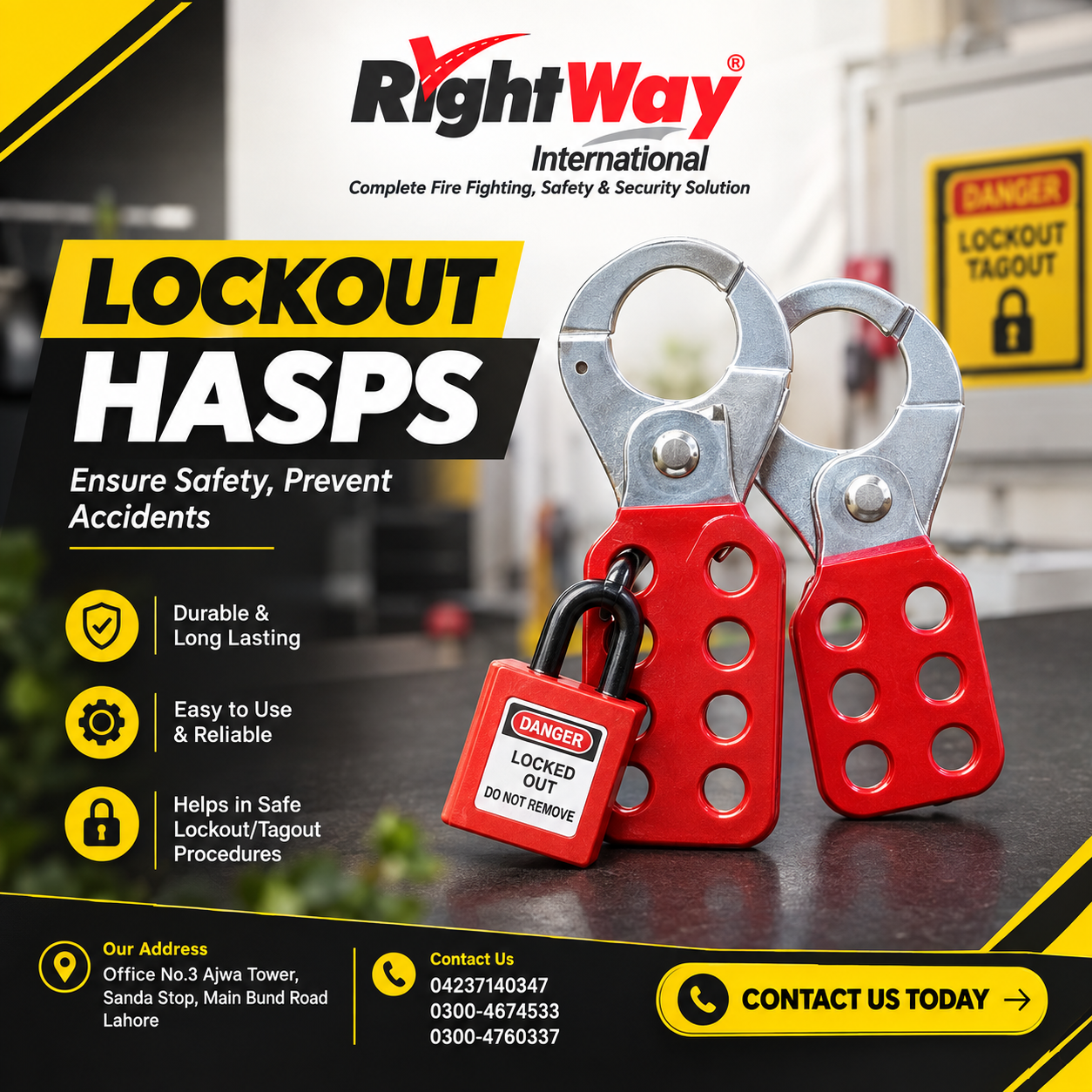
Importance of Lockout Hasps is closely related to workplace safety because lockout hasps allow multiple authorized workers to maintain control over the same isolated energy source during maintenance and repair work.
A lockout hasp is an essential component of a Lockout/Tagout (LOTO) system. Workers can use it with safety padlocks, lockout devices, safety tags, breaker lockouts, valve lockouts, and other energy-isolation equipment.
Unlike a standard hasp used for doors or gates, a lockout hasp is specifically designed to support hazardous energy control. It allows more than one worker to apply their personal safety padlock to the same isolation point.
As a result, the equipment cannot normally be re-energized until every worker has removed their personal lock according to the approved workplace procedure.
What Is a Lockout Hasp?
A Lockout Hasp is a safety device used during Lockout/Tagout procedures to allow multiple workers to secure one energy-isolation point.
A typical lockout hasp contains an opening or series of openings through which safety padlocks can be attached. The hasp connects to a compatible lockout point, such as an electrical disconnect, breaker lockout, valve lockout, or other isolation device.
For example, imagine that five maintenance workers need to repair one machine. The machine must first be shut down and isolated from its hazardous energy sources. The workers can then apply a suitable lockout device and attach a lockout hasp.
Each authorized worker can place their personal safety padlock on the hasp. Therefore, the isolation remains secured while any worker still has their lock attached.
How Does a Lockout Hasp Work?
A lockout hasp works by allowing multiple personal locks to control a single lockout point.
For example, a machine requires electrical maintenance. First, an authorized worker shuts down the machine and isolates the electrical supply. The worker then installs a compatible breaker lockout device.
Next, the worker attaches a lockout hasp to the lockout device. Each authorized worker involved in the maintenance then applies their personal safety padlock to the hasp.
The machine remains locked out while the workers perform their maintenance tasks.
If one worker finishes early, that worker can remove their personal lock. However, the equipment should remain isolated as long as another worker’s personal lock remains attached.
This arrangement helps provide individual control during group maintenance activities.
Importance of Lockout Hasps
Lockout hasps play an important role in workplace energy-control procedures because they help protect multiple workers working on the same equipment.
The main importance of lockout hasps includes:
- Supports group Lockout/Tagout procedures
- Allows multiple workers to apply personal locks
- Helps prevent unexpected equipment startup
- Helps prevent accidental re-energization
- Provides individual worker control
- Supports hazardous energy isolation
- Works with compatible safety padlocks
- Helps improve maintenance safety
- Provides a visible lockout point
- Supports workplace accountability
Furthermore, lockout hasps provide a practical solution when several authorized employees need to work on the same machinery or energy source.
Lockout Hasp and Lockout/Tagout
A Lockout Hasp is an important part of a Lockout/Tagout (LOTO) system.
LOTO procedures help control hazardous energy during servicing, maintenance, inspection, cleaning, repair, and other activities where unexpected energization could create a hazard.
Hazardous energy can include:
- Electrical energy
- Mechanical energy
- Hydraulic energy
- Pneumatic energy
- Thermal energy
- Chemical energy
- Pressurized energy
- Stored energy
- Gravitational energy
For example, several technicians may need to repair a production machine. Instead of using only one personal lock, the team can use a lockout hasp so that every authorized worker can apply their own safety padlock.
Therefore, each worker maintains control over their own safety while the machine remains isolated.
What Is a Group Lockout Hasp?
A Group Lockout Hasp is a lockout device designed for situations where multiple workers need to participate in the same lockout procedure.
Group lockout hasps allow several authorized workers to attach their personal safety padlocks to one isolation point.
For example, a maintenance team may consist of electricians, mechanical technicians, supervisors, and contractors. All of them may need to work on the same machine.
The group can use a suitable lockout hasp to maintain individual control over the isolated energy source.
Most importantly, each worker should follow the organization’s approved group lockout procedure and remove their own lock when their work is complete.
Types of Lockout Hasps
Manufacturers provide different types of lockout hasps for various workplace applications.
Steel Lockout Hasp
A Steel Lockout Hasp provides a durable metal construction for industrial lockout applications. Workers can use suitable steel hasps where strength and durability are important.
Aluminum Lockout Hasp
An Aluminum Lockout Hasp provides a lightweight option for suitable lockout applications. Aluminum construction can also provide useful resistance to certain environmental conditions.
Nylon Lockout Hasp
A Nylon Lockout Hasp uses a non-metallic construction. Depending on the design and application, this type may be suitable for certain electrical environments.
Insulated Lockout Hasp
An Insulated Lockout Hasp is designed for applications where non-conductive construction may provide an additional safety consideration. Workers should always verify product specifications before using a hasp around electrical hazards.
6-Hole Lockout Hasp
A 6-Hole Lockout Hasp can accommodate multiple safety padlocks. This design is useful for group maintenance where several authorized workers need individual locks.
Multi-Lockout Hasp
A Multi-Lockout Hasp allows multiple workers to secure the same lockout point using their individual safety padlocks.
Heavy-Duty Lockout Hasp
A Heavy-Duty Lockout Hasp is designed for demanding industrial environments where a robust lockout device is required.
Benefits of Lockout Hasps
A Lockout Hasp provides several benefits when organizations use it correctly as part of their energy-control procedures.
Supports Multiple Workers
The biggest advantage of a lockout hasp is that several authorized workers can apply their own personal locks to the same isolation point.
Provides Individual Control
Each worker can maintain control over their own safety padlock. This helps prevent equipment restoration while a worker is still performing maintenance.
Supports Group Lockout
Lockout hasps provide a practical solution for group maintenance operations where multiple people work on the same equipment.
Helps Prevent Accidental Startup
A properly applied lockout system helps prevent unexpected equipment operation while maintenance is taking place.
Improves Lockout Visibility
A lockout hasp with multiple safety padlocks provides a clear visual indication that several workers are involved in the maintenance activity.
Works With Safety Padlocks
Lockout hasps are designed to work with compatible safety padlocks and other LOTO equipment.
Helps Improve Workplace Safety
By supporting proper energy-control procedures, lockout hasps can help organizations reduce the risk associated with unexpected energization.
Lockout Hasp vs. Ordinary Hasp
A lockout hasp and an ordinary hasp may look similar, but they serve different purposes.
A Lockout Hasp is designed for energy isolation and commonly provides features such as:
- Multiple lock openings
- LOTO compatibility
- Safety padlock compatibility
- High visibility
- Industrial construction
- Group lockout capability
- Worker identification support
In contrast, an ordinary hasp generally secures doors, gates, cabinets, boxes, or other property.
Therefore, an ordinary hasp should not automatically be considered a substitute for a purpose-designed lockout hasp.
Where Are Lockout Hasps Used?
Lockout hasps are used in many workplaces where employees need to control hazardous energy during maintenance and servicing.
Common applications include:
- Manufacturing plants
- Factories
- Construction sites
- Warehouses
- Workshops
- Power plants
- Electrical facilities
- Oil and gas facilities
- Chemical plants
- Processing plants
- Maintenance departments
- Industrial machinery areas
- Commercial facilities
For example, maintenance workers can use lockout hasps with breaker lockouts to isolate electrical equipment.
Similarly, workers can use compatible hasps with valve lockout devices when isolating hydraulic, pneumatic, water, gas, steam, or other energy sources.
How to Use a Lockout Hasp
Workers should always follow the organization’s approved Lockout/Tagout procedure when using a lockout hasp.
A typical process includes the following steps:
- Identify the equipment and hazardous energy sources.
- Notify affected employees about the shutdown.
- Shut down the equipment safely.
- Isolate all relevant energy sources.
- Apply the appropriate lockout device.
- Install the compatible lockout hasp.
- Each authorized worker attaches their personal safety padlock.
- Apply required safety tags or identification.
- Release, block, or control stored energy.
- Verify that the equipment remains isolated.
- Complete the required maintenance or repair work.
- Each worker removes their own lock according to the approved procedure.
- Restore the equipment only after all required checks are complete.
Most importantly, workers should never remove another person’s personal lock unless the organization’s written energy-control procedure specifically provides an authorized process for doing so.
Lockout Hasp and Safety Padlock
A Lockout Hasp and Safety Padlock often work together as part of a LOTO system.
The hasp provides the connection point for multiple locks, while each safety padlock provides individual control.
For example, if six workers are repairing a machine, each worker can attach a personal safety padlock to the lockout hasp.
As long as one authorized worker’s personal lock remains attached, the lockout arrangement should remain in place according to the organization’s procedure.
This approach helps ensure that every worker can maintain control over their own protection during group maintenance.
Lockout Hasp and Breaker Lockout
Electrical maintenance often requires a combination of a Breaker Lockout, Lockout Hasp, Safety Padlock, and Safety Tag.
A worker can first shut down the electrical equipment and isolate the appropriate circuit breaker. The compatible breaker lockout device can then secure the breaker.
If several authorized workers need to work on the equipment, they can use a lockout hasp with their individual safety padlocks.
This provides a practical method for maintaining group control over the isolated electrical energy source.
Lockout Hasp and Valve Lockout
Lockout hasps can also form part of procedures involving valve isolation.
Industrial facilities may need to isolate:
- Gas valves
- Water valves
- Steam valves
- Hydraulic valves
- Pneumatic valves
- Process valves
A suitable valve lockout device can secure the valve in the required position. Workers can then use compatible lockout equipment, including hasps and safety padlocks, according to the site’s energy-control procedure.
The correct lockout equipment depends on the valve design, energy source, workplace conditions, and manufacturer specifications.
Lockout Hasp Colors and Identification
Lockout hasps may be available in different colors or finishes depending on the manufacturer and application.
Organizations can use color coding as part of their internal safety system. For example, different colors may identify departments, teams, contractors, or specific procedures.
However, companies should establish their own color-coding rules because color meanings can differ between workplaces.
In addition to color, organizations can use:
- Safety tags
- Worker names
- Employee numbers
- Department identification
- Equipment numbers
- Lock numbers
- Warning labels
Clear identification can help workers understand who is involved in a lockout procedure.
Lockout Hasp Installation and Maintenance
A lockout hasp does not normally require complicated installation. Instead, workers attach it to a compatible lockout point or lockout device.
However, proper selection is important. The hasp should fit the lockout device and accommodate the required number and type of safety padlocks.
During inspections, workers should check:
- Hasp body condition
- Lock holes
- Hinge condition
- Rivets or connecting points
- Corrosion
- Physical damage
- Cracks or deformation
- Sharp edges
- Identification markings
- Compatibility with safety padlocks
- Signs of tampering
If a lockout hasp becomes damaged or no longer functions correctly, remove it from service and replace it according to the workplace safety procedure.
Safety Considerations When Using Lockout Hasps
A lockout hasp should always be used as part of a complete hazardous energy-control program.
Workers should:
- Follow the approved LOTO procedure
- Use compatible lockout equipment
- Apply personal safety padlocks
- Identify all hazardous energy sources
- Control stored energy
- Verify isolation before work begins
- Never bypass an applied lockout device
- Never remove another worker’s lock without following the authorized procedure
- Inspect lockout equipment regularly
- Receive appropriate training before performing lockout activities
A lockout hasp alone does not eliminate every hazard. Safe results depend on proper energy isolation, training, verification, communication, and compliance with the organization’s procedures.
Lockout Hasps and OSHA Lockout/Tagout
OSHA Lockout/Tagout requirements focus on controlling hazardous energy during servicing and maintenance activities.
OSHA’s energy-control requirements are intended to help prevent unexpected machine startup and the release of hazardous energy.
A lockout hasp can support these procedures when multiple authorized employees work on the same equipment. However, the hasp itself does not replace a complete energy-control program.
Organizations should develop written procedures, train authorized employees, identify hazardous energy sources, and use suitable lockout equipment for the specific application.
Workplaces should also consider applicable local regulations, industry standards, equipment instructions, and project-specific safety requirements.
Lockout Hasps in Pakistan
Lockout Hasps in Pakistan provide an important solution for industrial and commercial workplaces that use hazardous energy-control procedures.
Factories, manufacturing plants, construction sites, workshops, warehouses, power facilities, oil and gas facilities, and maintenance departments can use lockout hasps as part of a properly designed Lockout/Tagout system.
For example, a manufacturing plant may need several maintenance workers to repair one production machine. A lockout hasp allows each worker to apply a personal safety padlock while the machine remains isolated.
Similarly, an industrial facility may use lockout hasps with electrical breaker lockouts, valve lockouts, disconnect lockouts, and other LOTO devices.
Before purchasing a lockout hasp in Pakistan, consider the number of workers involved, energy source, lockout device, material, environmental conditions, number of lock holes, padlock compatibility, and workplace safety procedure.
Frequently Asked Questions
What is a Lockout Hasp?
A Lockout Hasp is a device used in Lockout/Tagout procedures that allows multiple authorized workers to attach their personal safety padlocks to the same isolation point.
What is the purpose of a Lockout Hasp?
The main purpose of a lockout hasp is to support group lockout procedures and allow multiple workers to maintain individual control over an isolated energy source.
Why are Lockout Hasps important?
Lockout hasps are important because they help multiple workers secure the same hazardous energy source during maintenance and repair activities.
How many locks can be placed on a Lockout Hasp?
The number depends on the specific hasp design. Some lockout hasps accommodate several safety padlocks, while others are designed for larger group lockout applications.
Can a Lockout Hasp be used for electrical equipment?
Yes. Compatible lockout hasps can be used with electrical lockout devices such as breaker lockouts and disconnect lockouts.
Can a Lockout Hasp be used with valve lockouts?
Yes. Suitable lockout hasps can be used as part of valve isolation procedures when the equipment and workplace procedure support their use.
What is the difference between a Lockout Hasp and a normal hasp?
A lockout hasp is specifically designed to support hazardous energy isolation and Lockout/Tagout procedures. A normal hasp generally secures doors, gates, cabinets, or other property.
What materials are Lockout Hasps made from?
Lockout hasps may be manufactured from materials such as steel, aluminum, nylon, or other materials depending on the intended application.
Can one worker use a Lockout Hasp?
Yes. However, lockout hasps are particularly useful when multiple authorized workers need to apply individual safety padlocks to the same isolation point.
What is a Group Lockout Hasp?
A Group Lockout Hasp is a lockout device that allows multiple authorized workers to attach personal safety padlocks during group maintenance activities.
Should every worker have their own lock?
In personal lockout procedures, each authorized worker should generally use their own personal safety padlock according to the organization’s energy-control procedure.
Are Lockout Hasps reusable?
Many lockout hasps are designed for repeated use. However, workers should inspect them regularly and remove damaged or defective equipment from service.
Where can Lockout Hasps be used?
Lockout hasps can be used in factories, manufacturing plants, workshops, construction sites, warehouses, power plants, chemical facilities, oil and gas facilities, and other workplaces where hazardous energy must be controlled.
Are Lockout Hasps required for every LOTO procedure?
Not necessarily. The correct lockout equipment depends on the equipment, energy source, number of workers, isolation point, and approved workplace procedure. A hasp is especially useful for group lockout situations.
Conclusion
A Lockout Hasp provides an important layer of protection during maintenance, repair, inspection, and servicing activities. It allows multiple authorized workers to apply their personal safety padlocks to the same isolated energy source.
Moreover, organizations can use lockout hasps with safety padlocks, lockout devices, safety tags, breaker lockouts, valve lockouts, disconnect lockouts, and group lockout equipment to strengthen their hazardous energy-control procedures.
The importance of lockout hasps becomes particularly clear during group maintenance. Each worker can maintain personal control over the lockout arrangement while working on the same equipment.
Finally, organizations should select the correct lockout hasp for the application and follow the manufacturer’s instructions, workplace procedures, and applicable Lockout/Tagout requirements. Proper training, identification, inspection, communication, and energy verification can further improve workplace safety.