




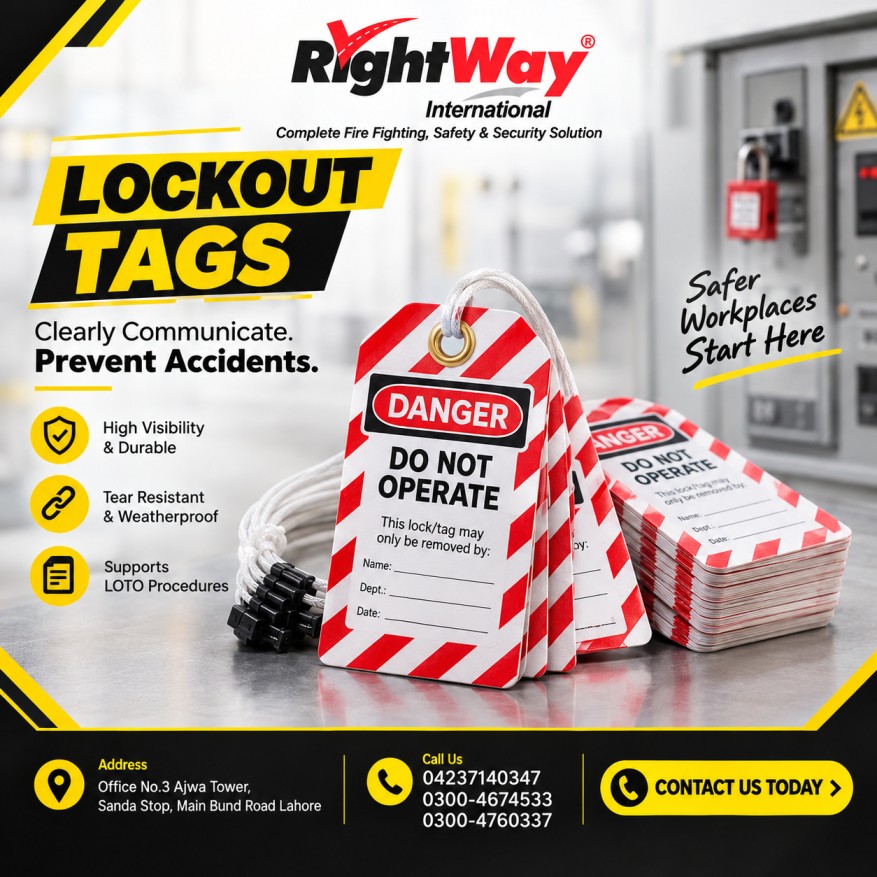
Lockout Tags play an important role in workplace safety. They form a key part of a Lockout/Tagout (LOTO) system. Workers use these tags during maintenance, repairs, and equipment servicing.
A lockout tag warns workers not to operate equipment. It identifies machinery that needs maintenance or repair. This clear warning helps prevent accidental startup and unexpected energy release.
Workers use lockout tags with safety padlocks and other LOTO devices. These products help control hazardous energy and improve workplace safety.
Main Importance of Lockout Tags
- Provides a Clear Warning: A lockout tag warns workers not to operate equipment during maintenance or repairs.
- Helps Prevent Accidental Startup: The tag alerts workers before they start machinery or restore its power supply.
- Supports LOTO Procedures: Workers use lockout tags with safety padlocks and suitable lockout devices.
- Identifies Equipment Under Maintenance: Tags identify machines, electrical panels, and valves that require servicing.
- Improves Workplace Communication: Clear warning messages help employees understand potential hazards.
- Identifies Authorized Workers: Tags can display the worker’s name, department, date, and other required details.
- Supports Hazardous Energy Control: Lockout tags help workers follow approved energy control procedures.
- Reduces Maintenance Risks: Clear warnings discourage workers from operating equipment during servicing.
- Works With Different Lockout Devices: Workers can attach tags to cable lockouts, valve lockouts, circuit breaker lockouts, plug lockouts, and lockout hasps.
- Promotes Personal Safety: Workers can use tags with personal safety padlocks to identify their lockout and communicate important warnings.
Why Are Lockout Tags Important?
Switching off equipment does not always provide enough protection. Another worker might restart the machine without knowing about ongoing maintenance. Someone might also reconnect the power supply or open a valve.
Lockout tags provide a visible warning in these situations. They tell workers that equipment must remain out of service. They also communicate important safety information to everyone in the work area.
However, a tag alone cannot physically prevent equipment operation. Workers must use suitable lockout devices and safety padlocks as required by their site’s approved Lockout/Tagout procedure.
How to Use Lockout Tags Correctly
Follow these steps to use lockout tags safely:
- Identify Energy Sources: Check for electrical, mechanical, hydraulic, and pneumatic energy sources.
- Shut Down Equipment: Follow the approved shutdown procedure before starting maintenance.
- Isolate Hazardous Energy: Disconnect or isolate all relevant energy sources.
- Apply Lockout Devices: Secure the isolation points with suitable devices and personal safety padlocks.
- Attach Lockout Tags: Display clear warnings and the required worker identification details.
- Verify Isolation: Test the equipment according to the approved procedure before beginning work.
- Maintain the Lockout: Keep the equipment isolated throughout the maintenance task. Remove locks and tags only according to the approved procedure.
Lockout tags help improve workplace safety during maintenance and repairs. They warn workers, identify equipment under service, and support hazardous energy control. They also improve communication between maintenance teams and other employees.
For better protection, combine lockout tags with safety padlocks, suitable lockout devices, and proper employee training. Always follow your facility’s approved LOTO procedure. These practices help prevent accidental equipment operation and create a safer working environment.
Cable Lockout
Simply switching off equipment does not always provide enough protection. Another worker may try to restart the machine. Someone may also reconnect an electrical supply without knowing that maintenance is in progress.
A Lockout Tag provides a visible warning before anyone operates the equipment. It tells workers that the equipment requires isolation and must remain out of service. Read More