




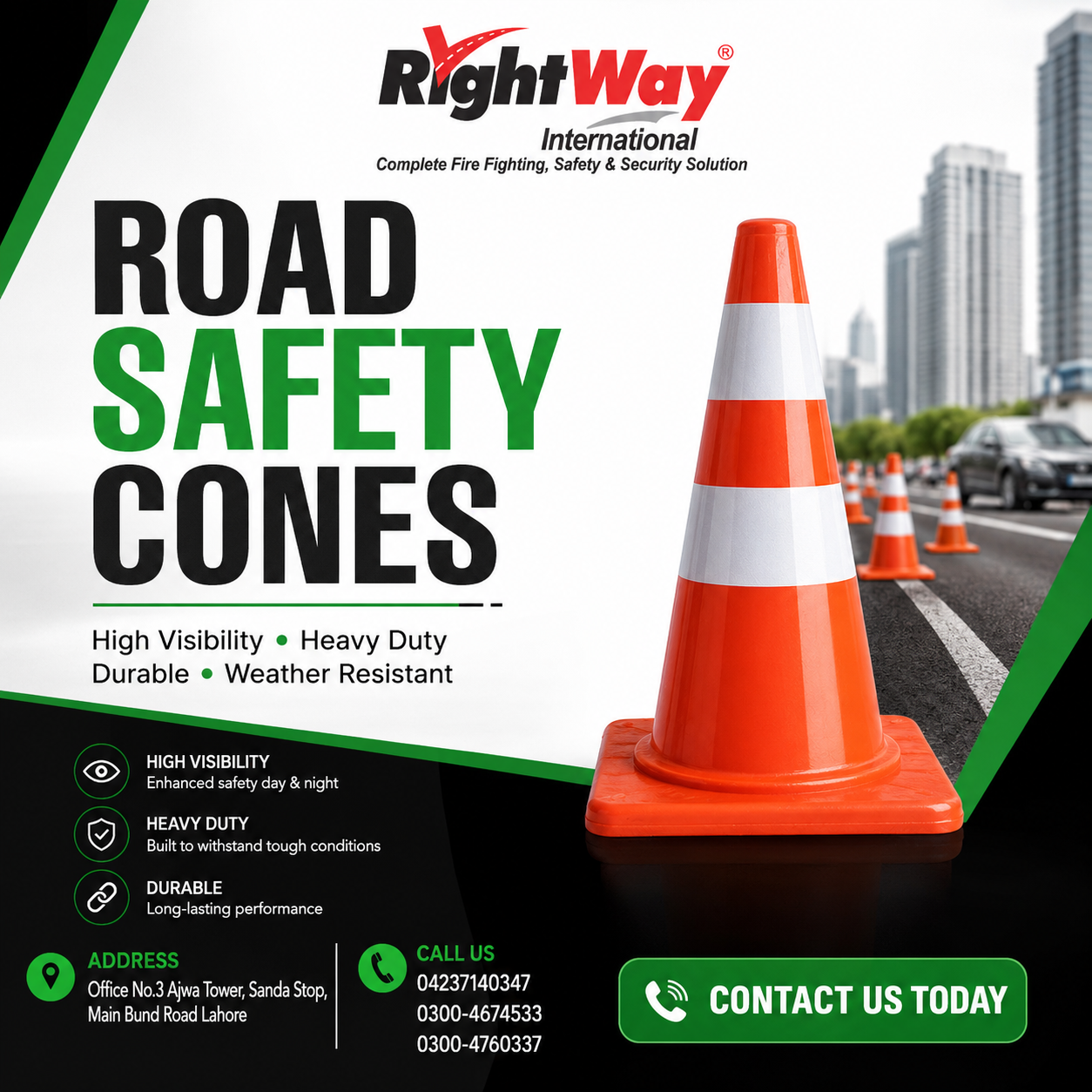
Road Safety Traffic Cones are essential traffic management devices that help guide vehicles, warn road users, channel traffic, and protect workers in temporary and permanent traffic-control areas. Because of their bright colors, reflective bands, durable construction, and stable bases, traffic cones provide a simple and effective way to improve visibility and road safety.
Furthermore, organizations use traffic cones across highways, roads, construction sites, parking areas, airports, industrial facilities, warehouses, schools, hospitals, event venues, utility work zones, and emergency locations. As a result, they have become an important part of modern traffic management and workplace safety systems.
Moreover, traffic cones help create clear boundaries around hazards and work areas. They also help drivers and pedestrians understand changes in normal traffic conditions. Therefore, businesses, contractors, government departments, and safety teams can use suitable traffic cones to improve traffic organization and protect people in high-risk areas.
What Are Road Safety Traffic Cones?
Road Safety Traffic Cones are portable traffic-control devices that provide visual warnings, traffic guidance, and temporary channelization. Manufacturers commonly produce these cones from flexible and impact-resistant materials such as PVC, rubber, polyethylene, and thermoplastic compounds.
Most traffic cones feature bright orange, red, yellow, or fluorescent colors. In addition, reflective bands or collars improve visibility when vehicle headlights illuminate the cones at night.
A typical traffic cone can help with:
- Road construction
- Highway maintenance
- Lane closures
- Traffic diversions
- Parking management
- Emergency response
- Accident-site protection
- Utility maintenance
- Pedestrian safety
- Airport operations
- Warehouse traffic control
- Industrial safety
- Event traffic management
- School-zone safety
- Temporary hazard marking
Why Are Road Safety Traffic Cones Important?
Road users need clear warnings whenever normal traffic conditions change. For this reason, traffic cones provide an immediate visual indication of hazards, restricted areas, road work, or temporary traffic changes.
For example, workers can use cones to show that:
- A lane is closed
- Road construction is taking place
- A hazard exists ahead
- Drivers should reduce speed
- Traffic must move into another lane
- Workers are operating nearby
- Pedestrians should follow another route
- Vehicles should avoid a restricted area
In addition, workers can quickly move and reposition cones when site conditions change. Therefore, traffic cones offer flexibility that permanent traffic-control structures cannot always provide.
Main Components of a Traffic Cone
A high-quality road safety traffic cone normally includes several important components.
1. High-Visibility Cone Body
The cone body provides the primary visual warning. Manufacturers use durable and flexible materials to help the cone withstand regular handling and outdoor conditions.
2. Reflective Bands
Reflective bands improve nighttime visibility. When vehicle headlights strike the reflective surface, the material reflects light toward approaching drivers.
3. Weighted Base
A wide and stable base helps keep the cone upright. Consequently, a properly designed base can improve stability during normal outdoor use.
4. Bright Safety Color
Bright colors help drivers and pedestrians recognize traffic cones from a distance. Orange and fluorescent colors remain particularly popular for road and construction applications.
5. Identification Area
Some traffic cones provide space for company logos, identification markings, warning messages, or other safety information.
How Do Road Safety Traffic Cones Work?
Traffic cones use visual guidance and physical channelization to help control movement around hazards and work areas.
Step 1: Identify the Hazard
First, workers identify the road hazard, construction area, accident location, maintenance activity, or restricted zone.
Step 2: Establish the Safety Area
Next, workers position traffic cones around or before the hazard. This arrangement creates a visible boundary and alerts approaching road users.
Step 3: Guide Traffic
Afterward, the cone arrangement guides vehicles and pedestrians toward the correct route.
Step 4: Control Traffic Movement
Furthermore, workers can use properly positioned cones to channel traffic into designated lanes and away from restricted areas.
Step 5: Protect Workers
Finally, the visible separation between moving traffic and the work area helps create a safer environment for workers and other road users.
Types of Road Safety Traffic Cones
Different environments require different traffic cone designs. Therefore, buyers should select a cone according to its intended application.
1. Standard Traffic Cones
Standard traffic cones work well for general traffic control, parking management, maintenance work, and temporary hazard marking.
2. Reflective Traffic Cones
Reflective traffic cones feature reflective bands or collars. As a result, they provide better visibility during nighttime and low-light operations.
3. Heavy-Duty Traffic Cones
Heavy-duty traffic cones offer stronger construction for demanding environments. Contractors commonly use them on highways, construction sites, and areas with heavy vehicle movement.
4. Collapsible Traffic Cones
Collapsible traffic cones fold down for easy transportation and storage. Therefore, emergency vehicles, roadside assistance teams, and mobile safety crews can carry them conveniently.
5. LED Traffic Cones
LED traffic cones include integrated warning lights. Consequently, they can provide additional visibility during nighttime work and low-visibility conditions.
6. Highway Traffic Cones
Highway traffic cones usually feature larger dimensions and enhanced visibility. Therefore, they suit major roads, highways, and high-speed traffic environments.
7. Construction Traffic Cones
Construction traffic cones help establish work zones, identify hazards, guide vehicles, and protect workers during construction activities.
8. Airport Safety Cones
Airport safety cones help organize vehicle movement and identify restricted areas around aircraft movement zones, service roads, and maintenance areas.
Common Applications of Road Safety Traffic Cones
Road safety traffic cones serve many industries and public environments.
Road Construction
Construction teams use cones to mark work areas, temporary lane closures, road repairs, and traffic diversions.
Highway Maintenance
Highway maintenance crews use highly visible cones to alert motorists and protect workers around maintenance activities.
Parking Management
Businesses and property managers use cones to identify restricted parking areas, loading zones, reserved spaces, and temporary routes.
Emergency Response
Emergency responders can quickly place cones around accident scenes, damaged vehicles, road obstructions, and other hazards. In this way, they can establish a visible safety perimeter while managing the incident.
Utility Work
Utility companies use traffic cones around excavation sites, repair areas, cable work, pipeline maintenance, and infrastructure projects.
Industrial Facilities
Factories, warehouses, and logistics centers use cones to organize vehicle movement, identify hazards, and separate pedestrian areas from vehicle routes.
Airports
Airport teams use specialized safety cones around service areas, maintenance zones, aircraft movement areas, and restricted locations.
Public Events
Event organizers use traffic cones around entrances, exits, parking areas, pedestrian routes, and temporary traffic-control zones.
Key Features of High-Quality Traffic Cones
When selecting road safety traffic cones, buyers should consider several important features.
High Visibility
Bright fluorescent colors make cones easier to identify during daylight. Therefore, they provide an immediate visual warning to approaching drivers.
Reflective Visibility
Reflective bands improve visibility at night by reflecting vehicle headlights toward approaching road users.
Durable Construction
Quality materials help traffic cones withstand impacts, frequent handling, outdoor exposure, and repeated deployment.
Stable Base
A strong and weighted base helps keep the cone upright and improves stability.
Weather Resistance
Outdoor traffic cones should withstand rain, sunlight, wind, and changing temperatures. Consequently, weather-resistant materials can improve service life.
UV Resistance
UV-resistant materials help reduce fading and material deterioration caused by prolonged sunlight exposure.
Stackable Design
Stackable traffic cones save storage space. In addition, they make transportation and large-scale deployment easier.
Easy Deployment
Lightweight traffic cones allow workers to place, remove, and reposition them quickly.
Benefits of Road Safety Traffic Cones
Road safety traffic cones provide several important benefits:
- Improve driver awareness
- Provide clear hazard warnings
- Guide traffic movement
- Protect workers in temporary work zones
- Improve pedestrian safety
- Separate vehicles from restricted areas
- Increase nighttime visibility
- Allow quick deployment
- Simplify transportation and storage
- Support temporary traffic management
- Reduce confusion around work areas
- Support emergency response
- Provide a cost-effective traffic-control solution
Moreover, organizations can combine traffic cones with barriers, warning signs, road markings, flashing lights, and other safety equipment to create a more comprehensive traffic-control system.
Traffic Cones for Daytime and Nighttime Safety
Visibility plays a major role in traffic safety. During the daytime, bright colors help drivers recognize cones against the surrounding environment.
At night, reflective bands can reflect vehicle headlights toward approaching motorists. As a result, reflective traffic cones can provide stronger visual warnings during nighttime road work.
However, organizations should not rely on traffic cones alone when managing high-risk work zones. Instead, they should follow the applicable traffic-control plan and use appropriate signs, barriers, lighting, and other safety devices.
How to Choose the Right Road Safety Traffic Cone
Choosing the correct traffic cone depends on the working environment and safety requirements.
1. Determine the Application
First, identify where you will use the cones. Roads, highways, construction sites, parking areas, warehouses, airports, and emergency scenes may require different specifications.
2. Consider Cone Height
Next, select a suitable cone height. Larger cones can provide greater visibility in high-speed or high-traffic environments.
3. Check Reflective Features
For nighttime operations, choose cones with suitable reflective bands or collars.
4. Evaluate Base Stability
Choose a cone with a stable base that suits the expected environmental conditions and traffic activity.
5. Check Material Quality
Evaluate flexibility, impact resistance, UV resistance, weather resistance, and overall durability before purchasing.
6. Consider Transportation and Storage
If workers need to move cones frequently, lightweight and stackable designs can provide significant convenience.
7. Verify Applicable Requirements
Finally, check the applicable local traffic-management, workplace-safety, and road-authority requirements before selecting equipment for professional use.
Best Practices for Using Traffic Cones
Proper placement plays an important role in effective traffic management. Therefore, safety teams should follow appropriate traffic-control procedures.
- Inspect cones before every deployment
- Replace damaged cones immediately
- Keep reflective bands clean
- Maintain appropriate spacing
- Follow approved traffic-control plans
- Select suitable cone heights
- Use reflective cones for nighttime operations
- Position cones where drivers can clearly see them
- Keep damaged or unstable cones away from active traffic
- Store cones correctly after use
- Train workers in traffic-control procedures
- Follow applicable local traffic regulations
Traffic Cone Maintenance
Although traffic cones require relatively little maintenance, regular inspections can help maintain their safety performance.
Inspect cones for:
- Cracks
- Broken bases
- Faded colors
- Damaged reflective bands
- Surface deterioration
- Deformation
- Excessive dirt
- Loss of stability
- Vehicle impact damage
- UV-related deterioration
Furthermore, clean reflective surfaces regularly to maintain visibility. If a cone becomes severely damaged, faded, unstable, or poorly reflective, replace it immediately.
Industries That Use Road Safety Traffic Cones
Road safety traffic cones support safety operations across many industries, including:
- Road construction
- Highway maintenance
- Transportation
- Municipal services
- Public works
- Utility companies
- Oil and gas
- Mining
- Manufacturing
- Warehousing
- Logistics
- Aviation
- Emergency services
- Security services
- Event management
- Schools and universities
- Hospitals
- Commercial properties
- Government departments
- Infrastructure projects
Road Safety Traffic Cones and Workplace Safety
Traffic cones can support workplace safety by clearly separating workers from moving vehicles and identifying temporary hazards.
For example, construction teams can place cones around machinery, excavation areas, temporary lane closures, loading zones, and maintenance locations. Consequently, drivers and pedestrians receive a clear visual warning before entering a potentially hazardous area.
However, traffic cones should form part of a complete safety program rather than act as the only protective measure. Organizations should also use appropriate signs, barriers, training, lighting, and traffic-control procedures according to the specific work environment.
Difference Between Road Safety Traffic Cones and Traffic Barriers
Traffic cones and traffic barriers both support traffic management, but they serve different purposes.
| Feature | Road Safety Traffic Cones | Traffic Barriers |
|---|---|---|
| Primary Purpose | Visual guidance and channelization | Physical separation and protection |
| Portability | Very High | Moderate |
| Deployment | Quick and Simple | More Involved |
| Storage | Easy | Requires More Space |
| Flexibility | Highly Flexible | Less Flexible |
| Visibility | High | High |
| Typical Application | Temporary Traffic Control | Work-Zone Separation |
| Cost | Generally Lower | Generally Higher |
Therefore, traffic cones work particularly well when teams need portable and flexible visual guidance. On the other hand, barriers provide stronger physical separation where the work environment requires it.
Importance of Reflective Traffic Cones
Reflective traffic cones provide additional visibility during nighttime operations. Their reflective bands can catch vehicle headlights and make the cones easier to recognize.
For this reason, construction companies, highway maintenance teams, emergency responders, and utility workers often prefer reflective traffic cones for low-light operations.
Nevertheless, organizations should select reflective materials according to the specific requirements of their traffic-control environment.
Traffic Cones for Construction Work Zones
Construction sites often contain multiple hazards, including heavy machinery, excavations, uneven surfaces, workers, moving vehicles, and temporary lane changes.
Therefore, construction teams use traffic cones to establish clear boundaries around these activities.
Traffic cones can mark:
- Excavation areas
- Road repair zones
- Asphalt work
- Utility trenches
- Construction machinery
- Temporary lane closures
- Equipment loading areas
- Pedestrian detours
- Material storage areas
- Vehicle access routes
Traffic Cones for Emergency Situations
Emergency situations often require fast and flexible safety equipment. Traffic cones allow emergency teams to create visible boundaries within a short time.
For example, police officers, rescue teams, roadside assistance crews, and maintenance workers can use cones around accident scenes, damaged vehicles, fallen objects, road obstructions, and other temporary hazards.
As a result, traffic cones can help organize the surrounding area while emergency personnel focus on incident management.
Road Safety Traffic Cones in Pakistan
In Pakistan, organizations commonly use traffic cones for road construction, highway maintenance, municipal projects, parking management, infrastructure development, industrial facilities, emergency operations, and commercial properties.
When purchasing traffic cones in Pakistan, buyers should consider road conditions, traffic speed, weather exposure, visibility requirements, cone height, base stability, reflective properties, material quality, and intended application.
Moreover, organizations should select traffic-control equipment according to the applicable local requirements and project specifications.
Technical Specifications
| Specification | Typical Details |
| Equipment Type | Road Safety Traffic Cone |
| Primary Function | Traffic Control and Hazard Warning |
| Common Materials | PVC, Rubber, Polyethylene, Thermoplastic |
| Common Colors | Orange, Red, Yellow, Fluorescent Colors |
| Typical Height Range | Approximately 300 mm to 1000 mm |
| Visibility | High-Visibility and Reflective Options |
| Base | Weighted or Heavy-Duty Base |
| Design | Portable and Stackable |
| Applications | Roads, Highways, Construction, Parking, Industrial Sites |
| Optional Features | Reflective Bands, LED Lighting, Identification Markings |
| Environment | Indoor and Outdoor Applications |
| Main Benefit | Traffic Guidance and Work-Zone Protection |
Frequently Asked Questions
What are Road Safety Traffic Cones used for?
Road safety traffic cones guide traffic, identify hazards, channel vehicles, protect workers, control parking areas, and establish temporary safety zones.
What materials are traffic cones made from?
Manufacturers commonly produce traffic cones from PVC, rubber, polyethylene, and thermoplastic materials.
Why do traffic cones have reflective bands?
Reflective bands improve nighttime visibility by reflecting vehicle headlights toward approaching road users.
Are traffic cones suitable for highways?
Yes. Suitable traffic cones can support highway maintenance, construction, lane closures, and temporary traffic control. However, organizations should select the correct size and specification according to the applicable traffic-management requirements.
Can traffic cones be used at construction sites?
Yes. Construction teams commonly use traffic cones to mark work zones, identify hazards, guide vehicles, and protect workers.
Are traffic cones weather resistant?
Many quality traffic cones can withstand outdoor conditions such as sunlight, rain, wind, and temperature changes. However, buyers should check the material and manufacturer specifications before selecting a product.
How should traffic cones be stored?
Store traffic cones in a clean and suitable location where they remain protected from unnecessary damage and contamination. Stackable designs can also help save storage space.
How often should traffic cones be inspected?
Inspect traffic cones before deployment and regularly during use. Replace cones that show serious damage, fading, instability, or damaged reflective bands.