




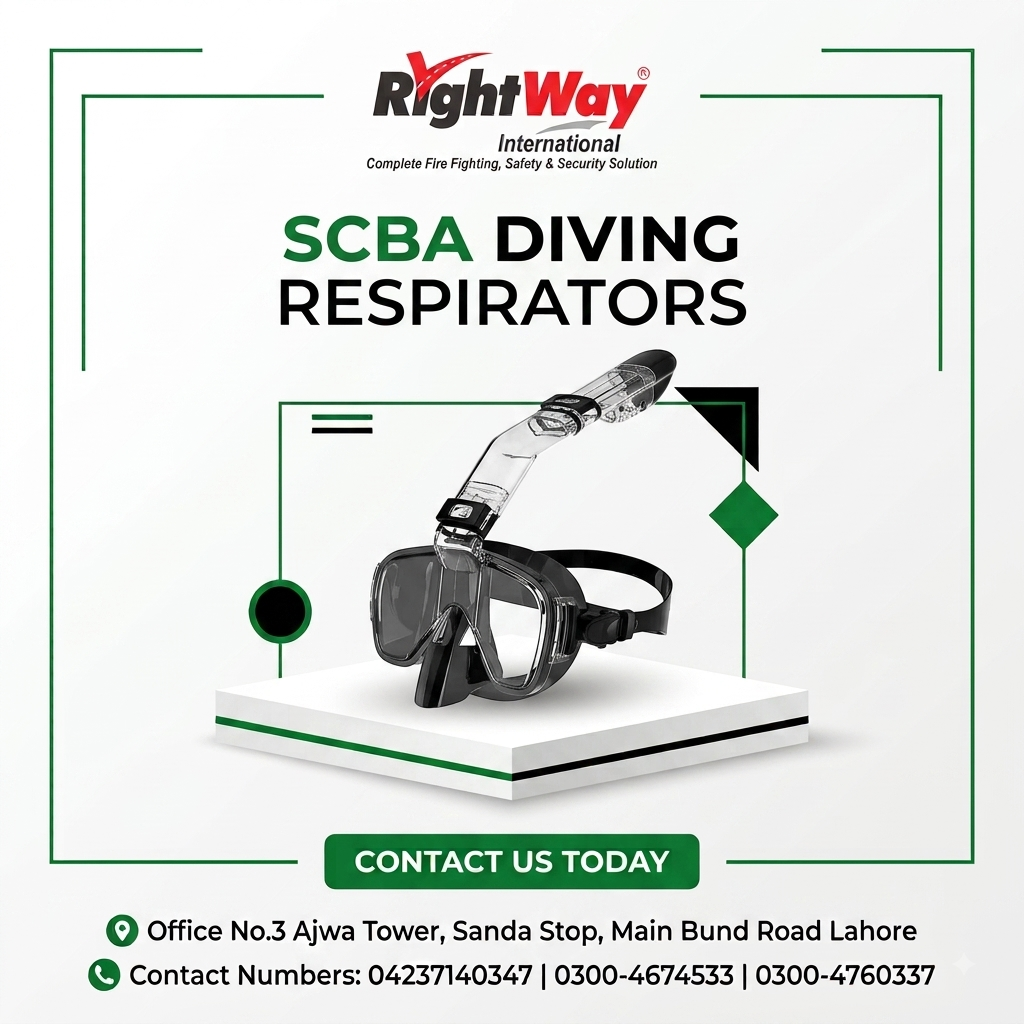
Snorkelling Half Face Scuba Diving Respirator in Pakistan is underwater equipment designed for snorkelling, recreational diving, swimming, and other suitable water-based activities. The exact application depends on the product design, specifications, and manufacturer approval.
A half-face snorkelling mask generally covers the eyes and nose while allowing the user to breathe through a separate mouthpiece and snorkel. In contrast, a full-face snorkelling mask covers a larger portion of the face and uses an integrated breathing system.
However, users should clearly distinguish between snorkelling equipment and scuba-diving equipment. A product designed for surface snorkelling should not automatically be used for scuba diving. Instead, users should confirm the manufacturer’s approved application before using the equipment underwater.
What Is a Snorkelling Half Face Scuba Diving Respirator?
A Snorkelling Half Face Scuba Diving Respirator generally refers to a half-face mask used with appropriate snorkelling or diving equipment. The mask protects the eyes and nose while providing clear underwater vision.
During recreational snorkelling, the user normally breathes through a snorkel while remaining close to the water’s surface. On the other hand, scuba divers use a dedicated regulator connected to a compressed breathing-gas cylinder.
Therefore, the mask and breathing system perform different functions. Users should always select each component according to the intended activity and the manufacturer’s specifications.
How Does a Half Face Diving Mask Work?
First, the user places the mask securely over the eyes and nose. Next, the silicone skirt creates a seal against the face and helps keep water away from the eyes and nose.
During surface snorkelling, the user breathes through a snorkel and mouthpiece. Meanwhile, a scuba diver uses a compatible regulator to receive breathing gas from a diving cylinder.
The mask itself does not generate or purify breathing air. Instead, it provides underwater visibility and creates a sealed area around the eyes and nose.
Therefore, users should consider the mask, snorkel, regulator, and breathing-air source as separate components when selecting diving equipment.
Main Components
A typical half-face snorkelling or diving mask may contain:
- Tempered glass lens
- Flexible silicone face skirt
- Nose pocket
- Adjustable head strap
- Adjustable buckles
- Durable mask frame
- Nose area
- Purge valve where applicable
- Compatible snorkel
- Compatible diving regulator where approved
In addition, manufacturers may use different materials and designs for recreational and professional applications.
For example, quality diving masks commonly use durable materials that can withstand repeated exposure to water, salt, sunlight, and normal recreational use.
Half Face Mask vs Full Face Snorkelling Mask
A half-face snorkelling mask and a full-face snorkelling mask use different designs.
A half-face mask generally covers the eyes and nose. The user then breathes through a separate snorkel and mouthpiece.
In comparison, a full-face snorkelling mask covers a larger portion of the face and incorporates an integrated breathing pathway.
However, users should choose full-face snorkelling equipment carefully. Poor airflow, damaged valves, an incorrect fit, or an unsuitable design can create breathing-related safety concerns.
Therefore, users should follow the manufacturer’s instructions and select equipment that matches the intended activity.
Snorkelling Mask for Surface Swimming
A Snorkelling Half Face Mask works well for suitable surface-snorkelling and swimming activities.
The mask provides underwater visibility while the snorkel allows the user to breathe without lifting the face completely out of the water.
However, users should remain aware of waves, currents, weather conditions, boats, and other water hazards. In addition, they should inspect the mask, strap, snorkel, and mouthpiece before entering the water.
As a result, regular equipment checks can help users identify damaged or worn components before use.
Scuba Diving Mask and Breathing System
For actual scuba diving, users need to distinguish between the diving mask and the breathing system.
A scuba diver normally receives breathing gas through a scuba regulator connected to a pressurized diving cylinder. The regulator reduces the cylinder pressure and delivers breathing gas through the mouthpiece.
Meanwhile, the diving mask creates an air space around the eyes and nose. This space allows the diver to see underwater and equalize pressure through the nose.
Therefore, a normal snorkelling mask cannot replace a scuba regulator. Users should only use equipment for scuba diving when the manufacturer specifically approves the complete system for that purpose.
Benefits of a Half Face Diving Mask
A suitable half-face diving mask can offer several practical benefits.
First, it provides clear underwater visibility. Furthermore, the silicone skirt can create a comfortable seal around the face.
Other benefits include:
- Clear underwater vision
- Comfortable facial seal
- Adjustable head strap
- Compact and lightweight design
- Easy storage and transportation
- Suitable for recreational snorkelling
- Compatibility with suitable snorkels
- Different sizes and designs
- Useful for recreational water activities
However, users should select the correct size and design because a poor fit can cause discomfort and water leakage.
Common Applications
Snorkelling half-face masks and diving masks can support several recreational activities, including:
- Recreational snorkelling
- Surface swimming
- Beach activities
- Pool training
- Underwater sightseeing
- Recreational diving with compatible equipment
- Diving lessons
- Water sports
- Marine tourism
- Underwater photography
Nevertheless, users should always follow the manufacturer’s instructions and use the equipment only for its intended purpose.
How to Choose a Snorkelling Half Face Mask
When selecting a Snorkelling Half Face Mask in Pakistan, buyers should consider several important factors.
1. Mask Fit
First, check the mask fit carefully. The silicone skirt should create a comfortable seal without putting excessive pressure on the face.
2. Lens Quality
Next, examine the lens quality. A suitable diving lens should provide clear underwater visibility. Many quality diving masks use tempered glass lenses.
3. Silicone Skirt
A flexible silicone skirt can improve comfort and help create a reliable seal around the face.
4. Adjustable Strap
An adjustable strap allows the user to achieve a secure and comfortable fit. However, users should avoid tightening the strap excessively.
5. Intended Application
Always check the manufacturer’s intended application.
For example, a mask designed for surface snorkelling should not automatically become a scuba-diving mask. Instead, users should verify the product’s specifications before using it for diving.
6. Equipment Compatibility
Finally, check compatibility between the mask, snorkel, regulator, and other diving equipment.
This step becomes especially important when users intend to combine equipment from different manufacturers.
Snorkelling and Diving Safety
Water activities require careful preparation and appropriate equipment.
Before use, users should:
- Inspect the mask.
- Check the silicone skirt for damage.
- Examine the head strap and buckles.
- Inspect the snorkel and mouthpiece.
- Follow the manufacturer’s instructions.
- Avoid using damaged equipment.
- Never exceed the product’s intended application.
- Check local water and weather conditions.
- Stay within the user’s training and experience.
- Use appropriate scuba equipment for scuba diving.
- Obtain proper scuba-diving training before using scuba equipment.
Furthermore, users should never treat a snorkelling mask as a replacement for a certified scuba breathing system.
Snorkelling Half Face Mask in Pakistan
Snorkelling Half Face Masks in Pakistan can support recreational swimming, surface snorkelling, underwater sightseeing, and other suitable water activities.
When selecting a Snorkelling Half Face Mask in Pakistan, buyers should compare mask size, face seal, lens quality, silicone material, strap adjustment, snorkel compatibility, manufacturer specifications, intended depth, product quality, and safety features.
For scuba diving, buyers should select a suitable scuba diving mask and certified breathing regulator system designed for scuba applications.
Most importantly, buyers should not assume that a mask becomes a scuba respirator simply because it covers the face or connects to a breathing tube.
Snorkelling Half Face Mask Price in Pakistan
The Snorkelling Half Face Mask Price in Pakistan varies according to product design, materials, brand, lens type, accessories, and intended application.
For example, basic recreational snorkelling masks may cost less than professional diving masks or specialized scuba equipment.
Therefore, buyers should compare specifications, quality, durability, and intended use instead of choosing equipment based only on price.
Frequently Asked Questions
What is a Snorkelling Half Face Mask?
A Snorkelling Half Face Mask covers the eyes and nose while allowing the user to breathe through a separate snorkel and mouthpiece.
Can a half-face snorkelling mask be used for scuba diving?
Not necessarily. Users should only use a snorkelling mask for scuba diving when the manufacturer specifically designs and approves it for scuba applications.
Scuba diving requires an appropriate regulator and breathing-gas system.
What is the difference between a snorkelling mask and a scuba mask?
A snorkelling mask normally works with a snorkel for surface breathing. In contrast, a scuba mask works with a scuba regulator that supplies breathing gas from a diving cylinder.
Is a half-face mask better than a full-face snorkelling mask?
The best option depends on the activity, fit, comfort, and product design.
A half-face mask uses a separate breathing mouthpiece, while a full-face snorkelling mask incorporates the breathing system into the mask design.
Therefore, users should choose equipment according to the intended activity and manufacturer instructions.
Can a snorkelling mask be used underwater?
Yes. A suitable snorkelling mask provides underwater visibility. However, a traditional snorkel only supports breathing when the snorkel remains above the water surface.
For deeper underwater breathing, users need an appropriate scuba-diving breathing system.
What should I check before using a diving mask?
Before entering the water, inspect the lens, silicone skirt, strap, buckles, and connected equipment. Also check for cracks, tears, leaks, or other visible damage.
Where can Snorkelling Half Face Masks be used?
They can support recreational snorkelling, swimming, underwater sightseeing, marine tourism, pool activities, and other suitable surface-water activities.
Is a snorkelling mask the same as a breathing apparatus?
No. A snorkelling mask mainly provides underwater visibility and facial protection. A breathing apparatus uses a dedicated breathing-gas source and delivery system.
Therefore, users should never confuse a snorkelling mask with a complete scuba or supplied-air breathing apparatus.
Airline Breathing Apparatus
A properly selected airline breathing apparatus can provide several important benefits.
First, it can provide a continuous supply of breathing air for compatible respiratory protection applications.
In addition, airline respirators can be suitable for extended work periods because the worker does not necessarily have to carry a large breathing-air cylinder.
Furthermore, the remote air source can allow workers to operate in environments where filtering respirators may not provide adequate protection.
Other potential benefits include:
- Continuous breathing-air supply
- Reduced weight compared with cylinder-based systems
- Suitable for extended-duration applications
- Can support hazardous industrial operations
- Compatible with different facepiece configurations
- Can be connected to suitable breathing-air compressors
- Useful for applications requiring supplied-air respiratory protection
However, airline systems can restrict worker movement because the worker remains connected to the breathing-air source through a hose. Read More