




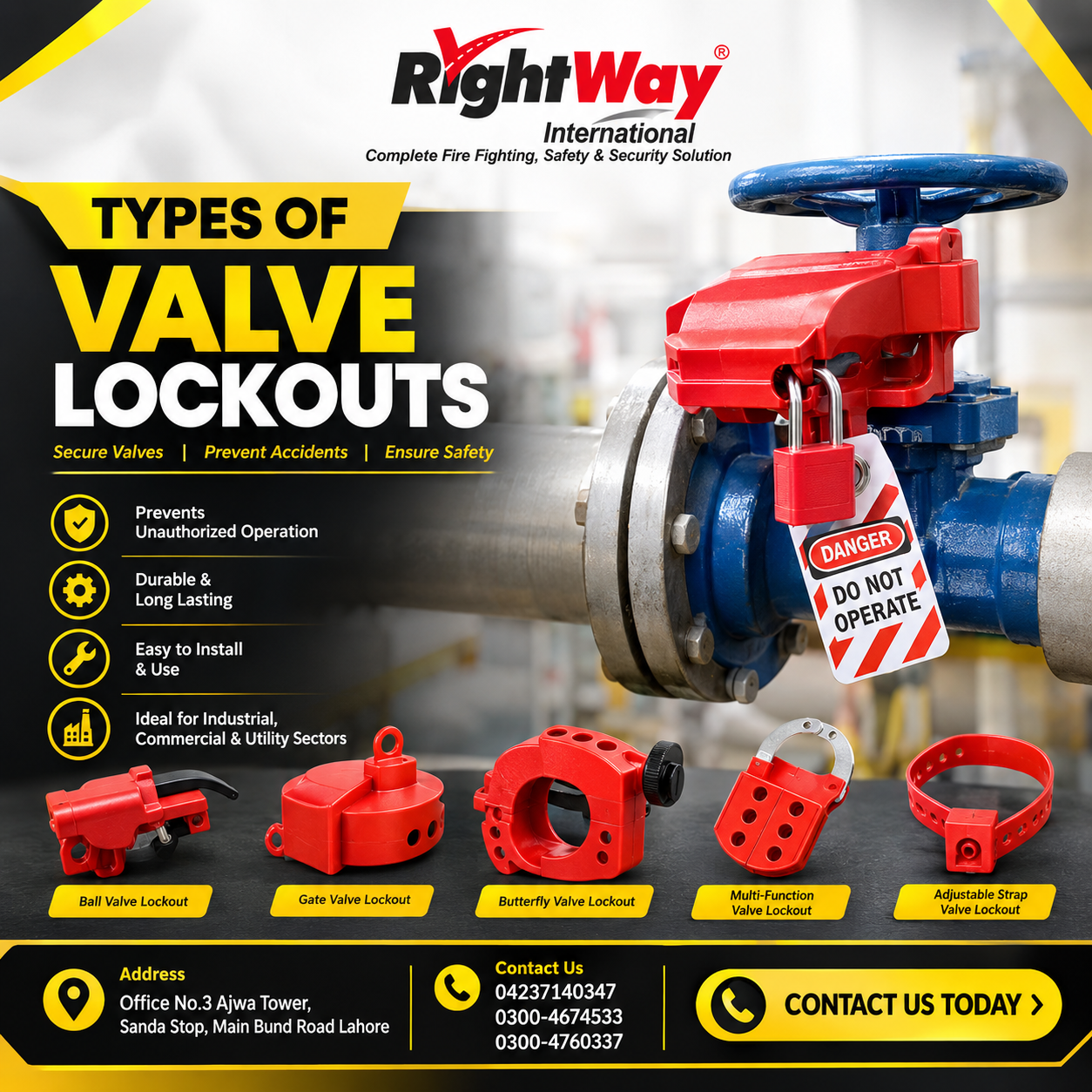
Valve lockouts play an important role in workplace safety, especially when workers maintain or repair equipment that contains hazardous energy. Industrial facilities use different valves to control water, gas, steam, chemicals, fuel, hydraulic pressure, and other energy sources. Therefore, workers need the right Valve Lockout Device to prevent accidental valve operation during maintenance.
A proper Valve Lockout helps workers isolate hazardous energy before they start maintenance work. In addition, it supports a structured Lockout Tagout (LOTO) procedure and helps reduce the risk of unexpected equipment startup, pressure release, or fluid flow.
Because industrial systems use many valve designs, manufacturers provide several Types Of Valve Lockouts. Each type matches a particular valve design and operating method.
This article explains the different types of valve lockouts, their applications, benefits, selection factors, and role in Lockout Tagout procedures.
What Is a Valve Lockout?
A Valve Lockout is a safety device that prevents workers from operating a valve during maintenance, inspection, repair, or servicing.
For example, a worker may need to close a valve before repairing a pipeline. After closing the valve, the worker attaches the appropriate lockout device and secures it with a Safety Padlock. As a result, unauthorized workers cannot easily reopen the valve while maintenance continues.
Valve lockouts support Energy Isolation by physically restricting valve movement. Moreover, workers can combine them with safety tags, lockout hasps, and other LOTO Equipment.
Depending on the valve design, workers may choose a ball valve lockout, gate valve lockout, butterfly valve lockout, plug valve lockout, or another specialized device.
Why Are Valve Lockouts Important?
Industrial valves often control hazardous materials and energy. A sudden valve operation can release pressure, chemicals, steam, gas, water, or other substances.
Therefore, facilities need a reliable Valve Lockout System during maintenance activities.
A valve lockout helps workers:
- Prevent unauthorized valve operation
- Control hazardous energy
- Maintain safe equipment isolation
- Support Lockout Tagout procedures
- Reduce the risk of accidental startup
- Protect maintenance workers
- Improve workplace safety
- Support industrial maintenance safety
- Prevent accidental opening or closing of critical valves
In addition, a clearly identified lockout device helps workers recognize equipment that remains under maintenance.
Types Of Valve Lockouts
Different valve designs require different lockout solutions. Therefore, selecting the correct device starts with identifying the valve type, size, operating method, and surrounding space.
Here are the most common Types Of Valve Lockouts.
1. Ball Valve Lockout
A Ball Valve Lockout secures ball valves and prevents workers from rotating the valve handle.
Ball valves usually control the flow of liquids or gases through pipelines. Their handle rotates between an open and closed position. Consequently, workers need a lockout device that prevents unwanted handle movement.
A Ball Valve Lockout Device fits around or over the valve handle and restricts operation. Workers then attach a safety padlock to secure the device.
Applications of Ball Valve Lockout
Workers commonly use ball valve lockouts in:
- Gas pipelines
- Water systems
- Chemical plants
- Manufacturing facilities
- Oil and gas facilities
- Process plants
- Hydraulic systems
- Industrial pipelines
- Fuel systems
For example, a maintenance worker may isolate a gas line before servicing connected equipment. The worker closes the ball valve, applies the lockout device, attaches a safety padlock, and places the required safety tag.
2. Gate Valve Lockout
A Gate Valve Lockout secures gate valves and prevents unauthorized operation of the valve wheel.
Gate valves commonly appear in industrial water, gas, chemical, steam, and pipeline systems. Their large handwheels require a different lockout design than ball valves.
A Gate Valve Lockout Device normally covers or restricts the valve wheel. As a result, workers cannot easily turn the wheel while the lockout remains in place.
Applications of Gate Valve Lockout
Gate valve lockouts support:
- Water treatment plants
- Chemical facilities
- Oil and gas systems
- Industrial pipelines
- Steam systems
- Manufacturing plants
- Utility systems
- Process industries
Furthermore, facilities can select different sizes to match different gate valve dimensions.
3. Butterfly Valve Lockout
A Butterfly Valve Lockout helps secure butterfly valves and restricts movement of the valve handle.
Butterfly valves use a rotating disc to control fluid flow. Workers often find these valves in water treatment, HVAC, chemical processing, and industrial pipeline systems.
A Butterfly Valve Lockout Device prevents unauthorized movement of the operating handle. Therefore, workers can maintain a safer isolation point during maintenance.
Butterfly Valve Lockout Applications
Workers use butterfly valve lockouts in:
- Water treatment facilities
- Chemical plants
- Manufacturing industries
- HVAC systems
- Industrial pipelines
- Process plants
- Utility systems
Because butterfly valve designs and handle arrangements vary, workers should select a lockout that matches the specific valve.
4. Plug Valve Lockout
A Plug Valve Lockout secures plug valves and prevents unauthorized operation.
Plug valves use a rotating plug to control fluid flow. Industries use them for water, gas, chemical, and process applications.
A Plug Valve Lockout Device restricts movement of the valve operating mechanism. Consequently, workers can maintain the valve in its isolated position during servicing.
Plug Valve Lockout Applications
Common applications include:
- Chemical processing
- Gas systems
- Water systems
- Oil and gas facilities
- Industrial pipelines
- Process equipment
- Manufacturing plants
Workers should always check the valve design and dimensions before selecting a plug valve lockout.
5. Universal Valve Lockout
A Universal Valve Lockout provides a flexible solution for several valve configurations.
Instead of carrying a separate device for every valve design, facilities can use a universal system when the device supports the required valve configuration.
Universal valve lockouts can help secure different valve handles and operating mechanisms. Therefore, they often suit facilities that maintain many types of valves.
Benefits of Universal Valve Lockouts
Universal devices can provide:
- Flexible application
- Reduced equipment requirements
- Easier storage
- Convenient maintenance operations
- Compatibility with multiple valve configurations
However, workers should always verify compatibility before using a universal valve lockout on a particular valve.
6. Adjustable Valve Lockout
An Adjustable Valve Lockout allows workers to adjust the device according to the valve handle or operating mechanism.
This flexibility helps facilities manage valves with different dimensions. In addition, adjustable designs can provide a practical option when fixed-size lockouts do not fit.
Workers should check the manufacturer’s specifications before using an adjustable device because compatibility depends on the valve design.
Adjustable Valve Lockout Applications
Facilities may use adjustable devices for:
- Industrial valves
- Process valves
- Pipeline valves
- Utility systems
- Maintenance operations
- Manufacturing equipment
7. Cable Valve Lockout
A Cable Valve Lockout uses a flexible cable to restrict valve operation.
Cable systems can work well when workers need to secure valves with unusual shapes, multiple operating points, or difficult access.
The worker routes the cable around the required valve mechanism and secures it using the lockout mechanism. Afterward, the worker applies the appropriate safety padlock or hasp.
Advantages of Cable Valve Lockouts
Cable valve lockouts can offer:
- Flexible installation
- Multiple-point isolation
- Convenient operation
- Support for unusual valve configurations
- Compact storage
- Versatile industrial applications
For this reason, cable lockout systems often support maintenance teams that handle a wide range of equipment.
8. Pneumatic Valve Lockout
A Pneumatic Valve Lockout helps isolate pneumatic energy sources and control the operation of pneumatic systems.
Pneumatic equipment uses compressed air to operate machinery and components. Unexpected pressure release can create serious hazards during maintenance.
Therefore, workers must follow an appropriate Hazardous Energy Control procedure before servicing pneumatic equipment.
A pneumatic lockout may work alongside other energy isolation devices to help prevent unexpected activation.
Pneumatic Valve Lockout Applications
Industries may use pneumatic lockout solutions in:
- Manufacturing plants
- Automated production lines
- Packaging facilities
- Industrial machinery
- Pneumatic systems
- Process equipment
Valve Lockout Comparison
Each valve type requires a suitable lockout solution. The following comparison helps explain the common differences:
| Valve Lockout Type | Common Valve | Main Purpose |
|---|---|---|
| Ball Valve Lockout | Ball Valve | Prevent handle rotation |
| Gate Valve Lockout | Gate Valve | Prevent wheel operation |
| Butterfly Valve Lockout | Butterfly Valve | Restrict handle movement |
| Plug Valve Lockout | Plug Valve | Prevent plug rotation |
| Universal Valve Lockout | Multiple valve types | Flexible valve isolation |
| Adjustable Valve Lockout | Various valves | Adjustable fit |
| Cable Valve Lockout | Various configurations | Flexible isolation |
| Pneumatic Valve Lockout | Pneumatic systems | Control pneumatic energy |
Therefore, workers should never select a valve lockout based only on appearance. Instead, they should check the valve type, dimensions, operating mechanism, and manufacturer’s compatibility information.
How Does a Valve Lockout Work?
A valve lockout works by physically restricting the valve’s operating mechanism.
First, the authorized worker identifies the correct energy source and valve.
Next, the worker shuts down the equipment according to the established procedure.
After that, the worker isolates the valve and applies the appropriate lockout device.
Then, the worker attaches a Safety Padlock and identification tag according to the site’s LOTO procedure.
Finally, the worker verifies that the energy isolation remains effective before starting maintenance.
This process helps prevent another person from accidentally operating the isolated valve.
Importance of Valve Lockout in LOTO
Lockout Tagout provides a structured method for controlling hazardous energy during servicing and maintenance.
Valve lockouts form an important part of LOTO when valves serve as energy-isolating devices.
For example, a maintenance team may need to repair a pressurized pipeline. The team can isolate the appropriate valve, apply a valve lockout, attach a safety padlock, and identify the lockout with a tag.
As a result, workers can clearly identify the isolated energy source.
Moreover, facilities can combine valve lockouts with:
- Safety Padlocks
- Lockout Hasps
- Safety Tags
- Lockout Stations
- Electrical Lockout Devices
- Circuit Breaker Lockouts
- Pneumatic Lockouts
- Other LOTO Devices
Benefits of Valve Lockout Devices
A proper Valve Lockout Device provides several workplace safety benefits.
1. Helps Control Hazardous Energy
Valve lockouts help workers control energy sources that flow through pipelines and process systems.
2. Supports Maintenance Safety
Workers can isolate equipment before performing maintenance, inspection, or repair.
3. Reduces Accidental Operation
A physical lockout makes unauthorized valve operation more difficult.
4. Supports LOTO Procedures
Valve lockouts form part of many industrial Lockout Tagout Equipment systems.
5. Improves Identification
Safety tags can identify the person responsible for the lockout and provide important warnings.
6. Supports Workplace Safety
A consistent lockout system helps organizations create safer maintenance practices.
Valve Lockout and Safety Padlock
A Safety Padlock provides the locking point that secures a valve lockout.
Unlike ordinary locks, safety padlocks form part of a controlled lockout system. Facilities often assign individual locks to authorized employees so workers can maintain personal control over their energy isolation.
For example, a worker can install the valve lockout and attach their assigned safety padlock. Therefore, another person cannot simply remove the lock and operate the valve.
Valve Lockout and Lockout Hasp
A Lockout Hasp allows multiple authorized workers to secure the same energy-isolation point.
For instance, if several technicians work on one machine, each technician can attach their own safety padlock to the hasp.
As a result, the team can maintain individual control over the lockout.
Where Are Valve Lockouts Used?
Valve lockouts support many industrial applications.
Common examples include:
- Manufacturing plants
- Chemical industries
- Oil and gas facilities
- Water treatment plants
- Pharmaceutical industries
- Food processing facilities
- Power plants
- HVAC systems
- Construction projects
- Warehouses
- Utility facilities
- Industrial pipelines
- Process plants
Common Valve Applications
Facilities may use valve lockouts for:
- Gas Valve Lockout
- Steam Valve Lockout
- Water Valve Lockout
- Chemical Valve Lockout
- Hydraulic Valve Lockout
- Pneumatic Valve Lockout
- Fuel Valve Lockout
- Process Valve Lockout
- Pipeline Valve Lockout
Each application requires workers to assess the specific energy source and isolation method.
How to Select the Right Valve Lockout
Choosing the right Valve Lockout requires more than selecting a device by name.
First, identify the valve type.
Next, measure the valve handle or operating mechanism when required.
Then, check the lockout device’s dimensions and compatibility.
Also, consider:
- Valve type
- Valve size
- Handle design
- Operating mechanism
- Available installation space
- Environmental conditions
- Required padlock size
- Number of workers
- LOTO procedure
- Manufacturer specifications
For example, a ball valve lockout may not suit a large gate valve. Similarly, a standard fixed lockout may not provide enough flexibility for an unusual valve configuration.
Therefore, proper selection improves the effectiveness of the overall Valve Lockout System.
Valve Lockout Safety Procedure
Workers should follow the facility’s approved Lockout Procedure whenever they isolate hazardous energy.
A typical procedure includes:
Step 1: Identify the Energy Source
Determine which valve controls the hazardous energy.
Step 2: Notify Affected Workers
Inform workers that maintenance will take place.
Step 3: Shut Down the Equipment
Follow the approved shutdown procedure.
Step 4: Isolate the Valve
Close or otherwise position the valve according to the energy control procedure.
Step 5: Apply the Valve Lockout
Install the correct lockout device on the valve.
Step 6: Apply the Safety Padlock
Secure the lockout with the authorized worker’s padlock.
Step 7: Attach the Safety Tag
Clearly identify the lockout and provide the required warning information.
Step 8: Release or Control Stored Energy
Address pressure, trapped fluid, compressed air, or other stored energy according to the site’s procedure.
Step 9: Verify Isolation
Confirm that the equipment cannot start or receive the hazardous energy before maintenance begins.
Step 10: Complete the Maintenance Work
Perform the required servicing while maintaining the energy isolation.
Step 11: Remove the Lockout Safely
After completing the work, follow the approved procedure to inspect the area, confirm worker safety, and remove the lockout.
OSHA and Valve Lockout
OSHA’s Lockout/Tagout requirements under 29 CFR 1910.147 address the control of hazardous energy during servicing and maintenance.
The standard focuses on preventing unexpected energization, startup, or release of stored energy that could injure workers.
Under an effective energy-control program, employers establish procedures, training, inspections, and appropriate energy-isolating methods.
Therefore, facilities should select valve lockout equipment that supports their documented Energy Control Procedure and the specific hazards of their equipment.
OSHA also addresses requirements for lockout and tagout devices, including durability, standardization, and identification.
Valve Lockout for Industrial Applications
Industrial facilities often manage several energy sources at the same time. Consequently, maintenance teams need a coordinated Industrial Lockout Tagout system.
For example, one machine may involve:
- Electrical energy
- Pneumatic pressure
- Hydraulic pressure
- Steam
- Water
- Gas
- Chemical flow
- Mechanical energy
A valve lockout addresses the valve-controlled energy source, while other LOTO devices address additional energy sources.
Therefore, workers should never assume that locking one valve automatically makes the entire machine safe. Instead, they should identify and control every applicable hazardous energy source.
Valve Lockout Maintenance
Facilities should inspect their lockout equipment regularly.
Workers should check for:
- Cracks
- Broken components
- Excessive wear
- Deformation
- Corrosion
- Damaged locking points
- Missing components
- Difficult operation
If a device shows damage that could affect its performance, remove it from service and follow the company’s replacement procedure.
In addition, store valve lockouts in a clean and accessible location. A dedicated Lockout Station can help workers find the required LOTO equipment quickly.
Valve Lockout in Pakistan
Industrial organizations in Pakistan use valve lockout equipment in manufacturing, construction, oil and gas, chemical processing, water treatment, power generation, and other industries.
Companies looking for Valve Lockout in Pakistan should consider product quality, compatibility, durability, availability, and technical support.
When purchasing Valve Lockout Pakistan products, buyers should compare the device specifications with the valves used at their facility.
Common search requirements include:
- Valve Lockout Supplier in Pakistan
- Valve Lockout Manufacturer Pakistan
- Valve Lockout Price in Pakistan
- LOTO Equipment Pakistan
- Lockout Tagout Equipment Pakistan
- Lockout Devices Pakistan
- Industrial Safety Equipment Pakistan
- Industrial Safety Products Pakistan
- Safety Equipment Pakistan
The correct product should always match the actual valve and the facility’s LOTO requirements.
Frequently Asked Questions
What are the main types of valve lockouts?
The main types include Ball Valve Lockout, Gate Valve Lockout, Butterfly Valve Lockout, Plug Valve Lockout, Universal Valve Lockout, Adjustable Valve Lockout, Cable Valve Lockout, and Pneumatic Valve Lockout.
What is a Ball Valve Lockout?
A Ball Valve Lockout prevents unauthorized movement of a ball valve handle during maintenance and energy isolation.
What is a Gate Valve Lockout?
A Gate Valve Lockout restricts operation of a gate valve handwheel and helps maintain the valve in its isolated position.
What is a Butterfly Valve Lockout?
A Butterfly Valve Lockout restricts movement of a butterfly valve handle and supports safe valve isolation during maintenance.
What is a Universal Valve Lockout?
A Universal Valve Lockout provides a flexible solution for securing compatible valve configurations with one adjustable system.
Why do workers use valve lockouts?
Workers use valve lockouts to help prevent unauthorized valve operation and support hazardous energy control during maintenance.
Can a valve lockout work with a safety padlock?
Yes. Compatible valve lockout devices typically include a locking point where an authorized worker can attach a safety padlock.
Can multiple workers lock the same valve?
Yes, when the lockout system supports a Lockout Hasp or another suitable multi-worker arrangement. Each authorized worker should maintain control through their assigned lock according to the site’s LOTO procedure.
How do I select the right valve lockout?
Start by identifying the valve type, size, operating mechanism, and available space. Then compare those details with the manufacturer’s compatibility specifications.
Where can I buy valve lockout equipment in Pakistan?
Businesses can source Valve Lockout Pakistan products from industrial safety equipment suppliers. Before purchasing, compare specifications, quality, compatibility, and supplier support.
Conclusion
Understanding the Types Of Valve Lockouts helps industries choose the right equipment for hazardous energy control.
Ball valve lockouts, gate valve lockouts, butterfly valve lockouts, plug valve lockouts, universal valve lockouts, adjustable valve lockouts, cable valve lockouts, and pneumatic valve lockout solutions each serve different applications.
However, selecting the correct device represents only one part of effective LOTO. Workers must also follow the facility’s Lockout Tagout Procedure, control all applicable hazardous energy sources, use appropriate safety padlocks and tags, and verify isolation before maintenance begins.
Therefore, a properly planned Valve Lockout System can support safer maintenance operations and stronger workplace safety practices.