




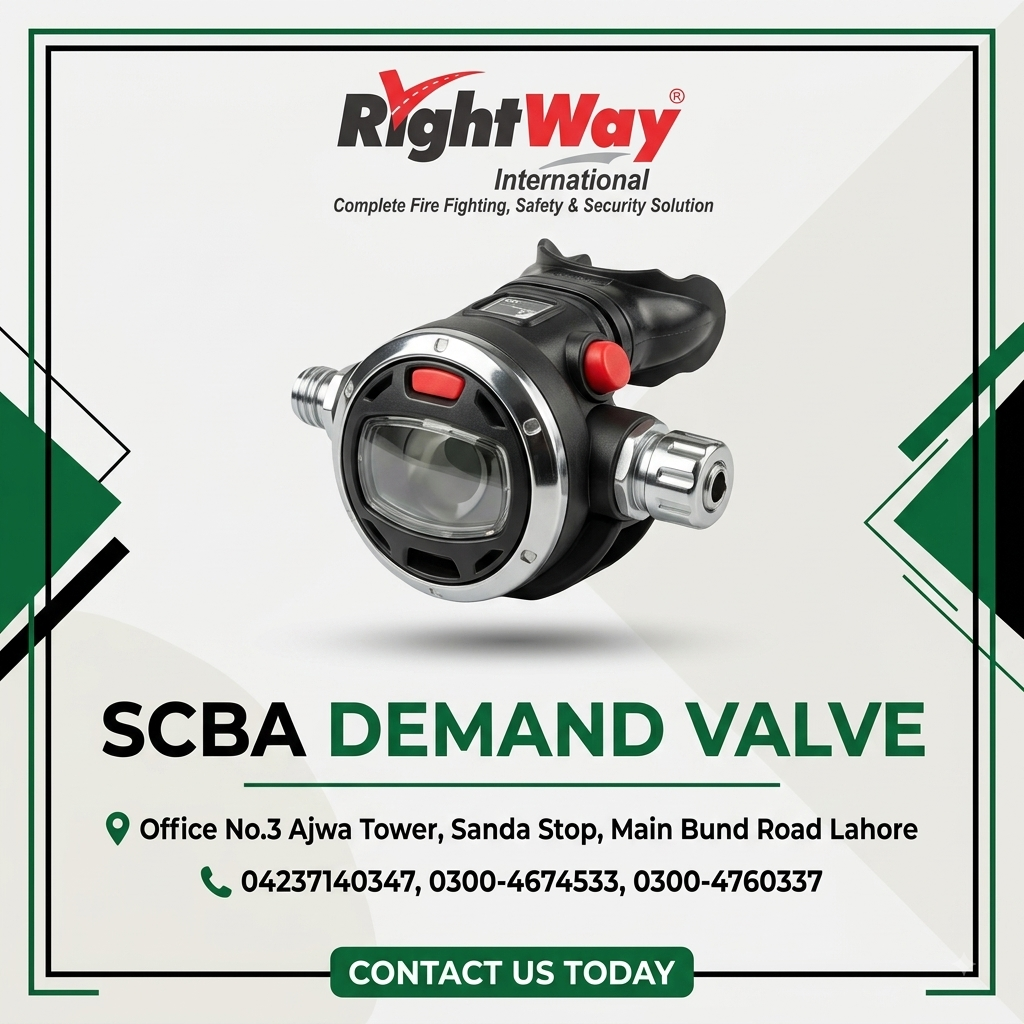
SCBA Demand Valve in Pakistan is a critical component of a Self-Contained Breathing Apparatus (SCBA) that delivers breathing air to the user when the wearer inhales. It is designed to provide breathing air from the SCBA cylinder through a controlled pressure-reduction and delivery system.
SCBA demand valves are commonly used by firefighters, emergency responders, industrial workers, rescue teams, and personnel working in environments where the surrounding atmosphere may be contaminated, oxygen-deficient, or otherwise unsafe to breathe.
However, an SCBA demand valve should not be considered a complete breathing apparatus by itself. It is one component of a complete SCBA system that normally includes an air cylinder, cylinder valve, pressure regulator, demand valve, facepiece or mask, pressure gauge, and other safety components.
What Is an SCBA Demand Valve?
An SCBA Demand Valve is the component that supplies breathing air to the wearer according to their breathing demand.
When the user inhales, the demand valve responds by allowing compressed breathing air to flow into the facepiece. When the user stops inhaling, the valve reduces or stops the airflow.
Therefore, the demand valve helps provide breathing air when it is required instead of continuously releasing air at a constant rate.
The exact operating pressure, airflow characteristics, connection type, and compatibility depend on the SCBA manufacturer and model.
How Does an SCBA Demand Valve Work?
The working principle of an SCBA Demand Valve is based on the user’s breathing demand.
First, compressed breathing air is stored inside the SCBA cylinder. The air passes through the cylinder valve and pressure-reduction system.
Next, the reduced-pressure air reaches the demand valve. When the wearer inhales, a pressure difference is created inside the facepiece.
The demand valve detects this change and opens to supply breathing air to the wearer.
When inhalation stops, the pressure inside the facepiece changes again and the valve returns toward its closed position.
As a result, the demand valve helps deliver breathing air according to the user’s respiratory demand.
Main Components of an SCBA Demand Valve
A typical SCBA Demand Valve may include several precision components designed to control breathing-air delivery.
Common components may include:
- Demand valve housing
- Inlet connection
- Air outlet connection
- Diaphragm
- Valve mechanism
- Springs
- Sealing elements
- Breathing-air flow control mechanism
- Connection or locking mechanism
- Positive-pressure mechanism where applicable
- Manufacturer-specific adjustment components
The exact internal construction varies between SCBA manufacturers and models.
For this reason, users should not disassemble, modify, or repair a demand valve unless they are authorized and properly trained to service that specific equipment.
SCBA Demand Valve vs Pressure Regulator
An SCBA pressure regulator and an SCBA demand valve perform different functions.
The pressure regulator reduces the very high pressure stored inside the SCBA cylinder to a lower working pressure suitable for the breathing-air system.
On the other hand, the demand valve controls the delivery of breathing air to the wearer according to inhalation demand.
Therefore, both components work together but should not be considered interchangeable.
A complete SCBA system requires the correct combination of components specified by the manufacturer.
SCBA Demand Valve and Positive Pressure
Many modern firefighter and industrial SCBA systems use a positive-pressure facepiece and demand valve system.
In a positive-pressure SCBA, the breathing system is designed to maintain pressure inside the facepiece above the surrounding atmosphere under normal operating conditions.
This design can help reduce the potential for contaminated air to enter through small facepiece leakage points.
However, positive-pressure performance depends on the complete SCBA system, proper facepiece fit, equipment condition, and correct operation.
Therefore, users should always follow the manufacturer’s instructions and applicable respiratory-protection requirements.
SCBA Demand Valve for Firefighters
Firefighters frequently use SCBA Demand Valves while operating in smoke-filled or hazardous environments.
During structural firefighting, the surrounding atmosphere may contain smoke, toxic gases, particulate matter, and insufficient oxygen.
An SCBA provides an independent breathing-air supply so trained firefighters can operate without relying on the surrounding atmosphere.
The demand valve plays an important role by supplying breathing air when the firefighter inhales.
Consequently, reliable demand-valve performance is an important part of overall SCBA operation.
SCBA Demand Valve for Industrial Applications
SCBA Demand Valves can also be used in industrial emergency-response and respiratory-protection applications where approved SCBA systems are required.
Potential applications include:
- Chemical processing facilities
- Oil and gas facilities
- Refineries
- Petrochemical plants
- Manufacturing facilities
- Industrial maintenance
- Confined-space rescue
- Emergency response teams
- Fire and rescue services
- Hazardous-material response
- Industrial rescue operations
- Emergency evacuation activities
The appropriate respiratory-protection equipment depends on the specific workplace hazards and applicable regulations.
Benefits of an SCBA Demand Valve
A properly functioning SCBA Demand Valve can provide several important operational benefits.
These may include:
- Demand-based breathing-air delivery
- Controlled airflow
- Integration with approved SCBA systems
- Support for positive-pressure breathing systems where applicable
- Reliable breathing-air delivery
- Reduced unnecessary airflow compared with continuous-flow systems
- Compact design
- Ergonomic operation
- Compatibility with designated SCBA facepieces
- Suitable operation in demanding emergency environments when properly certified and maintained
However, these benefits depend on using the correct demand valve with the SCBA system for which it was designed.
SCBA Demand Valve Maintenance
Regular inspection and maintenance are essential for respiratory-protection equipment.
Before use, trained personnel should inspect the demand valve for visible damage, contamination, worn seals, loose connections, or other abnormalities.
Users should also check:
- Valve housing condition
- Connection mechanism
- Seals and O-rings where applicable
- Airflow operation
- Facepiece connection
- Locking mechanism
- Signs of contamination
- Unusual air leakage
- Manufacturer-required inspection indicators
If a demand valve does not operate correctly, it should be removed from service and inspected by an appropriately qualified technician.
Never attempt unauthorized modifications because even a small change can affect breathing-air performance.
SCBA Demand Valve Testing
SCBA demand valve testing should follow the manufacturer’s service procedures and applicable respiratory-protection standards.
Testing may involve checking airflow, pressure, leakage, valve operation, positive-pressure performance where applicable, and other manufacturer-specified parameters.
Professional servicing may require specialized testing equipment.
Therefore, organizations should establish a documented inspection, maintenance, and testing program for SCBA equipment.
How to Choose an SCBA Demand Valve
When selecting an SCBA Demand Valve, buyers should consider several important factors.
1. SCBA Compatibility
First, verify that the demand valve is specifically compatible with the SCBA model being used.
Do not assume that two demand valves are interchangeable simply because their connections appear similar.
2. Manufacturer Specifications
Next, check the manufacturer’s technical specifications, operating pressure, connection type, airflow characteristics, and approved applications.
3. Facepiece Compatibility
The demand valve must be compatible with the designated SCBA facepiece.
A mismatch between the valve and facepiece can affect system performance.
4. Positive-Pressure Compatibility
If the SCBA uses positive-pressure technology, confirm that the demand valve is designed for that particular system.
5. Certification and Standards
Buyers should verify the applicable certification, approval, and standards associated with the complete SCBA system and its components.
6. Replacement Parts
Finally, check the availability of genuine replacement parts, seals, service kits, and authorized maintenance support.
Using manufacturer-approved components can help maintain the intended performance of the breathing apparatus.
SCBA Demand Valve Safety
An SCBA Demand Valve is part of life-support respiratory equipment, so safety should always be the priority.
Before using SCBA equipment, trained personnel should:
- Inspect the complete SCBA system.
- Check the cylinder pressure.
- Inspect the facepiece.
- Examine the demand valve.
- Check all connections.
- Follow the manufacturer’s operating instructions.
- Confirm that the equipment is within its inspection and service requirements.
- Never use damaged equipment.
- Never modify the demand valve.
- Use only compatible components.
- Receive appropriate SCBA training.
- Follow workplace respiratory-protection procedures.
Furthermore, SCBA equipment should be used only by personnel who have received appropriate training for the specific system.
SCBA Demand Valve for Confined Space Rescue
Confined-space rescue can involve atmospheres that are oxygen-deficient, toxic, or otherwise immediately dangerous.
In situations where an appropriate SCBA is required, the demand valve helps deliver breathing air from the apparatus to the wearer.
However, SCBA selection for confined-space work should be based on the identified hazards, atmospheric testing, rescue procedures, training, and applicable safety requirements.
An SCBA demand valve alone does not make an environment safe.
SCBA Demand Valve for Emergency Response
Emergency-response teams may require SCBA equipment when responding to fires, chemical incidents, hazardous-material releases, or other atmospheric hazards.
The demand valve provides the breathing-air interface between the SCBA’s air supply system and the facepiece.
Therefore, emergency teams should ensure that SCBA systems are properly inspected, maintained, stored, and ready for use.
SCBA Demand Valve Price in Pakistan
The SCBA Demand Valve Price in Pakistan varies according to manufacturer, SCBA compatibility, model, certification, materials, availability, and whether the product is an original replacement component or part of a complete SCBA system.
Specialized demand valves from recognized manufacturers may cost more than generic or incompatible alternatives.
Therefore, buyers should compare compatibility, certification, manufacturer specifications, service support, replacement-part availability, and product quality rather than choosing a demand valve based only on price.
SCBA Demand Valve in Pakistan
SCBA Demand Valves in Pakistan are relevant to firefighting departments, industrial emergency-response teams, rescue organizations, hazardous-material teams, and other users of approved SCBA systems.
When purchasing an SCBA Demand Valve in Pakistan, buyers should provide the exact SCBA manufacturer and model whenever possible.
This information helps suppliers identify the correct replacement component and avoid compatibility problems.
For critical respiratory-protection equipment, buyers should prioritize genuine, manufacturer-approved components and appropriate technical support.
Common Applications of SCBA Demand Valves
SCBA Demand Valves are commonly associated with:
- Firefighting
- Fire and rescue operations
- Industrial emergency response
- Confined-space rescue
- Hazardous-material response
- Chemical emergency response
- Oil and gas facilities
- Refineries
- Petrochemical facilities
- Industrial rescue teams
- Emergency response teams
- Disaster response
- Smoke-filled environments
- Oxygen-deficient environments
- IDLH environments where an approved SCBA is required
The exact application depends on the certification and approval of the complete SCBA system.
Frequently Asked Questions
What is an SCBA Demand Valve?
An SCBA Demand Valve is a breathing-air delivery component that supplies air to the wearer when the wearer inhales.
What does an SCBA demand valve do?
It controls breathing-air delivery from the SCBA pressure-reduction system to the facepiece according to the user’s breathing demand.
Is an SCBA demand valve a regulator?
A demand valve and pressure regulator perform different functions. The pressure regulator reduces cylinder pressure, while the demand valve controls breathing-air delivery to the wearer.
Can any SCBA demand valve fit any SCBA mask?
No. Demand valves are not universally interchangeable. The valve must be compatible with the specific SCBA facepiece and breathing-air system.
What is a positive-pressure SCBA demand valve?
A positive-pressure demand valve is designed to work with an SCBA system that maintains positive pressure inside the facepiece under normal operating conditions.
Where are SCBA demand valves used?
They are used as part of approved SCBA systems for firefighting, emergency response, hazardous-material operations, industrial rescue, and other environments requiring respiratory protection.
How often should an SCBA demand valve be serviced?
Service intervals depend on the manufacturer and applicable requirements. Users should follow the specific inspection, maintenance, and testing schedule provided for the SCBA system.
Can I repair an SCBA demand valve myself?
SCBA demand valves should not be modified or repaired by untrained personnel. Inspection and servicing should be performed according to the manufacturer’s procedures by appropriately qualified technicians.
What should I check before using an SCBA demand valve?
Check the complete SCBA system, including the demand valve, facepiece, connections, cylinder pressure, seals, and other components according to the manufacturer’s pre-use inspection procedure.
Is an SCBA demand valve the same as a breathing apparatus?
No. An SCBA demand valve is only one component of a complete Self-Contained Breathing Apparatus. The complete system normally includes a cylinder, cylinder valve, pressure regulator, demand valve, facepiece, pressure indicators, and other components.
Snorkelling Half Face Scuba Diving Respirator
Benefits of a Half Face Diving Mask
A suitable half-face diving mask can offer several practical benefits.
First, it provides clear underwater visibility. Furthermore, the silicone skirt can create a comfortable seal around the face.
Other benefits include:
- Clear underwater vision
- Comfortable facial seal
- Adjustable head strap
- Compact and lightweight design
- Easy storage and transportation
- Suitable for recreational snorkelling
- Compatibility with suitable snorkels
- Different sizes and designs
- Useful for recreational water activities
However, users should select the correct size and design because a poor fit can cause discomfort and water leakage. Read More