




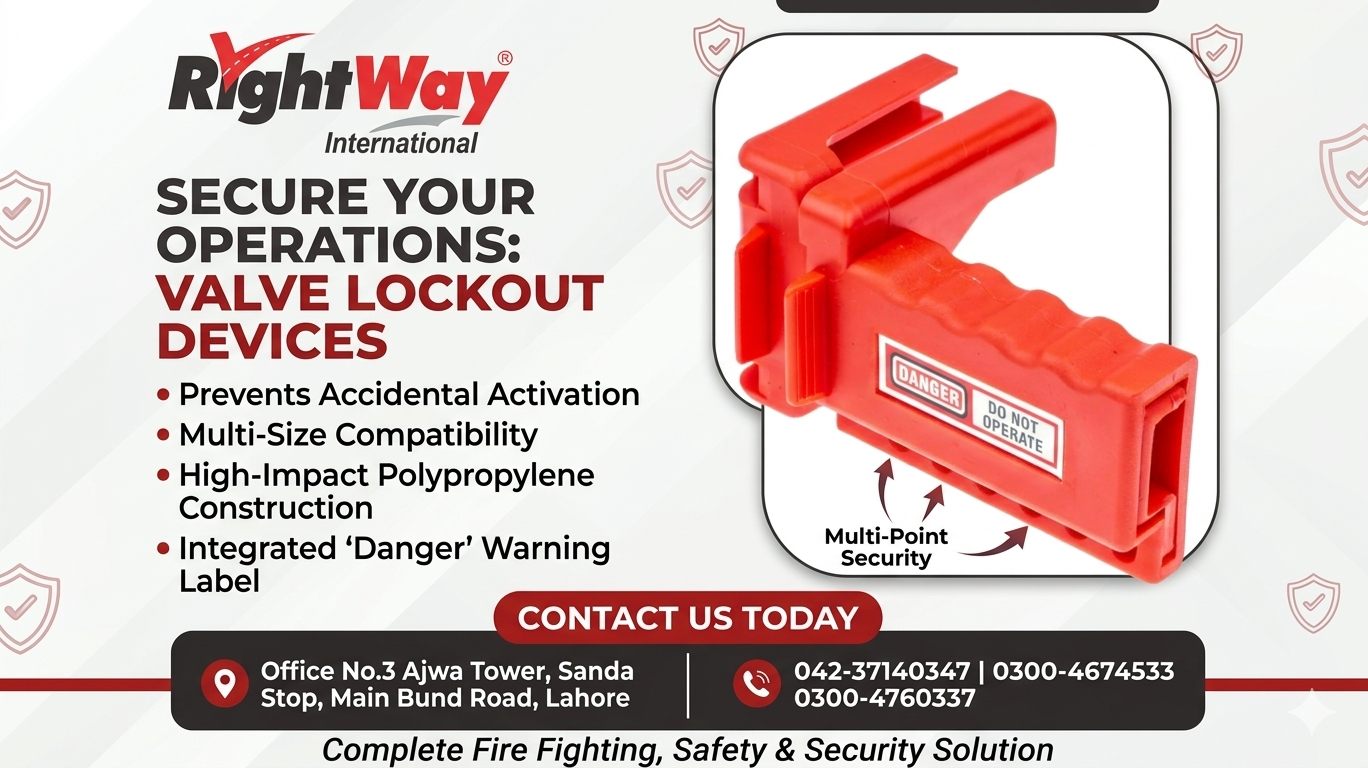
Valve Lockout Devices serve as fundamental components of industrial Lockout/Tagout (LOTO) programs. Safety professionals specifically design these specialized tools to isolate hazardous energy by physically preventing the movement of valves. Consequently, they prevent the accidental release of liquids, gases, or steam during maintenance, repair, or inspection.
By securing a valve in the “OFF” or “Closed” position, these devices protect personnel from chemical burns, high-pressure injections, and exposure to toxic substances. Furthermore, OSHA 29 CFR 1910.147 regulations require that employers neutralize all hazardous energy sources. Therefore, safety managers utilize valve lockouts as a reliable, standardized method to achieve compliance while prioritizing worker life safety.
What Is a Valve Lockout Device?
A valve lockout is a mechanical safety device that technicians fit over or around a valve handle or operating mechanism. Once a worker installs it, the device prevents the handle from turning or moving. Most designs feature multiple holes for safety padlocks. As a result, the system remains locked until every authorized worker removes their individual lock.
Common Applications Include:
- Oil and gas refinery maintenance
- Chemical processing plant shutdowns
- Water treatment facility repairs
- Boiler and steam system isolation
- Compressed air system servicing
- Pharmaceutical manufacturing safety
- Food and beverage line cleaning
Types of Valve Lockout Devices
Because valves come in various shapes—from small quarter-turn balls to massive rising-stem gates—technicians require specialized lockout hardware for each type.
1. Ball Valve Lockout
Safety teams use these to secure the lever of a ball valve in the closed position.
- Mechanism: These usually feature a two-part design that “sandwiches” the lever. Alternatively, some use a wedge-style block that prevents the handle from turning entirely.
2. Gate Valve Lockout
These circular, “clamshell” devices fit over the rotating handwheel of a gate valve.
- Specifically: Once the technician closes the device, it rotates freely around the wheel. Consequently, the valve cannot be turned even if someone attempts to force it.
3. Butterfly Valve Lockout
Manufacturers design these specifically for the unique handles of butterfly valves.
- Function: These slide onto the squeeze-trigger handle. Therefore, they make it impossible to pull the trigger and rotate the valve disc.
4. Universal Cable Lockout
This tool is the most versatile in a LOTO kit. It consists of a rugged handle and a multi-strand steel cable.
- Advantage: Technicians thread the cable through multiple valves or irregularly shaped handles. This makes them ideal for complex manifolds or large gate valves.
Technical Specifications
| Specification | Details |
| Material | Zenex™ Thermoplastic, Polypropylene, or Coated Steel |
| Temperature Range | -40°C to 150°C (depending on material) |
| Chemical Resistance | Resistant to oils, acids, and industrial solvents |
| Lock Hole Diameter | Standard 7mm – 9mm (Fits most safety padlocks) |
| Compliance | OSHA 1910.147, ANSI Z244, ISO 9001 |
Key Features and Advantages
- Extreme Durability: High-impact polymers withstand harsh outdoor environments and extreme temperatures.
- Universal Fit: Many devices feature adjustable parts. This allows them to fit a wide range of valve sizes with a single piece of hardware.
- High-Visibility Safety: Manufacturers usually produce these in “Safety Red.” This serves as a clear visual deterrent to unauthorized operation.
- Multi-Worker Access: Integrated holes allow for multiple padlocks. Furthermore, workers can use a lockout hasp for group maintenance tasks.
How to Select the Right Valve Lockout
To choose the correct device, you should follow these steps:
- Identify Valve Type: First, determine if it is a Gate, Ball, Butterfly, or Plug valve.
- Measure the Handle: Next, measure the diameter of the handwheel for gate valves. For ball valves, measure the length and thickness of the lever.
- Check for Obstructions: Additionally, ensure there is enough clearance around the pipe for the device to fit.
- Assess the Fluid: Finally, choose heavy-duty nylon or stainless steel components if you work with high-temperature steam or corrosive chemicals.
Frequently Asked Questions (FAQs)
Can a worker use a valve lockout in the ‘Open’ position?
While LOTO primarily focuses on isolation (closed), some maintenance procedures require a valve to stay open. Specialized devices exist for this; however, you must label them clearly.
Is one device enough for a team of five workers?
No. OSHA standards require that each worker applies their own personal padlock to the lockout device. Therefore, a team should use a hasp to ensure every individual maintains control over their own safety.
Are plastic valve lockouts strong enough?
Yes. Modern engineering-grade plastics provide a non-conductive, lightweight, and nearly indestructible solution under normal industrial conditions.