




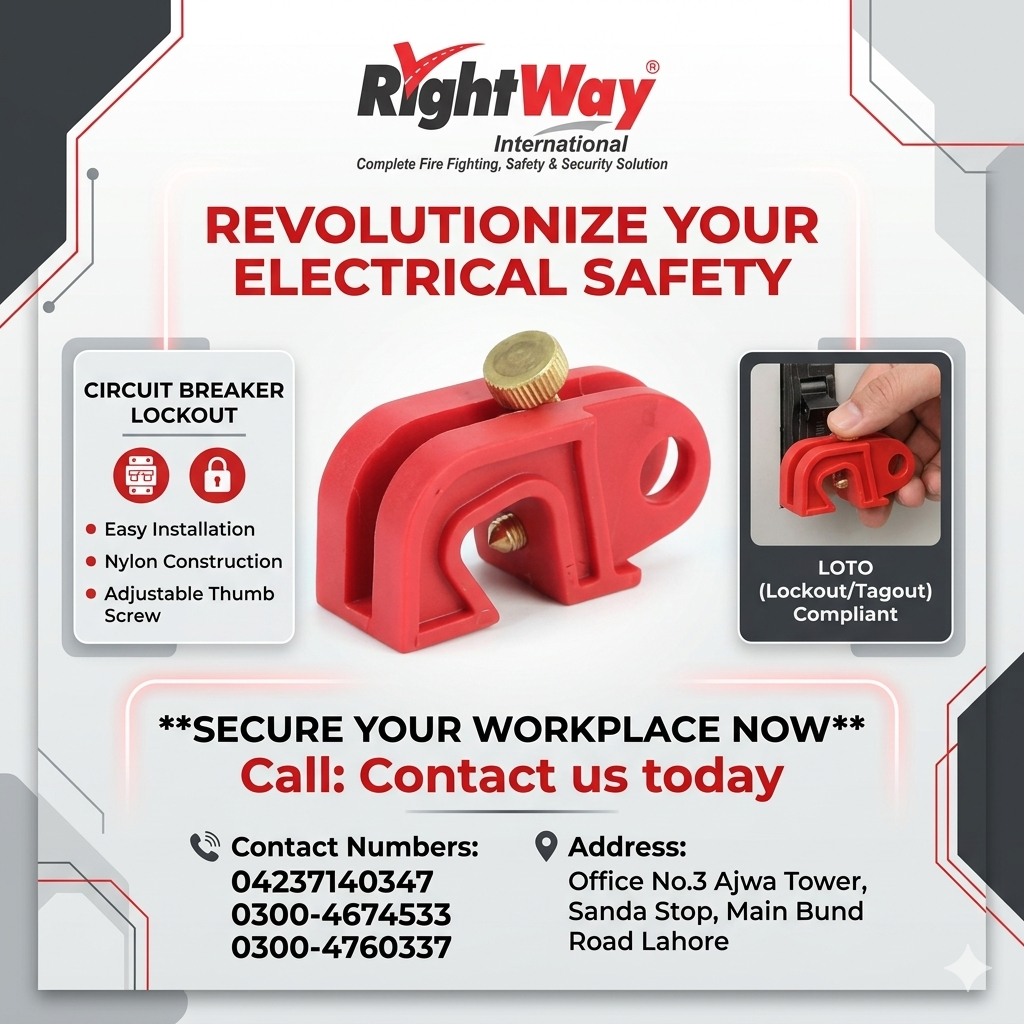
Circuit Breaker Lockout (CBL) devices serve as fundamental components of industrial Lockout/Tagout (LOTO) programs. Safety professionals design these specialized tools to isolate electrical energy at the source. Consequently, they prevent the accidental re-energization of circuits during maintenance, repair, or inspection. By physically securing a breaker in the “OFF” position, these devices protect personnel from electrocution, arc flashes, and unexpected machinery startups.
Furthermore, compliance with OSHA 29 CFR 1910.147 and NFPA 70E standards requires that employers neutralize all hazardous energy sources. Therefore, circuit breaker lockouts provide a reliable, standardized method to achieve this compliance while prioritizing worker life safety.
What Is a Circuit Breaker Lockout?
A circuit breaker lockout is a mechanical device that attaches to the toggle or handle of a circuit breaker. Once a technician installs it, the device physically blocks the switch from moving to the “ON” position. Most designs feature a hole for a safety padlock, ensuring that only the authorized worker performing the maintenance can restore power.
Common Applications Include:
- Industrial switchgear maintenance
- Commercial electrical panel servicing
- HVAC system repairs
- Routine machinery inspections
- Emergency electrical isolation
- NFPA 70E compliant safety programs
The Role of Circuit Breaker Lockouts in NFPA 70E Compliance
NFPA 70E, the Standard for Electrical Safety in the Workplace, emphasizes the creation of an “Electrically Safe Work Condition.” To maintain this condition, safety managers rely on circuit breaker lockouts as their primary tools.
Key Regulatory Requirements:
- Exclusivity: Workers must never use lockout devices for any purpose other than controlling energy.
- Durability: The hardware must withstand harsh environments, including heat, moisture, and chemicals.
- Standardization: Facilities should maintain uniform lockout hardware in terms of color, shape, or size.
- Identification: Every lockout must clearly identify the specific authorized employee who applied it.
Types of Circuit Breaker Lockout Devices
Because circuit breakers vary in shape—ranging from tiny residential toggles to massive industrial molded-case breakers—technicians require specialized lockout devices for each type.
1. Miniature Circuit Breaker (MCB) Lockouts
Manufacturers design these for small breakers typically found in control panels.
- Specifically: These often feature “pin-out” or “pin-in” designs that require no tools for installation.
2. Universal Large Handle Lockouts
These secure large or irregularly shaped breaker handles.
- Mechanism: The device uses a “base rail” and a blocking bar to physically obstruct the handle.
3. Clamp-On Breaker Lockouts
As the most versatile type of lockout, these feature a robust thumb-screw mechanism.
- Advantage: These provide an extremely secure grip and usually include a “cleat” for breakers with long throws.
4. Multi-Pole Breaker Lockouts
Safety teams use these specifically for breakers where a bar ties two or three poles together.
- Function: The wide grip range easily accommodates the tie-bar.
Technical Specifications
| Specification | Details |
| Material | Reinforced Nylon, Polycarbonate, Stainless Steel |
| Dielectric Strength | Non-conductive (Nylon models) |
| Temperature Range | -40°C to 120°C |
| Lock Hole Diameter | Standard 7mm – 8mm (Fits most safety padlocks) |
| Chemical Resistance | Resistant to oils, grease, and common solvents |
| Compliance | OSHA 1910.147, NFPA 70E, ISO 9001 |
Key Features and Advantages
- Non-Conductive Materials: Most CBLs consist of high-strength nylon or plastic. Consequently, they prevent electrical arcing during installation.
- Easy Installation: Modern designs utilize “tool-free” technology. This allows workers to secure a circuit in seconds using thumb screws or spring-loaded pins.
- Visual Deterrent: Bright “Safety Red” colors serve as a high-visibility warning that someone is servicing the equipment.
- Zero-Access Security: Once the worker applies the padlock, the device covers the screw or clamp. This prevents unauthorized removal or tampering.
Safety Lockout Hasp
A safety lockout hasp is a lockout device designed to allow multiple padlocks to secure one isolation point. It ensures that machinery or electrical systems cannot be restarted until every authorized worker removes their personal lock.
Lockout hasps are commonly used in:
- Electrical lockout systems
- Mechanical maintenance
- Industrial machinery servicing
- Valve lockout procedures
- Group lockout applications
- NFPA 70E electrical safety programs
- OSHA-compliant LOTO procedures
How to Select the Right Breaker Lockout
To choose the correct device, follow these steps:
- Measure the Toggle: Determine the width and thickness of the breaker switch.
- Identify Tie-Bars: Check if the system uses a single-pole or multi-pole breaker.
- Assess the Environment: If you work in a corrosive or high-heat area, select stainless steel or reinforced polymers.
- Verify Compatibility: Ensure your device matches the specific brand (e.g., Square D, ABB, Siemens).
Frequently Asked Questions (FAQs)
Can I use a normal padlock with a breaker lockout?
Although it is physically possible, safety experts strongly recommend using a dedicated LOTO Safety Padlock. These locks are non-conductive and ensure that one specific individual holds the only key.
Does OSHA allow “Tagout” instead of “Lockout”?
OSHA mandates “Lockout” whenever a device’s design allows for a lock. However, they only permit “Tagout” alone if the equipment design makes a physical lock impossible.
Are these devices reusable?
Yes. Manufacturers build high-quality circuit breaker lockouts to last for years of repeated use in industrial settings.