

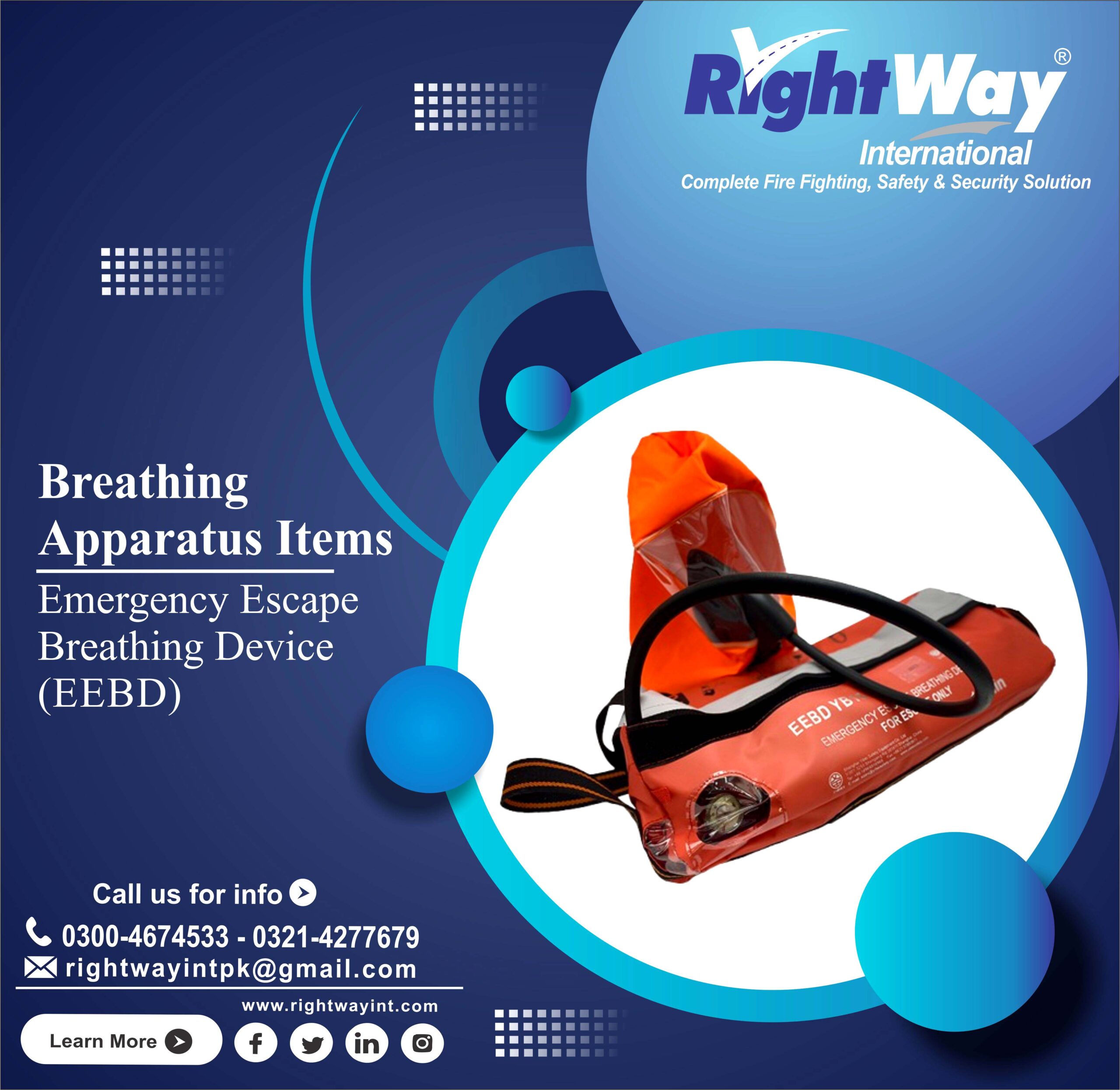
EEBD (Emergency Escape Breathing Device) in Pakistan is compact, life-saving respiratory protection systems designed for safe evacuation from smoke-filled or toxic environments. In Pakistan, EEBD units are mandatory onboard ships, oil tankers, offshore platforms, and are widely used in industrial plants and chemical factories.
These devices are manufactured according to international standards set by the International Organization for Standardization (ISO) and the International Maritime Organization (IMO). In Pakistan, compliance aligns with the Pakistan Standards and Quality Control Authority (PSQCA) to ensure safety and quality assurance.
🔎 What is EEBD?
An EEBD (Emergency Escape Breathing Device) is a self-contained compressed air breathing apparatus designed strictly for emergency escape. It typically provides 10–15 minutes of breathable air, allowing safe evacuation during fire, smoke leakage, or toxic gas release.
⚠ Important: EEBD is not designed for firefighting or rescue operations — it is for escape only.
⚙ Main Components of EEBD
A standard EEBD unit includes:
- High-pressure compressed air cylinder (200 or 300 bar)
- Pressure reducer and regulator
- Flame-resistant hood with visor
- Breathing hose
- Automatic activation system
- Storage carry case
The hood design allows quick wearing without complex fitting, making it ideal during panic situations.
🏭 Types of EEBD in Pakistan
1️⃣ Compressed Air EEBD
Most common maritime type. Uses breathable compressed air for 10–15 minutes.
Used in: Ships, cargo vessels, engine rooms
2️⃣ Hood-Type EEBD (SOLAS Approved)
Flame-resistant hood covering full head and neck area.
Used in: Passenger ships, oil tankers
3️⃣ Industrial Escape Breathing Apparatus
Heavy-duty models used in chemical plants and refineries.
Used in: Oil & gas, chemical processing plants
🌊 Applications of EEBD in Pakistan
EEBD devices are mandatory safety equipment in maritime sectors, especially in port cities like Karachi.
Major applications include:
- Ship engine room escape
- Marine vessel compliance (SOLAS requirement)
- Offshore oil rigs
- Chemical factories
- Power plants
- Confined industrial spaces
Maritime laws require vessels to carry approved EEBD units in accommodation and machinery spaces.
💰 EEBD Price in Pakistan
Prices vary based on brand, certification, and cylinder capacity.
| Type | Price Range (PKR) |
|---|---|
| 10-Minute EEBD | 65,000 – 120,000 |
| 15-Minute EEBD | 85,000 – 180,000 |
| SOLAS Approved EEBD | 120,000 – 250,000 |
| Industrial Escape Set | 150,000 – 300,000 |
Bulk purchases for shipping companies may reduce pricing.
🧪 Maintenance & Inspection
Proper maintenance is essential for emergency reliability:
- Monthly pressure check
- Annual inspection
- Hydrostatic cylinder testing every 3–5 years
- Store in cool, dry environment
- Replace expired units immediately
Failure to maintain EEBD units may lead to malfunction during emergencies.
🧰 Related Breathing & Scuba Equipment
EEBD units are often supplied alongside other breathing systems such as:
- SCBA (Self-Contained Breathing Apparatus)
- Firefighting breathing sets
- Scuba cylinders
- Diving regulators
- Buoyancy Control Devices (BCD)
- Full-face diving masks
- Breathing air compressors
- Oxygen cylinders (medical & industrial)
These systems are widely used in marine operations, underwater diving, rescue missions, and industrial safety sectors across Pakistan.
✅ Benefits of EEBD
- Quick emergency deployment
- Lightweight and compact
- Flame-resistant hood protection
- Mandatory maritime safety compliance
- Reliable short-term breathable air supply
In conclusion, EEBD (Emergency Escape Breathing Device) units are essential life-saving safety devices for maritime and industrial sectors in Pakistan. Whether installed on ships, offshore platforms, or chemical plants, these devices ensure safe evacuation during fire and toxic gas emergencies. Choosing certified, SOLAS-approved equipment and ensuring regular inspection is critical for compliance and operational safety.