




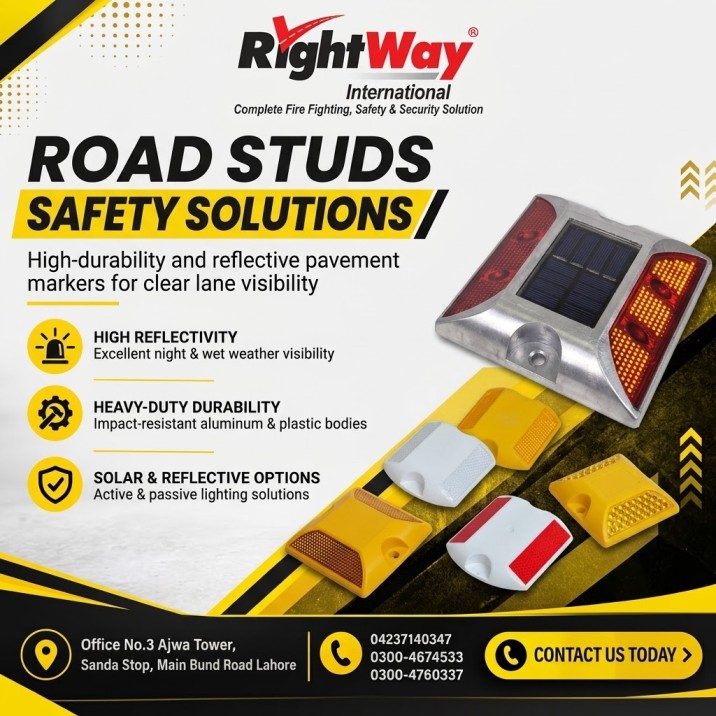
Road Studs Features & Benefits. Road Studs play an important role in road safety, night time visibility, and traffic guidance. These small but effective road safety devices help drivers identify road boundaries, lane markings, and traffic directions. Moreover, road authorities install them on highways, expressways, urban roads, and sharp curves to improve visibility and guide vehicles safely.
At RightWay International, we understand the importance of reliable road safety equipment. Therefore, we provide professional fire-fighting, safety, and security solutions for different industries. Road studs offer a practical way to highlight road markings and improve driver awareness. In addition, they help drivers recognize lane divisions, road edges, pedestrian crossings, and potential hazards, especially during nighttime and poor weather conditions.
What Are Road Studs?
Road Studs are small reflective or illuminated devices installed on road surfaces to guide drivers and improve roadway visibility. Manufacturers produce these devices using durable materials such as aluminum, plastic, stainless steel, and other impact-resistant materials.
Most conventional road studs contain reflective elements that return vehicle headlight illumination toward drivers. Meanwhile, solar road studs use built-in solar panels and LED lights to provide active illumination at night.
Road studs come in different shapes, sizes, colors, and designs. For example, some models feature reflective glass or plastic lenses, while others include solar-powered LED lighting systems. Furthermore, different colors help communicate specific road guidance according to applicable traffic regulations.
Consequently, road studs provide clear visual guidance and help drivers follow road layouts more easily.
Common Applications of Road Studs
Road studs support traffic guidance across different road environments. Moreover, their reflective and illuminated designs make them useful during nighttime, foggy conditions, and low-visibility situations.
1. Highway and Expressway Guidance
Road authorities install road studs along highways and expressways to identify lane markings and road boundaries. In particular, these devices help drivers maintain their lanes during nighttime driving.
2. Lane Separation
Traffic management departments use road studs to highlight lane divisions. As a result, drivers can recognize individual traffic lanes and maintain proper vehicle positioning.
3. Road Curves and Sharp Bends
Road studs provide visual guidance around sharp bends and winding roads. Furthermore, reflective elements help drivers recognize changes in road direction when headlights illuminate them.
4. Pedestrian Crossings
Authorities install suitable road studs near pedestrian crossings to improve visibility and highlight crossing areas. In addition, illuminated road studs can provide extra visual guidance to approaching drivers.
5. Road Construction Projects
Construction teams use temporary or suitable road studs to identify traffic routes around roadwork areas. Consequently, drivers can recognize lane changes and follow designated paths more easily.
6. Tunnels and Underpasses
Road studs help identify lane markings and roadway boundaries inside tunnels and underpasses. Moreover, illuminated models can improve visual guidance in areas with limited natural light.
7. Parking Areas
Commercial buildings and parking facilities use road studs to identify driving lanes, parking boundaries, and vehicle movement routes. Therefore, these devices help organize traffic within parking spaces.
8. Airports and Industrial Facilities
Airports and industrial facilities use suitable road studs to guide operational vehicles along designated routes. In addition, they help identify restricted areas and improve visibility around internal roads.
9. Bridges and Elevated Roads
Road authorities install road studs on bridges and elevated road sections to highlight lane boundaries and road edges. Similarly, these devices help drivers follow the correct route during nighttime travel.
10. Solar Road Lighting Systems
Solar road studs provide active LED illumination without requiring a direct electrical connection. Their built-in solar panels collect energy during daylight and power the lights after sunset.
Types of Road Studs
1. Reflective Road Studs
These traditional road studs use reflective lenses to return vehicle headlight illumination toward drivers. They provide visual guidance without requiring an electrical power source.
2. Solar Road Studs
Solar road studs use photovoltaic panels and rechargeable batteries to power built-in LED lights. Therefore, they provide active illumination during nighttime.
3. Aluminum Road Studs
Manufacturers produce aluminum road studs for applications that require durable road surface markers. Their metal construction offers strength and resistance to regular traffic loads when properly selected and installed.
4. Plastic Road Studs
Plastic road studs provide a lightweight and practical option for road marking applications. Moreover, reflective lenses improve their visibility when vehicle headlights illuminate them.
5. Glass Road Studs
Glass road studs use reflective optical elements to improve nighttime road guidance. Their design makes them suitable for selected road marking applications.
Key Features of Road Studs
- High Visibility: Reflective lenses or LED lights improve road guidance.
- Durable Construction: Suitable materials withstand regular outdoor exposure and traffic conditions.
- Weather Resistance: Appropriate models resist rain, moisture, and changing weather conditions.
- Multiple Colors: Different colors help identify road markings and traffic directions.
- Easy Installation: Suitable mounting designs allow installation on different road surfaces.
- Solar Technology: Solar models provide illumination without continuous external electricity.
- Impact Resistance: Properly rated designs withstand traffic loads and road conditions.
Benefits of Road Studs
- Improved Nighttime Safety: Helps drivers recognize road boundaries and lane markings after sunset.
- Better Driver Guidance: Provides clear visual direction along highways, curves, and intersections.
- Reduced Lane Confusion: Highlights lane divisions and helps drivers maintain correct positioning.
- Enhanced Road Visibility: Reflective and illuminated designs improve visibility in low-light conditions.
- Energy Efficiency: Solar road studs use renewable energy to operate LED lights.
- Improved Traffic Organization: Helps road authorities manage vehicle movement and identify road layouts.
- Additional Road Safety: Provides supplementary guidance in areas with limited visibility.
Road studs remain an important part of modern road safety and traffic management systems. Therefore, selecting suitable road studs according to road conditions, traffic loads, and installation requirements can improve driver guidance and roadway visibility.
At RightWay International, we aim to support safer roads and workplaces through reliable safety and traffic management solutions.