




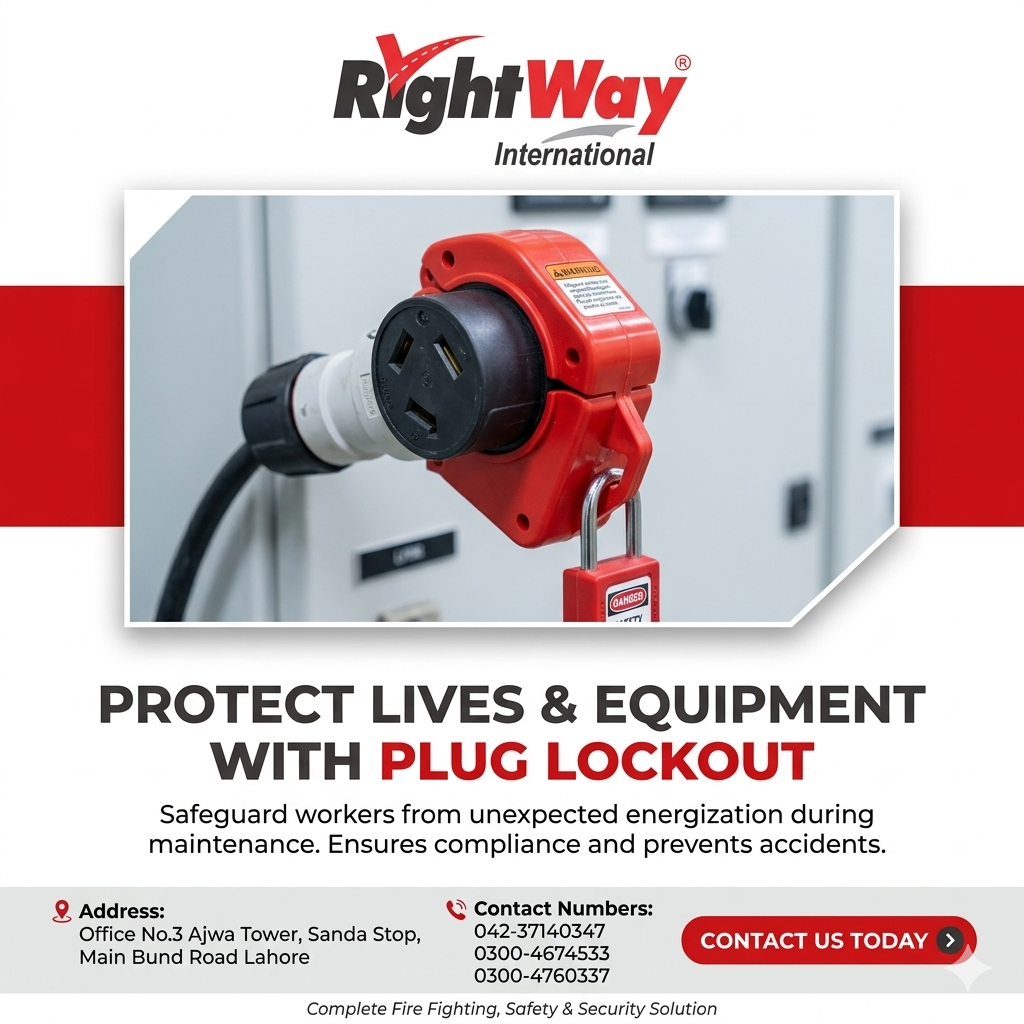
Plug Lockout Device. serve as critical components of industrial Lockout/Tagout (LOTO) programs. Safety professionals specifically design these devices to isolate electrical energy by physically preventing electrical plugs from connecting to power outlets. Consequently, they eliminate the risk of accidental machine startup during maintenance, cleaning, or servicing operations.
By enclosing the plug and preventing reconnection to a power source, plug lockouts protect workers from electric shock, arc flash incidents, equipment damage, and unexpected machine activation. Furthermore, Occupational Safety and Health Administration (OSHA) 29 CFR 1910.147 regulations require employers to control hazardous energy sources before servicing equipment. Therefore, maintenance teams rely on plug lockout devices as a dependable and compliant safety solution for electrical isolation.
What Is a Plug Lockout Device?
A plug lockout is a mechanical safety device that workers place over an electrical plug after disconnecting it from the outlet. Once installed, the device fully encloses the plug and prevents anyone from reconnecting it to electrical power. Most designs include multiple padlock holes, allowing authorized personnel to apply individual safety locks for group lockout procedures.
As a result, machinery remains completely isolated until every worker removes their personal lock and authorization is confirmed.
Common Applications Include:
- Industrial machinery maintenance
- Power tool servicing
- Conveyor system repairs
- Welding equipment isolation
- HVAC maintenance operations
- Food processing equipment cleaning
- Packaging machine servicing
- Construction site electrical safety
- Manufacturing assembly line maintenance
- Laboratory equipment shutdowns
Types of Plug Lockout Devices
Because electrical plugs vary in size, shape, and voltage ratings, technicians require different lockout devices for effective energy isolation.
1. Standard Plug Lockout
Safety teams use these devices for common 110V, 220V, and industrial electrical plugs.
- Mechanism: These typically feature a durable clamshell-style enclosure that completely surrounds the plug while allowing the power cord to exit through a secured opening.
2. Rotating Plug Lockout
Manufacturers design these adjustable devices to accommodate various plug sizes with a rotating internal mechanism.
- Specifically: Technicians can modify the internal diameter to fit different plug configurations. Consequently, one device can secure multiple plug types.
3. Heavy-Duty Industrial Plug Lockout
These lockouts protect large industrial plugs used in high-voltage machinery and manufacturing equipment.
- Function: Reinforced thermoplastic or steel-reinforced construction provides maximum durability in demanding industrial environments.
4. Pneumatic Plug Lockout
Facilities use these specialized lockouts for pneumatic hose connectors and compressed air fittings.
- Advantage: Workers can safely isolate pneumatic energy sources and prevent accidental reconnection during servicing tasks.
5. Waterproof Plug Lockout
These devices are specifically designed for wet environments and outdoor industrial applications.
- Benefit: Weather-resistant materials protect the lockout system from moisture, dust, and harsh environmental conditions.
Technical Specifications
| Specification | Details |
|---|---|
| Material | Polypropylene, ABS Plastic, Zenex™ Thermoplastic |
| Voltage Compatibility | 110V – 600V Industrial Plugs |
| Temperature Range | -40°C to 120°C |
| Chemical Resistance | Resistant to oils, solvents, and corrosive chemicals |
| Padlock Hole Diameter | Standard 7mm – 9mm |
| Cable Diameter Capacity | Up to 25mm |
| Compliance | OSHA 1910.147, ANSI Z244.1, CE Certified |
Valve Lockout Device
A valve lockout is a mechanical safety device that technicians fit over or around a valve handle or operating mechanism. Once a worker installs it, the device prevents the handle from turning or moving. Most designs feature multiple holes for safety padlocks. As a result, the system remains locked until every authorized worker removes their individual lock.
Key Features and Advantages
Extreme Durability
High-impact engineering plastics withstand harsh industrial conditions, UV exposure, and frequent handling without cracking or deformation.
Complete Electrical Isolation
The enclosed design physically prevents plugs from reconnecting to power outlets, eliminating accidental energization risks.
Universal Compatibility
Many plug lockouts feature adjustable housings that fit multiple plug styles and cord sizes with a single device.
High-Visibility Safety
Manufacturers typically produce these devices in bright red or yellow colors. Therefore, they provide a clear visual warning against unauthorized equipment operation.
Multi-Worker Protection
Integrated padlock holes allow multiple workers to apply individual safety locks during group maintenance procedures.
Lightweight and Non-Conductive
Non-metallic construction ensures electrical insulation while remaining lightweight and easy to handle.
How to Select the Right Plug Lockout Device
To choose the correct plug lockout, follow these important steps:
1. Identify Plug Type
First, determine whether the equipment uses standard electrical plugs, industrial connectors, or pneumatic fittings.
2. Measure Plug Dimensions
Next, measure the plug length, width, and cable diameter to ensure proper fitment inside the lockout device.
3. Check Voltage Requirements
Additionally, verify that the lockout is rated for the equipment’s operating voltage and industrial environment.
4. Evaluate Environmental Conditions
Choose weather-resistant or chemical-resistant materials if the device will be exposed to moisture, oils, or corrosive substances.
5. Determine Group Lockout Needs
Finally, ensure the device supports multiple padlocks if several technicians will work on the equipment simultaneously.
Best Practices for Plug Lockout Safety
- Always disconnect equipment completely before applying the lockout device.
- Verify zero energy by testing equipment startup controls.
- Apply personal safety padlocks immediately after installing the lockout.
- Use warning tags to identify authorized personnel and maintenance status.
- Inspect lockout devices regularly for damage or wear.
- Train employees on proper LOTO procedures and OSHA compliance requirements.
Industries That Commonly Use Plug Lockouts
Manufacturing Facilities
Factories use plug lockouts extensively during machinery maintenance and production line servicing.
Construction Sites
Contractors secure portable power tools and temporary electrical systems to prevent accidental energization.
Food Processing Plants
Maintenance crews isolate mixers, conveyors, and packaging equipment during sanitation procedures.
Data Centers
Technicians lock out electrical systems and backup power equipment during repairs and upgrades.
Healthcare Facilities
Hospitals and laboratories utilize plug lockouts to safely maintain medical equipment and electrical devices.
Frequently Asked Questions (FAQs)
Can a worker use a plug lockout on energized equipment?
No. Workers must always disconnect the plug from the power source before installing the lockout device. OSHA regulations require complete energy isolation prior to maintenance activities.
Are plug lockouts reusable?
Yes. Most plug lockout devices are manufactured from durable industrial-grade materials and designed for repeated long-term use under normal operating conditions.
Can multiple workers secure the same plug lockout?
Yes. Most plug lockouts feature multiple lock holes that allow each authorized employee to attach their own personal safety padlock.
Do plug lockouts work for all plug sizes?
Not always. Different lockouts support different plug dimensions. Therefore, technicians should verify compatibility before use.
Are plastic plug lockouts durable enough for industrial environments?
Yes. Modern thermoplastic lockout devices offer excellent impact resistance, electrical insulation, and chemical durability for demanding industrial applications.