




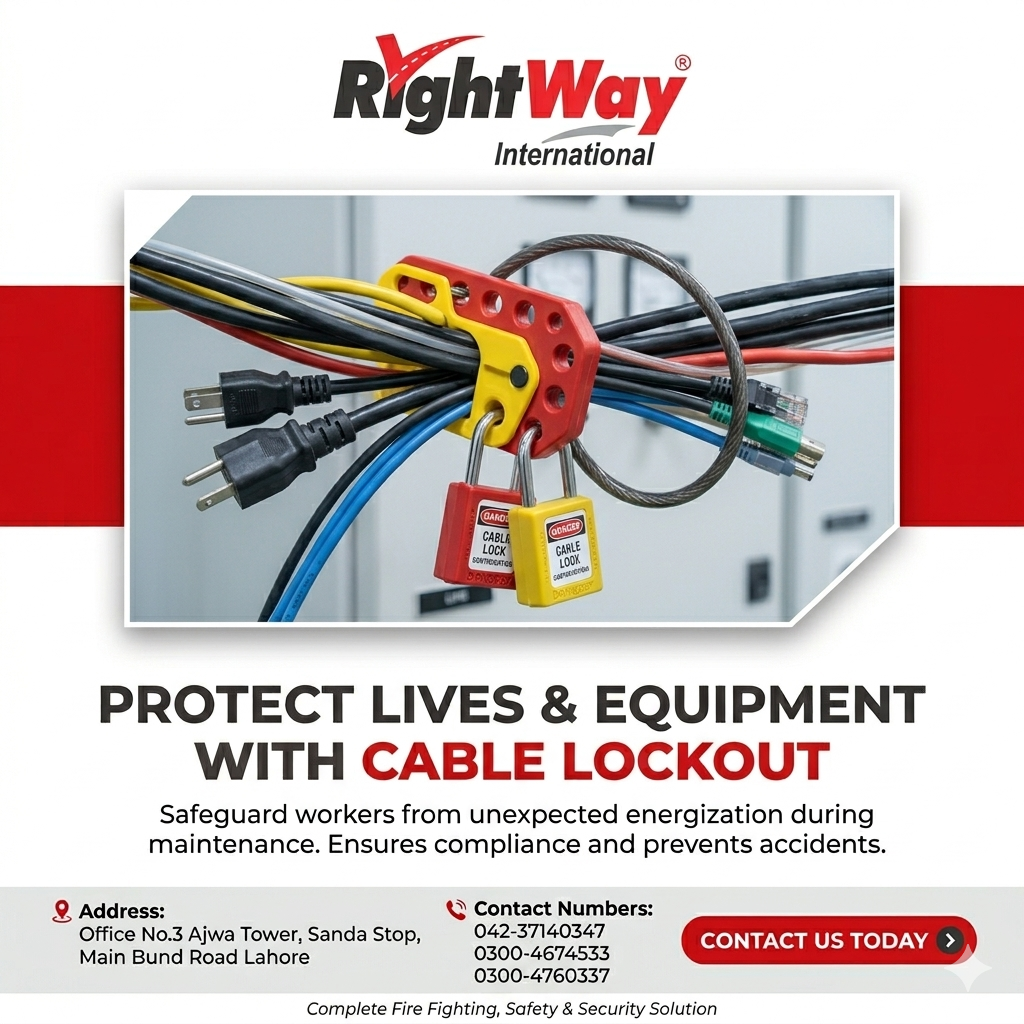
Cable Lockout Device serve as highly versatile components of industrial Lockout/Tagout (LOTO) programs. Safety professionals specifically design these devices to isolate hazardous energy by securing multiple energy points with a single lockout system. Consequently, they prevent the accidental activation of machinery, valves, breakers, and industrial equipment during maintenance, servicing, or repair work.
By using a durable steel cable combined with a lockable control mechanism, cable lockouts help workers isolate complex systems that standard lockout devices cannot secure effectively. Furthermore, Occupational Safety and Health Administration (OSHA) 29 CFR 1910.147 regulations require employers to control hazardous energy sources before maintenance activities begin. Therefore, maintenance teams rely on cable lockout devices as a flexible, reliable, and OSHA-compliant energy isolation solution.
What Is a Cable Lockout Device?
A cable lockout is a safety device consisting of a strong multi-strand steel cable and a lockable body mechanism. Technicians thread the cable through equipment handles, valve wheels, electrical disconnects, or multiple isolation points. Once tightened and locked with safety padlocks, the cable prevents movement or operation of the secured equipment.
Most cable lockout systems support multiple padlocks, allowing every authorized worker to apply their individual lock during group maintenance operations. As a result, the equipment remains isolated until all workers safely complete their tasks and remove their personal locks.
Common Applications Include:
- Valve lockout and isolation
- Electrical breaker lockout
- Multi-point machinery shutdowns
- Industrial equipment maintenance
- Conveyor system servicing
- Chemical processing plant isolation
- Oil and gas facility maintenance
- HVAC system lockout procedures
- Pneumatic and hydraulic energy isolation
- Group lockout/tagout operations
Types of Cable Lockout Devices
Because industrial equipment varies greatly in size and configuration, manufacturers offer several cable lockout designs for different applications.
1. Adjustable Cable Lockout
Safety teams commonly use these versatile lockouts for general industrial applications.
- Mechanism: Workers insert the cable through energy isolation points and tighten it using a locking mechanism that secures the cable firmly in place.
2. Grip Tight Cable Lockout
Manufacturers design these devices with ergonomic handles for easier cable tightening and maximum holding strength.
- Specifically: The internal locking system automatically grips the cable when tightened. Consequently, workers achieve secure lockout with minimal effort.
3. Insulated Cable Lockout
These lockouts feature non-conductive cable coatings for electrical safety applications.
- Function: The insulated outer layer reduces electrical conductivity risks when securing electrical disconnects or breakers.
4. Retractable Cable Lockout
This compact design includes a self-retracting cable system for convenient storage and portability.
- Advantage: Technicians can quickly deploy and retract the cable during maintenance procedures, improving efficiency and reducing clutter.
5. Heavy-Duty Steel Cable Lockout
Industrial facilities use these reinforced systems for large valves, heavy machinery, and outdoor applications.
- Benefit: High-tensile steel cables provide exceptional strength and resistance to tampering or harsh environmental conditions.
Technical Specifications
| Specification | Details |
|---|---|
| Material | Steel Cable, Nylon-Coated Steel, ABS Thermoplastic |
| Cable Length | 1.8m – 5m (Custom lengths available) |
| Cable Diameter | 3mm – 6mm |
| Temperature Range | -40°C to 150°C |
| Chemical Resistance | Resistant to oils, acids, solvents, and corrosion |
| Padlock Capacity | Supports multiple safety padlocks |
| Compliance | OSHA 1910.147, ANSI Z244.1, CE Certified |
Plug Lockout Device
A plug lockout is a mechanical safety device that workers place over an electrical plug after disconnecting it from the outlet. Once installed, the device fully encloses the plug and prevents anyone from reconnecting it to electrical power. Most designs include multiple padlock holes, allowing authorized personnel to apply individual safety locks for group lockout procedures.
As a result, machinery remains completely isolated until every worker removes their personal lock and authorization is confirmed.
Key Features and Advantages
Exceptional Versatility
Cable lockouts can secure multiple types of equipment, including valves, breakers, disconnect switches, and irregular machinery components.
Multi-Point Isolation
One cable lockout system can isolate several energy points simultaneously. Therefore, maintenance teams reduce the number of devices required during complex shutdowns.
Durable Construction
High-strength steel cables and impact-resistant lock bodies withstand demanding industrial environments and long-term use.
Adjustable Locking System
Technicians can easily tighten or loosen the cable to accommodate different equipment sizes and configurations.
High-Visibility Safety
Manufacturers typically produce cable lockouts in bright red colors for clear visual identification and enhanced workplace safety awareness.
Group Lockout Capability
Integrated locking holes allow multiple workers to apply individual padlocks for team maintenance operations.
How to Select the Right Cable Lockout Device
To choose the correct cable lockout, follow these important steps:
1. Identify Energy Isolation Points
First, determine whether the lockout will secure valves, breakers, disconnects, or multiple equipment components.
2. Measure Required Cable Length
Next, calculate the cable length necessary to wrap around or pass through all lockout points securely.
3. Consider Environmental Conditions
Choose corrosion-resistant or insulated cables for outdoor, chemical, or electrical environments.
4. Verify Padlock Compatibility
Additionally, ensure the lockout body supports the required number of safety padlocks for group lockout procedures.
5. Evaluate Strength Requirements
Select heavy-duty steel cable systems for large industrial valves, machinery, or high-security applications.
Best Practices for Cable Lockout Safety
- Always identify all hazardous energy sources before applying the cable lockout.
- Ensure the cable is fully tightened to prevent equipment movement.
- Verify isolation by testing equipment controls before starting maintenance.
- Use personal safety padlocks and warning tags for every authorized worker.
- Inspect cables regularly for fraying, corrosion, or physical damage.
- Train employees on proper LOTO procedures and OSHA safety requirements.
Industries That Commonly Use Cable Lockouts
Oil and Gas Industry
Technicians secure valves, pipelines, and processing systems during maintenance and shutdown procedures.
Manufacturing Plants
Factories use cable lockouts to isolate machinery, conveyors, and automated production systems.
Chemical Processing Facilities
Workers secure hazardous chemical systems and pressure control valves during servicing operations.
Power Generation Facilities
Maintenance teams isolate electrical disconnects, turbines, and control systems safely.
Water Treatment Plants
Operators use cable lockouts for pumps, valves, and filtration systems during repairs and inspections.
Frequently Asked Questions (FAQs)
Can a cable lockout secure multiple valves at once?
Yes. Cable lockout systems are specifically designed to isolate multiple valves, switches, or equipment points simultaneously using a single cable.
Are cable lockouts suitable for electrical applications?
Yes. Insulated cable lockouts provide a safe solution for electrical lockout applications when used correctly according to OSHA standards.
How many workers can apply locks to a cable lockout?
Most cable lockouts support multiple padlocks, allowing several workers to maintain individual control over their own safety during group maintenance.
Are steel cable lockouts resistant to corrosion?
Yes. Many cable lockout systems feature nylon-coated or stainless steel cables for enhanced corrosion resistance in harsh environments.
Can cable lockouts replace standard valve lockouts?
In many cases, yes. However, dedicated valve lockout devices may provide a more secure fit for certain valve types and applications.