




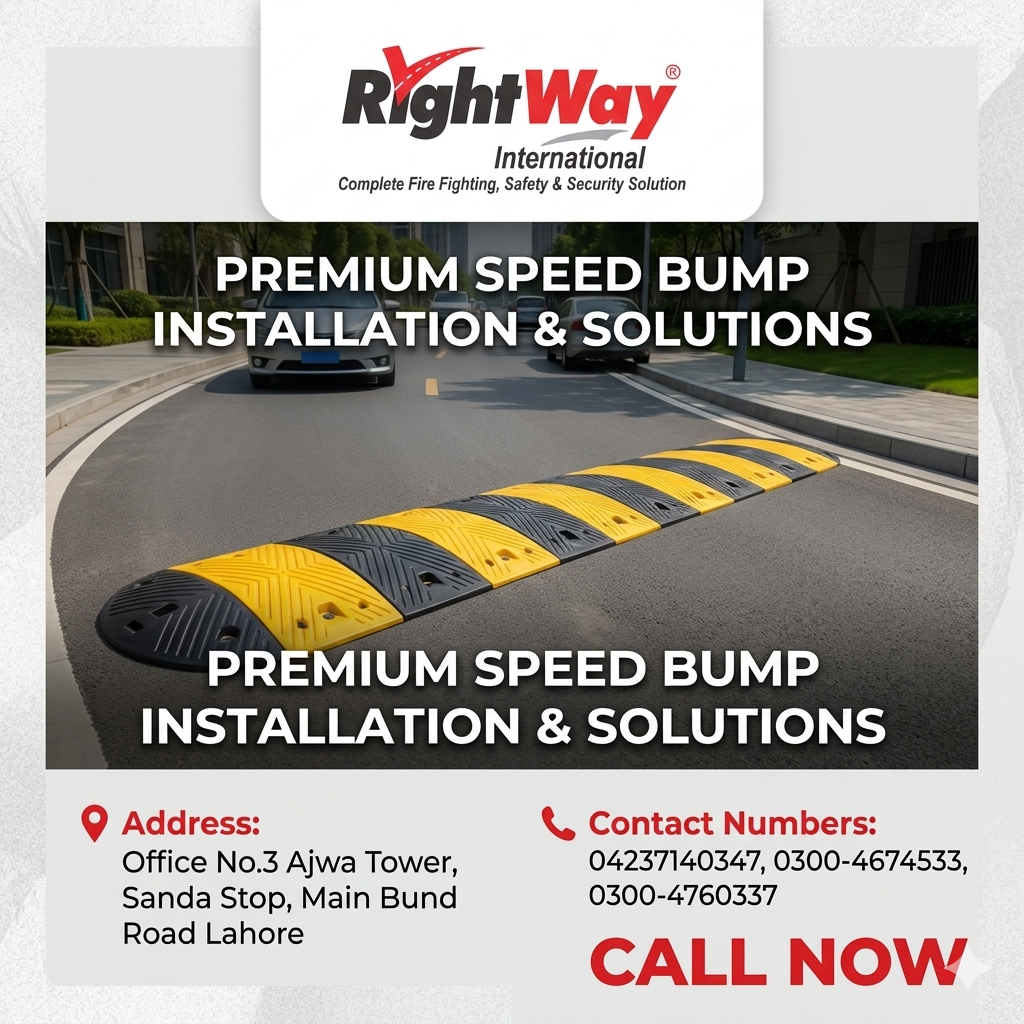
Speed Bumps are essential traffic calming devices designed to reduce vehicle speeds, improve road safety, and protect pedestrians, motorists, and workers in areas where controlled traffic movement is required. These raised road safety structures force drivers to slow down, helping prevent accidents and enhance safety in both public and private environments.
Speed bumps are widely used in residential communities, parking lots, industrial facilities, warehouses, schools, hospitals, shopping centers, airports, construction sites, logistics hubs, government facilities, and commercial properties to control vehicle speeds and improve traffic management.
Because road safety is a critical concern worldwide, speed bumps play a vital role in traffic calming programs, accident prevention strategies, pedestrian protection systems, and transportation safety initiatives. They support compliance with traffic safety guidelines established by transportation authorities, Occupational Safety and Health Administration (OSHA) , ISO, ANSI, MUTCD, HSE, and local road safety agencies.
What Are Speed Bumps?
A Speed Bump is a raised traffic control device installed across roadways or driving surfaces to physically reduce vehicle speed. Speed bumps create a vertical deflection that encourages drivers to slow down before passing over them, thereby increasing safety in areas with pedestrian activity or vehicle congestion.
Speed bumps are commonly used for:
- Traffic calming
- Vehicle speed reduction
- Pedestrian safety
- Parking lot safety
- Residential road safety
- School zone protection
- Industrial facility traffic control
- Warehouse vehicle management
- Hospital traffic management
- Airport safety operations
- Commercial property traffic control
- Construction site safety
- Private road management
- Campus safety programs
- Public infrastructure projects
Key Components of Speed Bumps
A typical speed bump includes:
- Raised traffic calming surface
- High-visibility color markings
- Reflective safety elements
- Durable construction material
- Modular sections or single-piece design
- Anchoring hardware
- Anti-slip surface texture
- Edge transition sections
- UV-resistant coating
- Weather-resistant materials
- Road marking indicators
- Reflective cat eyes (optional)
- Installation bolts and fixings
- Warning signage
How Speed Bumps Work
Speed bumps reduce vehicle speed through controlled vertical displacement.
Step 1: Vehicle Approaches
Drivers notice warning signs, road markings, or visible speed bumps ahead.
Step 2: Speed Reduction
The raised surface encourages drivers to slow down before crossing.
Step 3: Controlled Crossing
Vehicles pass safely over the bump at a reduced speed.
Step 4: Traffic Calming
Vehicle speeds remain lower throughout the protected area.
Step 5: Enhanced Safety
Reduced speeds decrease accident risks and improve pedestrian protection.
Types of Speed Bumps
1. Rubber Speed Bumps
Manufactured from recycled or heavy-duty rubber and commonly used in parking lots and commercial facilities.
2. Plastic Speed Bumps
Lightweight and durable speed control devices suitable for temporary or permanent installation.
3. Asphalt Speed Bumps
Constructed directly from asphalt and widely used on roads and residential streets.
4. Concrete Speed Bumps
Heavy-duty traffic calming structures designed for long-term installations.
5. Modular Speed Bumps
Interlocking sections that can be installed quickly and customized for different road widths.
6. Reflective Speed Bumps
Equipped with reflective markings for improved nighttime visibility.
7. Heavy-Duty Industrial Speed Bumps
Designed for warehouses, factories, logistics centers, and industrial facilities.
8. Portable Speed Bumps
Temporary traffic calming devices used for events, construction projects, and temporary roadworks.
Road Safety Traffic Cones
Road Safety Traffic Cones are portable safety devices made from durable materials such as PVC, rubber, polyethylene, or thermoplastic. They are designed with bright colors and reflective bands to provide high visibility during both daytime and nighttime conditions.
Traffic cones are commonly used for:
- Road construction projects
- Highway maintenance
- Traffic diversion
- Lane closures
- Parking management
- Emergency response operations
- Event traffic control
- Pedestrian safety
- Utility maintenance work
- Airport ground operations
- Warehouse traffic management
- Industrial safety programs
- Public infrastructure projects
- Crowd control systems
- Temporary hazard marking
Common Applications of Speed Bumps
Speed bumps are widely used in:
- Residential communities
- Housing societies
- Parking lots and garages
- Shopping malls
- Schools and universities
- Hospitals and healthcare facilities
- Warehouses and logistics centers
- Manufacturing plants
- Airports and transportation terminals
- Government facilities
- Industrial complexes
- Construction sites
- Hotels and resorts
- Sports venues
- Commercial properties
Importance of Speed Bumps in Road Safety Systems
Speed bumps are a critical component of traffic management and road safety systems.
Key Benefits
- Reduces vehicle speeds
- Improves pedestrian safety
- Prevents traffic accidents
- Enhances traffic control
- Protects workers in industrial areas
- Improves parking lot safety
- Reduces reckless driving
- Supports traffic calming initiatives
- Enhances community safety
- Improves compliance with speed limits
Technical Specifications
| Specification | Details |
|---|---|
| Equipment Type | Speed Bump |
| Function | Traffic Calming and Speed Reduction |
| Material | Rubber, Plastic, Asphalt, Concrete |
| Color | Black, Yellow, Reflective Yellow |
| Surface Type | Anti-Slip |
| Installation | Permanent or Temporary |
| Visibility | Reflective Markings Available |
| Application | Roads, Parking Areas, Industrial Sites |
| Maintenance Requirement | Low |
| Standards | OSHA, ANSI, MUTCD, ISO, HSE |
Key Features and Advantages of Speed Bumps
Effective Speed Control
Forces drivers to reduce speed naturally and safely.
Enhanced Safety
Reduces accident risks in pedestrian and vehicle interaction zones.
Durable Construction
Designed to withstand heavy traffic and harsh weather conditions.
High Visibility
Bright colors and reflective elements improve driver awareness.
Easy Installation
Available in modular and pre-fabricated designs for quick deployment.
Low Maintenance
Requires minimal upkeep after installation.
Cost-Effective Traffic Management
Provides long-term road safety benefits at a relatively low cost.
Regulatory Compliance
Supports compliance with road safety and traffic management standards.
How to Select the Right Speed Bump
1. Assess Traffic Volume
Determine the number and type of vehicles using the roadway.
2. Evaluate Vehicle Speeds
Select a speed bump designed for the target speed reduction.
3. Choose Appropriate Material
Consider rubber, plastic, asphalt, or concrete based on site requirements.
4. Review Environmental Conditions
Choose weather-resistant materials suitable for local conditions.
5. Verify Regulatory Compliance
Ensure compliance with local traffic regulations and safety standards.
Best Practices for Using Speed Bumps
- Install proper warning signs
- Use reflective markings for night visibility
- Conduct regular inspections
- Replace damaged sections promptly
- Follow approved installation guidelines
- Maintain adequate spacing
- Ensure proper drainage around installations
- Perform routine safety audits
- Keep surfaces clean and visible
- Follow local transportation regulations
Industries That Use Speed Bumps
- Transportation sector
- Construction industry
- Manufacturing facilities
- Warehousing and logistics
- Airports and aviation facilities
- Educational institutions
- Healthcare facilities
- Government agencies
- Commercial property management
- Retail centers
- Hospitality industry
- Industrial parks
- Residential developments
- Public infrastructure projects
- Utility companies
Importance of OSHA and Traffic Safety Compliance
Speed bumps help organizations comply with traffic safety requirements by ensuring:
- Reduced vehicle speeds
- Improved pedestrian protection
- Enhanced workplace traffic management
- Better accident prevention measures
- Increased public safety
- Improved site traffic control
- Safer industrial operations
- Compliance with traffic safety standards
Difference Between Speed Bumps and Speed Humps
| Feature | Speed Bumps | Speed Humps |
| Purpose | Aggressive Speed Reduction | Moderate Speed Reduction |
| Height | Higher | Lower |
| Length | Shorter | Longer |
| Typical Speed | 5–15 km/h | 15–30 km/h |
| Application | Parking Lots, Private Roads | Public Roads |
| Driver Comfort | Lower | Higher |
| Traffic Flow Impact | Greater | Moderate |
Frequently Asked Questions (FAQs)
What are Speed Bumps used for?
Speed bumps are used to reduce vehicle speeds, improve road safety, and protect pedestrians in high-risk areas.
What materials are Speed Bumps made from?
They are commonly manufactured from rubber, plastic, asphalt, and concrete.
Where are Speed Bumps commonly installed?
They are installed in parking lots, residential communities, schools, hospitals, industrial facilities, and commercial properties.
How do Speed Bumps improve safety?
They force drivers to slow down, reducing accident risks and improving pedestrian protection.
How often should Speed Bumps be inspected?
Speed bumps should be inspected regularly for wear, damage, visibility, and secure installation.
Conclusion
Speed Bumps are among the most effective traffic calming solutions used to improve road safety, control vehicle speeds, and protect pedestrians and workers. By reducing speeding, preventing accidents, and enhancing traffic management, speed bumps contribute significantly to safer roads, workplaces, parking facilities, and public spaces. Their durability, affordability, and effectiveness make them an essential component of modern traffic safety and transportation management systems.