




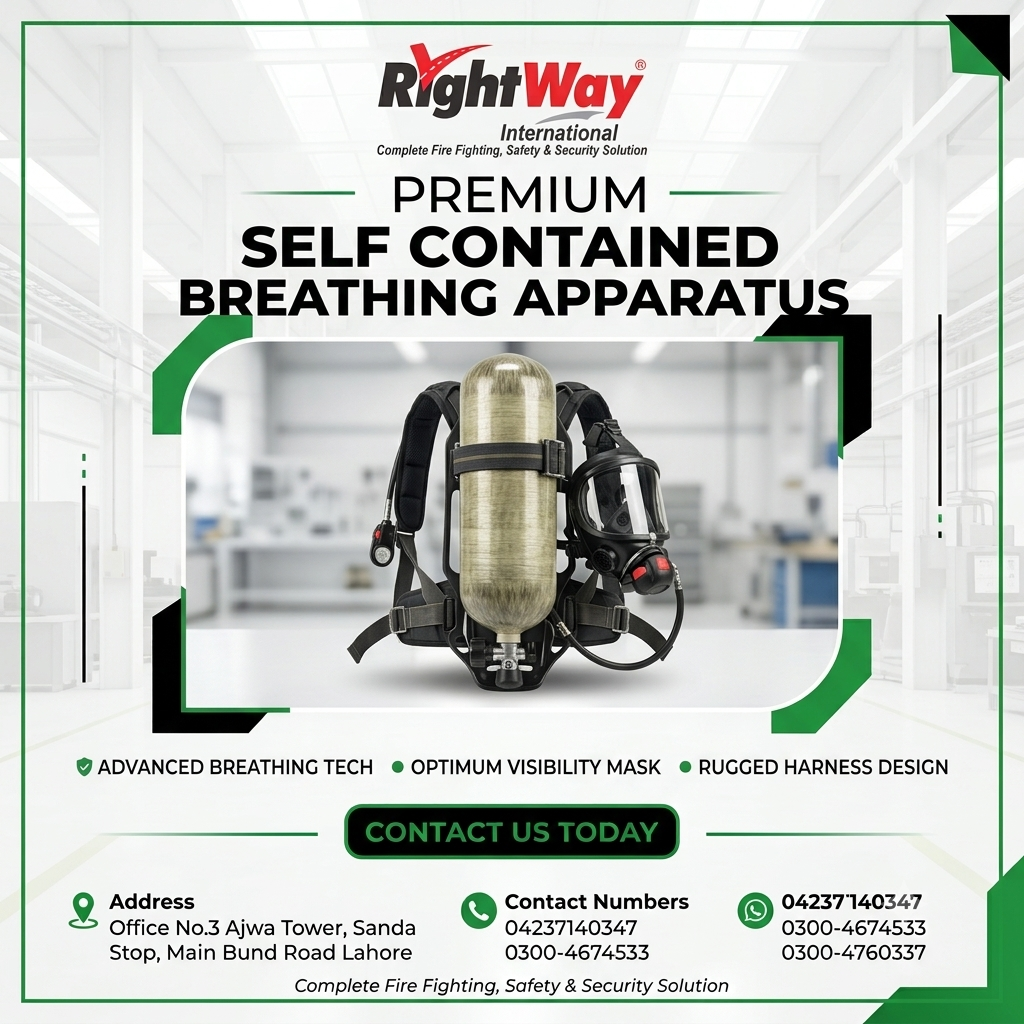
Self Contained Breathing Apparatus (SCBA) in Pakistan is an important respiratory protection system for workers who may enter environments with toxic gases, smoke, oxygen-deficient atmospheres, or other respiratory hazards. An SCBA provides the wearer with a supply of breathable air from a compressed-air cylinder, allowing the user to work without relying on the surrounding atmosphere.
Industries use Self Contained Breathing Apparatus for firefighting, emergency response, hazardous-material operations, chemical handling, confined-space entry, industrial rescue, and other situations where normal air-purifying respirators cannot provide adequate protection.
An SCBA normally includes a compressed-air cylinder, backplate and harness, pressure regulator, facepiece, pressure gauge, warning alarm, and associated breathing-air components. The exact configuration depends on the manufacturer, model, certification, and intended application.
For workplaces in Pakistan, organizations should select SCBA equipment according to the specific respiratory hazard, workplace conditions, required operating duration, applicable standards, and the manufacturer’s instructions.
The Occupational Safety and Health Administration (OSHA) provides respiratory protection requirements for covered workplaces. Its respiratory protection standard includes requirements for respirator selection, use, medical evaluation, fit testing, training, maintenance, and respiratory protection programs.
OSHA Website: OSHA – Respiratory Protection Standard, 29 CFR 1910.134
Across Pakistan, organizations use SCBA systems in fire departments, chemical plants, oil and gas facilities, refineries, pharmaceutical factories, power plants, steel mills, manufacturing facilities, emergency-response teams, confined-space operations, and industrial rescue services.
Benefits of Self Contained Breathing Apparatus
Provides an Independent Air Supply
A Self Contained Breathing Apparatus provides the wearer with breathable air from a compressed-air cylinder.
As a result, the user does not depend on the surrounding atmosphere for breathing air while the SCBA remains within its rated operating conditions.
Supports Work in Hazardous Atmospheres
SCBA systems can provide respiratory protection in environments where workers may encounter smoke, toxic gases, oxygen deficiency, or other atmospheric hazards.
Therefore, emergency-response teams often select SCBA for situations that require a high level of respiratory protection.
Suitable for Firefighting
Firefighters commonly use SCBA when entering smoke-filled buildings or other environments where the atmosphere may contain dangerous contaminants.
The facepiece, breathing system, cylinder, and harness work together to provide respiratory protection during firefighting operations.
Useful for Emergency Response
Emergency teams can use SCBA during hazardous-material incidents, industrial accidents, chemical releases, and rescue operations.
Furthermore, an independent air supply can help trained responders operate in environments that may not support safe breathing.
Supports Confined-Space Operations
Some confined spaces can contain oxygen-deficient or contaminated atmospheres.
Organizations may use SCBA for certain confined-space rescue or entry operations when a competent assessment identifies the need for supplied breathing air and the equipment meets the applicable requirements.
High-Visibility Warning Systems
Many SCBA systems include warning devices that alert the wearer when the cylinder pressure reaches a predetermined level.
These warnings help the user monitor remaining breathing-air supply and follow the organization’s emergency and exit procedures.
Main Components of Self Contained Breathing Apparatus
A complete SCBA breathing apparatus contains several important components.
Compressed Air Cylinder
The SCBA air cylinder stores compressed breathing air for the wearer.
Cylinder capacity, pressure, material, and rated service life vary by model and manufacturer.
Workers should always check the cylinder’s markings, inspection status, pressure requirements, and manufacturer’s instructions before use.
Facepiece
The SCBA facepiece creates the breathing interface between the user and the breathing-air system.
A properly fitted facepiece helps maintain the required seal and allows the user to receive air through the regulator.
Pressure Regulator
The regulator reduces cylinder pressure to the pressure required by the breathing system.
It delivers breathing air to the facepiece according to the SCBA design.
Backplate and Harness
The SCBA backplate and harness support the cylinder and help distribute the equipment’s weight across the user’s body.
Adjustable straps allow trained users to secure the apparatus correctly.
Pressure Gauge
The pressure gauge allows the wearer to monitor cylinder pressure.
The user should monitor the gauge throughout the operation and follow the organization’s procedures for low-air warnings and exit.
Low-Air Warning Alarm
Many SCBA systems include an audible or other warning system that alerts the wearer when the air supply reaches a specified level.
The user must follow the manufacturer’s instructions and workplace emergency procedures when the warning activates.
Breathing-Air Hose
The breathing-air hose connects the regulator and facepiece or other components according to the SCBA design.
Users should inspect hoses for cuts, cracks, wear, contamination, and other damage before use.
Types of Self Contained Breathing Apparatus
Open-Circuit SCBA
Open-circuit SCBA systems provide compressed breathing air to the wearer and discharge exhaled air into the surrounding atmosphere.
This design represents a common configuration for firefighting and industrial emergency-response applications.
Closed-Circuit SCBA
Closed-circuit breathing apparatus recirculates exhaled air through a breathing system that removes carbon dioxide and replenishes oxygen according to the equipment design.
These systems serve specific applications and require appropriate training and maintenance.
Positive Pressure SCBA
Positive pressure SCBA maintains pressure inside the facepiece above the surrounding atmosphere under specified operating conditions.
This design helps reduce the potential for contaminated air to enter through small facepiece leakage paths when the system operates correctly.
Firefighting SCBA
Firefighting SCBA supports trained firefighters during structural firefighting and related emergency operations.
These systems must meet the applicable certification and performance requirements for their intended use.
Industrial SCBA
Industrial SCBA systems support trained workers and emergency-response teams during hazardous industrial operations.
Common applications include chemical plants, refineries, manufacturing facilities, and industrial rescue operations.
Rescue SCBA
Rescue SCBA systems support trained emergency personnel during rescue operations where atmospheric hazards may prevent the use of normal respiratory protection.
Key Features of Self Contained Breathing Apparatus
Common SCBA features include:
- Compressed-air cylinder
- Full-facepiece
- Adjustable harness
- Backplate
- Pressure regulator
- Pressure gauge
- Low-air warning alarm
- Breathing-air connection
- Cylinder valve
- Durable construction
- Emergency warning system
- High-visibility components
- Adjustable straps
- Protective carrying system
However, features vary between manufacturers and models. Therefore, organizations should review the manufacturer’s technical specifications before purchasing or deploying an SCBA.
Common Applications in Pakistan
| Industry | Application | SCBA Use |
|---|---|---|
| Fire Services | Firefighting and rescue | Firefighting SCBA |
| Chemical Plants | Hazardous-material response | Industrial SCBA |
| Oil & Gas | Emergency response | SCBA breathing equipment |
| Refineries | Gas and fire emergencies | Positive-pressure SCBA |
| Pharmaceutical | Chemical emergency response | Industrial SCBA |
| Power Plants | Emergency and maintenance response | SCBA systems |
| Steel Mills | Smoke and hazardous atmosphere response | Firefighting SCBA |
| Manufacturing | Industrial emergency response | SCBA equipment |
| Confined Spaces | Rescue operations | Rescue SCBA |
| Waste Treatment | Hazardous atmosphere response | Respiratory protection |
| Emergency Services | Rescue and incident response | SCBA breathing apparatus |
| Industrial Workshops | Hazardous atmosphere response | Industrial SCBA |
How Self Contained Breathing Apparatus Works
First, a trained user inspects the SCBA and confirms that the equipment meets the required operating condition.
Next, the user checks the compressed-air cylinder, facepiece, regulator, harness, pressure gauge, warning system, and other components according to the manufacturer’s instructions and workplace procedure.
After that, the user puts on the harness and secures the SCBA correctly.
The user then connects or activates the breathing system according to the equipment design.
When the user breathes in, the regulator supplies breathing air from the cylinder to the facepiece.
The pressure gauge allows the user to monitor the remaining cylinder pressure.
If the air supply reaches the warning level, the SCBA activates its warning system according to the manufacturer’s design.
The user should then follow the established emergency or exit procedure.
Self Contained Breathing Apparatus and Oxygen-Deficient Atmospheres
An oxygen-deficient atmosphere can create a serious respiratory hazard because normal air may not provide enough oxygen to support safe breathing.
In addition, industrial environments can contain toxic gases, vapors, smoke, or other contaminants.
Therefore, organizations should conduct an appropriate atmospheric assessment before selecting respiratory protection.
A suitable Self Contained Breathing Apparatus can provide an independent breathing-air supply for trained users when the equipment matches the identified hazard and operating conditions.
Workers should never enter a hazardous atmosphere simply because they have access to an SCBA. Employers must establish appropriate procedures, training, atmospheric monitoring, emergency planning, and respiratory protection requirements.
Self Contained Breathing Apparatus Selection Guide
When selecting a Self Contained Breathing Apparatus in Pakistan, consider the following factors.
Hazard Identification
First, identify the atmospheric hazards that workers may encounter.
Consider:
- Toxic gases
- Smoke
- Chemical vapors
- Oxygen deficiency
- Unknown atmospheres
- Fire-related contaminants
- Hazardous-material releases
Operating Duration
Determine how long trained users may need to remain inside the hazardous environment.
Cylinder capacity and operating duration vary by equipment, user activity, environmental conditions, and breathing rate.
Therefore, never assume that every SCBA cylinder provides the same operating time.
Cylinder Type
Consider the cylinder material, capacity, pressure rating, inspection requirements, and manufacturer specifications.
Facepiece Fit
The facepiece should provide the required fit for the intended user.
Organizations should follow applicable fit-testing and respiratory-protection requirements.
Harness Design
Choose an adjustable harness that allows trained users to wear and secure the apparatus correctly.
Warning System
Check the SCBA’s low-air warning system and confirm that users understand its operation.
Certification and Standards
Before purchasing an SCBA, verify the applicable certification, approval, and performance requirements for the intended application.
Self Contained Breathing Apparatus Safety Practices
A Self Contained Breathing Apparatus should form part of a complete respiratory protection and emergency-response program.
- Identify the atmospheric hazards.
- Conduct an appropriate risk assessment.
- Select suitable respiratory protection.
- Train users before deployment.
- Complete required medical evaluations.
- Perform fit testing where applicable.
- Inspect the SCBA before use.
- Check cylinder pressure.
- Inspect the facepiece.
- Check the regulator and hoses.
- Test warning systems according to the manufacturer’s instructions.
- Follow confined-space procedures where applicable.
- Monitor the atmosphere when required.
- Follow emergency and evacuation procedures.
- Maintain equipment according to manufacturer requirements.
- Store SCBA equipment correctly.
Most importantly, only properly trained and authorized personnel should use SCBA equipment in hazardous environments.
SCBA Inspection and Maintenance
Regular inspection helps organizations identify damaged or defective equipment before use.
Inspect the following components:
- Air cylinder
- Cylinder valve
- Facepiece
- Regulator
- Pressure gauge
- Warning alarm
- Harness
- Backplate
- Breathing-air hose
- Seals
- Straps
- Connections
Look for:
- Cracks
- Cuts
- Abrasion
- Chemical damage
- Corrosion
- Leaks
- Deformation
- Damaged straps
- Damaged seals
- Missing components
- Contamination
Remove damaged equipment from service and follow the manufacturer’s maintenance requirements.
Organizations should also maintain inspection, cleaning, repair, cylinder testing, and servicing records according to applicable requirements.
SCBA Cylinder Safety
The compressed-air cylinder represents an important part of the SCBA system.
Workers should handle cylinders carefully and protect them from impacts, excessive heat, contamination, and other conditions that can damage the cylinder.
Before use, check the cylinder markings and inspection status.
Do not use a cylinder that shows damage or fails the required inspection criteria.
Furthermore, organizations should follow applicable cylinder testing and maintenance requirements as well as the manufacturer’s instructions.
Self Contained Breathing Apparatus Training
SCBA requires proper training because users must understand the equipment, limitations, warning systems, emergency procedures, and maintenance requirements.
Training should cover areas such as:
- SCBA components
- Donning and doffing
- Facepiece fit
- Cylinder inspection
- Pressure monitoring
- Low-air warnings
- Emergency procedures
- Equipment limitations
- Cleaning
- Inspection
- Storage
- Maintenance
- Workplace-specific hazards
Regular refresher training helps users maintain familiarity with the equipment and workplace procedures.
OSHA and Self Contained Breathing Apparatus
The Occupational Safety and Health Administration (OSHA) provides requirements for respiratory protection in covered workplaces through 29 CFR 1910.134.
The standard addresses important elements of respiratory protection programs, including respirator selection, medical evaluation, fit testing, proper use, cleaning, maintenance, training, and program evaluation.
Why Self Contained Breathing Apparatus Matters
Hazardous atmospheres can expose workers and emergency responders to serious respiratory risks.
Smoke, toxic gases, chemical vapors, and oxygen-deficient environments can make normal breathing unsafe.
A properly selected Self Contained Breathing Apparatus provides an independent breathing-air supply and can support trained personnel during firefighting, rescue, hazardous-material response, and other specialized operations.
For industrial facilities in Pakistan, SCBA equipment can support:
- Firefighting operations
- Emergency response
- Hazardous-material incidents
- Chemical plant emergencies
- Oil and gas operations
- Refinery emergencies
- Confined-space rescue
- Industrial rescue
- Smoke-filled environments
- Oxygen-deficient atmospheres
- Industrial maintenance emergencies
When organizations combine SCBA with respiratory protection programs, atmospheric monitoring, trained personnel, emergency procedures, regular inspections, proper maintenance, and suitable protective equipment, they can create a more organized approach to respiratory safety.
Self Contained Breathing Apparatus for Industrial Safety Programs
Self Contained Breathing Apparatus provides an independent breathing-air supply for trained users who may encounter hazardous atmospheres.
Its compressed-air cylinder, facepiece, regulator, harness, pressure gauge, warning system, and other components work together to provide respiratory protection within the equipment’s approved operating conditions.
Organizations in Pakistan should select SCBA equipment according to hazard type, atmospheric conditions, required operating duration, cylinder capacity, facepiece requirements, certification, applicable standards, user training, maintenance requirements, and workplace procedures.
Whether used by fire departments, chemical plants, oil and gas facilities, refineries, pharmaceutical factories, power plants, manufacturing facilities, emergency-response teams, or industrial rescue units, a properly selected and maintained SCBA can play an important role in respiratory protection.