




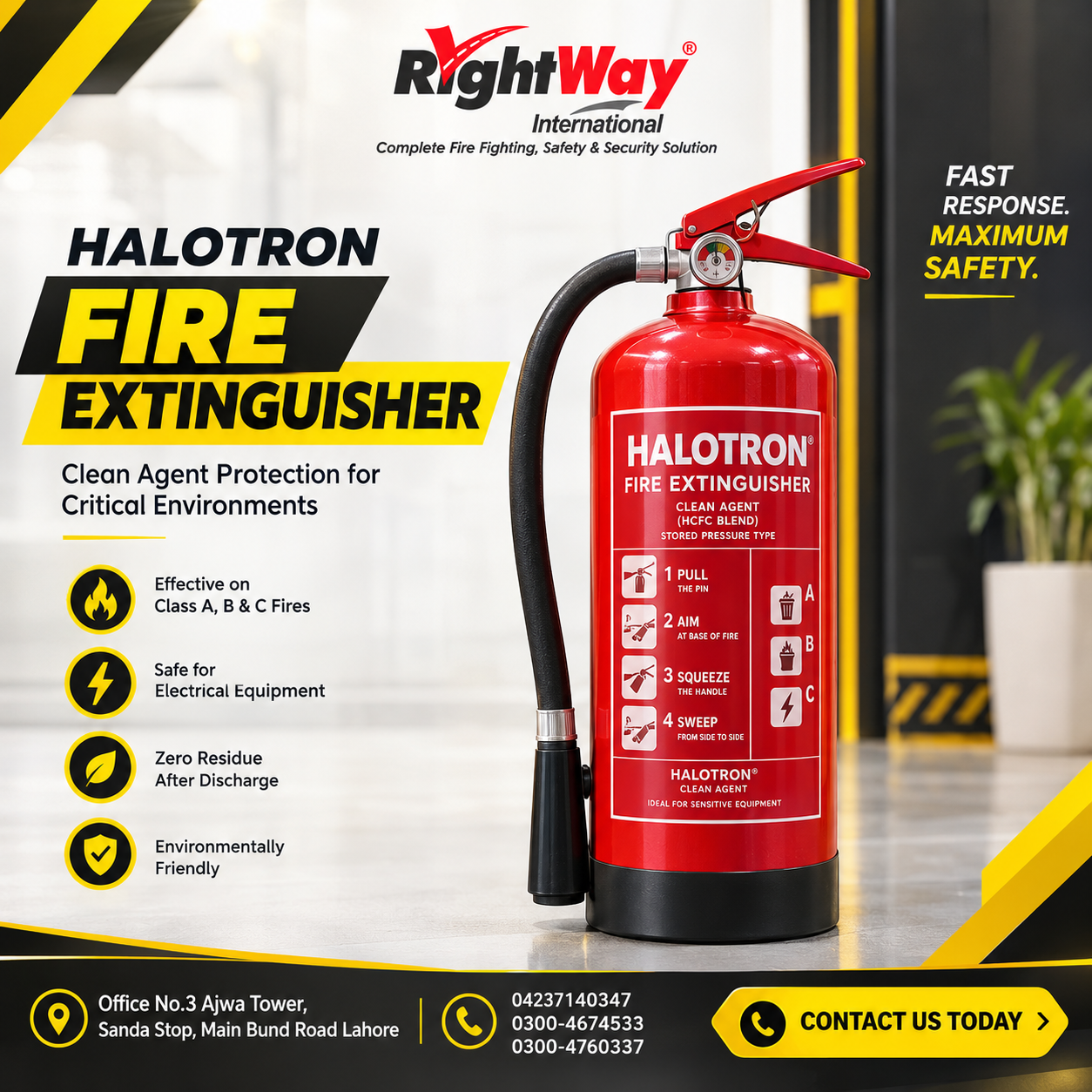
Importance of Halotron Fire Extinguisher provides clean-agent fire protection for areas that contain sensitive electrical equipment, machinery, computers, and other valuable assets. Unlike traditional dry chemical extinguishers, Halotron extinguishing agents leave little to no conventional powder residue after discharge.
As a result, businesses can use Halotron extinguishers in places where cleanup and equipment protection matter. These extinguishers can help control certain Class A, Class B, and energized electrical fires, depending on the product certification and application.
In addition, Halotron extinguishers offer a practical solution for offices, server rooms, laboratories, control rooms, telecommunications facilities, and other areas with sensitive equipment.
For businesses in Pakistan, selecting the correct fire extinguisher remains an important part of an effective fire safety plan. Therefore, facility managers should consider the fire hazard, equipment type, room conditions, extinguisher rating, and applicable safety requirements before purchasing a Halotron extinguisher.
What Is a Halotron Fire Extinguisher?
A Halotron Fire Extinguisher uses a clean gaseous extinguishing agent to suppress certain types of fire without leaving the powder or foam residue associated with conventional extinguishers.
The agent works by interrupting the chemical reaction that supports combustion. In suitable applications, it can quickly reduce the intensity of a fire while minimizing contamination around sensitive equipment.
Moreover, Halotron extinguishers provide an alternative for locations where dry chemical powder could create cleanup problems. For example, server rooms, communication equipment areas, laboratories, and control panels often contain components that require careful cleaning after a fire incident.
However, users should always check the extinguisher label and certification before selecting it for a particular hazard. The approved fire classes and application limits can vary by model.
What Type of Fire Can a Halotron Fire Extinguisher Handle?
Halotron extinguishers can provide protection against several common fire hazards, depending on their specific certification and rating.
Class A Fires
Class A fires involve ordinary combustible materials such as:
- Paper
- Cardboard
- Wood
- Cloth
- Certain plastics
However, users should confirm the extinguisher’s rating before relying on it for a specific Class A application.
Class B Fires
Class B fires involve flammable liquids such as:
- Petrol
- Diesel
- Solvents
- Paints
- Certain oils and chemicals
Halotron extinguishers may provide protection against suitable Class B hazards when the product carries the required rating.
Energized Electrical Equipment
Electrical equipment can present a serious fire risk because energized components may remain connected to a power source during an emergency.
For suitable electrical hazards, a clean-agent extinguisher can help suppress the fire without introducing water-based agents onto sensitive equipment. Nevertheless, users should follow the manufacturer’s instructions and applicable electrical safety procedures.
Why Is a Halotron Fire Extinguisher Important?
A Halotron extinguisher becomes particularly useful when a facility needs fire protection without the heavy residue associated with dry chemical powder.
First, the clean-agent design helps reduce post-discharge cleanup. Therefore, businesses can potentially reduce contamination around sensitive equipment.
Second, Halotron extinguishers can work well in areas where water or foam may not suit the hazard. For instance, electrical and electronic equipment requires careful consideration when selecting a fire extinguisher.
Furthermore, these extinguishers can provide a compact fire protection option for offices, laboratories, telecommunications rooms, and other specialized environments.
Most importantly, the extinguisher must match the actual fire hazard. A clean-agent extinguisher does not replace every other type of fire extinguisher.
Main Benefits of Halotron Fire Extinguishers
1. Clean Fire Suppression
Halotron extinguishing agents do not produce the same powder residue associated with many dry chemical extinguishers. Consequently, cleanup can become easier after a small fire incident.
2. Suitable for Sensitive Equipment
Many facilities contain computers, control panels, communication systems, and electronic equipment. In appropriate applications, Halotron can help protect these areas without introducing large amounts of powder residue.
3. Useful for Electrical Fire Hazards
Halotron extinguishers can provide protection for suitable energized electrical hazards when the extinguisher carries the required rating.
Therefore, they can serve as part of a broader fire protection strategy for offices, server rooms, laboratories, and technical facilities.
4. Reduced Cleanup Requirements
Traditional dry chemical powder can spread across surrounding equipment and surfaces. In contrast, clean-agent extinguishing systems can reduce the amount of conventional residue left after discharge.
As a result, maintenance teams may spend less time cleaning affected equipment after a minor fire.
5. Professional Fire Protection
Halotron extinguishers offer a specialized fire protection option for facilities that need to consider both fire suppression and equipment protection.
For this reason, many technical environments include clean-agent extinguishers as part of their portable fire protection arrangements.
How Does a Halotron Fire Extinguisher Work?
A Halotron extinguisher suppresses fire by interfering with the combustion process. When the user activates the extinguisher, the pressurized agent exits through the discharge nozzle.
The agent then spreads across the affected area and helps interrupt the chemical reaction that maintains combustion.
At the same time, the agent can reduce the fire’s ability to continue burning. This action allows trained users to control a small developing fire when the extinguisher is appropriate for that hazard.
However, users should never attempt to fight a rapidly spreading fire. If the fire grows beyond the initial stage, evacuate the area and contact emergency services.
Where Are Halotron Fire Extinguishers Used?
Halotron extinguishers can suit various environments where sensitive equipment and specific fire hazards exist.
1. Server Rooms and Data Centers
Server rooms contain expensive electronic equipment that requires careful fire protection. A suitable clean-agent extinguisher can help control an incipient fire while minimizing conventional powder contamination.
2. Offices
Modern offices contain computers, printers, networking equipment, and electrical appliances. Therefore, a properly rated Halotron extinguisher can provide an additional portable fire protection option.
3. Laboratories
Laboratories may contain electrical instruments, chemicals, computers, and specialized equipment. The facility should select extinguishers according to the specific hazards present.
4. Telecommunications Facilities
Communication rooms often contain valuable electronic equipment. Consequently, clean-agent fire extinguishers can form part of the portable fire protection strategy.
5. Control Rooms
Industrial control rooms contain electrical panels, monitoring systems, and automation equipment. Halotron extinguishers may provide suitable protection for specific fire hazards in these environments.
6. Electrical Equipment Areas
Electrical rooms and equipment areas require careful extinguisher selection. Therefore, facility managers should review the extinguisher rating and application before installation.
Halotron vs CO₂ Fire Extinguisher
Both Halotron and CO₂ Fire Extinguishers can serve certain electrical fire hazards. However, they operate differently and suit different applications.
CO₂ extinguishers discharge carbon dioxide and leave no powder residue. However, the discharge can create a strong cooling effect and may present safety considerations in enclosed spaces.
Halotron extinguishers use a different clean-agent technology. Depending on the model, they can provide protection against specific Class A, Class B, and energized electrical hazards.
Therefore, the choice should depend on the actual hazard, room conditions, equipment, extinguisher rating, and manufacturer’s instructions.
Halotron vs DCP Fire Extinguisher
A DCP Fire Extinguisher, or Dry Chemical Powder extinguisher, can provide protection against several common fire classes. However, dry chemical powder leaves residue after discharge.
Halotron provides a clean-agent alternative for applications where powder contamination could create problems.
For example, a server room may require a different extinguisher strategy from a workshop or fuel storage area.
Therefore, businesses should not select an extinguisher based only on price or appearance. Instead, they should match the extinguisher to the fire risk.
Halotron vs Foam Fire Extinguisher
Foam extinguishers commonly suit specific Class A and Class B fire hazards. However, users should carefully evaluate electrical risks before using water-based or foam-based extinguishing agents.
Halotron can provide a suitable option for certain electrical and sensitive-equipment applications.
In contrast, foam may offer different benefits for flammable liquid hazards. Consequently, each extinguisher type has its own application range.
How to Use a Halotron Fire Extinguisher
Only trained individuals should attempt to use a portable fire extinguisher.
Follow these general steps:
Step 1: Assess the Fire
First, determine whether the fire remains small and manageable. If flames spread rapidly or produce heavy smoke, evacuate immediately.
Step 2: Select the Correct Extinguisher
Next, confirm that the extinguisher rating matches the fire hazard.
Step 3: Remove the Safety Pin
Pull the safety pin to unlock the operating handle.
Step 4: Aim at the Base of the Fire
Point the nozzle toward the base of the flames rather than the top of the fire.
Step 5: Squeeze the Handle
Press the operating handle to release the extinguishing agent.
Step 6: Sweep Across the Fire
Move the nozzle from side to side while maintaining a safe distance. Continue until the fire is controlled or the extinguisher becomes empty.
Step 7: Leave Safely
If the fire does not go out quickly, stop fighting it and evacuate the area.
Never turn your back on a fire. Also, keep a clear escape route behind you.
Why Should You Avoid Water on Electrical Fires?
Water conducts electricity and can create a serious shock hazard when used on energized electrical equipment.
Furthermore, water can damage sensitive electronic components and create additional equipment losses.
Therefore, users should never assume that water is suitable for every fire. Instead, identify the fire class and use an appropriately rated extinguisher.
For electrical hazards, follow the equipment manufacturer’s safety requirements and use an extinguisher specifically approved for the application.
Safety Precautions for Halotron Fire Extinguishers
Proper handling plays an important role in fire safety. Follow these precautions:
- Read the extinguisher label before use.
- Check the pressure indicator where applicable.
- Inspect the cylinder for visible damage.
- Keep the safety pin and seal intact until use.
- Store the extinguisher in an accessible location.
- Keep the extinguisher away from unnecessary heat exposure.
- Train employees in basic extinguisher safety.
- Never test or discharge the extinguisher unnecessarily.
- Follow the manufacturer’s maintenance instructions.
- Replace or recharge the extinguisher after discharge.
- Do not use an extinguisher that shows serious damage or leakage.
- Always maintain a safe escape route.
Additionally, enclosed spaces require special attention because clean-agent discharge can affect the atmosphere. Follow the manufacturer’s safety instructions and applicable workplace requirements.
Maintenance of Halotron Fire Extinguishers
Regular inspection helps ensure that a fire extinguisher remains ready for emergency use.
During routine checks, inspect the cylinder, hose or nozzle, pressure indicator, safety pin, tamper seal, mounting bracket, and overall condition.
Moreover, trained or authorized personnel should perform servicing according to the manufacturer’s instructions and applicable fire safety requirements.
A maintenance program should also include:
- Routine visual inspections
- Pressure checks where applicable
- Cylinder condition checks
- Discharge inspection
- Recharging after use
- Proper servicing records
- Replacement of damaged components
Consequently, regular maintenance helps keep portable fire protection equipment ready when an emergency occurs.
Halotron Fire Extinguisher for Electrical Equipment
Electrical equipment requires carefully selected fire protection because water-based agents may create electrical hazards.
For example, offices, control rooms, laboratories, server rooms, and communication facilities may contain equipment that requires clean-agent protection.
However, not every Halotron extinguisher carries the same rating. Therefore, always check the manufacturer’s label, certification, and application requirements before installation.
How to Choose the Right Halotron Fire Extinguisher
Before purchasing a Halotron extinguisher, consider the following factors:
Fire Class
Identify the materials and equipment that could catch fire in the protected area.
Extinguisher Rating
Check the approved fire ratings and make sure they match the intended application.
Cylinder Size
Choose a suitable capacity based on the room size, hazard level, and fire protection plan.
Certification
Select products that meet applicable certification and safety requirements.
Installation Location
Install the extinguisher where trained users can reach it quickly during an emergency.
Maintenance Support
Choose a supplier that can provide inspection, servicing, recharging, and technical support.
Importance of Halotron Fire Extinguishers in Pakistan
Fire risks exist in offices, factories, warehouses, laboratories, server rooms, educational institutions, hospitals, commercial buildings, and industrial facilities throughout Pakistan.
At the same time, many modern workplaces depend heavily on computers, electrical panels, networking systems, and electronic equipment.
Therefore, businesses should develop fire protection plans that consider both life safety and equipment protection.
A properly selected Halotron extinguisher can support portable fire protection in suitable applications. However, businesses should also maintain fire alarms, emergency exits, fire detection systems, sprinkler systems where required, evacuation plans, and employee training.
For reliable fire protection, always select equipment according to the actual hazard and applicable safety requirements.
Frequently Asked Questions About Halotron Fire Extinguishers
What is a Halotron Fire Extinguisher?
A Halotron Fire Extinguisher uses a clean-agent extinguishing medium to control certain types of fires. Depending on its rating, it can provide protection for suitable Class A, Class B, and energized electrical hazards.
Is Halotron safe for electrical equipment?
Halotron extinguishers can suit certain energized electrical hazards when the product carries the appropriate rating. Always follow the manufacturer’s instructions and electrical safety procedures.
Does Halotron leave residue?
Halotron is designed as a clean-agent extinguishing medium and does not leave the same powder residue associated with DCP extinguishers. However, users should follow the manufacturer’s guidance regarding post-discharge cleanup.
Can Halotron extinguish Class A fires?
Some Halotron extinguishers carry Class A ratings. However, users should always check the specific product label and certification before selecting one for a Class A hazard.
Can Halotron extinguish flammable liquid fires?
Certain Halotron extinguishers carry Class B ratings and can provide protection against suitable flammable-liquid fires. Always verify the extinguisher’s rating before use.
Where should I install a Halotron Fire Extinguisher?
Suitable locations may include offices, server rooms, laboratories, control rooms, telecommunications facilities, and electrical equipment areas, depending on the identified fire hazards.
Is Halotron better than DCP?
These extinguishers serve different applications. DCP extinguishers provide broad protection for various common fire hazards, while Halotron can provide a clean-agent option for suitable applications where residue reduction matters.
How often should a Halotron extinguisher be inspected?
Inspection and servicing schedules depend on the manufacturer, local requirements, extinguisher type, and applicable fire safety standards. Regular visual checks should form part of the facility’s fire safety program.
Can anyone use a Halotron Fire Extinguisher?
Only trained people should attempt to use a portable fire extinguisher. If the fire grows quickly or creates dangerous smoke, evacuate immediately and contact emergency services.
Conclusion
A Halotron Fire Extinguisher provides a clean-agent fire protection option for suitable Class A, Class B, and energized electrical hazards, depending on its certification and rating.
Furthermore, its low-residue characteristics make it useful for locations that contain sensitive electronic and electrical equipment.
However, the correct extinguisher depends on the specific fire hazard. Therefore, businesses should assess their risks before purchasing or installing portable fire protection equipment.
For offices, server rooms, laboratories, telecommunications facilities, control rooms, and other technical environments, a properly selected Halotron extinguisher can form an important part of a broader fire safety plan.
At the same time, organizations should maintain fire alarms, emergency exits, detection systems, suppression systems, employee training, and regular equipment inspections.
Choose the correct fire extinguisher, maintain it properly, and ensure that employees understand how to respond safely during a fire emergency.