

Speed Limit Sign Features & Benefits. Speed management is one of the most important aspects of road safety. Excessive vehicle speed increases the risk of road accidents and makes it more difficult for drivers to respond to unexpected situations. Therefore, clearly displayed speed limit signs play an essential role in traffic control.
A Speed Limit Sign informs drivers about the maximum permitted vehicle speed on a particular road or within a specific area. It helps motorists follow traffic regulations and maintain appropriate driving speeds.
At RightWay International, we understand the importance of effective traffic management and road safety. We provide professional road safety solutions for highways, commercial developments, industrial facilities, parking areas, and public infrastructure across Pakistan.
What Is a Speed Limit Sign?
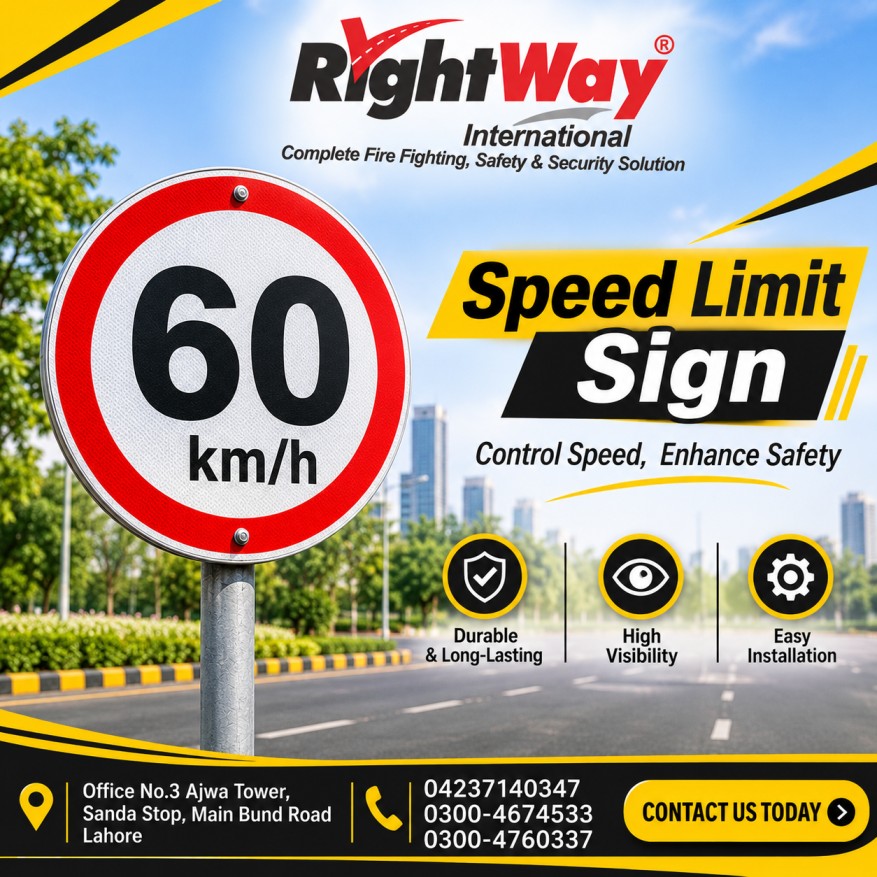
A Speed Limit Sign is a regulatory traffic sign that displays the maximum legal speed permitted on a specific road or in a designated area.
These signs help drivers understand the speed restrictions that apply to their location. Moreover, they support traffic authorities in managing vehicle movement and improving road safety.
Speed limit signs commonly display a numerical speed value, such as 30, 40, 60, or 80 km/h. The applicable speed depends on road conditions, traffic regulations, and decisions made by the relevant authorities.
Most standard speed limit signs use a clear numerical display and a recognizable design. In addition, reflective materials help improve visibility during nighttime driving.
Applications of Speed Limit Signs
Speed Limit Signs are essential for controlling vehicle speeds in different environments.
- Highways and Motorways: Authorities use speed limit signs to communicate permitted speeds on different sections of major roads.
- School Zones: Lower speed limits help protect children and other pedestrians near educational institutions.
- Residential Areas: These signs help control vehicle speeds in housing societies and neighbourhood streets.
- Industrial Facilities: Factories and warehouses use speed limit signs to manage vehicle movement and protect workers.
- Parking Areas: Shopping malls, commercial buildings, and private parking facilities use speed restrictions to improve safety.
- Construction Zones: Temporary speed limit signs warn drivers to reduce speed near roadwork and construction activities.
- Hospitals: Medical facilities use speed limit signs to manage traffic around entrances, emergency routes, and pedestrian areas.
- Commercial Developments: Business centres and private properties install these signs to guide drivers and maintain organized traffic movement.
Types of Speed Limit Signs
Different roads and facilities require different speed restrictions. Therefore, authorities select suitable signs according to traffic conditions and local regulations.
1. Standard Speed Limit Sign
This sign displays the maximum permitted speed for a particular road. It helps drivers follow the applicable traffic regulations.
2. School Zone Speed Limit Sign
School zone speed limit signs inform drivers about reduced speed restrictions near schools. They help improve safety for children, parents, and school staff.
3. Highway Speed Limit Sign
Highway speed limit signs communicate the maximum permitted speed on highways and major roads. Authorities may use different limits for different road sections.
4. Residential Area Speed Limit Sign
These signs control vehicle speeds in residential streets. They help create safer environments for pedestrians, cyclists, and residents.
5. Temporary Speed Limit Sign
Construction companies and road authorities use temporary signs during maintenance, road repairs, and construction activities. These signs communicate temporary speed restrictions.
6. Electronic Speed Limit Sign
Electronic speed limit signs display speed information through LED screens or other digital displays. Some advanced systems allow authorities to update speed information according to traffic conditions.
7. Variable Speed Limit Sign
Variable speed limit signs allow authorities to change displayed speed restrictions when necessary. They can support traffic management during congestion, bad weather, or other changing road conditions.
Key Features of Speed Limit Signs
A quality Speed Limit Sign should provide clear information and remain visible under different environmental conditions.
- Clear Numerical Display: Large numbers help drivers recognize speed restrictions quickly.
- High Visibility: Contrasting colours improve readability from a suitable distance.
- Reflective Sheeting: Retroreflective materials improve visibility when headlights illuminate the sign.
- Weather Resistance: Suitable construction helps signs withstand rain, sunlight, dust, and outdoor conditions.
- Durable Material: Aluminium and other approved sign substrates provide reliable support.
- Strong Mounting System: Proper brackets and supports help maintain secure installation.
- Easy Maintenance: Quality construction supports long-term performance.
- Customizable Speed Values: Manufacturers can produce signs according to approved project requirements.
Benefits of Speed Limit Signs
Speed Limit Signs provide several important benefits for drivers, pedestrians, and traffic management authorities.
1. Improved Road Safety
Speed limit signs inform drivers about permitted speeds. Consequently, motorists can adjust their driving behaviour according to road conditions and applicable regulations.
2. Better Traffic Control
Clearly displayed speed restrictions help authorities manage vehicle movement. They also support organized traffic flow across different road networks.
3. Reduced Accident Risks
Excessive speed can increase both the likelihood and severity of road accidents. Therefore, clearly communicated speed restrictions support safer driving practices.
4. Enhanced Pedestrian Protection
Lower speed limits in busy pedestrian areas give drivers more time to react. This is particularly important near schools, hospitals, markets, and residential communities.
5. Improved Driver Awareness
Speed limit signs remind motorists to observe traffic regulations. Furthermore, they provide clear information about changing speed restrictions along a route.
6. Better Safety in Construction Areas
Temporary speed limit signs alert drivers to roadwork and changing traffic conditions. As a result, motorists can approach construction zones more carefully.
7. Effective Traffic Management
Speed limit signs help authorities apply consistent speed restrictions across different road sections. They also support broader road safety and traffic management strategies.
Standards and Guidelines for Speed Limit Signs
Speed limit signs should follow the requirements of the relevant traffic authority. Their design, placement, dimensions, colours, and displayed speed values must match applicable regulations.
The Manual on Uniform Traffic Control Devices (MUTCD) provides guidance for regulatory traffic signs in the United States.
An important reference is:
- MUTCD Section 2B.21 – Speed Limit Sign (R2-1): Covers the standard regulatory speed limit sign and its applications.
- MUTCD Part 2 – Signs: Provides broader guidance on traffic sign design, placement, and regulatory sign requirements.
For road projects in Pakistan, the relevant highway department, municipal authority, or road-owning agency should determine the applicable speed limits and approve the sign specifications.
Proper installation also matters. Authorities should place signs where drivers can see and understand them in sufficient time.
Why Choose RightWay International?
RightWay International provides professional fire-fighting, safety, security, and traffic management solutions in Pakistan.
We understand that effective traffic management requires clear signage and reliable road safety products. Therefore, we focus on solutions that help improve road awareness and support safer transportation environments.
Our traffic management solutions serve different project requirements, including:
- Highway and motorway safety
- Commercial road safety
- Industrial traffic management
- Parking area safety
- Construction site traffic control
- Residential road safety
Whether you require standard speed limit signs or customized traffic signage, RightWay International can assist with your project requirements.
Contact our team today to learn more about our road safety products.
Frequently Asked Questions (FAQs)
1. What is the purpose of a Speed Limit Sign?
A Speed Limit Sign informs drivers about the maximum permitted speed on a particular road or within a designated area. It supports traffic regulation and safer driving.
2. What numbers are commonly displayed on speed limit signs?
Speed limit signs can display different values, such as 30, 40, 50, 60, or 80 km/h. However, the permitted speed depends on local traffic regulations and road conditions.
3. Where are speed limit signs installed?
Authorities install speed limit signs on highways, residential streets, school zones, industrial roads, construction areas, and commercial properties.
4. Are speed limit signs reflective?
Many outdoor speed limit signs use retroreflective sheeting. This material reflects vehicle headlights towards drivers and improves nighttime visibility.
5. Which materials are used for speed limit signs?
Manufacturers commonly use aluminium or other suitable sign substrates. They may also apply reflective sheeting to improve visibility and durability.
6. Why are speed limit signs important near schools?
School zones often experience increased pedestrian movement. Speed limit signs alert drivers to reduced speed restrictions and encourage greater caution.
7. What is the difference between a standard and electronic speed limit sign?
A standard speed limit sign displays a fixed speed value. In contrast, an electronic sign can display changeable speed information through a digital system.
8. Can speed limit signs be customized?
Yes. Manufacturers can produce signs with different speed values, sizes, and specifications according to approved project requirements and applicable regulations.
9. Does RightWay International provide speed limit signs in Pakistan?
RightWay International provides traffic management and road safety solutions in Pakistan. Contact our team for product availability, specifications, and project quotations.
Contact RightWay International
Office Address: Office No. 3, Ajwa Tower, Sanda Stop, Main Bund Road, Lahore, Pakistan.
Phone Numbers:
- 042-37140347
- 0300-4674533
- 0300-4760337
Choose RightWay International for reliable traffic management and road safety solutions. Together, we can support safer and more organized roads.