




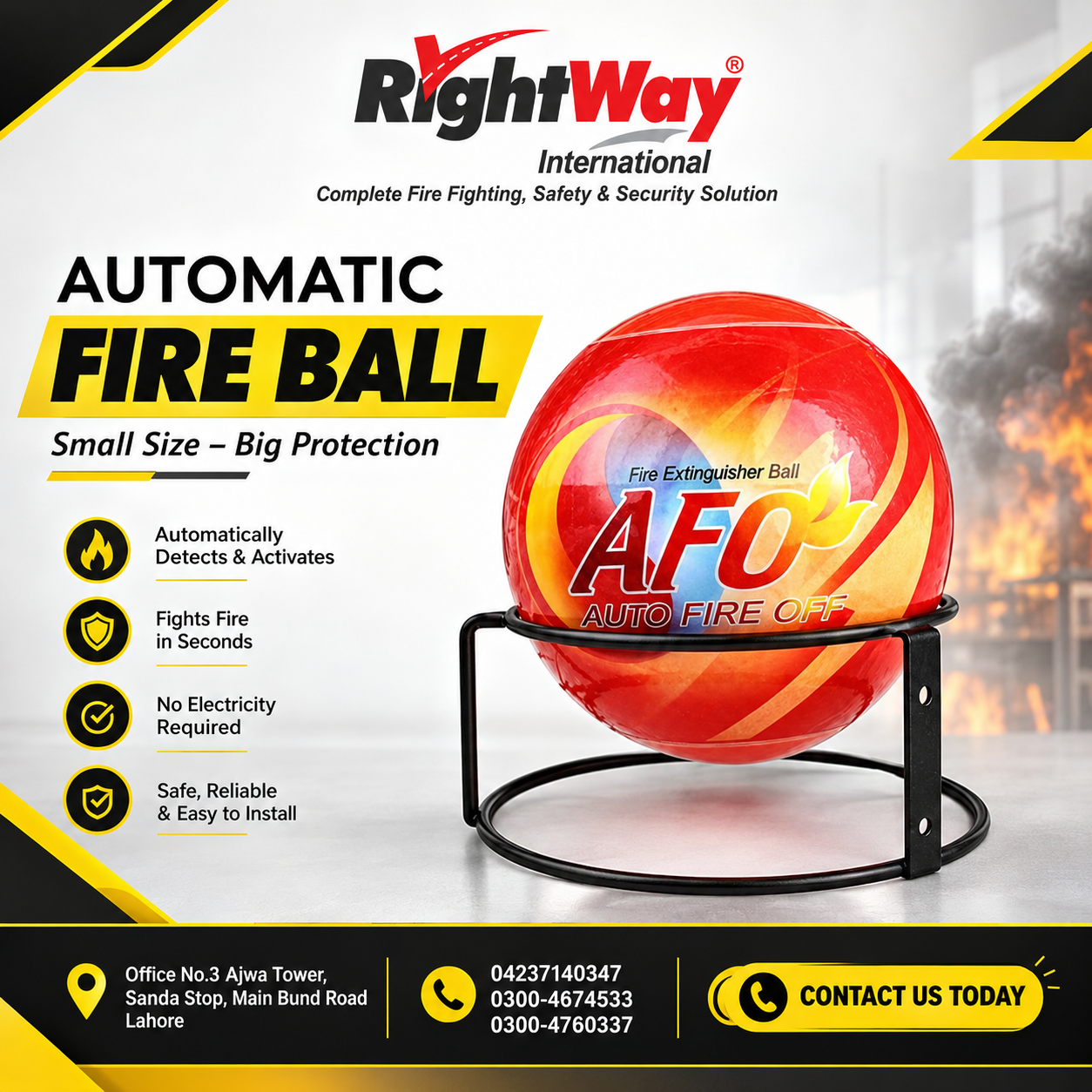
Importance of Automatic Fire Ball provides an additional fire protection option for small fire hazards in areas where rapid detection and localized suppression can be valuable. Designed to activate automatically when exposed to sufficient heat, a fire ball can release its extinguishing agent directly around the developing fire.
Because of its simple operating concept, an automatic fire ball can be installed near potential fire hazards such as electrical panels, distribution boards, machinery, kitchens, storage areas, and other locations where a small fire could develop.
Unlike a conventional portable fire extinguisher, an automatic fire ball does not require a person to stand directly beside the fire and manually operate the extinguisher. When the activation mechanism reaches its specified temperature, the device can activate and discharge its extinguishing agent.
However, an automatic fire ball should not be considered a replacement for fire alarms, sprinklers, portable extinguishers, or a complete fire protection system. Users should always select a product according to its certified fire rating, extinguishing agent, installation requirements, and manufacturer’s instructions.
What Is an Automatic Fire Ball?
An Automatic Fire Ball is a compact fire suppression device designed to activate when exposed to sufficient heat.
Many automatic fire balls use a heat-sensitive activation mechanism. When the surrounding temperature reaches the device’s specified activation point, the mechanism triggers the extinguishing system and disperses the extinguishing agent.
Depending on the specific model, an automatic fire ball may contain dry chemical powder or another approved extinguishing agent.
The exact fire classes it can handle depend on the product’s certification and rating. Therefore, users should always check the manufacturer’s specifications before installation.
An automatic fire ball may be positioned near a potential fire source so that it can provide localized fire suppression during the early stages of a fire.
How Does an Automatic Fire Ball Work?
An automatic fire ball works through a heat-activated fire suppression mechanism.
When a fire develops near the device, rising heat reaches the activation mechanism. Once the temperature reaches the specified activation level, the device activates and disperses its extinguishing agent.
The extinguishing agent then works to suppress the fire by interfering with the combustion process.
For dry chemical powder models, the powder can interrupt the chemical chain reaction that allows flames to continue burning.
The device therefore provides a rapid localized response without requiring a person to manually pull a pin and squeeze a handle.
However, the automatic fire ball must be installed correctly and within the manufacturer’s recommended distance from the potential fire hazard.
Why Is an Automatic Fire Ball Important?
Fire can develop rapidly, particularly around electrical equipment, machinery, kitchens, storage areas, and other heat-producing or combustible environments.
An automatic fire ball can provide an additional layer of protection by responding to heat without requiring immediate manual operation.
For example, if a small fire develops in a location that is temporarily unattended, a properly installed automatic fire ball may activate when sufficient heat reaches its activation mechanism.
This can provide an early suppression response and may help limit fire development when the device is correctly selected and used within its certified application.
Nevertheless, automatic fire balls should form part of a broader fire safety strategy that includes detection, alarms, evacuation procedures, suitable extinguishers, and other required fire protection systems.
Main Benefits of an Automatic Fire Ball
1. Automatic Activation
One of the main features of an automatic fire ball is its ability to activate automatically when exposed to sufficient heat.
This means the device does not necessarily require a person to be standing nearby to initiate the suppression process.
2. Simple Fire Protection Solution
Automatic fire balls have a relatively simple operating concept.
Once correctly installed, they remain positioned near the identified fire hazard and can respond when the specified activation temperature is reached.
3. Useful for Localized Fire Hazards
Automatic fire balls can be considered for localized risks such as electrical panels, machinery, storage areas, and other suitable applications identified by a fire risk assessment.
4. Compact Design
The compact construction allows an automatic fire ball to be installed in locations where a larger fire suppression system may not be practical.
However, available space and installation requirements should always be checked before installation.
5. Quick Response to Heat
Because the device responds to heat, it can activate during the early development of a fire when the surrounding temperature reaches its specified activation point.
6. Can Provide Additional Protection
An automatic fire ball can provide another layer of protection alongside conventional fire extinguishers, fire alarms, smoke detectors, and other fire protection equipment.
7. Useful for Unattended Areas
Certain areas may remain unattended for extended periods.
When correctly installed, an automatic fire ball can provide localized automatic suppression without depending entirely on a person noticing the fire first.
Where Are Automatic Fire Balls Used?
Automatic fire balls may be suitable for a variety of localized fire hazards.
However, the correct application depends on the product’s certification, extinguishing agent, fire rating, and manufacturer’s installation instructions.
1. Electrical Panels
Electrical panels and distribution boards can represent potential fire hazards due to electrical faults, overheating, loose connections, or equipment failure.
A suitably rated automatic fire ball may provide localized protection around an electrical hazard where its extinguishing agent is approved for that application.
2. Machinery Areas
Machinery can generate heat and may contain electrical components, motors, wiring, lubricants, or other combustible materials.
A suitable automatic fire suppression device can provide an additional layer of protection around identified hazards.
3. Kitchens
Kitchen areas contain cooking equipment and combustible materials.
However, automatic fire balls should only be used for kitchen applications when the specific product is certified and suitable for the particular type of fire hazard.
Cooking-oil fires require specially rated fire protection equipment, such as suitable wet chemical suppression systems or extinguishers.
4. Storage Areas
Storage rooms may contain cardboard, paper, packaging, textiles, and other combustible materials.
An automatic fire ball may provide localized protection in suitable areas, but it should not replace the required portable extinguishers, detection systems, or sprinkler protection.
5. Workshops
Workshops can contain electrical equipment, machinery, tools, combustible materials, and other potential ignition sources.
A fire risk assessment can help determine whether an automatic fire ball is suitable for specific locations.
6. Server and Equipment Areas
Electrical and electronic equipment can represent potential ignition hazards.
However, the extinguishing agent must be appropriate for the equipment and the specific fire risk. Product certification should always be checked before installation.
Automatic Fire Ball vs Traditional Fire Extinguisher
An automatic fire ball and a traditional portable fire extinguisher have different operating methods.
A conventional extinguisher generally requires a person to identify the fire, approach it safely, activate the extinguisher, and direct the extinguishing agent toward the base of the flames.
An automatic fire ball is designed to activate when sufficient heat reaches its activation mechanism.
Therefore, an automatic fire ball can provide localized automatic protection, while a portable extinguisher allows a trained person to actively control the direction and duration of discharge.
Both can have a place within a complete fire safety strategy, depending on the identified hazards.
Automatic Fire Ball vs Fire Alarm System
A fire alarm system primarily detects a fire or smoke condition and alerts occupants or emergency personnel.
An automatic fire ball, in contrast, is designed to provide localized suppression when its activation mechanism reaches the required temperature.
Therefore, these systems perform different functions.
A fire alarm can provide an important warning and support evacuation, while an automatic suppression device can address a localized fire hazard.
For comprehensive fire protection, facilities may require both detection and suppression systems.
Automatic Fire Ball vs Fire Sprinkler System
Fire sprinklers are engineered suppression systems designed to protect buildings and defined areas according to their design requirements.
Automatic fire balls are generally compact localized devices intended for specific applications.
A fire sprinkler system can protect larger areas when properly designed and installed, while an automatic fire ball may provide additional localized protection around a particular hazard.
Therefore, an automatic fire ball should not automatically be considered a substitute for a required sprinkler system.
How to Install an Automatic Fire Ball
Installation should always follow the manufacturer’s instructions.
General considerations include:
Step 1: Identify the Fire Hazard
Determine the location where a fire could potentially start.
Step 2: Check the Product Rating
Confirm that the automatic fire ball is approved for the specific fire hazard.
Step 3: Select the Correct Location
Position the device where heat from a developing fire can reach the activation mechanism as intended.
Step 4: Maintain the Required Distance
Follow the manufacturer’s specified installation distance and coverage requirements.
Step 5: Secure the Device
Install the fire ball using the appropriate mounting method and hardware.
Step 6: Keep the Device Accessible
Do not block or cover the automatic fire ball with materials, equipment, or storage items.
Step 7: Inspect the Installation
Check the device regularly for visible damage, corrosion, contamination, or other problems.
Professional installation may be appropriate where the product forms part of a larger fire protection system.
Is an Automatic Fire Ball Safe?
An automatic fire ball is designed to activate under specific conditions, but safe use depends on correct selection, installation, maintenance, and application.
Users should never modify the device or attempt to open its internal components.
The device should also remain within its specified environmental conditions.
Most importantly, users should understand that automatic fire balls are intended for early-stage or localized fire suppression. They are not designed to replace evacuation procedures or emergency response.
If a fire is spreading rapidly, producing dangerous smoke, or threatening escape routes, occupants should evacuate immediately and contact emergency services.
Safety Precautions for Automatic Fire Balls
Follow these precautions when using automatic fire balls:
- Select a product with an appropriate fire rating.
- Follow the manufacturer’s installation instructions.
- Install the device at the recommended location.
- Do not modify the fire ball.
- Do not open or dismantle the device.
- Keep the device free from obstruction.
- Inspect the device regularly.
- Check for corrosion or physical damage.
- Replace damaged units.
- Follow the manufacturer’s maintenance requirements.
- Do not depend on an automatic fire ball as the only fire protection measure.
- Maintain suitable fire alarms and detection systems.
- Provide appropriate portable extinguishers.
- Keep emergency exits clear.
- Train employees in fire emergency procedures.
- Evacuate immediately when a fire becomes unsafe to control.
Maintenance of Automatic Fire Balls
Regular inspection helps ensure that an automatic fire ball remains ready for use.
During routine inspections, check the device for physical damage, corrosion, contamination, loose mounting, or other visible problems.
Also check that nothing has been placed in front of the device that could prevent heat from reaching its activation mechanism.
A maintenance program may include:
- Visual inspection
- Mounting inspection
- Physical condition checks
- Corrosion checks
- Activation mechanism inspection
- Manufacturer-recommended servicing
- Replacement after activation
- Replacement of damaged units
- Maintenance documentation
After an automatic fire ball activates, it should not simply be returned to service without following the manufacturer’s replacement or servicing instructions.
What Type of Fire Can an Automatic Fire Ball Handle?
The answer depends on the specific automatic fire ball.
Different products may use different extinguishing agents and may carry different fire ratings.
Some dry chemical automatic fire balls are designed for certain combinations of combustible, flammable-liquid, and electrical fire hazards.
However, users should never assume that every automatic fire ball can extinguish every type of fire.
Always check:
- Fire classification
- Extinguishing agent
- Product certification
- Fire rating
- Manufacturer’s instructions
- Installation requirements
For example, a product approved for certain electrical hazards should not automatically be assumed to be suitable for commercial cooking-oil fires.
Can an Automatic Fire Ball Replace a Fire Extinguisher?
An automatic fire ball should generally be considered an additional fire protection device rather than a universal replacement for portable extinguishers.
Portable extinguishers allow trained users to select the appropriate extinguishing agent and direct it toward the fire.
Automatic fire balls provide localized automatic activation.
Therefore, facilities should determine their fire protection requirements through a suitable fire risk assessment.
Automatic Fire Ball for Offices
Offices contain electrical equipment, paper, cardboard, furniture, computers, printers, and other potential fire hazards.
An automatic fire ball may provide localized protection in selected areas where the product is appropriate for the identified hazard.
However, offices should also maintain suitable portable extinguishers, smoke detection, fire alarms, emergency lighting, evacuation routes, and employee fire safety procedures.
Automatic Fire Ball for Warehouses
Warehouses can contain large quantities of packaging materials, cardboard, wooden pallets, textiles, and stored goods.
Because fire can spread rapidly through stored materials, warehouses often require a comprehensive fire protection strategy.
An automatic fire ball may provide localized protection in selected high-risk areas.
However, larger warehouse facilities may require fire detection, sprinkler systems, hydrants, fire extinguishers, emergency lighting, fire alarms, and other systems based on the risk assessment and applicable requirements.
Automatic Fire Ball for Electrical Equipment
Electrical equipment can present fire risks because of overheating, short circuits, damaged wiring, overloaded circuits, or component failure.
An automatic fire ball containing a suitable extinguishing agent may provide localized protection where the product is specifically approved for electrical fire hazards.
Before installation, verify the product’s electrical fire rating and certification.
Never assume that an automatic fire ball is suitable for energized electrical equipment simply because it is marketed as an automatic fire extinguisher.
Automatic Fire Ball for Kitchens
Kitchens contain significant fire risks from cooking appliances, grease, oil, gas, and electrical equipment.
An automatic fire ball should only be used in a kitchen when the specific product is approved for the relevant fire hazard.
Commercial cooking-oil and fat fires require appropriate fire suppression equipment designed for those hazards.
Therefore, kitchens should use properly rated wet chemical extinguishers or suppression systems where required.
How to Choose the Right Automatic Fire Ball
Before purchasing an automatic fire ball, consider the following factors.
Fire Rating
Check which fire classes the product is certified to handle.
Extinguishing Agent
Determine whether the device contains dry chemical powder or another extinguishing agent.
Activation Temperature
Check the manufacturer’s specified activation temperature.
Coverage
Review the manufacturer’s stated coverage and installation requirements.
Certification
Select products that meet applicable certification and safety requirements.
Construction Quality
Check the quality of the housing, activation mechanism, mounting system, and other components.
Installation Requirements
Follow the manufacturer’s instructions regarding mounting position, distance, and environmental conditions.
Maintenance Support
Choose a supplier that can provide appropriate inspection, servicing, replacement, and technical support.
Importance of Automatic Fire Ball in Pakistan
Fire safety is important across offices, schools, warehouses, factories, shops, workshops, commercial buildings, institutions, and residential environments throughout Pakistan.
Many of these locations contain electrical equipment, combustible materials, machinery, storage areas, and other potential fire hazards.
An Automatic Fire Ball in Pakistan can provide an additional localized fire suppression option for suitable applications.
For example, it may be considered for selected electrical panels, machinery areas, storage spaces, or other locations where its certified fire rating matches the identified hazard.
However, different locations require different fire protection solutions.
A commercial kitchen may require wet chemical protection, while a warehouse may require sprinklers and hydrants in addition to portable extinguishers. Electrical areas may require suitable non-conductive extinguishing agents.
Therefore, fire risk assessment should guide the selection and installation of automatic fire suppression equipment.
Automatic Fire Ball for Commercial Buildings
Commercial buildings can contain offices, electrical rooms, kitchens, storage areas, machinery, server rooms, and other spaces with different fire hazards.
Because these areas have different risks, one fire protection product may not be suitable for every location.
An automatic fire ball can provide localized protection in selected areas where its certification and fire rating are appropriate.
However, commercial buildings should also consider fire alarms, smoke detectors, emergency lighting, portable fire extinguishers, sprinkler systems, evacuation plans, and other required fire protection measures.
Frequently Asked Questions About Automatic Fire Balls
What Is an Automatic Fire Ball?
An automatic fire ball is a compact fire suppression device designed to activate automatically when exposed to sufficient heat. It then releases its extinguishing agent to suppress a developing fire.
How Does an Automatic Fire Ball Work?
The device uses a heat-sensitive activation mechanism. When the surrounding temperature reaches the manufacturer’s specified activation point, the device activates and disperses its extinguishing agent.
Is an Automatic Fire Ball Reusable?
After activation, the device generally requires replacement or servicing according to the manufacturer’s instructions. Users should not assume that an activated fire ball can simply be reused.
What Fire Classes Can an Automatic Fire Ball Extinguish?
The applicable fire classes depend on the specific product, extinguishing agent, certification, and fire rating. Always check the manufacturer’s specifications.
Can an Automatic Fire Ball Be Used for Electrical Fires?
Some products may be certified for suitable electrical fire hazards. However, users should verify the specific product’s rating and certification before installation.
Can an Automatic Fire Ball Be Used on Cooking Oil?
Not automatically. Cooking-oil fires require fire protection equipment specifically approved for this hazard. A wet chemical extinguisher or suitable commercial kitchen suppression system may be required.
Where Should an Automatic Fire Ball Be Installed?
It should be installed near an identified fire hazard according to the manufacturer’s recommended mounting position, distance, and coverage requirements.
Does an Automatic Fire Ball Replace a Fire Extinguisher?
No. It should generally be considered an additional fire protection measure rather than a universal replacement for portable fire extinguishers.
Does an Automatic Fire Ball Need Maintenance?
Yes. Regular inspection helps identify physical damage, corrosion, contamination, mounting problems, or other issues. Maintenance should follow the manufacturer’s instructions.
Is an Automatic Fire Ball Suitable for a Warehouse?
It may be suitable for specific localized hazards within a warehouse. However, larger warehouses may require comprehensive protection such as fire alarms, sprinklers, hydrants, and portable extinguishers.
What Is the Activation Temperature of an Automatic Fire Ball?
The activation temperature varies by product and model. Always check the manufacturer’s technical specifications rather than assuming a standard activation temperature.
Can an Automatic Fire Ball Be Installed Outdoors?
Outdoor installation depends on the specific product’s environmental rating and manufacturer’s instructions. Exposure to weather, moisture, temperature changes, and corrosion should be considered.
Conclusion
An Automatic Fire Ball can provide an additional layer of localized fire protection by automatically activating when sufficient heat reaches its activation mechanism.
Its automatic operation can be useful in selected areas where a developing fire may otherwise remain unnoticed until it becomes larger.
Automatic fire balls can be considered for suitable electrical areas, machinery, storage spaces, workshops, commercial locations, and other applications when the product’s fire rating and certification match the identified hazard.
However, an automatic fire ball does not replace a complete fire protection system.
The correct fire extinguisher, fire alarm, smoke detection system, sprinkler system, emergency lighting, evacuation plan, and other safety measures should be selected according to the specific building and fire risks.
Most importantly, always follow the manufacturer’s installation instructions and verify the product’s certified fire applications before use.
For businesses and facilities in Pakistan, selecting properly rated and professionally supported fire protection equipment can help strengthen overall emergency preparedness and fire safety.