




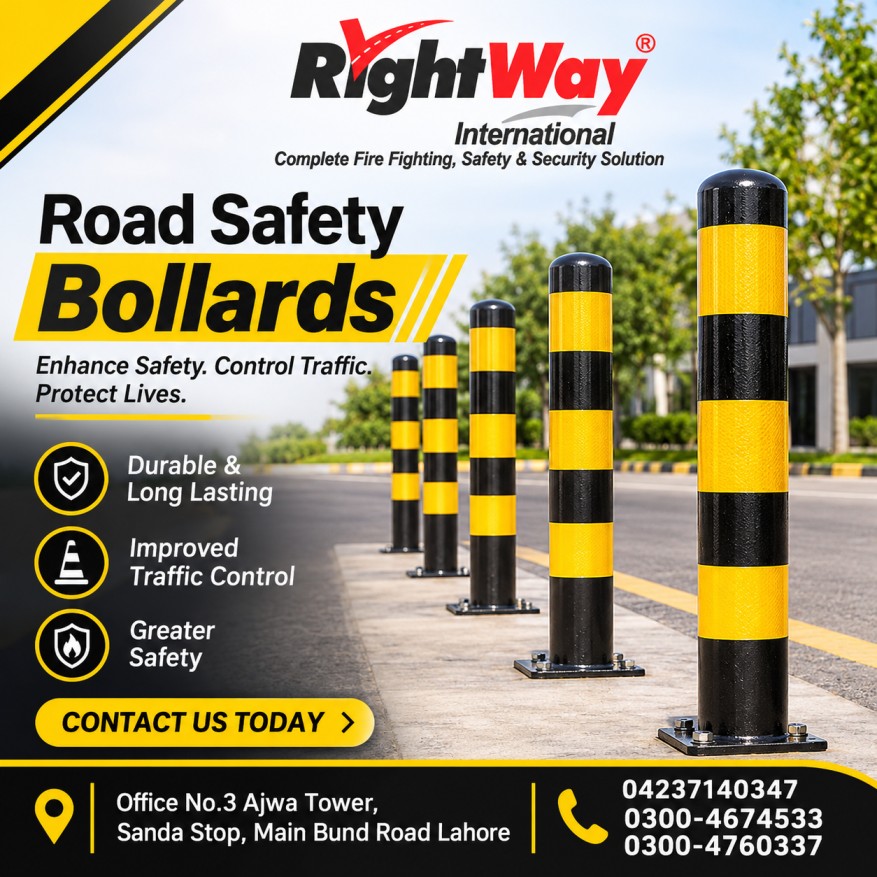
Road Safety Bollards Features & Benefits. Road Safety Bollards play an important role in traffic management, pedestrian protection, and road safety. These specially designed vertical safety posts help control vehicle movement, separate traffic areas, and protect pedestrians from accidental vehicle entry. Moreover, road authorities, commercial buildings, parking facilities, and industrial sites use bollards to improve traffic organization and protect restricted areas.
At RightWay International, we understand the importance of reliable road safety equipment. Therefore, we provide professional fire-fighting, safety, and security solutions for different industries. Road safety bollards offer a practical solution for controlling vehicle access and improving public safety. In addition, their durable construction helps organizations establish clear boundaries around pedestrian zones, parking spaces, and restricted locations.
What Are Road Safety Bollards?
Road Safety Bollards are vertical posts that help control vehicle access and protect designated areas. Manufacturers produce these safety products using materials such as steel, stainless steel, concrete, rubber, and high-strength plastic.
Bollards come in different shapes, sizes, colors, and installation designs. Furthermore, many models include reflective strips or high-visibility finishes that help drivers identify them during nighttime and low-light conditions.
Some bollards provide permanent vehicle barriers, while others offer flexible or removable designs for temporary traffic control. For example, fixed bollards suit pedestrian zones and building entrances, whereas removable models allow authorized vehicles to access restricted areas.
Consequently, road safety bollards help improve traffic organization and provide physical protection in different environments.
Common Applications of Road Safety Bollards
Road safety bollards support traffic management and property protection in various locations. Moreover, their different designs make them suitable for permanent installations and temporary traffic control.
1. Pedestrian Walkways
Authorities install bollards along pedestrian walkways to separate people from moving vehicles. As a result, these posts help protect walking areas and discourage unauthorized vehicle entry.
2. Road Intersections
Road authorities use bollards near selected intersections to guide vehicle movement and identify restricted areas. In addition, reflective bollards improve visibility around traffic control points.
3. Parking Areas
Commercial buildings and shopping centers install bollards around parking spaces, pedestrian routes, and building entrances. Therefore, these posts help organize vehicle movement and protect nearby structures.
4. Shopping Malls and Commercial Buildings
Shopping malls use bollards to protect entrance areas, outdoor seating spaces, and pedestrian zones. Moreover, they help restrict unauthorized vehicle access to selected locations.
5. Industrial Facilities
Factories and industrial facilities install bollards around machinery, loading areas, storage zones, and pedestrian routes. Consequently, they help establish physical separation between vehicles and workers.
6. Warehouses and Loading Areas
Warehouses use bollards to protect loading bays, building corners, doors, and equipment. In addition, they help identify vehicle movement boundaries in busy operational areas.
7. Roads and Highways
Road authorities use suitable bollards to identify road boundaries, guide traffic, and restrict vehicle access. Furthermore, reflective models improve roadside visibility during nighttime conditions.
8. Airports and Transportation Terminals
Airports install bollards around passenger walkways, terminal entrances, and restricted vehicle zones. Therefore, they help organize traffic movement and protect pedestrian areas.
9. Hospitals and Educational Institutions
Hospitals and schools use bollards near entrances, pedestrian crossings, and internal roads. As a result, they help control vehicle access and maintain safer walking areas.
10. Public Parks and Recreational Areas
Public parks use bollards to prevent unauthorized vehicles from entering pedestrian pathways, green spaces, and recreational zones. Moreover, they help maintain clear boundaries between vehicles and visitors.
Types of Road Safety Bollards
1. Fixed Bollards
Fixed bollards provide permanent vehicle access control. Installers secure these posts into concrete foundations or suitable mounting surfaces. Moreover, they suit pedestrian areas, building entrances, and restricted locations.
2. Removable Bollards
Removable bollards allow authorized personnel to open selected access points when required. Their locking mechanisms support controlled access in parking facilities and commercial areas.
3. Retractable Bollards
Retractable bollards move vertically to allow or restrict vehicle access. Depending on their design, operators can raise or lower them manually or through automated systems.
4. Flexible Bollards
Flexible bollards bend when vehicles make contact and return toward their original position. Therefore, they suit traffic guidance, lane separation, and temporary road management applications.
5. Reflective Bollards
Reflective bollards feature high-visibility reflective strips or surfaces. In addition, they help drivers identify road boundaries and restricted areas during nighttime and poor lighting conditions.
6. Steel Bollards
Steel bollards provide strong construction for demanding traffic management applications. They suit industrial facilities, commercial entrances, and locations requiring durable physical barriers.
7. Plastic Bollards
Plastic bollards offer lightweight construction and easy handling. Moreover, their bright colors make them suitable for temporary traffic control and road guidance.
8. Concrete Bollards
Concrete bollards provide heavy and rigid construction for permanent installations. They suit locations that require substantial physical barriers and long-term vehicle access control.
Key Features of Road Safety Bollards
- Durable Construction: Available in steel, stainless steel, concrete, rubber, and plastic materials.
- High Visibility: Bright colors and reflective strips improve visibility for approaching drivers.
- Access Control: Helps restrict unauthorized vehicle entry into designated areas.
- Multiple Designs: Available in fixed, removable, retractable, and flexible models.
- Weather Resistance: Suitable outdoor models withstand rain, sunlight, and changing environmental conditions.
- Easy Installation: Different mounting options support installation on roads, pavements, and concrete surfaces.
- Pedestrian Protection: Creates physical separation between vehicle routes and walking areas.
- Versatile Applications: Suitable for roads, parking facilities, commercial buildings, and industrial sites.
Benefits of Road Safety Bollards
- Improved Road Safety: Helps organize vehicle movement and identify restricted areas.
- Pedestrian Protection: Separates walking areas from vehicle routes.
- Better Traffic Management: Supports organized traffic movement in busy locations.
- Property Protection: Helps protect buildings, equipment, and infrastructure from accidental vehicle entry.
- Controlled Vehicle Access: Restricts unauthorized vehicles from entering selected locations.
- Enhanced Visibility: Reflective surfaces help drivers identify road boundaries and obstacles.
- Flexible Traffic Control: Different bollard designs support permanent and temporary installations.
- Cost-Effective Solution: Provides a practical option for improving access control and traffic organization.
Road safety bollards remain valuable equipment for modern traffic management and pedestrian protection. Therefore, selecting the correct bollard type, material, height, visibility features, and installation method can improve safety in different environments.
At RightWay International, we aim to support safer roads and workplaces through reliable fire-fighting, safety, and traffic management solutions.