




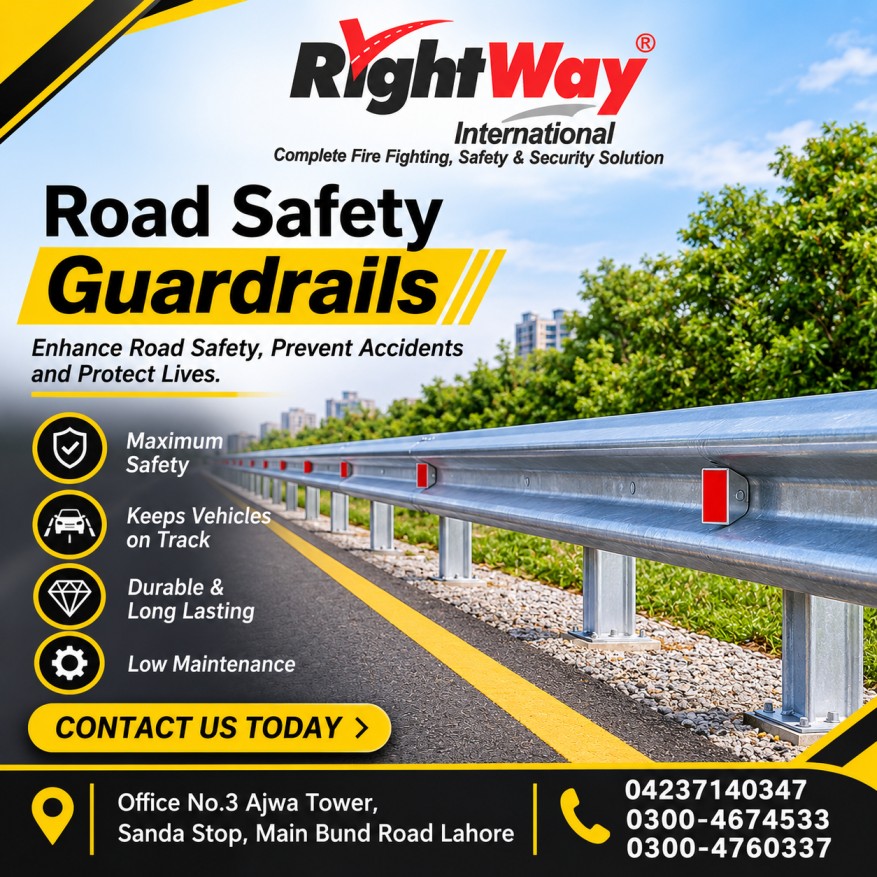
Road Safety Guardrails Features & Benefits. Road Safety Guardrails play an important role in highway safety, vehicle protection, and traffic management. These specially designed roadside safety barriers help prevent vehicles from leaving the roadway and entering potentially dangerous areas. Moreover, road authorities, highway departments, construction companies, and infrastructure developers install guardrails along highways, bridges, sharp curves, and elevated roads to improve road safety.
At RightWay International, we understand the importance of reliable road safety equipment. Therefore, we provide professional fire-fighting, safety, and security solutions for different industries. Road safety guardrails offer an important solution for reducing the risk of serious roadside accidents. In addition, their strong construction helps guide vehicles and provide a protective barrier along hazardous road sections.
What Are Road Safety Guardrails?
Road Safety Guardrails are protective roadside barriers designed to help prevent vehicles from leaving designated roadways. Manufacturers generally produce these systems using galvanized steel, metal components, and other durable materials.
A typical steel guardrail system includes corrugated metal beams, supporting posts, mounting brackets, and connecting hardware. Furthermore, manufacturers design these components to work together and help redirect or contain vehicles during certain impacts.
Road safety guardrails come in different designs to suit various road conditions and installation requirements. For example, highway guardrails provide roadside protection, while bridge guardrails protect vehicles along elevated road sections.
Consequently, these barriers help reduce the risk of vehicles entering hazardous areas such as steep slopes, ditches, and roadside obstacles.
Common Applications of Road Safety Guardrails
Road safety guardrails provide roadside protection in different environments. Moreover, their durable construction makes them suitable for highways, bridges, construction zones, and other high-risk locations.
1. Highways and Motorways
Highway authorities install guardrails along road edges and median sections. These barriers help prevent vehicles from crossing into dangerous roadside areas or opposing traffic lanes.
2. Sharp Road Curves
Road authorities install guardrails around sharp curves and winding roads. As a result, these barriers provide additional roadside protection where drivers may struggle to maintain vehicle control.
3. Bridges and Flyovers
Bridge guardrails help protect vehicles along elevated roadways. In addition, they provide a physical barrier between moving traffic and exposed bridge edges.
4. Mountain Roads
Mountain roads often include steep slopes, narrow passages, and dangerous roadside drops. Therefore, authorities install guardrails along suitable sections to reduce the risk of vehicles leaving the roadway.
5. Road Construction Sites
Construction companies use suitable temporary or permanent guardrail systems around roadwork areas. Moreover, these barriers help separate traffic from construction zones and restricted areas.
6. Road Medians
Authorities install guardrails along selected road medians to help prevent vehicles from crossing into opposing traffic lanes. Consequently, these barriers support safer traffic separation.
7. Industrial Facilities
Industrial facilities use guardrails along internal roads, vehicle routes, and selected hazardous areas. Furthermore, they help establish physical separation between vehicles and operational spaces.
8. Parking Facilities
Large parking facilities use suitable guardrails near ramps, elevated parking levels, and exposed edges. These barriers help protect vehicles and infrastructure in areas with potential fall hazards.
9. Tunnels and Underpasses
Road authorities install suitable protective barriers along tunnel approaches and selected underpass sections. Therefore, they help guide vehicles and protect vulnerable roadside structures.
10. Elevated Roads and Embankments
Guardrails provide roadside protection along elevated road sections and embankments. In addition, they help reduce the risk of vehicles leaving the road and entering lower or hazardous areas.
Types of Road Safety Guardrails
1. W-Beam Guardrails
W-Beam guardrails feature a corrugated steel beam with a distinctive W-shaped profile. They provide a widely used roadside barrier design for highways, roads, and other traffic routes.
2. Thrie-Beam Guardrails
Thrie-Beam guardrails feature three corrugations across the metal beam. Their design provides a different structural profile for selected roadside protection applications.
3. Steel Guardrails
Steel guardrails provide durable construction for highway and roadside protection. Manufacturers commonly use galvanized steel to improve corrosion resistance and support outdoor installations.
4. Bridge Guardrails
Bridge guardrails protect vehicles along bridge edges and elevated road structures. Their design must meet the applicable bridge safety and structural requirements.
5. Highway Guardrails
Highway guardrails help contain or redirect vehicles in selected roadside impact conditions. Authorities install them along road edges, medians, and hazardous highway sections.
6. Cable Guardrails
Cable guardrails use tensioned steel cables supported by posts. They provide an alternative roadside barrier design for suitable road applications.
7. Temporary Road Guardrails
Temporary guardrail systems support selected road construction and maintenance projects. They help establish protective boundaries around work areas and restricted traffic zones.
Key Features of Road Safety Guardrails
- Strong Construction: Commonly manufactured using galvanized steel and other durable materials.
- Corrosion Resistance: Galvanized finishes help protect steel components from rust and environmental exposure.
- Impact Management: Properly designed systems help contain or redirect vehicles during certain impacts.
- Modular Design: Beam sections, posts, and connecting components support systematic installation.
- Roadside Protection: Helps separate moving traffic from selected roadside hazards.
- Multiple Designs: Available in W-Beam, Thrie-Beam, cable, and other barrier configurations.
- Weather Resistance: Suitable materials support long-term outdoor installations.
- Highway Applications: Designed for use along roads, bridges, medians, and other traffic routes.
Benefits of Road Safety Guardrails
- Improved Highway Safety: Helps reduce the risk of vehicles leaving the roadway in selected hazardous locations.
- Vehicle Protection: Provides a protective roadside barrier during certain impact conditions.
- Reduced Accident Severity: Properly selected and installed systems can help reduce the consequences of some roadway departures.
- Better Traffic Guidance: Establishes clear boundaries along highways, curves, and elevated roads.
- Protection from Roadside Hazards: Helps separate traffic from steep slopes, ditches, and fixed obstacles.
- Improved Road Organization: Supports safer separation between traffic lanes and roadside areas.
- Durable Performance: Galvanized steel construction supports long-term outdoor use.
- Versatile Applications: Suitable for highways, bridges, construction zones, and industrial roads.
Road safety guardrails remain essential components of modern highway infrastructure and roadside protection systems. Therefore, selecting the correct guardrail design, material, dimensions, installation method, and applicable crash-tested performance level is important for achieving effective protection.
At RightWay International, we aim to support safer roads and workplaces through reliable fire-fighting, safety, and traffic management solutions.