




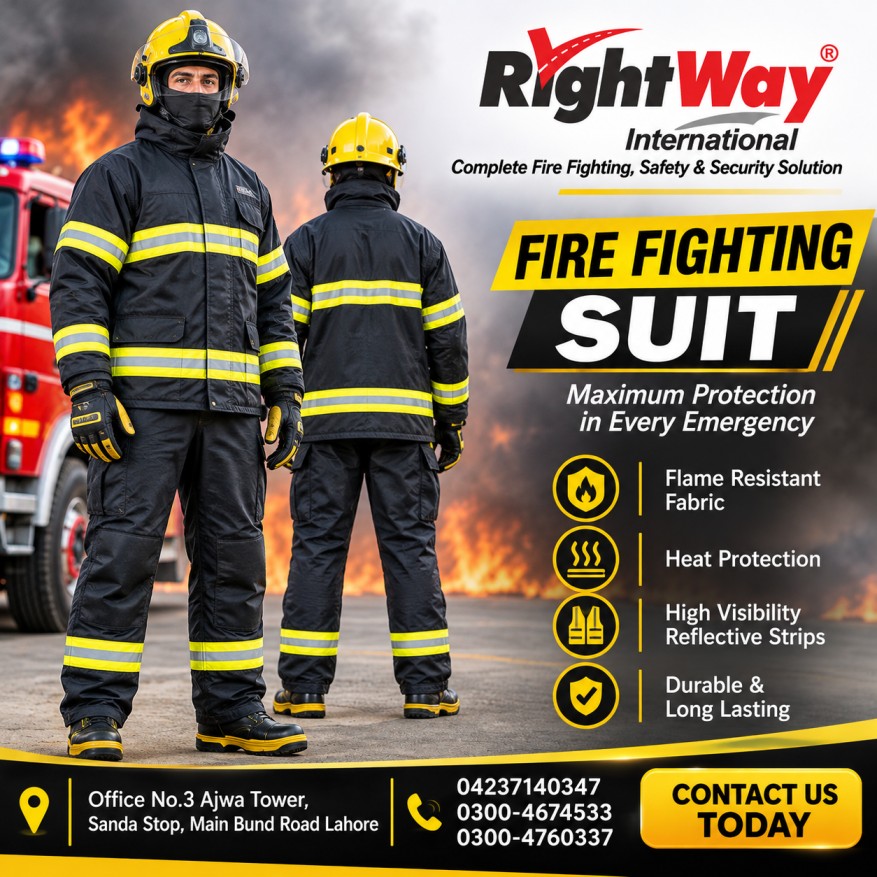
Fire Fighting Suit Features & Benefits is an essential piece of personal protective equipment (PPE) designed to help protect firefighters against heat, flames, and other hazards encountered during firefighting operations. Firefighters work in dangerous environments where high temperatures, radiant heat, smoke, and physical hazards can create serious risks. Therefore, suitable protective clothing plays an important role in firefighter safety.
Modern firefighting suits feature specialized materials, protective layers, reinforced construction, and reflective strips. These components help provide thermal protection, improve visibility, and support movement during emergency operations.
At RightWay International, we understand the importance of reliable fire safety equipment. We provide fire protection and safety solutions to support firefighters, emergency response teams, industrial facilities, and organizations.
What Is a Fire Fighting Suit?
A Fire Fighting Suit is specialized protective clothing designed for firefighters and emergency response personnel. It generally includes a protective jacket and trousers that cover the body and help reduce exposure to heat and flames.
Depending on its intended application, a firefighting suit may contain multiple protective layers. These layers can include an outer shell, a moisture barrier, and a thermal insulation layer.
Each layer serves a specific purpose. The outer shell provides resistance to heat, flames, and physical wear. Meanwhile, the moisture barrier helps resist water and certain external liquids. The thermal layer helps reduce heat transfer toward the wearer’s body.
However, protection levels vary according to the suit’s design, materials, certification, and intended use.
Key Features of a Fire Fighting Suit
A quality firefighting suit includes several important features that support firefighter protection and operational performance.
1. Flame-Resistant Materials
Firefighting suits use specialized materials designed to resist ignition and reduce flame exposure. These materials help protect firefighters during emergency response activities.
However, flame-resistant clothing does not provide unlimited protection against fire or extreme heat.
2. Thermal Protection
Thermal protection is one of the most important features of a firefighting suit. Its protective layers help reduce heat transfer and support safer operations in high-temperature environments.
The actual protection level depends on the suit’s construction and tested performance.
3. High-Visibility Reflective Strips
Reflective strips improve firefighter visibility in smoky environments, low-light conditions, and emergency response areas.
These strips help other team members identify firefighters during rescue and firefighting operations.
4. Multi-Layer Construction
Many structural firefighting suits feature multiple protective layers.
Common components include:
- Outer shell for flame and abrasion resistance.
- Moisture barrier for protection against water penetration.
- Thermal liner for additional insulation.
Together, these layers help provide protection against different environmental hazards.
5. Durable and Reinforced Design
Firefighters frequently work in physically demanding environments. Therefore, quality suits often include reinforced areas around the knees, elbows, and other high-wear sections.
Durable stitching and suitable closures also contribute to the overall performance of the garment.
6. Comfortable Fit and Mobility
Firefighters need to move quickly during emergency operations. For this reason, a properly designed suit should support flexibility, movement, and comfortable wear.
Suitable sizing also helps maintain proper coverage during firefighting activities.
Benefits of Wearing a Fire Fighting Suit
A suitable firefighting suit offers several important benefits for emergency response personnel.
1. Helps Protect Against Heat and Flames
Specialized protective materials and multiple layers help reduce exposure to heat and flames. This protection is particularly important during structural firefighting operations.
2. Supports Firefighter Safety
Protective clothing helps reduce certain workplace hazards. When used with suitable helmets, gloves, boots, and breathing apparatus, it forms part of a complete firefighter PPE system.
3. Improves Visibility During Emergencies
Reflective strips help identify firefighters in dark, smoky, and low-visibility environments. Consequently, team members can maintain better visual awareness during operations.
4. Provides Physical Protection
Reinforced construction helps protect against abrasion and general wear during demanding firefighting activities.
5. Supports Emergency Response Operations
A suitable fit and practical design allow firefighters to perform different tasks more effectively. These include fire suppression, rescue operations, and emergency evacuation activities.
Main Components of a Fire Fighting Suit
A complete firefighting outfit may include several protective items, depending on its design and application.
1. Protective Jacket: Covers the upper body and includes specialized protective layers.
2. Protective Trousers: Provide lower-body coverage and often feature reinforced knees.
3. Protective Hood: Helps cover exposed areas around the head and neck when used with compatible equipment.
4. Firefighter Helmet: Protects the head against impact and other specified hazards.
5. Fire-Resistant Gloves: Help protect hands while maintaining the grip and dexterity required for firefighting tasks.
6. Firefighter Boots: Provide foot protection, support, and resistance to specified workplace hazards.
7. Reflective Strips: Improve visibility in low-light and emergency environments.
A complete structural firefighting ensemble also requires compatible respiratory protection, such as a suitable Self-Contained Breathing Apparatus (SCBA), when the operating environment presents respiratory hazards.
Types of Fire Fighting Suits
Different firefighting activities require different levels and types of protective clothing. Therefore, selecting the correct suit is essential.
1. Structural Fire Fighting Suit
Structural firefighting suits are designed for firefighters responding to building fires and similar emergency situations.
They typically feature multiple protective layers that help reduce exposure to flames, radiant heat, and other specified hazards.
2. Proximity Fire Fighting Suit
Proximity suits are designed for certain high-radiant-heat environments, including specific industrial and aircraft firefighting applications.
They commonly feature specialized reflective outer materials. However, their protection depends on the particular design and certification.
3. Industrial Fire Fighting Suit
Industrial firefighting suits are used in selected industrial environments where workers may encounter heat, flames, and other workplace hazards.
The required protection depends on the facility’s risk assessment and the suit’s intended application.
4. Wildland Fire Fighting Clothing
Wildland firefighting clothing is designed for outdoor vegetation fires. These garments generally prioritize mobility, breathability, and protection against the hazards associated with wildland firefighting.
It is different from structural firefighting clothing and should be selected according to the operational environment.
Applications of Fire Fighting Suits
Firefighting suits are used in different environments where trained personnel may face fire-related hazards.
Common applications include:
- Fire and rescue departments
- Industrial firefighting teams
- Oil and gas facilities
- Chemical processing plants
- Power generation facilities
- Airports and aircraft rescue operations
- Manufacturing industries
- Emergency response organizations
- Warehouses and industrial facilities
- Specialized fire protection teams
Fire Fighting Suit Standards and Safety Requirements
Firefighting protective clothing should meet the appropriate safety requirements for its intended application.
For example, NFPA 1970 is a standard covering protective ensembles for structural and proximity firefighting, among other firefighter protective equipment requirements.
Other relevant standards may apply depending on the suit type, country, and operational requirements.
Before purchasing a firefighting suit, consider the following factors:
- Verify the applicable certification and testing documentation.
- Check the manufacturer’s specifications.
- Confirm the suit’s intended firefighting application.
- Select the correct size for proper coverage and mobility.
- Inspect stitching, closures, seams, and reflective materials.
- Follow the manufacturer’s cleaning and maintenance instructions.
- Replace damaged or worn protective clothing according to manufacturer guidance.
Importantly, a firefighting suit alone does not make a firefighter safe in every fire environment. Proper training, risk assessment, respiratory protection, and compatible PPE are also essential.
How to Choose the Right Fire Fighting Suit
Selecting the right firefighting suit requires careful consideration of workplace hazards and operational requirements.
First, identify the type of firefighting activity. Structural firefighting, industrial firefighting, proximity operations, and wildland firefighting require different protective clothing.
Next, review the suit’s protective materials, thermal performance, construction, and certification.
Also, consider comfort, sizing, flexibility, and compatibility with other protective equipment.
Finally, purchase from a reliable supplier that can provide product specifications and relevant certification documents.
Why Choose RightWay International for Fire Safety Equipment?
At RightWay International, we recognize that firefighter protection is essential for effective emergency response.
We focus on fire safety, firefighting equipment, personal protective equipment, and security solutions for different industries.
Our goal is to help organizations explore suitable safety products for their operational requirements.
Whether you need firefighting suits or other fire protection equipment, RightWay International can assist you in finding appropriate safety solutions.
Frequently Asked Questions (FAQs)
1. What is the purpose of a fire fighting suit?
A fire fighting suit helps protect firefighters against flames, heat, and other specified hazards during firefighting operations. Its protection level depends on the design, materials, and certification.
2. What materials are used in firefighting suits?
Manufacturers use specialized flame-resistant fabrics and protective materials. Many structural suits include an outer shell, moisture barrier, and thermal liner.
3. What are the main components of a firefighting suit?
A typical structural firefighting ensemble includes a protective jacket, trousers, helmet, gloves, boots, and protective hood. A compatible breathing apparatus is also necessary when respiratory hazards are present.
4. Are all firefighting suits suitable for industrial applications?
No. Different industrial environments present different hazards. Organizations should select protective clothing according to their risk assessment and the suit’s intended application.
5. How should a fire fighting suit be maintained?
Follow the manufacturer’s cleaning, inspection, storage, and maintenance instructions. Regularly inspect the suit for damaged fabric, worn seams, defective closures, and other signs of deterioration.
6. Which standards apply to firefighting suits?
Applicable standards depend on the suit’s intended use and the country of operation. NFPA 1970 covers protective ensembles for structural and proximity firefighting, among other firefighter protective equipment requirements.
A Fire Fighting Suit is an important component of firefighter personal protective equipment. Its specialized materials, protective layers, reflective strips, and durable construction help support firefighter safety during emergency operations.
Selecting the correct suit requires careful attention to its intended application, protective performance, certification, and compatibility with other PPE.
Contact RightWay International for firefighting equipment and professional fire safety solutions.