




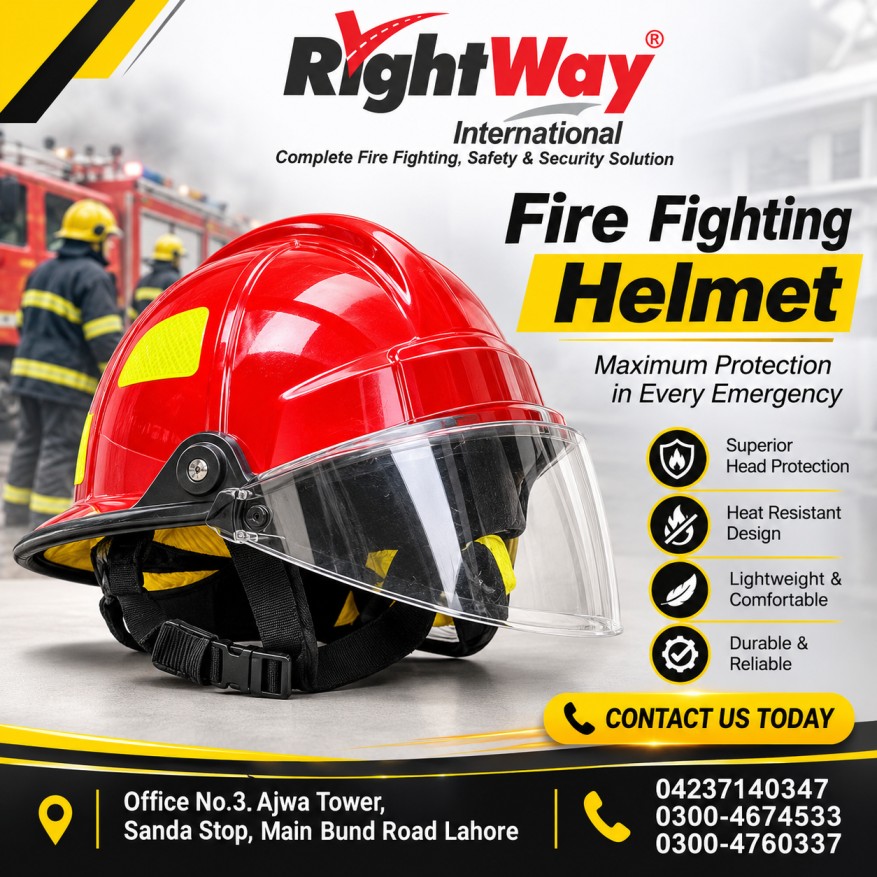
Fire Fighting Helmet Features & Benefits. Fire Fighting Helmet plays an essential role in protecting firefighters during emergency response operations. Firefighters often work in dangerous environments where flames, extreme heat, falling objects, smoke, and debris create serious risks. Therefore, they need reliable personal protective equipment (PPE) to protect themselves while performing rescue and firefighting activities.
At RightWay International, we understand the importance of firefighter safety. We provide fire safety and protection solutions designed to support emergency response teams, industrial facilities, commercial buildings, and firefighting departments across Pakistan.
What Is a Fire Fighting Helmet?
A Fire Fighting Helmet is specialized protective headgear designed for firefighters and emergency response personnel. It helps protect the head against heat, flames, falling debris, and accidental impacts during firefighting operations.
Unlike ordinary safety helmets, firefighting helmets feature materials and components designed for demanding emergency environments. Depending on the model, they may include a protective visor, neck protector, chin strap, adjustable suspension system, and heat-resistant outer shell.
Key Features of a Fire Fighting Helmet
A quality firefighting helmet combines several protective features to improve safety, comfort, and performance.
1. Heat and Flame Resistance
Firefighting helmets use heat-resistant materials to help protect firefighters from high temperatures and brief exposure to flames. Their construction supports safe operation in challenging firefighting environments.
2. Impact Protection
The helmet helps protect the head from falling objects, accidental impacts, and debris commonly found at emergency sites.
3. Protective Face Visor
Many firefighting helmets include a transparent face visor. It helps protect the face and eyes against flying particles, splashes, and other operational hazards.
4. Adjustable Chin Strap
A secure chin strap helps keep the helmet properly positioned during movement, climbing, and rescue operations.
5. Neck Protection
Some models include a heat-resistant neck protector that provides additional coverage against heat, sparks, and debris.
6. Comfortable Suspension System
An adjustable internal suspension system improves fitting and comfort. Moreover, it helps distribute helmet weight more evenly.
Types of Fire Fighting Helmets
Different firefighting environments require different helmet designs. Common types include:
- Structural Fire Fighting Helmet: Designed for building fires and structural firefighting operations.
- Wildland Fire Fighting Helmet: Designed for outdoor firefighting and vegetation fire response.
- Industrial Fire Fighting Helmet: Used in industrial environments where workers face fire and heat hazards.
- Rescue Helmet: Designed for certain technical rescue and emergency response activities.
The correct selection depends on the operational environment and applicable safety standards.
Why Is a Fire Fighting Helmet Important?
Firefighters face multiple hazards while responding to emergencies. A suitable helmet provides an important layer of personal protection.
Its major benefits include:
- Helps protect the head against impact hazards.
- Provides protection against heat and flames according to its tested rating.
- Reduces exposure to falling debris.
- Provides additional facial protection when fitted with a suitable visor.
- Improves comfort during emergency operations.
- Supports safer firefighting and rescue activities.
However, a helmet must always work alongside other PPE, including firefighting suits, gloves, boots, and suitable respiratory protection.
Applications of Fire Fighting Helmets
Firefighting helmets serve various professional environments, including:
- Fire and rescue departments
- Industrial firefighting teams
- Oil and gas facilities
- Chemical manufacturing plants
- Power stations
- Airports and aviation emergency teams
- Commercial and residential fire response teams
- Emergency rescue services
How to Choose the Right Fire Fighting Helmet
Before purchasing a firefighting helmet, consider the following factors:
- Safety Standards: Check the applicable firefighting helmet standards, such as NFPA 1970 or EN 443, depending on the intended application.
- Material Quality: Select a helmet with materials suitable for the expected heat and impact hazards.
- Comfort and Fit: Ensure proper adjustment and a secure fit.
- Visor Protection: Check the visor’s compatibility and protective rating.
- Accessories: Consider neck protectors, chin straps, and other compatible accessories.
- Maintenance: Follow the manufacturer’s cleaning, inspection, and replacement instructions.
Fire Fighting Helmets in Pakistan
Demand for reliable firefighting equipment continues across industrial, commercial, and emergency response sectors in Pakistan. Fire departments, factories, warehouses, construction companies, and safety organizations require suitable protective equipment to support their emergency preparedness.
RightWay International provides fire safety, firefighting, and personal protective equipment solutions for customers in Pakistan. Our product range supports organizations looking for dependable fire protection and workplace safety equipment.
Frequently Asked Questions (FAQs)
1. What is the main purpose of a Fire Fighting Helmet?
Its main purpose is to help protect firefighters’ heads against heat, flames, impact, and falling debris during firefighting operations.
2. What materials are used in firefighting helmets?
Manufacturers use specialized heat-resistant materials, such as thermoplastics and composite materials, depending on the helmet design.
3. Do firefighting helmets include face protection?
Many models include transparent visors or compatible eye and face protection accessories.
4. How often should a Fire Fighting Helmet be inspected?
Inspect the helmet before and after use, and follow the manufacturer’s recommended inspection and replacement schedule.
5. Are firefighting helmets different from industrial safety helmets?
Yes. Firefighting helmets have specialized designs and protective properties for firefighting environments, while ordinary industrial helmets primarily address workplace impact hazards.
A Fire Fighting Helmet is an essential part of firefighter personal protective equipment. It helps protect emergency personnel against several hazards while supporting comfort and operational performance. Selecting a suitable helmet, maintaining it correctly, and following applicable safety standards can improve firefighter protection.
Contact RightWay International for professional fire safety and firefighting equipment solutions in Pakistan.