




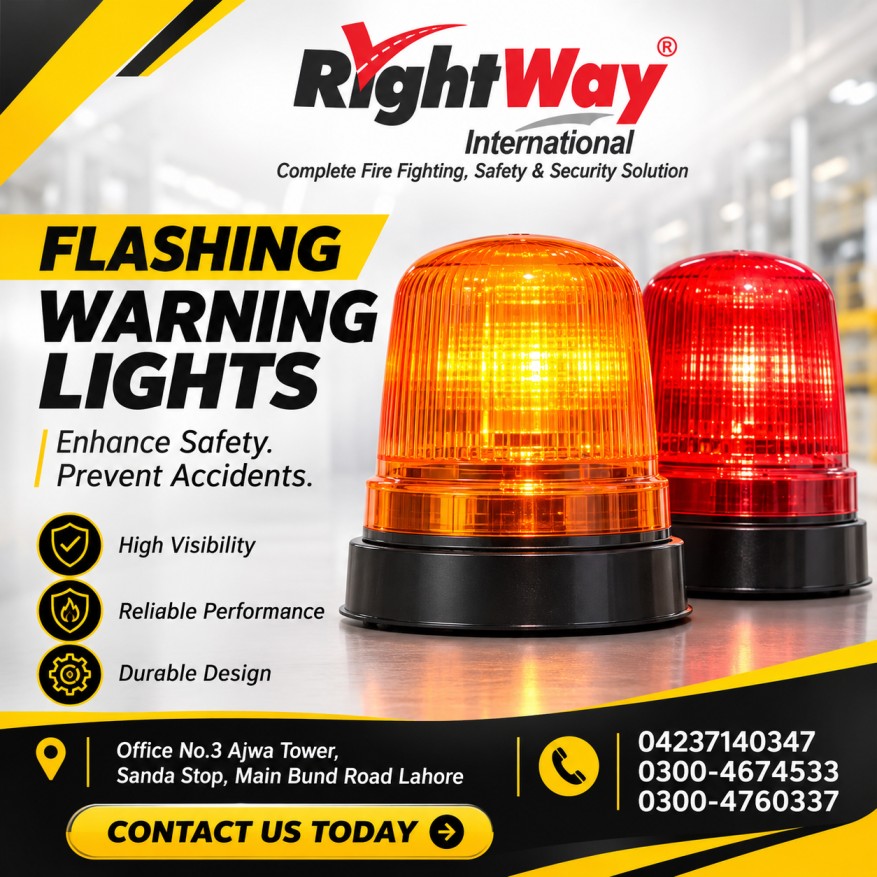
Flashing Warning Lights Features & Benefits. Flashing Warning Lights play an important role in road safety, traffic management, workplace safety, and hazard prevention. These highly visible warning devices use flashing or rotating light signals to alert drivers, pedestrians, and workers about potential hazards. Moreover, traffic authorities, construction companies, industrial facilities, emergency services, and commercial organizations use warning lights to improve visibility and reduce accident risks.
At RightWay International, we understand the importance of reliable road safety equipment. Therefore, we provide professional fire-fighting, safety, and security solutions for different industries. Flashing Warning Lights offer an effective solution for highlighting dangerous areas, controlling traffic movement, and providing clear visual alerts. In addition, their bright illumination helps attract attention during daytime, nighttime, and low-visibility conditions.
What Are Flashing Warning Lights?
Flashing Warning Lights are visual safety devices designed to produce intermittent light signals. These signals alert people to potential dangers, restricted areas, road hazards, and emergency situations.
Manufacturers produce these devices in different shapes, sizes, colors, and configurations. Common options include LED warning lights, rotating beacons, strobe lights, and rechargeable warning lamps.
Furthermore, many modern warning lights use LED technology. LEDs provide bright illumination, low power consumption, and long operating life. Depending on the model, these devices may operate through batteries, rechargeable power sources, vehicle electrical systems, or direct electrical connections.
Consequently, flashing warning lights help improve hazard awareness and support safer movement around roads, workplaces, and industrial environments.
Common Applications of Flashing Warning Lights
Flashing Warning Lights serve many purposes across different industries. Moreover, their versatile designs make them suitable for temporary and permanent safety installations.
1. Road Construction Sites
Construction companies use flashing warning lights around roadwork areas, excavation sites, and temporary traffic diversions. These lights alert approaching drivers and help identify restricted sections.
2. Highways and Motorways
Traffic authorities install warning lights at selected highway locations, dangerous road sections, and traffic control points. As a result, drivers receive clear visual warnings about potential hazards.
3. Emergency Vehicles
Ambulances, fire trucks, police vehicles, and rescue vehicles use specialized flashing warning lights. These signals help other road users recognize emergency vehicles and respond appropriately.
4. Industrial Facilities
Factories and warehouses install warning lights near machinery, loading areas, vehicle routes, and restricted zones. Furthermore, these devices help workers identify potentially dangerous locations.
5. Parking Areas
Parking facilities use flashing warning lights near entrances, exits, ramps, and vehicle movement areas. Therefore, they help improve visibility and alert pedestrians and drivers.
6. Railway Crossings
Suitable warning lights provide visual alerts at railway crossings. They help notify road users about approaching trains and restricted crossing conditions.
7. Airports and Aviation Facilities
Airport operators use approved warning lights for selected ground operations, service vehicles, and designated restricted areas. These lights support visibility and operational safety.
8. Building and Infrastructure Projects
Construction teams use warning lights around temporary barriers, scaffolding areas, excavation points, and other hazardous locations. Consequently, workers and visitors can identify restricted areas more easily.
9. Industrial Machinery
Manufacturers integrate flashing warning lights into machinery and automated equipment. These signals can indicate machine operation, faults, warnings, or specific operating conditions.
10. Hazardous Road Locations
Road authorities use flashing warning lights near sharp curves, intersections, narrow roads, and other locations that require additional driver attention.
Types of Flashing Warning Lights
1. LED Flashing Warning Lights
LED warning lights use light-emitting diodes to produce bright flashing signals. They offer energy-efficient operation and suit many road safety and industrial applications.
2. Rotating Beacon Lights
Rotating beacon lights produce a rotating visual signal to attract attention. Organizations commonly use them on selected service vehicles, industrial equipment, and warning installations.
3. Strobe Warning Lights
Strobe lights produce short, intense flashes of light. They provide highly noticeable visual alerts in suitable emergency, industrial, and safety applications.
4. Solar-Powered Warning Lights
Solar warning lights use solar panels to charge their batteries. They offer a convenient option for selected outdoor locations without direct electrical connections.
5. Rechargeable Warning Lights
Rechargeable warning lights use built-in rechargeable batteries. They suit temporary installations, maintenance operations, and portable safety applications.
6. Magnetic Beacon Lights
Magnetic beacon lights feature magnetic mounting bases on compatible surfaces. They provide convenient installation on suitable vehicles and metal equipment.
7. Vehicle Warning Lights
Vehicle warning lights support visibility for selected emergency, maintenance, construction, and service vehicles. Their designs vary according to vehicle type and applicable regulations.
8. Portable Warning Lights
Portable warning lights allow users to move safety signals between different locations. They are useful for temporary roadwork, maintenance, and emergency operations.
Key Features of Flashing Warning Lights
- High Visibility: Bright flashing signals attract attention and help identify potential hazards.
- LED Technology: Many models offer energy-efficient lighting and long service life.
- Multiple Colors: Available in suitable red, amber, blue, and other signal colors depending on the application and local regulations.
- Durable Construction: Quality materials support reliable operation in demanding environments.
- Weather Resistance: Suitable outdoor models provide protection against rain, dust, and environmental exposure.
- Flexible Installation: Different mounting options support vehicles, walls, poles, and other suitable surfaces.
- Low Power Consumption: LED models help reduce energy requirements.
- Multiple Power Options: Available with battery, rechargeable, solar, and electrical power configurations.
- Different Flashing Patterns: Selected models offer adjustable flashing sequences and lighting modes.
Benefits of Flashing Warning Lights
- Improved Road Safety: Helps alert drivers to road hazards and restricted areas.
- Better Visibility: Provides noticeable visual signals during nighttime and low-light conditions.
- Accident Prevention Support: Gives road users additional warning time to recognize potential dangers.
- Effective Traffic Management: Supports temporary traffic control and roadwork operations.
- Workplace Safety: Helps identify hazardous machinery, restricted areas, and operational warnings.
- Emergency Awareness: Makes equipped emergency and service vehicles more noticeable.
- Energy Efficiency: LED technology helps reduce electricity consumption.
- Versatile Applications: Suitable for roads, highways, industrial facilities, construction sites, and vehicles.
Flashing Warning Lights remain important components of modern road safety and workplace warning systems. Therefore, selecting the correct light type, color, brightness, power source, mounting arrangement, and weather protection is essential for effective performance.
At RightWay International, we aim to support safer roads and workplaces through reliable fire-fighting, safety, and traffic management solutions.