




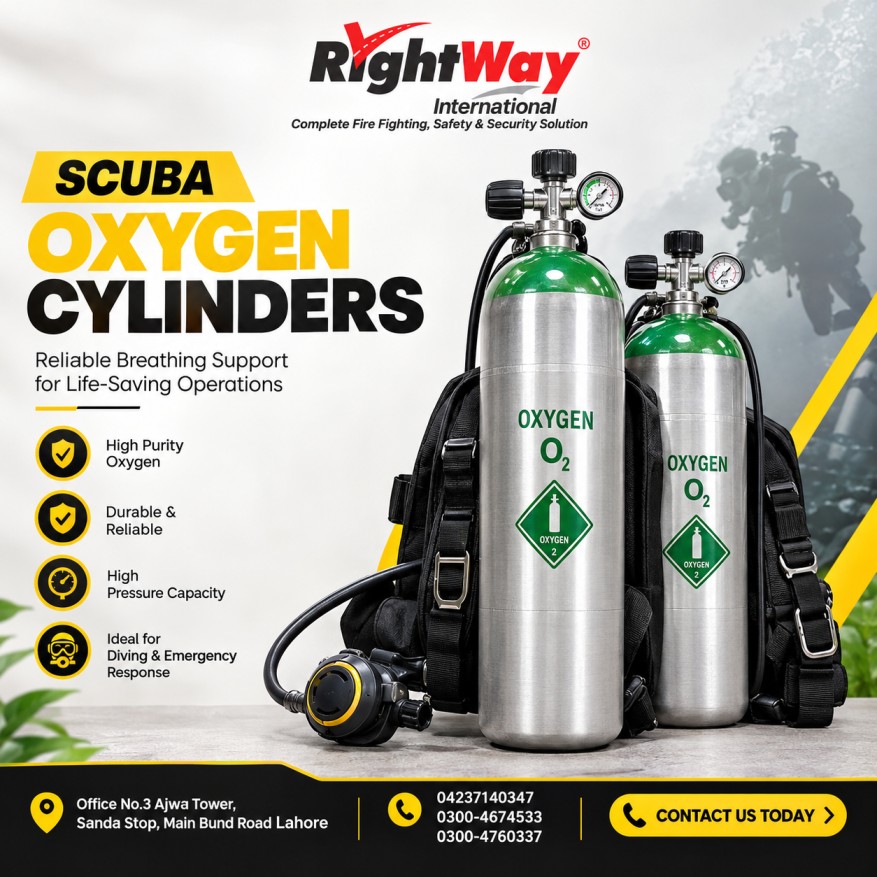
Importance of Scuba Oxygen Cylinders play an important role in underwater diving by storing and supplying breathing gas to divers. Divers use these cylinders with compatible regulators and other diving equipment to breathe underwater. They support recreational diving, professional underwater inspections, marine research, and specialized rescue operations.
Most standard scuba cylinders contain compressed breathing air rather than pure oxygen. However, technical divers may use specialized cylinders for oxygen-enriched mixtures and other breathing gases according to their training and dive plans.
Main Benefits of Scuba Oxygen Cylinders
- Reliable Breathing Gas Supply: Scuba cylinders store compressed breathing gas and supply it through a compatible regulator, allowing divers to breathe underwater.
- Underwater Exploration: Additionally, scuba cylinders help divers explore coral reefs, underwater landscapes, and marine environments.
- Professional Diving Support: Commercial divers use suitable diving cylinders during underwater inspections, maintenance tasks, and marine research.
- Equipment Compatibility: Furthermore, compatible cylinders work with regulators, pressure gauges, valves, and other diving equipment to support safe operations.
- Durable Construction: Manufacturers produce scuba cylinders from materials such as aluminum alloys and steel to meet different diving requirements.
- Specialized Diving Applications: Technical divers use suitable cylinders for specific breathing gas mixtures and planned decompression procedures.
Where Do Workers and Divers Use Scuba Oxygen Cylinders?
Scuba cylinders support a wide range of underwater activities. For example, recreational divers use them to explore coral reefs, observe marine life, and discover underwater landscapes.
Similarly, commercial divers use suitable cylinders for underwater inspections, marine construction support, and equipment maintenance. In addition, trained rescue divers use appropriate breathing apparatus during underwater search and recovery operations.
Technical divers may also carry specialized cylinders containing different breathing gas mixtures for particular stages of a dive. However, the correct cylinder depends on the planned depth, breathing gas, equipment compatibility, and diver training.
Before selecting a cylinder, users should check its capacity, working pressure, valve design, certification, and compatibility with the intended breathing gas. These checks help divers choose suitable equipment for their specific underwater activities.
How to Choose Scuba Oxygen Cylinders
First, identify the intended diving application and determine the required breathing gas. Most conventional scuba cylinders contain compressed breathing air, while specialized cylinders support specific oxygen or mixed-gas applications.
Next, choose a cylinder with the appropriate capacity, working pressure, material, and valve configuration. Aluminum and steel cylinders offer different weight and buoyancy characteristics, so divers should consider their equipment setup and operating conditions.
Also, check the cylinder markings, manufacturer information, certification, and inspection records. Furthermore, confirm that the cylinder matches the regulator and other components of the diving system.
Before every dive, inspect the cylinder body, valve, connections, and visible pressure information. Look for corrosion, dents, leaks, or other signs of damage. Arrange the required inspections and pressure tests according to applicable regulations and manufacturer guidelines.
Always obtain breathing gas from a suitable filling facility. For oxygen service, use equipment that meets the required oxygen-compatibility and cleanliness specifications. Never exceed the cylinder’s approved working pressure or use an unidentified gas mixture.
Remember that a scuba cylinder alone cannot provide a complete diving system. Divers also need compatible regulators, appropriate buoyancy equipment, proper training, and a well-planned dive procedure. In addition, they should follow established diving safety practices throughout each operation.
Frequently Asked Questions
1. What are Scuba Oxygen Cylinders?
Scuba cylinders are pressure vessels that store breathing gas for underwater activities. Divers connect them to compatible regulators to receive a controlled supply of gas. Most standard scuba cylinders contain compressed breathing air rather than pure oxygen.
2. Why are Scuba Oxygen Cylinders important?
Scuba cylinders provide divers with a portable breathing gas supply. When divers select, inspect, and use them correctly, these cylinders support recreational diving, professional underwater work, and specialized diving activities.
3. What gas do scuba cylinders contain?
Most conventional scuba cylinders contain compressed breathing air. Specialized diving cylinders may contain oxygen-enriched mixtures or other suitable breathing gases for specific applications. Divers must follow their training and dive plans when choosing a gas mixture.
4. Which materials do manufacturers use for scuba cylinders?
Manufacturers commonly use aluminum alloys or steel to produce scuba cylinders. Each material offers different weight, durability, and buoyancy characteristics. Divers should select a cylinder that suits their equipment and intended application.
5. How do you maintain Scuba Oxygen Cylinders?
Inspect the cylinder before each use and arrange periodic inspections and pressure tests as required. Check the valve, connections, and cylinder body for corrosion, damage, and leaks. Qualified personnel should handle cylinder servicing, testing, and filling.
6. Can divers use pure oxygen in every scuba cylinder?
No. Not every scuba cylinder or regulator supports pure oxygen service. Oxygen use requires compatible equipment, appropriate cleaning, correct handling procedures, and specialized training. Pure oxygen can also increase fire risks under certain conditions, especially at elevated pressures.
7. Where can I buy Scuba Oxygen Cylinders in Pakistan?
You can contact RightWay International to inquire about diving cylinders and related safety equipment. Before purchasing, confirm product availability, specifications, certification, intended application, and compatibility with your diving system.
Scuba cylinders play an important role in underwater operations. Therefore, choose the correct cylinder, use a suitable breathing gas, maintain inspection records, and follow professional diving safety procedures.