




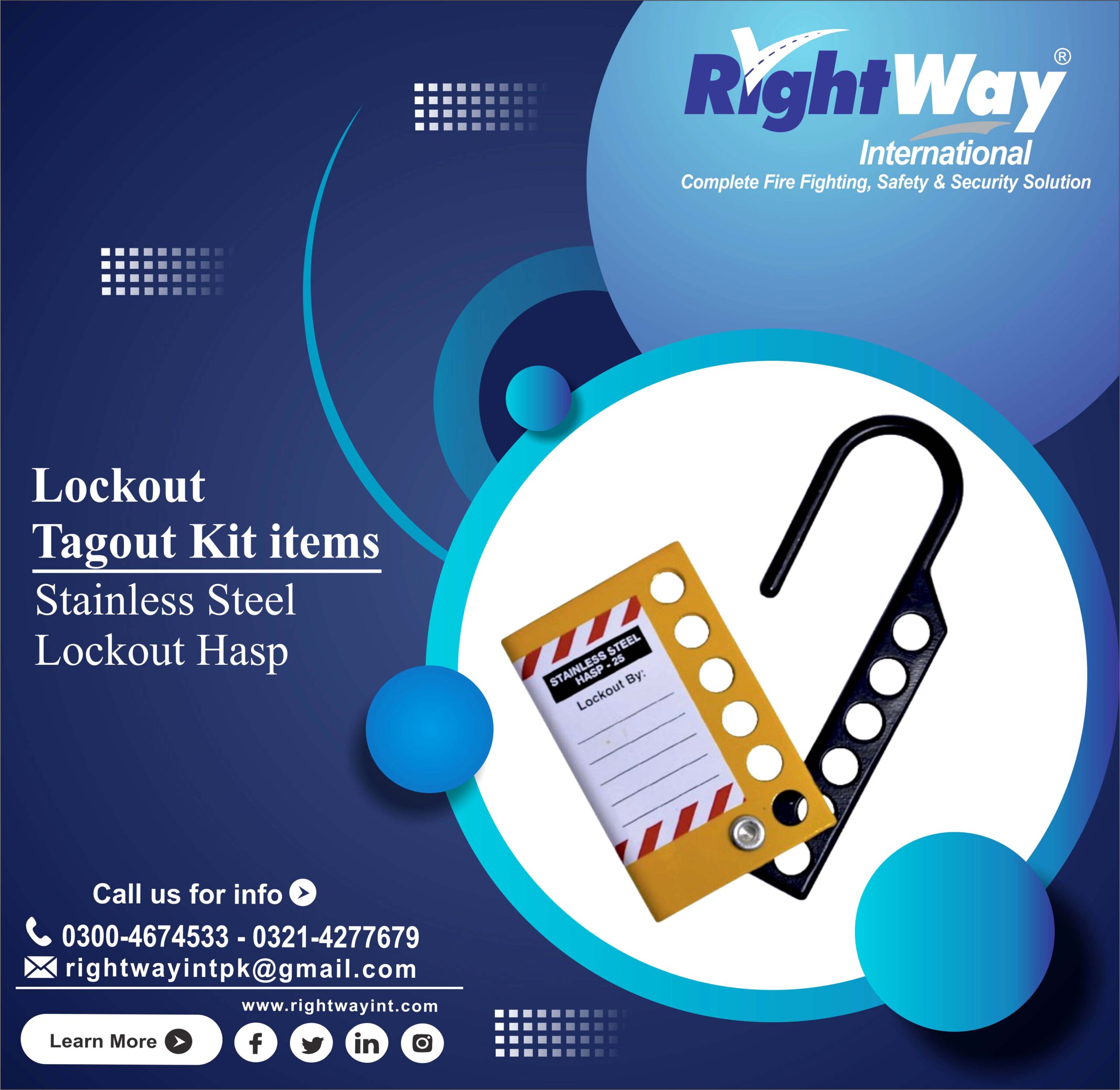
Lockout Hasps in Pakistan Price Types Uses Benefits & Suppliers. Lockout hasps in Pakistan are essential industrial safety devices used to secure energy isolation points during maintenance and servicing operations. These devices are widely implemented in factories, power plants, construction sites, oil & gas facilities, manufacturing units, and warehouses to prevent accidental machine start-up and hazardous energy release.
With increasing compliance requirements under international safety standards such as the National Fire Protection Association (NFPA) and occupational safety frameworks like the Occupational Safety and Health Administration (OSHA), lockout hasps are a core component of Lockout-Tagout (LOTO) procedures. In Pakistan, safety compliance is also monitored under regulatory frameworks such as the Pakistan Standards and Quality Control Authority (PSQCA).
When used together with padlocks, safety tags, circuit breaker lockouts, and valve lockout devices, lockout hasps ensure controlled access and worker protection during maintenance activities.
Lockout Hasps in Pakistan – Overview
A lockout hasp is a safety device that allows multiple workers to apply their individual padlocks to a single energy isolation point. It ensures that machinery cannot be restarted until every authorized worker has removed their padlock.
Unlike a standard hasp used for doors, lockout hasps are specifically designed for industrial LOTO applications and are built using high-strength steel or non-conductive materials.
Common Applications:
- Electrical panel isolation
- Circuit breakers
- Industrial valves
- Hydraulic systems
- Pneumatic lines
- Machinery maintenance
- Power distribution units
- Chemical processing plants
- Oil & gas refineries
- Manufacturing plants
Lockout hasps act as a group lockout safety solution, making them essential in high-risk work environments.
What Is a Lockout Hasp?
A lockout hasp is a U-shaped or hinged device with multiple padlock holes that enables more than one worker to secure the same lockout point.
Main Components:
- Jaw / Clasp – Secures the energy isolation device
- Multiple Padlock Holes – Allows 2–6 workers to attach safety padlocks
- Body Material – Steel, aluminum, or non-conductive nylon
- Anti-Spark or Insulated Coating – For hazardous environments
When locked, the equipment remains isolated until all attached padlocks are removed.
Advanced Features in Modern Lockout Hasps
Modern lockout hasps available in Pakistan offer enhanced safety:
1: Heavy-Duty Hardened Steel Construction
Resistant to impact, tampering, and industrial wear.
2: Non-Conductive Nylon Hasps
Ideal for electrical lockout applications to prevent shock hazards.
3: Spark-Resistant Aluminum Models
Used in oil & gas and chemical plants.
3: Multiple Worker Locking Points
Supports up to 6 padlocks for group maintenance operations.
4: Tamper-Resistant Design
Prevents accidental removal during servicing.
5:Compatibility with Safety Padlocks
Designed specifically to work with LOTO padlocks and safety tags.
These features ensure compliance, worker accountability, and accident prevention.
Types of Lockout Hasps in Pakistan
1. Steel Lockout Hasp
- Durable and high-strength
- Suitable for heavy industrial machinery
- Corrosion-resistant coating
Used in: Factories, power plants, mechanical workshops
2. Insulated Nylon Lockout Hasp
- Non-conductive material
- Lightweight and chemical resistant
- Safe for electrical systems
Best for: Electrical panels and switchboards
3. Aluminum Lockout Hasp
- Spark-resistant
- Rust-proof
- Ideal for hazardous environments
Suitable for: Oil refineries, gas plants, chemical industries
4. Scissor-Type Lockout Hasp
- Compact design
- Easy to apply in tight spaces
- Allows multiple lock attachments
Used in: Control panels and breaker boxes
Integration with Padlocks & LOTO Systems
Lockout hasps are incomplete without padlocks. Each worker attaches their personal safety padlock to the hasp, ensuring:
- Individual control
- Worker accountability
- Zero accidental energization
They are commonly integrated with:
- Safety padlocks (keyed different / keyed alike)
- Lockout tags
- Circuit breaker lockouts
- Valve lockout devices
- Electrical plug lockouts
- Group lockout boxes
Padlocks used in LOTO systems typically feature:
- Non-conductive bodies
- Key-retaining cylinders
- Anti-pick mechanisms
- Unique key systems
Together, lockout hasps and padlocks create a complete industrial safety solution.
Applications of Lockout Hasps in Pakistan
Lockout hasps are widely used in:
- Manufacturing industries
- Textile mills
- Pharmaceutical factories
- Cement plants
- Oil & gas sector
- Construction projects
- Power generation plants
- Food processing units
- Engineering workshops
- Warehouses and logistics hubs
They are critical for worker safety during equipment servicing.
Lockout Hasps Price in Pakistan
Prices vary depending on material, size, and quality:
| Type | Price Range (PKR) |
|---|---|
| Steel Lockout Hasp | 1,200 – 3,500 |
| Nylon Lockout Hasp | 1,500 – 4,000 |
| Aluminum Lockout Hasp | 2,000 – 5,500 |
| Heavy-Duty Industrial Hasp | 3,500 – 8,000 |
Prices may vary depending on supplier, import quality, and bulk quantity requirements.
Lockout Hasps Karachi & Lahore
Karachi
High demand in industrial areas, ports, refineries, and manufacturing zones. Suppliers provide bulk LOTO equipment including hasps, padlocks, and safety tags.
Lahore
Commonly supplied to factories, educational institutions, power stations, and construction companies with growing safety compliance awareness.
Installation & Usage Procedure
Proper Installation Steps:
- Shut down equipment properly
- Isolate energy source
- Apply lockout device
- Attach lockout hasp
- Each worker applies their safety padlock
- Attach warning tag
- Verify isolation
Maintenance Requirements:
- Inspect for corrosion
- Ensure smooth hinge operation
- Replace damaged units
- Store in dry conditions
Regular inspection ensures continued compliance and safety performance.
Benefits of Lockout Hasps Pakistan
- Prevents accidental machine startup
- Enables group lockout safety
- Ensures OSHA & NFPA compliance
- Improves worker accountability
- Reduces workplace accidents
- Durable and long service life
- Compatible with padlocks and tags
- Cost-effective safety solution
Lockout hasps are essential components of industrial safety management systems.
Frequently Asked Questions (FAQ)
What is a lockout hasp used for?
It allows multiple workers to secure a single isolation point during maintenance.
Can lockout hasps be used without padlocks?
No, they are designed to work with safety padlocks for proper lockout procedures.
Which type is best for electrical applications?
Non-conductive nylon lockout hasps are safest for electrical systems.
How many padlocks can be attached to a lockout hasp?
Typically 2 to 6 padlocks depending on the design.
Conclusion
Lockout hasps in Pakistan are critical industrial safety devices designed to protect workers from hazardous energy release during maintenance operations. When integrated with safety padlocks, tags, and complete LOTO systems, they ensure regulatory compliance, accident prevention, and operational safety.
With strong construction, multiple locking points, and compatibility with industrial padlocks, lockout hasps provide a reliable and cost-effective safety solution for factories, plants, and high-risk work environments.