




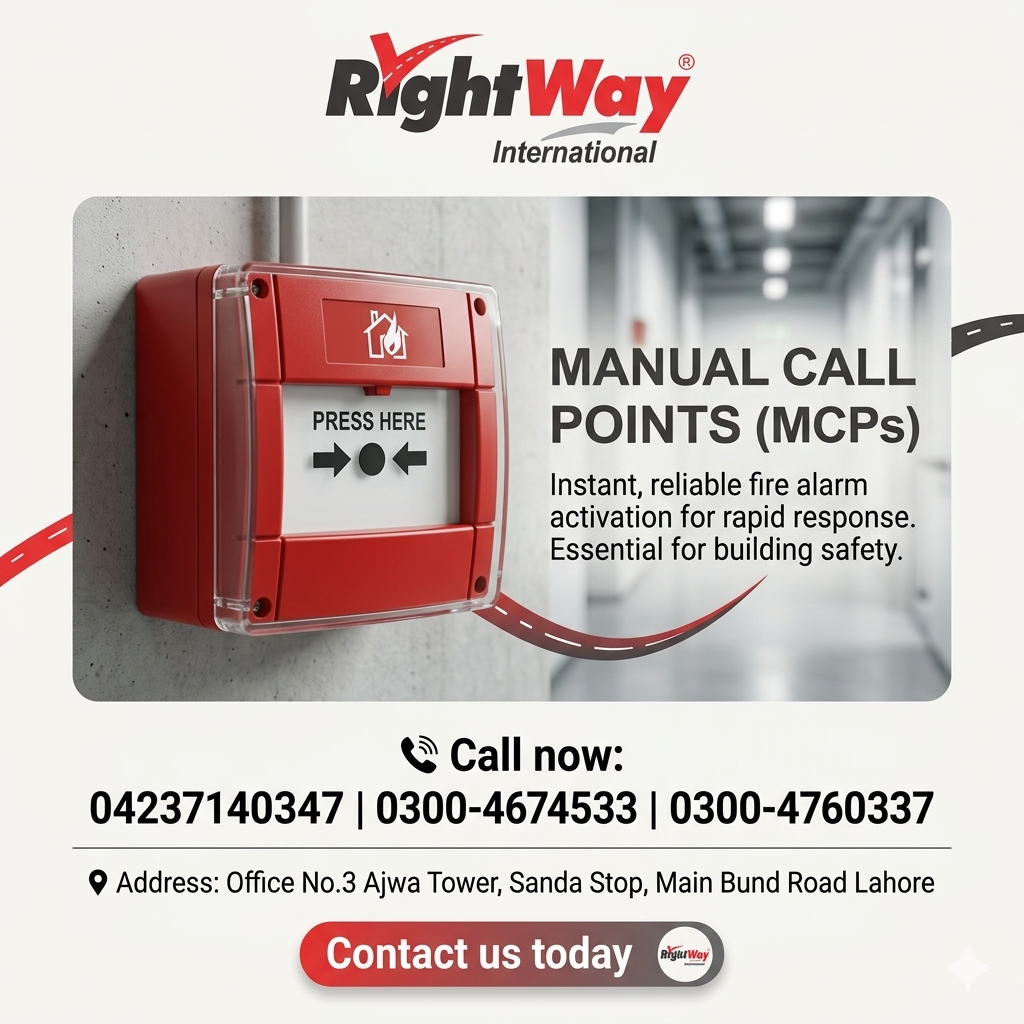
Manual Call Point (MCP) is a critical component of a fire alarm system that allows people to manually trigger a fire alarm during an emergency. It is commonly installed in commercial, industrial, and public buildings to provide immediate fire reporting and rapid evacuation.
According to National Fire Protection Association (NFPA 72) standards, Manual Call Points are essential in many fire alarm systems because they enable occupants to activate alarms even before automatic detectors respond.
What is a Manual Call Point?
A Manual Call Point, also known as a:
- Break Glass Unit
- Fire Alarm Call Point
- Emergency Alarm Switch
- Manual Fire Alarm Station
is a device used to manually initiate a fire alarm signal.
When someone discovers a fire, smoke, or dangerous situation, they can activate the MCP to alert everyone in the building instantly.
In simple terms, it acts as a manual emergency trigger for the fire alarm system.
How Does a Manual Call Point Work?
1. Normal Condition
The Manual Call Point remains in standby mode while connected to the Fire Alarm Control Panel (FACP).
2. Manual Activation
When a person notices fire or smoke:
- They press the button, or
- Break the glass/plastic element
This action sends a signal to the Fire Alarm Control Panel.
3. Signal Transmission
The MCP communicates with the fire alarm panel through wired or wireless connections.
4. Alarm Activation
The Fire Alarm Control Panel activates:
- Sirens
- Bells
- Strobe lights
- Emergency warning systems
5. Emergency Response
The system may also:
- Notify the fire department
- Trigger emergency shutdown systems
- Activate sprinkler systems
- Unlock emergency exits
Types of Manual Call Points
1. Conventional Manual Call Point
- Connected in zones
- Indicates alarm by zone only
- Simple and cost-effective
- Common in small buildings
2. Addressable Manual Call Point
- Each MCP has a unique address
- Displays exact activation location
- Faster emergency response
- Used in large commercial buildings
3. Wireless Manual Call Point
- Operates without wiring
- Easy installation
- Ideal for temporary sites and heritage buildings
4. Weatherproof Manual Call Point
- Designed for outdoor or harsh environments
- Resistant to dust, water, and corrosion
- Used in industrial plants and oil facilities
5. Explosion-Proof Manual Call Point
- Built for hazardous areas
- Used in chemical plants, refineries, and gas stations
- Prevents ignition in explosive atmospheres
Main Components of a Manual Call Point
1. Activation Element
The part pressed or broken to trigger the alarm.
2. Reset Mechanism
Allows authorized personnel to reset the device after activation.
3. LED Indicator
Shows alarm status or communication status.
4. Protective Cover
Prevents accidental activation.
5. Communication Circuit
Connects the MCP to the Fire Alarm Control Panel.
Functions of Manual Call Point
A Manual Call Point performs several important fire safety functions:
- Manual fire alarm activation
- Emergency evacuation initiation
- Immediate fire reporting
- Integration with fire alarm systems
- Support for life safety systems
- Fast occupant notification
- Backup to automatic detectors
Where Manual Call Points Are Used
Manual Call Points are installed in many locations, including:
- Commercial buildings
- Hospitals
- Schools and universities
- Shopping malls
- Hotels
- Factories and warehouses
- Airports
- Industrial plants
- Power stations
- Oil and gas facilities
They are usually mounted:
- Near exits
- Along escape routes
- Staircases
- Corridors
for quick access during emergencies.
Advantages of Manual Call Point
1. Immediate Human Response
Anyone can activate the alarm instantly after detecting fire.
2. Fast Evacuation
Provides early warning to occupants.
3. Simple Operation
Easy to use during emergencies.
4. Reliable Safety Device
Works independently of automatic detection speed.
5. Integration Capability
Can integrate with:
- Fire Alarm Control Panels
- Sprinkler systems
- Smoke detectors
- Emergency shutdown systems
Disadvantages of Manual Call Point
- Possible false alarms
- Requires proper installation
- Needs regular inspection and testing
- Can be damaged by misuse or vandalism
NFPA Standards for Manual Call Point
According to NFPA 72 standards:
- MCPs must be clearly visible
- Installed near exits and escape routes
- Mounted at accessible heights
- Regularly tested and inspected
- Connected to supervised fire alarm circuits
- Easily operable during emergencies
These standards ensure proper emergency response and occupant safety.
Installation Guidelines for Manual Call Point
Proper installation is essential for effective operation.
Recommended Installation Practices
- Install near building exits
- Maintain unobstructed access
- Use weatherproof models outdoors
- Clearly label the device
- Ensure proper wiring connections
- Follow local fire safety codes
Maintenance Tips for Manual Call Point
To ensure reliable performance:
- Test the MCP regularly
- Inspect glass or activation element
- Check LED indicators
- Verify panel communication
- Clean dust and debris
- Replace damaged units immediately
Routine maintenance improves system reliability and compliance.
Difference Between Manual Call Point and Smoke Detector
| Feature | Manual Call Point | Smoke Detector |
|---|---|---|
| Activation | Manual | Automatic |
| User Action Required | Yes | No |
| Detects Smoke | No | Yes |
| Detects Fire Automatically | No | Yes |
| Purpose | Emergency alarm trigger | Fire detection |
Both devices work together for complete fire protection.
Manual Call Point in Fire Alarm Systems
In modern fire alarm systems, Manual Call Points work alongside:
- Smoke Detectors
- Heat Detectors
- Flame Detectors
- Fire Alarm Control Panels
- Emergency Notification Systems
This integration provides faster detection and safer evacuation.
What is a Fire Alarm Control Panel?
A Fire Alarm Control Panel is an electronic unit that:
- Monitors fire detection devices
- Controls alarm signals (sirens, bells, strobes)
- Sends alerts to emergency systems
- Supervises system faults and wiring
Frequently Asked Questions (FAQs)
1. What is the purpose of a Manual Call Point?
It allows people to manually activate the fire alarm during emergencies.
2. Where should Manual Call Points be installed?
They should be installed near exits, corridors, and escape routes.
3. What is the difference between MCP and fire alarm panel?
The MCP sends the alarm signal, while the Fire Alarm Control Panel processes and controls the system.
4. Are Manual Call Points mandatory?
Yes, many commercial and industrial buildings require them according to fire safety standards.
5. How often should MCPs be tested?
They should be inspected and tested regularly as per NFPA and local fire safety regulations.
Conclusion
In conclusion, a Manual Call Point (MCP) is an essential part of any fire alarm system that enables occupants to manually trigger alarms during fire emergencies.
When integrated with Fire Alarm Control Panels, smoke detectors, flame detectors, and heat detectors, MCPs improve emergency response, evacuation speed, and overall building safety.
Following NFPA standards and proper maintenance practices ensures reliable fire protection and regulatory compliance.