




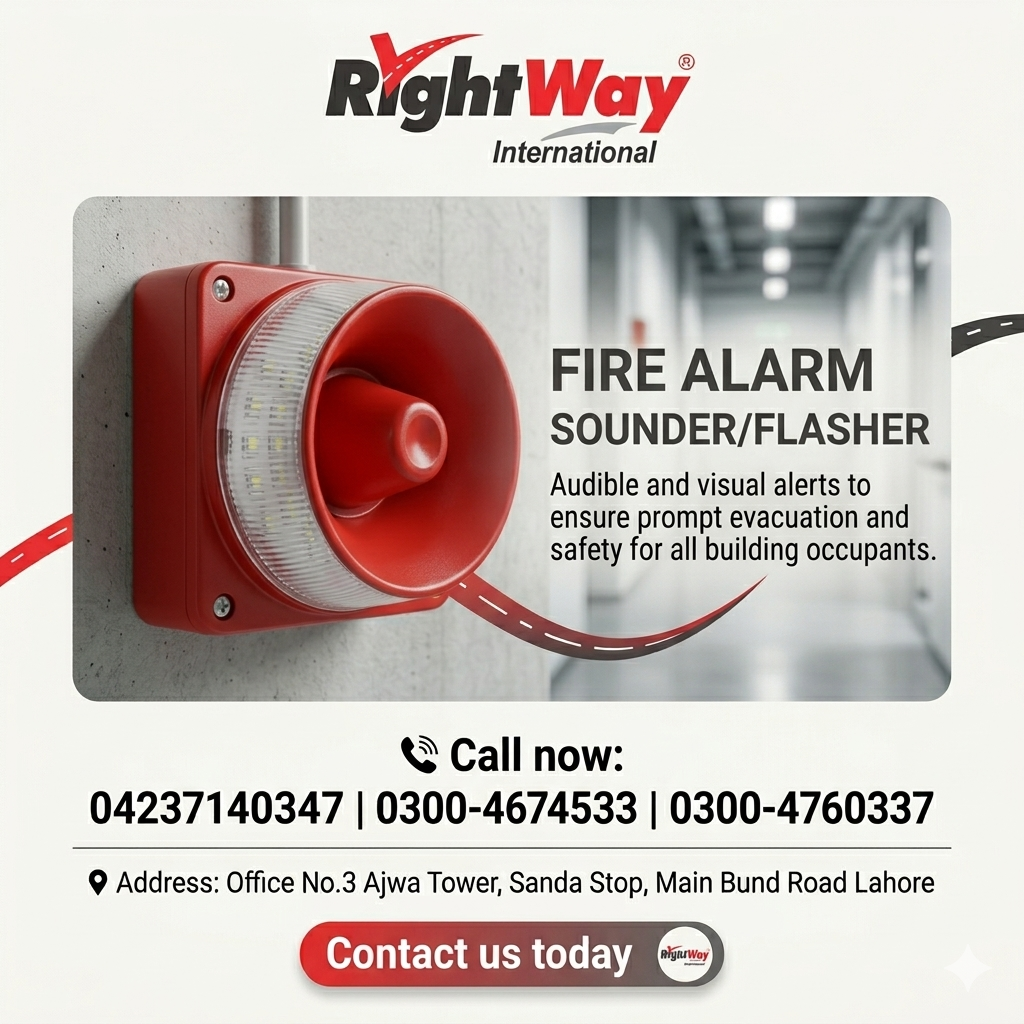
Fire Alarm Sounder Flasher is an important fire alarm notification device that combines both an audible alarm (sounder) and a visual warning light (flasher/strobe) in a single unit.
It is designed to alert building occupants during fire emergencies using loud sound signals and flashing lights, ensuring fast evacuation and improved safety.
According to National Fire Protection Association (NFPA 72) standards, fire alarm notification appliances such as sounder flashers are essential in commercial, industrial, and public buildings to provide effective emergency warning systems.
What is a Fire Alarm Sounder Flasher?
A Fire Alarm Sounder Flasher is an electronic fire alarm device that:
- Produces loud warning sounds
- Emits flashing strobe lights
- Alerts occupants during fire emergencies
- Assists people with hearing impairments
- Improves evacuation response time
In simple terms, it is a combined audio-visual alarm device used in fire alarm systems.
How Does a Fire Alarm Sounder Flasher Work?
1. Normal Condition
The sounder flasher remains in standby mode while connected to the Fire Alarm Control Panel (FACP).
2. Fire Detection
When smoke detectors, heat detectors, flame detectors, or Manual Call Points detect fire, they send a signal to the control panel.
3. Signal Processing
The Fire Alarm Control Panel processes the fire signal and activates the sounder flasher circuit.
4. Alarm Activation
The sounder flasher then:
- Produces loud siren or alarm tones
- Flashes high-intensity strobe lights
5. Emergency Notification
The combined audio and visual warning helps occupants evacuate safely and quickly.
Types of Fire Alarm Sounder Flashers
1. Wall-Mounted Sounder Flasher
- Installed on walls
- Common in offices, schools, and hospitals
- Easy installation and maintenance
2. Ceiling-Mounted Sounder Flasher
- Mounted on ceilings
- Provides wider sound and light coverage
- Ideal for large open spaces
3. Addressable Sounder Flasher
- Has a unique address
- Controlled individually by the fire alarm panel
- Used in intelligent fire alarm systems
4. Conventional Sounder Flasher
- Connected through alarm zones
- Simple and cost-effective
- Used in smaller buildings
5. Weatherproof Sounder Flasher
- Designed for outdoor environments
- Resistant to dust and water
- Used in industrial and outdoor applications
6. Explosion-Proof Sounder Flasher
- Built for hazardous locations
- Used in oil & gas plants, chemical factories, and refineries
- Safe for explosive atmospheres
Main Components of Fire Alarm Sounder Flasher
1. Sounder Unit
Generates audible alarm tones or sirens.
2. Flashing Strobe Light
Produces high-visibility flashing light signals.
3. Housing Enclosure
Protects internal electronic components.
4. Circuit Board
Controls sound and flashing operations.
5. Wiring Terminals
Connects the device to the Fire Alarm Control Panel.
Functions of Fire Alarm Sounder Flasher
A Fire Alarm Sounder Flasher performs several critical functions:
- Audible fire warning
- Visual emergency notification
- Occupant evacuation assistance
- Emergency alert signaling
- Hearing-impaired notification
- Fire alarm system integration
- Building emergency communication
Where Fire Alarm Sounder Flashers Are Used
These devices are installed in:
- Commercial buildings
- Hospitals
- Hotels
- Shopping malls
- Schools and universities
- Airports
- Factories and warehouses
- Industrial plants
- Parking garages
- Residential apartments
They are typically installed in:
- Corridors
- Staircases
- Hallways
- Production areas
- Emergency exits
Advantages of Fire Alarm Sounder Flasher
1. Dual Warning System
Provides both sound and visual alerts simultaneously.
2. Improved Safety
Enhances occupant awareness during emergencies.
3. Better Accessibility
Helps people with hearing disabilities through visual flashing signals.
4. Faster Evacuation
Increases emergency response time.
5. System Integration
Works with:
- Fire Alarm Control Panels
- Smoke Detectors
- Heat Detectors
- Manual Call Points
- Emergency Systems
Disadvantages of Fire Alarm Sounder Flasher
- Higher installation cost compared to standard alarms
- Requires proper placement for effective coverage
- Needs regular maintenance and testing
- Possible false alarms if improperly configured
NFPA Standards for Fire Alarm Sounder Flasher
According to NFPA 72 standards:
- Devices must provide adequate audible levels
- Visual strobes must meet brightness requirements
- Notification appliances should be clearly visible
- Regular testing and inspection are required
- Backup power support must be available
- Installation must comply with fire safety codes
These standards ensure effective emergency notification and occupant safety.
Installation Guidelines for Fire Alarm Sounder Flasher
Proper installation is essential for maximum performance.
Recommended Installation Practices
- Install at visible and audible locations
- Avoid obstruction by walls or furniture
- Follow manufacturer spacing guidelines
- Use weatherproof models outdoors
- Ensure proper wiring and power supply
- Test after installation
Maintenance Tips for Fire Alarm Sounder Flasher
To keep the device operating properly:
- Test alarms regularly
- Inspect flashing lights
- Check sound output levels
- Verify wiring connections
- Clean dust and debris
- Replace faulty units immediately
Routine maintenance improves reliability and compliance.
Difference Between Fire Alarm Sounder and Sounder Flasher
| Feature | Sounder | Sounder Flasher |
|---|---|---|
| Audible Alarm | Yes | Yes |
| Visual Warning | No | Yes |
| Strobe Light | No | Yes |
| Hearing-Impaired Support | Limited | Excellent |
| Emergency Visibility | Low | High |
Fire Alarm Sounder Flasher in Fire Protection Systems
In modern fire protection systems, sounder flashers work together with:
- Fire Alarm Control Panels (FACP)
- Smoke Detectors
- Heat Detectors
- Flame Detectors
- Manual Call Points
- Emergency Communication Systems
This integration ensures complete fire emergency notification and occupant protection.
Manual Call Point (MCP)
A Manual Call Point, also known as a:
- Break Glass Unit
- Fire Alarm Call Point
- Emergency Alarm Switch
- Manual Fire Alarm Station
is a device used to manually initiate a fire alarm signal.
When someone discovers a fire, smoke, or dangerous situation, they can activate the MCP to alert everyone in the building instantly.
In simple terms, it acts as a manual emergency trigger for the fire alarm system.
Frequently Asked Questions (FAQs)
1. What is a Fire Alarm Sounder Flasher?
It is a fire alarm device that combines audible and visual emergency warnings.
2. Why is a flashing light important in fire alarms?
It helps alert people in noisy environments and individuals with hearing impairments.
3. Where are sounder flashers installed?
They are installed in commercial, industrial, and public buildings.
4. What is the difference between a sounder and a sounder flasher?
A sounder only produces sound, while a sounder flasher provides both sound and flashing light alerts.
5. Are Fire Alarm Sounder Flashers required by NFPA?
Yes, NFPA 72 requires proper notification appliances for occupant safety.
Conclusion
In conclusion, a Fire Alarm Sounder Flasher is a vital fire alarm notification device that provides both audible and visual emergency alerts during fire incidents.
When integrated with Fire Alarm Control Panels, smoke detectors, heat detectors, flame detectors, and Manual Call Points, it significantly improves evacuation speed, accessibility, and overall fire safety.
Proper installation, maintenance, and compliance with NFPA standards ensure reliable emergency protection and system performance.