




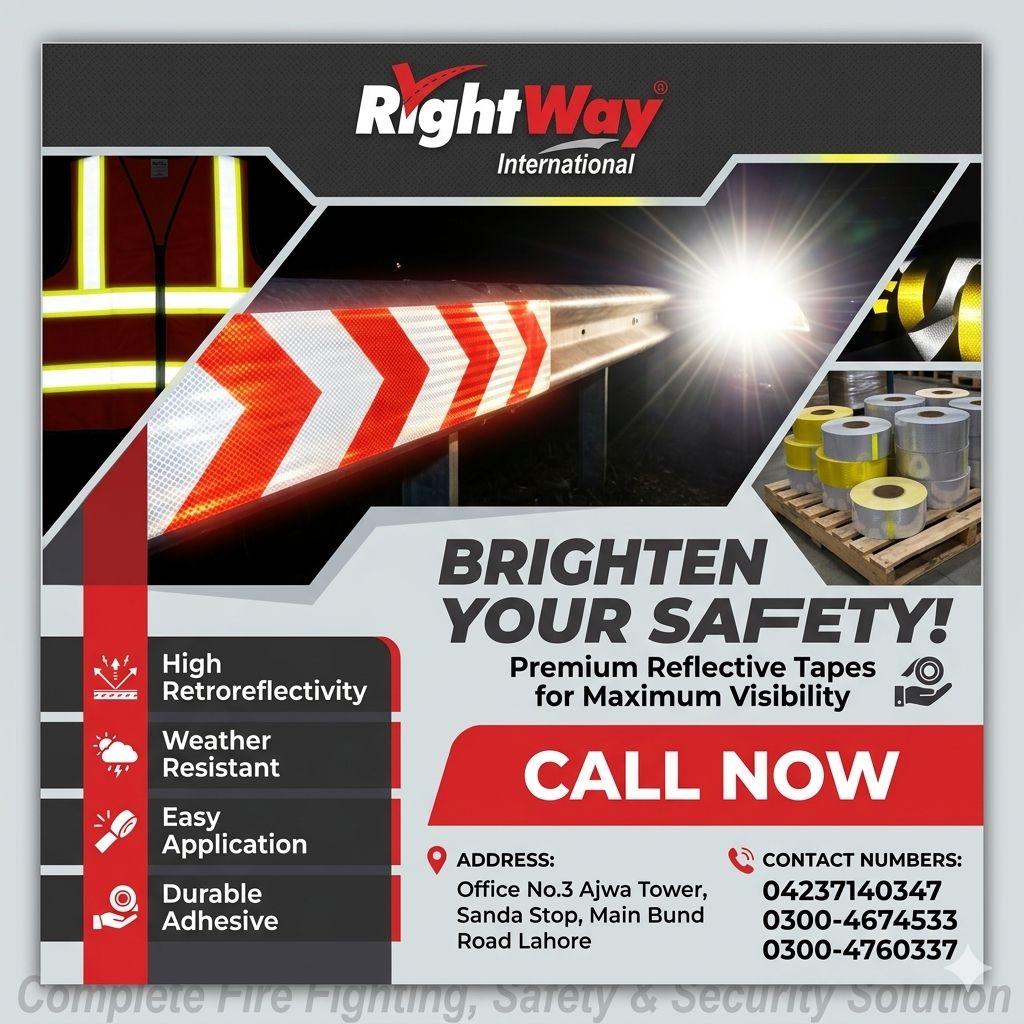
Safety Reflective Tape is a highly effective visibility-enhancing safety material designed to improve the detection of people, vehicles, equipment, structures, and hazards in low-light, nighttime, and high-risk environments. It is widely used across industries to increase visibility, reduce accidents, support traffic management, and improve compliance with workplace safety regulations.
Safety reflective tape is commonly applied to vehicles, machinery, construction barriers, road safety equipment, warehouses, loading docks, emergency vehicles, industrial facilities, public infrastructure, and personal protective equipment (PPE) to provide enhanced visibility and safety during both daytime and nighttime operations.
Because visibility-related accidents remain a significant concern worldwide, safety reflective tape plays a critical role in occupational safety programs, transportation safety systems, traffic control operations, hazard identification, and emergency preparedness initiatives. It supports compliance with Occupational Safety and Health Administration (OSHA) ANSI, DOT, ISO, EN 12899, EN ISO 20471, HSE, and other local safety regulations.
Reflective Safety Vests
Safety Vest is a high-visibility garment designed with fluorescent materials and reflective strips that make workers more noticeable to drivers, equipment operators, and other personnel in various work environments.
Reflective safety vests are commonly used for:
- Worker visibility
- Traffic control operations
- Road construction safety
- Warehouse safety
- Industrial safety
- Emergency response operations
- Airport ground crew protection
- Utility maintenance work
- Logistics and transportation safety
- Mining operations
- Public works projects
- Event management
- Crowd control
- Pedestrian safety
- Occupational hazard prevention
What Is Safety Reflective Tape?
Safety Reflective Tape is a specialized adhesive tape manufactured with retroreflective materials that reflect light back toward its source, making objects, equipment, vehicles, and personnel highly visible in dark or low-light conditions.
Safety reflective tape is commonly used for:
- Hazard marking
- Vehicle visibility
- Workplace safety
- Traffic control
- Construction zone safety
- Warehouse safety
- Equipment identification
- Emergency vehicle marking
- Industrial safety
- Pedestrian safety
- Loading dock safety
- Parking facility safety
- Road safety applications
- Public infrastructure protection
- Accident prevention
Road Safety Barriers
Road safety barriers are commonly used for:
- Highway safety
- Traffic management
- Vehicle containment
- Accident prevention
- Roadside protection
- Bridge safety
- Median separation
- Construction zone safety
- Pedestrian protection
- Industrial traffic control
- Airport perimeter safety
- Infrastructure protection
- Parking facility safety
- Tunnel safety systems
- Public road safety programs
Key Components of Safety Reflective Tape
A typical safety reflective tape includes:
- High-performance reflective film
- Retroreflective microprisms or glass beads
- Durable adhesive backing
- Weather-resistant coating
- UV-resistant materials
- High-visibility colors
- Waterproof construction
- Abrasion-resistant surface
- Flexible application design
- Corrosion-resistant finish
- Industrial-grade adhesive
- High-intensity reflective technology
- Long service life
- Easy installation system
How Safety Reflective Tape Works
Safety reflective tape improves visibility by reflecting light directly back toward its source.
Step 1: Light Exposure
Vehicle headlights, flashlights, or worksite lighting shine onto the reflective surface.
Step 2: Retroreflection Process
Microprisms or glass bead technology redirects light back toward the source.
Step 3: Enhanced Visibility
Objects marked with reflective tape become highly visible from long distances.
Step 4: Hazard Recognition
Drivers, operators, and pedestrians can quickly identify hazards and obstacles.
Step 5: Accident Prevention
Improved visibility significantly reduces collisions, injuries, and workplace incidents.
Types of Safety Reflective Tape
1. Engineering Grade Reflective Tape
Suitable for general traffic signs, safety markings, and low-risk visibility applications.
2. High-Intensity Reflective Tape
Provides enhanced brightness for road safety and industrial environments.
3. Diamond Grade Reflective Tape
Offers maximum reflectivity and long-distance visibility for critical safety applications.
4. Vehicle Conspicuity Tape
Used on trucks, trailers, buses, and commercial vehicles to improve visibility.
5. Hazard Warning Reflective Tape
Features striped patterns for hazard identification and danger zones.
6. Photoluminescent Reflective Tape
Combines reflective and glow-in-the-dark properties for emergency evacuation routes.
7. Marine Reflective Tape
Designed for boats, ships, and maritime safety applications.
8. Industrial Safety Reflective Tape
Used on machinery, warehouse equipment, and industrial facilities.
9. Fire-Resistant Reflective Tape
Suitable for high-temperature and hazardous environments.
10. Floor Marking Reflective Tape
Used for pedestrian pathways, warehouse lanes, and workplace organization.
Common Applications of Safety Reflective Tape
Safety reflective tape is widely used in:
- Road construction projects
- Highway maintenance operations
- Commercial vehicles
- Truck and trailer marking
- Warehouses and logistics facilities
- Manufacturing plants
- Airports and aviation facilities
- Railway systems
- Mining operations
- Oil and gas facilities
- Emergency response vehicles
- Public infrastructure projects
- Parking garages
- Shipping containers
- Utility maintenance operations
Importance of Safety Reflective Tape in Workplace Safety Systems
Safety reflective tape is an essential component of workplace visibility and hazard control programs.
Key Benefits
- Improves visibility
- Reduces accident risks
- Enhances traffic safety
- Supports regulatory compliance
- Improves hazard identification
- Increases worker protection
- Enhances emergency preparedness
- Improves equipment visibility
- Reduces workplace injuries
- Promotes safer working environments
Technical Specifications
| Specification | Details |
|---|---|
| Equipment Type | Safety Reflective Tape |
| Function | Visibility Enhancement & Hazard Identification |
| Material | PVC, PET, Acrylic, Reflective Film |
| Colors | Red, White, Yellow, Orange, Green, Black-Yellow |
| Reflective Technology | Glass Bead or Microprismatic |
| Adhesive Type | Pressure-Sensitive Adhesive |
| Application | Industrial, Traffic, Construction, Transportation |
| Weather Resistance | High |
| Maintenance Requirement | Low |
| Compliance Standards | OSHA, ANSI, DOT, ISO, EN Standards |
Key Features and Advantages of Safety Reflective Tape
High Visibility
Provides excellent visibility during both day and night operations.
Strong Reflective Performance
Reflects vehicle headlights and artificial lighting effectively.
Durable Construction
Designed to withstand harsh weather and industrial conditions.
Easy Installation
Can be applied quickly to various surfaces.
Weather Resistant
Performs reliably in rain, sunlight, snow, and extreme temperatures.
Versatile Applications
Suitable for vehicles, equipment, barriers, and buildings.
Regulatory Compliance
Supports compliance with transportation and workplace safety regulations.
Cost-Effective Safety Solution
Provides long-term visibility enhancement with minimal investment.
How to Select the Right Safety Reflective Tape
1. Identify Application Requirements
Determine whether the tape will be used on vehicles, equipment, signs, or structures.
2. Evaluate Visibility Needs
Choose the appropriate reflective grade based on required brightness levels.
3. Consider Environmental Conditions
Select weather-resistant and UV-resistant products for outdoor use.
4. Check Surface Compatibility
Ensure the adhesive works effectively on the intended surface.
5. Verify Compliance Standards
Confirm compliance with applicable safety and transportation regulations.
Best Practices for Using Safety Reflective Tape
- Clean surfaces before application
- Apply tape to dry and smooth surfaces
- Inspect reflective performance regularly
- Replace damaged or peeling tape promptly
- Follow manufacturer installation guidelines
- Use appropriate tape grades for specific applications
- Maintain visibility through routine cleaning
- Conduct regular workplace safety inspections
- Train personnel on hazard marking requirements
- Maintain compliance documentation
Industries That Use Safety Reflective Tape
- Construction industry
- Transportation sector
- Logistics and warehousing
- Manufacturing facilities
- Aviation industry
- Railway operators
- Mining companies
- Oil and gas facilities
- Public utilities
- Emergency response organizations
- Municipal services
- Government agencies
- Infrastructure contractors
- Security services
- Maritime industry
Importance of OSHA and Workplace Safety Compliance
Safety reflective tape helps organizations achieve compliance by ensuring:
- Improved workplace visibility
- Better hazard recognition
- Enhanced traffic control
- Reduced accident rates
- Increased worker protection
- Safer operational environments
- Compliance with PPE and safety standards
- Improved emergency response readiness
Difference Between Engineering Grade and Diamond Grade Reflective Tape
| Feature | Engineering Grade | Diamond Grade |
| Reflectivity | Standard | Extremely High |
| Visibility Distance | Moderate | Maximum |
| Durability | Good | Excellent |
| Cost | Lower | Higher |
| Application | General Safety Use | Critical Safety Applications |
| Service Life | Moderate | Long-Term |
Frequently Asked Questions (FAQs)
What is Safety Reflective Tape used for?
Safety reflective tape is used to improve visibility and identify hazards in transportation, industrial, and workplace environments.
How does Safety Reflective Tape work?
It uses retroreflective technology to reflect light back toward its source, making objects more visible.
Where can Safety Reflective Tape be applied?
It can be applied to vehicles, machinery, barriers, signs, buildings, equipment, and safety gear.
Is Safety Reflective Tape waterproof?
Most industrial-grade reflective tapes are waterproof and weather-resistant.
When should Safety Reflective Tape be replaced?
It should be replaced when reflective performance decreases, damage occurs, or adhesive failure is observed.
Safety Reflective Tape is one of the most effective and economical visibility-enhancement solutions available for modern safety management systems. By improving hazard recognition, vehicle visibility, equipment identification, and workplace safety, reflective tape significantly reduces accident risks across transportation, construction, manufacturing, warehousing, mining, aviation, and public infrastructure sectors. Its durability, versatility, and compliance with international safety standards make it an essential component of comprehensive occupational health and safety programs worldwide.