




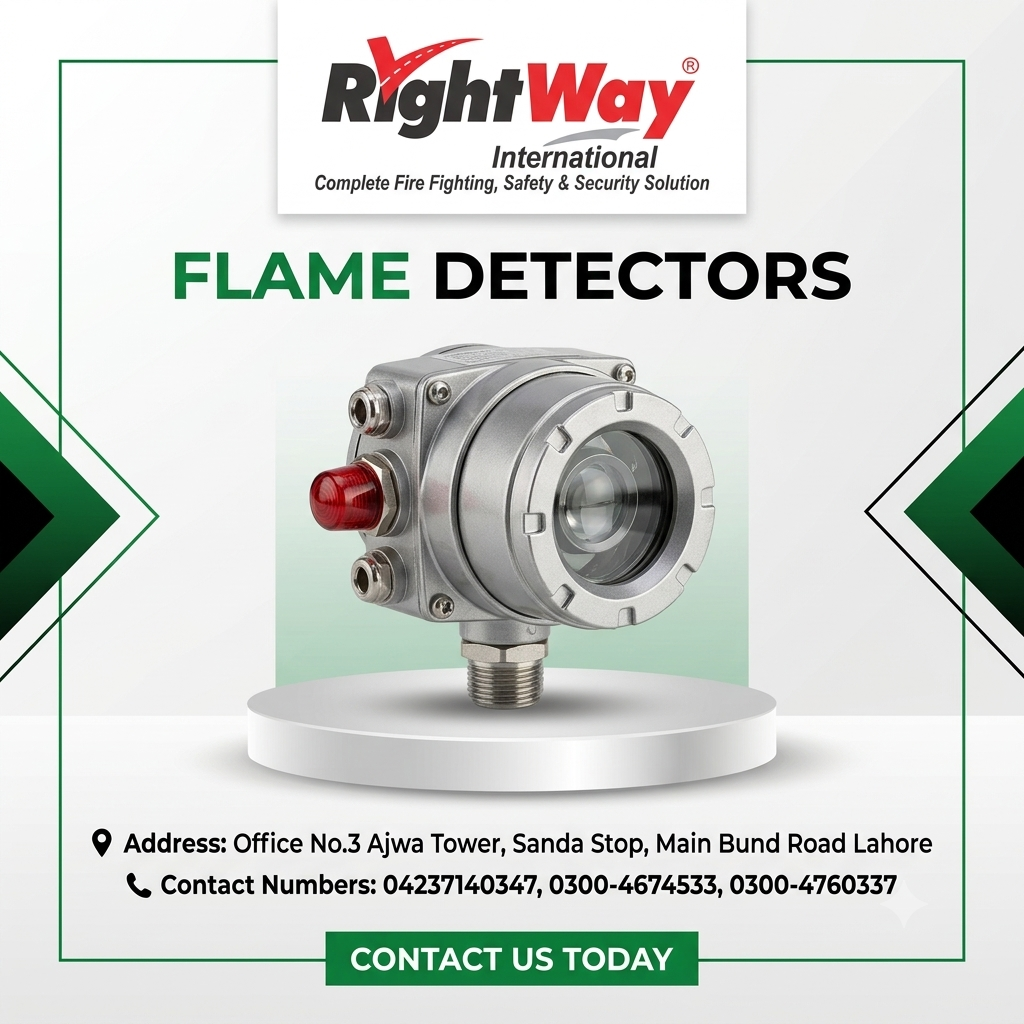
Flame Detector in Pakistan is a highly advanced fire detection device designed to identify the presence of flames by sensing ultraviolet (UV), infrared (IR), or combined UV/IR radiation emitted by fire. Unlike conventional smoke or heat detectors, Flame Detectors provide extremely rapid fire detection, making them ideal for environments where fires can spread within seconds or where smoke detection may not provide sufficient response time.
Flame Detectors are widely used in oil and gas facilities, petrochemical plants, power plants, manufacturing industries, warehouses, aircraft hangars, chemical processing plants, pharmaceutical industries, electrical substations, laboratories, mining operations, refineries, fuel storage terminals, marine vessels, offshore platforms, airports, commercial buildings, hospitals, educational institutions, government buildings, tunnels, server rooms, logistics centers, construction sites, warehouses, and industrial facilities throughout Pakistan.
These advanced fire detection devices improve workplace safety, provide early fire detection, reduce property damage, minimize operational downtime, protect valuable assets, and support compliance with National Fire Protection Association 72, NFPA 70, OSHA safety guidelines, UL standards, FM Approved standards, EN 54 standards, ISO standards, IEC standards, and local Pakistan fire safety regulations.
Modern Flame Detectors are manufactured using advanced ultraviolet sensors, infrared sensors, UV/IR dual-spectrum technology, triple infrared (IR3) sensors, intelligent microprocessors, digital signal processing, fire-resistant polycarbonate or aluminum housings, LED status indicators, relay outputs, wireless communication modules, explosion-proof enclosures, stainless steel mounting brackets, weatherproof protective covers, IP66/IP67-rated enclosures, and advanced optical filtering systems, ensuring dependable, accurate, and long-lasting fire detection.
Designed for continuous operation in demanding environments, Flame Detectors provide dependable fire protection for industrial, commercial, healthcare, hospitality, residential, government, marine, and energy sector applications across Pakistan.
Benefits of Flame Detectors
1. Ultra-Fast Fire Detection
Detects open flames within seconds before fires become uncontrollable.
2. Early Fire Warning
Provides immediate alarm activation for rapid evacuation and emergency response.
3. High Detection Accuracy
Advanced optical sensors accurately identify real flames while minimizing nuisance alarms.
4. Long Detection Range
Detects flames from significant distances depending on detector type.
5. Reduced False Alarms
Sophisticated filtering technology ignores sunlight, welding sparks, and artificial lighting.
6. Reliable Industrial Performance
Operates efficiently in harsh industrial environments.
7. Continuous Monitoring
Provides uninterrupted flame detection around the clock.
8. Enhanced Occupant Safety
Enables quick evacuation and minimizes risks to personnel.
9. Asset Protection
Safeguards expensive machinery, production equipment, fuel storage, electrical systems, inventory, and infrastructure.
10. Regulatory Compliance
Supports compliance with NFPA, ISO, UL, EN 54, IEC, FM Approved, OSHA, and local fire safety regulations.
Types of Flame Detectors
1. Ultraviolet (UV) Flame Detector
Detects ultraviolet radiation emitted by flames for rapid fire identification.
2. Infrared (IR) Flame Detector
Detects infrared radiation generated during combustion.
3. UV/IR Flame Detector
Combines ultraviolet and infrared sensing for improved reliability.
4. Triple IR (IR3) Flame Detector
Uses three infrared sensors for maximum accuracy and false alarm immunity.
5. Multi-Spectrum Flame Detector
Employs multiple optical wavelengths for superior fire detection.
6. Explosion-Proof Flame Detector
Designed for hazardous environments such as oil, gas, and petrochemical facilities.
7. Weatherproof Flame Detector
Suitable for outdoor industrial environments exposed to rain, dust, and extreme temperatures.
8. Addressable Flame Detector
Integrates directly with intelligent fire alarm systems.
9. Conventional Flame Detector
Compatible with conventional fire alarm panels.
10. Wireless Flame Detector
Communicates wirelessly with fire monitoring and alarm systems.
Common Flame Detector Components
Modern Flame Detectors typically include:
- UV Sensor
- IR Sensor
- Triple IR Sensors
- Optical Lens
- Signal Processing Circuit
- Intelligent Microprocessor
- Digital Signal Processor
- LED Status Indicator
- Relay Output Module
- Alarm Output Circuit
- Fire-Resistant Housing
- Explosion-Proof Enclosure
- Stainless Steel Mounting Bracket
- Protective Optical Window
- Sensitivity Adjustment Circuit
- Self-Test Module
- Power Supply Terminal
- Communication Interface
- Fault Indicator
- Weatherproof Sealing
- Cable Entry Glands
- Protective Sun Shield
- Identification Label
- Maintenance Label
These components ensure dependable flame detection, rapid alarm activation, and long operational life.
Common Uses of Flame Detectors in Pakistan
Flame Detectors are installed wherever immediate flame detection is essential.
Oil and Gas Industry
Refineries, offshore platforms, LNG terminals, fuel stations, gas processing plants, and storage facilities.
Chemical Processing Plants
Chemical manufacturing, solvent storage, paint industries, and hazardous material facilities.
Manufacturing Facilities
Factories, production lines, industrial workshops, and heavy engineering plants.
Warehouses
Fuel storage warehouses, logistics centers, and combustible material storage facilities.
Power Generation
Thermal power plants, substations, generator rooms, and electrical control rooms.
Commercial Buildings
Office towers, shopping malls, hotels, conference centers, and business complexes.
Healthcare Facilities
Hospitals, pharmaceutical plants, laboratories, and research centers.
Transportation
Airports, railway stations, tunnels, marine terminals, and seaports.
Government Buildings
Military facilities, defense installations, municipal buildings, and public institutions.
Construction Sites
Temporary industrial facilities, tunnels, and infrastructure projects.
Benefits Compared to Smoke Detectors
- Detects flames directly
- Extremely fast response
- Long-distance detection
- Reliable outdoor performance
- Suitable for hazardous environments
- Reduced false alarms
- Detects invisible fires quickly
- Ideal for high-risk industries
- Weather-resistant construction
- Compatible with intelligent fire alarm systems
- Durable industrial design
- Continuous monitoring
How Flame Detectors Work
A Flame Detector continuously monitors the surrounding environment using advanced ultraviolet, infrared, or multi-spectrum optical sensors.
Under normal operating conditions, the detector analyzes radiation patterns in the monitored area. When a flame appears, it emits characteristic ultraviolet and infrared radiation. The detector immediately recognizes these unique wavelengths while filtering out sunlight, welding operations, and other non-fire light sources.
The intelligent microprocessor verifies the detected signal before activating an audible alarm, visual indicator, fire alarm control panel, suppression system, or remote monitoring station. This rapid response helps prevent fire spread, minimizes property damage, and improves life safety.
Maintenance Requirements
Routine maintenance ensures dependable operation and regulatory compliance.
Maintenance activities include:
- Visual Inspection
- Optical Lens Cleaning
- Functional Testing
- Flame Simulation Testing
- Sensor Calibration
- Sensitivity Verification
- LED Indicator Testing
- Alarm Output Testing
- Relay Testing
- Wiring Inspection
- Housing Inspection
- Weather Seal Inspection
- Communication Testing
- Firmware Updates
- Preventive Maintenance
- Annual Servicing
- Maintenance Record Updating
- Detector Replacement at End of Service Life
Regular maintenance ensures accurate flame detection and reliable emergency performance.
Advantages of Flame Detectors
Flame Detectors provide numerous operational benefits:
- Ultra-fast flame detection
- Early fire warning
- High detection accuracy
- Long detection distance
- Continuous monitoring
- Durable industrial construction
- Low maintenance
- Weather-resistant performance
- Explosion-proof options
- Intelligent diagnostics
- Fast alarm response
- Reduced false alarms
- Long operational lifespan
- Reliable industrial performance
- Cost-effective fire protection
- Supports NFPA compliance
- Compatible with intelligent fire alarm systems
Applications of Flame Detectors
Common applications include:
- Oil Refineries
- Gas Plants
- LNG Facilities
- Petrochemical Plants
- Chemical Industries
- Manufacturing Plants
- Warehouses
- Power Plants
- Electrical Substations
- Aircraft Hangars
- Marine Vessels
- Offshore Platforms
- Fuel Storage Depots
- Airports
- Railway Stations
- Data Centers
- Hospitals
- Hotels
- Shopping Malls
- Educational Institutions
- Laboratories
- Pharmaceutical Facilities
- Mining Operations
- Government Buildings
- Residential Complexes
- Construction Sites
Portable Heat Detector
Portable Heat Detector in Pakistan is a smart investment for commercial buildings, industrial facilities, warehouses, hospitals, hotels, educational institutions, government offices, manufacturing plants, power plants, construction sites, laboratories, residential properties, and public buildings seeking reliable fire detection, enhanced life safety, reduced fire losses, improved business continuity, and compliance with international fire safety standards.
Flame Detectors in Pakistan
A Flame Detector in Pakistan is an essential fire protection solution for facilities requiring immediate flame detection and rapid emergency response. Its advanced UV, IR, UV/IR, and IR3 sensing technologies provide dependable fire detection, helping reduce fire losses, improve workplace safety, protect valuable assets, and minimize business interruptions.
With precision-engineered optical sensors, rugged industrial construction, intelligent electronic controls, weatherproof enclosures, explosion-proof options, dependable alarm systems, and compliance with international fire safety standards, Flame Detectors are widely used across industrial plants, refineries, hospitals, airports, warehouses, commercial buildings, power plants, laboratories, educational institutions, government facilities, and residential developments throughout Pakistan.
Professional installation, periodic inspections, functional testing, sensor cleaning, calibration, annual servicing, and preventive maintenance ensure dependable performance and compliance with modern fire safety regulations.
Why Choose a High-Quality Flame Detector?
High-quality Flame Detectors provide dependable flame detection, intelligent optical sensing technology, rugged fire-resistant construction, advanced electronic controls, rapid alarm communication, weatherproof performance, and long-term operational reliability.
Routine inspections, optical cleaning, detector calibration, functional testing, annual servicing, firmware updates, and preventive maintenance maximize system performance and extend equipment lifespan.
A Flame Detector in Pakistan is a smart investment for oil and gas facilities, chemical industries, manufacturing plants, warehouses, hospitals, hotels, airports, commercial buildings, power plants, government facilities, laboratories, educational institutions, mining operations, marine applications, residential developments, and industrial facilities seeking reliable fire detection, enhanced life safety, reduced fire losses, improved business continuity, and compliance with international fire safety standards.