




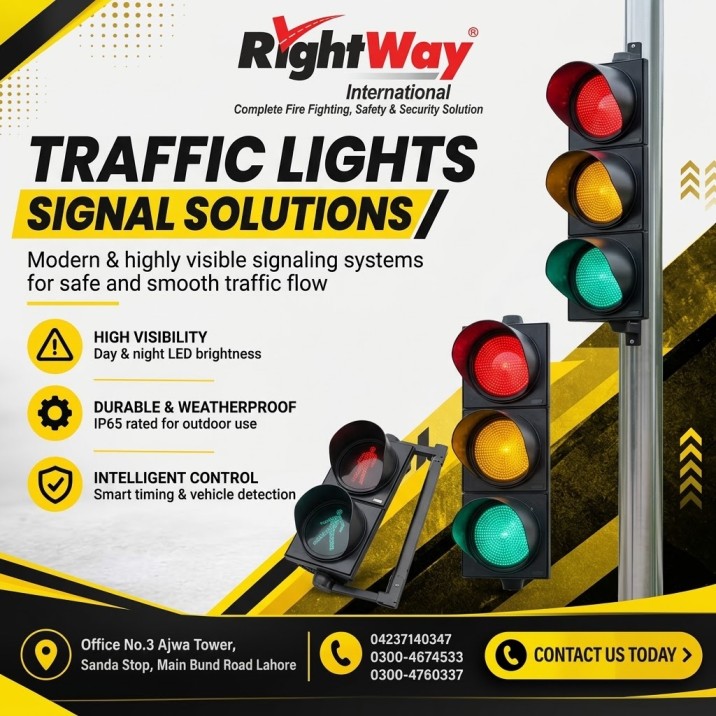
Traffic Lights Features Benefits. play an important role in road safety, traffic management, and vehicle control. These essential traffic control devices regulate vehicle movement, manage intersections, and help pedestrians cross roads safely. Moreover, traffic authorities use them to reduce traffic congestion, organize vehicle flow, and minimize the risk of road accidents.
At RightWay International, we understand the importance of reliable road safety equipment. Therefore, we provide professional fire-fighting, safety, and security solutions for different industries. Traffic lights offer an effective way to control road traffic and improve transportation safety. In addition, they help drivers and pedestrians understand traffic rules at busy intersections, highways, pedestrian crossings, and other controlled areas.
What Are Traffic Lights?
Traffic Lights are electronic signaling devices that control vehicle and pedestrian movement through colored lights. Most standard traffic signals use three main colors: red, yellow (amber), and green. Each color communicates a specific instruction to road users.
- Red Light: Instructs drivers to stop before the designated stop line.
- Yellow Light: Warns drivers that the signal is changing and they should prepare to stop when safe.
- Green Light: Allows drivers to proceed when the road ahead is clear.
Modern traffic signals use LED technology, electronic controllers, timers, and vehicle detection systems. Furthermore, some advanced models include pedestrian signals, countdown timers, and smart traffic management features.
Consequently, traffic lights help maintain organized vehicle movement and improve safety at busy road intersections.
Common Applications of Traffic Lights
Traffic lights support traffic control across different transportation environments. Moreover, their signaling systems help drivers and pedestrians follow organized movement patterns.
1. Road Intersections
Traffic authorities install traffic signals at road intersections to control vehicle movement from different directions. As a result, these signals reduce conflicts between vehicles and help maintain an organized traffic flow.
2. Highways and Major Roads
Traffic lights help regulate vehicle movement at selected highway junctions, access roads, and controlled crossings. In addition, they improve safety where different traffic routes meet.
3. Pedestrian Crossings
Pedestrian traffic signals guide people when crossing busy roads. Furthermore, dedicated pedestrian lights help separate pedestrian movement from vehicle traffic.
4. School Zones
Schools and traffic authorities use suitable traffic signals near educational institutions. These signals help drivers recognize pedestrian crossing points and follow speed and stopping instructions.
5. Construction Sites
Construction teams use temporary traffic lights to manage vehicles around road maintenance and construction areas. Consequently, workers can coordinate traffic movement through restricted or single-lane sections.
6. Toll Plazas
Toll operators install traffic signals to control vehicle movement through individual toll lanes. Similarly, these signals help drivers identify open and closed lanes.
7. Parking Facilities
Parking buildings and commercial facilities use traffic lights to manage vehicle entry and exit. In addition, red and green signals help drivers identify available or restricted routes.
8. Airports and Industrial Facilities
Airports, factories, and industrial facilities use suitable traffic signaling systems to regulate vehicle movement. Moreover, these systems help control access to restricted operational areas.
9. Railway Crossings
Railway crossing signals warn drivers and pedestrians when trains approach. In particular, flashing red lights and warning systems instruct road users to stop and wait until the crossing becomes safe.
Key Features of Traffic Lights
- Three-Color Signaling: Provides clear instructions through red, yellow, and green lights.
- LED Technology: Offers energy-efficient illumination and excellent visibility.
- Weather Resistance: Suitable outdoor models withstand different environmental conditions.
- Automatic Timers: Control signal duration according to programmed traffic schedules.
- Pedestrian Signals: Provide dedicated crossing instructions for pedestrians.
- Smart Controllers: Advanced systems can adjust signal timing according to traffic conditions.
Benefits of Traffic Lights
- Improved Road Safety: Helps reduce vehicle conflicts at controlled intersections.
- Better Traffic Management: Organizes vehicle movement and controls traffic flow.
- Pedestrian Protection: Provides safer crossing opportunities for pedestrians.
- Reduced Traffic Confusion: Gives drivers clear instructions at busy junctions.
- Energy Efficiency: LED traffic signals consume less electricity than many traditional lighting systems.
- Organized Transportation: Supports smoother movement across roads, highways, and industrial areas.
Traffic lights remain an essential part of modern transportation infrastructure. Therefore, selecting suitable traffic signaling equipment helps road authorities, construction companies, and facility managers improve traffic organization and road safety.
At RightWay International, we aim to support safer roads and workplaces through reliable safety and traffic management solutions.