




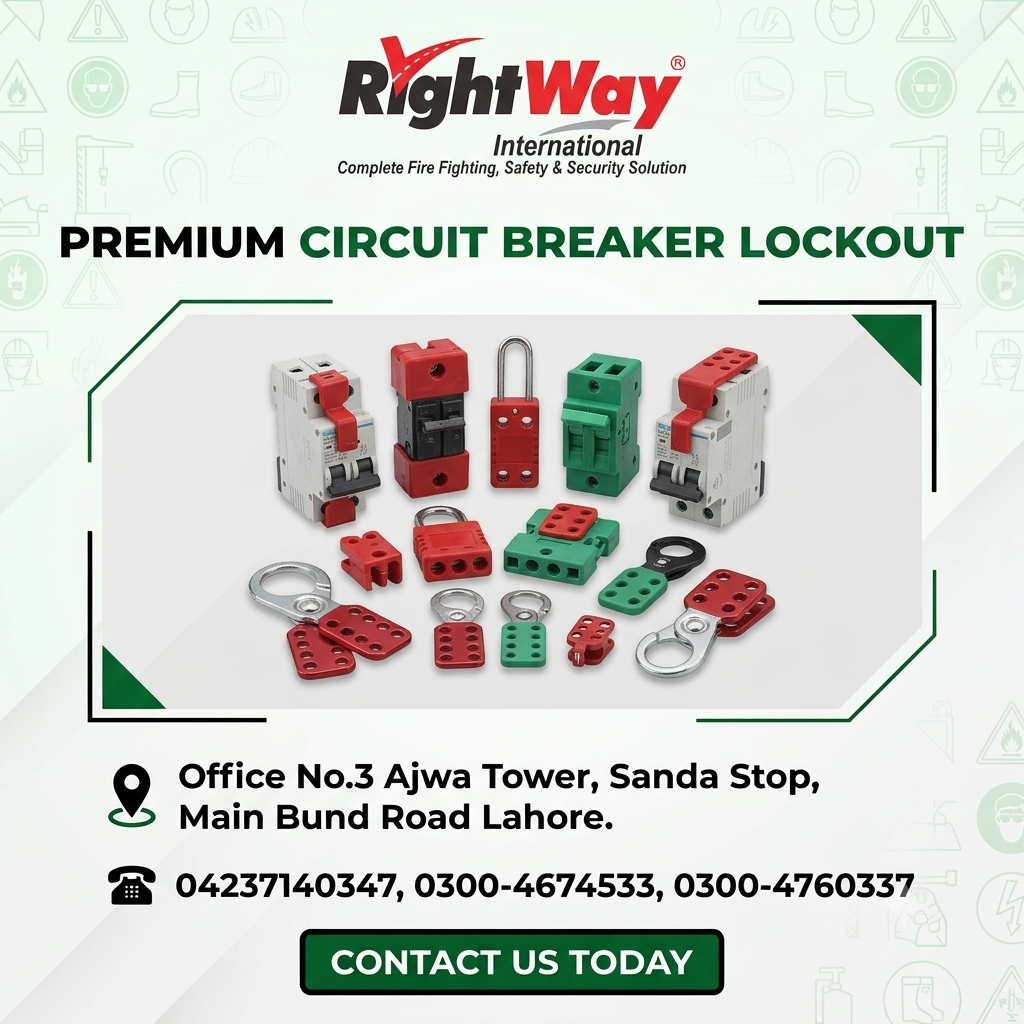
Circuit Breaker Lockout Devices in Pakistan is a vital electrical isolation device for any facility safety management program. Specifically, safety engineers design it to secure miniature, molded-case, and large air circuit breakers in the “OFF” position during maintenance. By physically blocking electrical switches from being flipped, these locking devices protect technicians from unexpected machine startups, arc flashes, and dangerous electrical shocks.
Consequently, facility teams extensively install these circuit breaker lockout devices across industrial plants, commercial towers, and power stations throughout Pakistan.
Importantly, these safety devices enhance workplace security and prevent severe electrical injuries during complex servicing tasks. Moreover, they support compliance with OSHA 1910.147 LOTO standards, National Fire Protection Association (NFPA) 70E electrical guidelines, ISO 45001 safety frameworks, and local Pakistan Civil Defence regulations.
Manufacturers build modern circuit breaker lockouts using impact-resistant engineering plastics, reinforced nylon bodies, and stainless steel set screws. Additionally, they feature tool-free thumb screws, universal pin-in/pin-out configurations, and high-visibility color coatings to deliver dependable performance in demanding industrial environments.
Benefits of Circuit Breaker Lockouts
- Positive Electrical Isolation: Mechanically prevents circuit breaker toggles from being switched back ON, ensuring complete de-energization during maintenance.
- Universal Compatibility: Fits a wide range of single-pole, multi-pole, miniature (MCB), and molded-case circuit breakers (MCCB) used across Pakistani electrical panels.
- OSHA LOTO Compliance: Fully satisfies OSHA 1910.147 Lockout/Tagout requirements for electrical energy sources on active machinery.
- Non-Conductive Dielectric Material: Made of high-grade nylon and thermoplastic compounds that completely eliminate electrical conductivity risks near live buses.
- High-Visibility Safety Color Coding: Bright red and safety-yellow plastic housings stand out instantly, allowing workers to quickly spot locked-out breakers.
- Tool-Free Installation: Incorporates ergonomic thumbscrews and push-button designs for fast, secure attachment without requiring screwdrivers.
- Tamper-Resistant Design: Features concealed set screws or integrated padlock holes that prevent unauthorized removal or tampering while locked.
- Durable & Chemical Resistant: Withstands thermal exposure, chemical splashes, oil mist, and UV aging across harsh Pakistani industrial environments.
- Lightweight & Ergonomic Structure: Easy for maintenance personnel to carry in standard LOTO pouches without adding excess weight.
- Global & Local Regulatory Compliance: Fully supports international OSHA, NFPA 70E, and ISO standards while meeting all local Pakistan industrial safety codes.
Types of Circuit Breaker Lockouts
- Pin-In / Pin-Out Miniature Circuit Breaker (MCB) Lockout: Uses alignment pins that snap into standard holes on the sides of MCB toggles for a secure grip.
- Universal Molded-Case Circuit Breaker (MCCB) Lockout: Adjustable clamp-on device designed to fit wide, heavy-duty breaker handles using a built-in thumbscrew.
- Clamp-On Switch Lockout: Versatile device that clamps tightly over standard rocker switches and large breaker handles.
- Cleat-Type MCB Lockout: Slides over the breaker toggle with a locking screw to block upward movement.
- Panel-Wide Circuit Breaker Lockout Bar: A continuous aluminum or plastic bar system that locks out an entire row of breakers simultaneously.
- Toggle Switch Lockout Cover: Fits tightly over wall switches and small toggles to prevent accidental switching.
- Large Air Circuit Breaker (ACB) Lockout: Heavy-duty mechanical block designed for massive draw-out type circuit breakers in main power substations.
- Snap-On Circuit Breaker Lockout: Features a spring-loaded or snap mechanism for instantaneous attachment to standard breakers.
- Wide-Handle Breaker Lockout: Extensively styled with deeper channels to accommodate oversized or extra-thick breaker handles.
- Lockout Tagout Kit Breaker Set: Pre-configured collections containing various breaker lockouts bundled for plant-wide utility maintenance.
Common Circuit Breaker Lockout Components
Engineers construct modern circuit breaker lockouts using high-precision internal and external parts:
- Impact-Resistant Polymer Body: High-grade reinforced nylon or thermoplastic housing built for toughness.
- Clamping Thumbscrew / Dial: Stainless steel or brass threaded screw providing secure mechanical grip on the breaker handle.
- Locking Pin Mechanism: Precision steel pins (in pin-in/pin-out models) that lock into breaker toggle recesses.
- Padlock Attachment Eyelet: Molded loop designed to accept standard safety padlock shackles and lockout hasps.
- Textured Gripping Surfaces: Ribbed or contoured surfaces for firm handling with heavy gloves.
- Warning Legend Area: Embossed international danger icons or text warning against unauthorized removal.
Common Uses in Pakistan
Technicians strategically apply circuit breaker lockouts to electrical panels and switchgear in:
- Industrial Facilities: Textile mills, steel plants, cement factories, and automotive assembly lines.
- Electrical Infrastructure: High-voltage switchgear rooms, distribution boards, and transformer substations.
- Oil, Gas & Chemical Plants: Refineries, chemical storage depots, and pipeline control systems.
- Pharmaceutical & Cleanrooms: Pharmaceutical formulation units, biotech labs, and HVAC control panels.
- Power Generation Facilities: Thermal power stations, hydroelectric dams, and solar park inverter stations.
- Commercial & High-Rise Buildings: Elevator machine rooms, central chillers, and generator control rooms.
- Food & Beverage Processing: Dairy plants, beverage bottling lines, and cold storage units.
- Logistics & Warehouses: Conveyor system control boxes and automated sorting lines.
Benefits Compared to Standard Improvised Methods
| Feature | Engineered Circuit Breaker Lockout | Improvised Tape / Wire / Padlock Methods |
| Mechanical Security | Clamps securely onto the toggle, preventing manual override | Easily ripped off, bypassed, or slipped off the switch handle |
| Electrical Safety | Non-conductive dielectric polymer construction | Metal wire or improvised materials can cause severe short circuits |
| Compliance | Purpose-built for OSHA 1910.147 electrical LOTO compliance | Completely non-compliant, leading to heavy regulatory penalties |
| Ease of Use | Fast, tool-free thumb screw or snap-on installation | Time-consuming and unreliable makeshift fixes |
| Visual Warning | High-visibility safety colors with clear danger markings | Lacks standardized safety communication or warnings |
Safety Lockout Hasps
A lockout hasp acts as a multi-person physical bridging tool attached to an energy-isolating device.
First, an authorized lead technician switches off the main power, valve, or pressure line. Next, they place the hasp jaw through the energy-isolating mechanism (such as a breaker handle hole or valve lockout body) and snap it shut so the interlocking tabs align.
How a Circuit Breaker Lockout Works
A circuit breaker lockout acts as a physical mechanical barrier attached directly to an electrical switch toggle.
First, an authorized technician flips the target circuit breaker handle to the “OFF” position, cutting off electrical power to the downstream machinery. Next, they select the appropriate circuit breaker lockout device (such as a pin-in MCB or universal MCCB clamp).
Then, they place the device over the breaker handle and tighten the integrated thumbscrew or push the locking pins into place so the toggle cannot be moved upward. Finally, they insert their personal safety padlock shackle and lockout hasp through the device’s eyelet and lock it closed.
Consequently, no other worker can energize the circuit until maintenance concludes and every technician removes their padlock.
Maintenance & Servicing Requirements
To remain operational and compliant with safety standards, circuit breaker lockouts require routine care:
- Monthly Visual Inspections: Inspect plastic bodies regularly for cracks, stripped thumbscrews, bent pins, or thermal deformation.
- Clamp Thread Checks: Test the threaded screws and metal inserts periodically to ensure smooth tightening without slipping.
- Padlock Hole Audits: Verify that padlock attachment eyelets are not warped or distorted from physical stress.
- Clean Storage Maintenance: Store unused circuit breaker lockouts in designated wall-mounted shadow boards or portable LOTO kits.
High-quality circuit breaker lockouts form an essential foundation of industrial electrical safety and hazard prevention. When facility teams assign them to authorized personnel and follow strict Lockout/Tagout procedures, these lockouts safeguard human life, eliminate electrical accidents, and ensure total compliance with safety codes throughout Pakistan.