




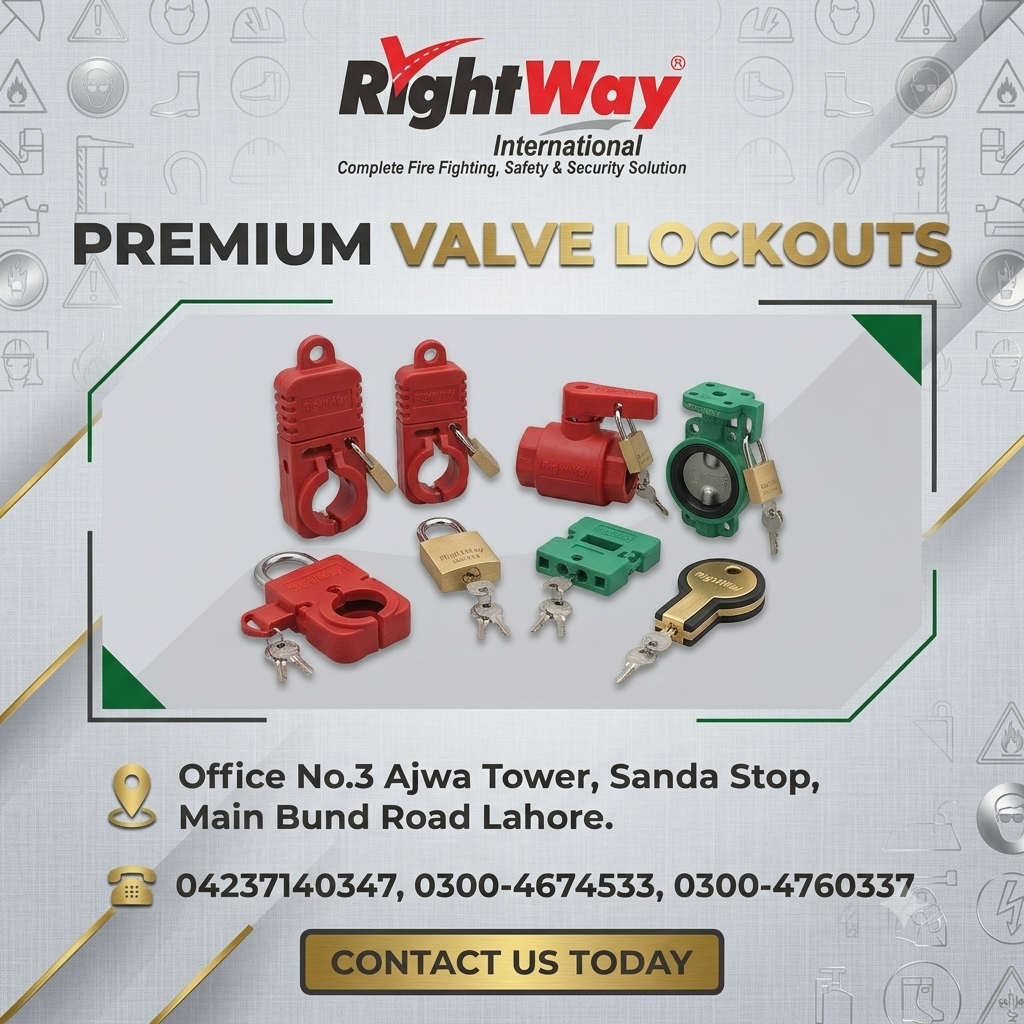
Valve Lockout Devices in Pakistan is a vital fluid isolation device for any facility safety management program. Specifically, safety engineers design it to secure ball, gate, butterfly, and plug valves in the “CLOSED” position during maintenance. By physically blocking industrial valves from being opened, these locking devices protect technicians from unexpected media discharges, toxic chemical leaks, and dangerous pressure releases. Consequently, facility teams extensively install these valve lockout devices across chemical plants, oil refineries, and water treatment facilities throughout Pakistan.
Importantly, these safety devices enhance workplace security and prevent severe fluid-related injuries during complex servicing tasks. Moreover, they support compliance with Occupational Safety and Health Administration 1910.147 LOTO standards, ASME fluid control guidelines, ISO 45001 safety frameworks, and local Pakistan industrial safety regulations. Manufacturers build modern valve lockouts using impact-resistant engineering plastics, reinforced polypropylene bodies, and heavy-duty steel cables. Additionally, they feature adjustable modular designs, universal multi-valve configurations, and high-visibility color coatings to deliver dependable performance in demanding industrial environments.
Benefits of Valve Lockouts
- Positive Fluid Isolation: Mechanically prevents valve handles and handwheels from being opened, ensuring complete line de-pressurization during maintenance.
- Universal Compatibility: Fits a wide range of ball valves, gate valves, butterfly valves, and pneumatic cylinders used across Pakistani industrial pipelines.
- OSHA LOTO Compliance: Fully satisfies OSHA 1910.147 Lockout/Tagout requirements for pneumatic, hydraulic, and fluid energy sources.
- Non-Conductive Dielectric Material: Made of robust engineering polymers that resist corrosion and withstand harsh chemical exposure near active lines.
- High-Visibility Safety Color Coding: Bright red and safety-yellow plastic housings stand out instantly, allowing workers to quickly spot isolated valves.
- Tool-Free Installation: Incorporates ergonomic clamping mechanisms and cable pulls for fast, secure attachment without requiring specialized wrenches.
- Tamper-Resistant Design: Features concealed locking points or integrated padlock holes that prevent unauthorized removal or tampering while locked.
- Durable & Chemical Resistant: Withstands thermal exposure, chemical splashes, oil mist, and UV aging across harsh Pakistani industrial environments.
- Lightweight & Ergonomic Structure: Easy for maintenance personnel to carry in standard LOTO pouches without adding excess weight.
- Global & Local Regulatory Compliance: Fully supports international OSHA, ASME, and ISO standards while meeting all local Pakistan industrial safety codes.
Types of Valve Lockouts
- Gate Valve Lockout: Crescent-shaped clamshell device that encloses the handwheel to prevent rotation.
- Ball Valve Lockout: Compact device that clamps over lever handles to block quarter-turn movement.
- Universal Cable Lockout: Versatile multi-hole steel cable system used to secure multiple valves or oversized handwheels simultaneously.
- Butterfly Valve Lockout: Specialized wedge or trigger block designed to immobilize trigger-handle butterfly valves.
- Pneumatic / Gas Cylinder Lockout: Encloses compressed gas pressure regulators and quick-disconnect fittings.
- Plug Valve Lockout: Secures multi-port plug valves by blocking handle rotation paths.
Common Valve Lockout Components
Engineers construct modern valve lockouts using high-precision internal and external parts:
- Impact-Resistant Polymer Body: High-grade reinforced polypropylene or industrial-grade thermoplastic housing built for toughness.
- Adjustable Clamping Slide / Cable: Stainless steel cables or interlocking half-moon shells providing secure mechanical grip.
- Padlock Attachment Eyelet: Molded loop designed to accept standard safety padlock shackles and lockout hasps.
- Textured Gripping Surfaces: Ribbed or contoured surfaces for firm handling with heavy gloves.
- Warning Legend Area: Embossed international danger icons or text warning against unauthorized removal.
Common Uses in Pakistan
Technicians strategically apply valve lockouts to pipelines and fluid control systems in:
- Oil, Gas & Chemical Plants: Refineries, chemical storage depots, and pipeline control systems.
- Water Treatment Facilities: Municipal pumping stations, filtration plants, and sewage treatment works.
- Power Generation Facilities: Thermal power stations, hydroelectric cooling lines, and boiler feed water systems.
- Industrial Facilities: Textile mills, steel plants, cement factories, and chemical processing units.
- Pharmaceutical & Cleanrooms: Pharmaceutical formulation units, biotech labs, and steam sterilization lines.
- Food & Beverage Processing: Dairy plants, beverage bottling lines, and CIP (Cleaning in Place) sanitation loops.
Benefits Compared to Standard Improvised Methods
| Feature | Engineered Valve Lockout | Improvised Chain / Padlock Methods |
| Mechanical Security | Encloses or clamps tightly over the valve handle, preventing manual override | Easily slipped off, cut, or bypassed using simple tools |
| Fluid Safety | Complete physical barrier against accidental valve rotation | Chain slack can allow partial valve movement and leaks |
| Compliance | Purpose-built for OSHA 1910.147 fluid LOTO compliance | Completely non-compliant, leading to heavy regulatory penalties |
| Ease of Use | Fast, tool-free clamping or cable threading installation | Time-consuming and unreliable makeshift fixes |
| Visual Warning | High-visibility safety colors with clear danger markings | Lacks standardized safety communication or warnings |
How a Valve Lockout Works
A valve lockout acts as a physical mechanical barrier attached directly to a fluid control handle or handwheel.
First, an authorized technician turns the target valve handle or handwheel to the “CLOSED” position, cutting off fluid, gas, or steam flow to the downstream equipment. Next, they select the appropriate valve lockout device (such as a ball valve clamp or gate valve enclosure).
Then, they place the device over or around the valve mechanism and secure it tightly so the handle cannot be moved. Finally, they insert their personal safety padlock shackle and lockout hasp through the device’s eyelet and lock it closed.
Consequently, no other worker can re-pressurize the system until maintenance concludes and every technician removes their padlock.
Circuit Breaker Lockout Devices
A circuit breaker lockout acts as a physical mechanical barrier attached directly to an electrical switch toggle.
First, an authorized technician flips the target circuit breaker handle to the “OFF” position, cutting off electrical power to the downstream machinery. Next, they select the appropriate circuit breaker lockout device (such as a pin-in MCB or universal MCCB clamp).
Then, they place the device over the breaker handle and tighten the integrated thumbscrew or push the locking pins into place so the toggle cannot be moved upward. Finally, they insert their personal safety padlock shackle and lockout hasp through the device’s eyelet and lock it closed.
Consequently, no other worker can energize the circuit until maintenance concludes and every technician removes their padlock.
Maintenance & Servicing Requirements
To remain operational and compliant with safety standards, valve lockouts require routine care:
- Monthly Visual Inspections: Inspect plastic bodies regularly for cracks, cable fraying, or thermal deformation.
- Cable & Clamping Checks: Test the sliding mechanisms and cables periodically to ensure smooth locking without slipping.
- Padlock Hole Audits: Verify that padlock attachment eyelets are not warped or distorted from physical stress.
- Clean Storage Maintenance: Store unused valve lockouts in designated wall-mounted shadow boards or portable LOTO kits.
High-quality valve lockouts form an essential foundation of industrial fluid safety and hazard prevention. When facility teams assign them to authorized personnel and follow strict Lockout/Tagout procedures, these lockouts safeguard human life, eliminate fluid-release accidents, and ensure total compliance with safety codes throughout Pakistan.