




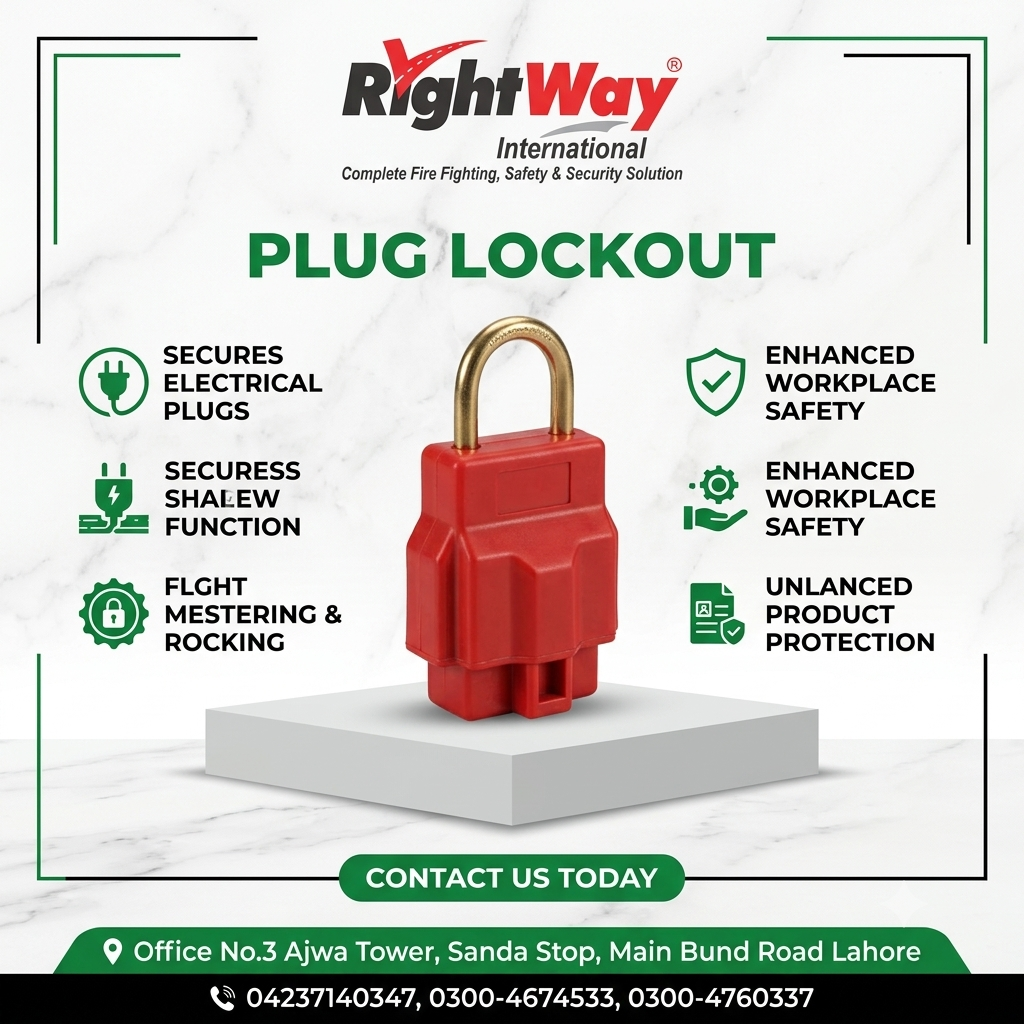
Plug Lockout Devices in Pakistan are a vital electrical isolation device for any facility safety management program. Specifically, safety engineers design them to secure electrical plugs, cords, and connectors in the “DISCONNECTED” position during maintenance. By physically enclosing equipment plugs inside secure, lockable clamshell housings, these devices prevent technicians and workers from accidentally plugging cords back into live wall outlets. Consequently, facility teams extensively install these plug lockout devices across manufacturing plants, data centers, hospitals, and commercial complexes throughout Pakistan.
Importantly, these safety devices enhance workplace security and prevent severe electrical shock hazards during cord-connected machinery servicing. Moreover, they support compliance with OSHA 1910.147 LOTO standards, National Electrical Code (NEC) guidelines, ISO 45001 safety frameworks, and local Pakistan industrial safety regulations. Manufacturers build modern plug lockouts using heavy-duty, impact-resistant engineering plastics, non-conductive thermoplastic bodies, and bright hazard-warning colors. Additionally, they feature universal multi-hole entry ports, modular cord channels, and compact designs to deliver dependable performance in demanding industrial environments.
Benefits of Plug Lockouts
- Positive Energy Isolation: Mechanically encases electrical plug prongs and cords, preventing unauthorized or accidental re-energization during servicing.
- Universal Cord Compatibility: Fits a wide range of standard 110V, 220V, and heavy-duty 3-phase industrial electrical plugs used across Pakistani facilities.
- OSHA LOTO Compliance: Fully satisfies OSHA 1910.147 Lockout/Tagout requirements for portable and cord-connected electrical equipment.
- Non-Conductive Dielectric Material: Made of robust, high-grade thermoplastic compounds that completely eliminate electrical conductivity risks near live terminals.
- High-Visibility Safety Color Coding: Bright red and safety-yellow plastic housings stand out instantly, allowing workers to quickly spot isolated equipment cords.
- Tool-Free Installation: Incorporates intuitive clamshell folding designs and cord-cinching slots for fast, secure attachment without requiring tools.
- Tamper-Resistant Design: Features interlocking shell edges and integrated padlock holes that prevent access to plug prongs while locked.
- Durable & Chemical Resistant: Withstands thermal exposure, chemical splashes, oil mist, and UV aging across harsh Pakistani industrial environments.
- Lightweight & Ergonomic Structure: Easy for maintenance personnel to carry in standard LOTO tool pouches without adding excess weight.
- Global & Local Regulatory Compliance: Fully supports international OSHA, NEC, and ISO standards while meeting all local Pakistan industrial safety codes.
Types of Plug Lockouts
- Standard Clamshell Plug Lockout: Hinged plastic box that encloses small to medium-sized 110V-220V straight blade and molded plugs.
- Industrial Heavy-Duty Cylindrical Plug Lockout: Long tubular housing designed to enclose large, heavy-duty 3-phase industrial and generator power plugs.
- Universal Cord-Through Plug Lockout Bag: Flexible heavy-duty fabric or vinyl bag with a drawstring and padlock eyelets that wraps around any size plug and cord bundle.
- Pneumatic / Hose Quick-Disconnect Lockout: Specialized cylindrical enclosure that blocks compressed air fittings and pneumatic hoses from mating.
- Compact Mini Plug Lockout: Designed specifically for smaller appliance, computer, and office equipment power plugs.
- Multi-Socket Power Strip Lockout: Encloses entire power strips or multiple plug heads to isolate clusters of electronic devices simultaneously.
Common Plug Lockout Components
Engineers construct modern plug lockouts using high-precision internal and external parts:
- Impact-Resistant Polymer Shell: High-grade reinforced thermoplastic or polypropylene housing built for toughness and drop resistance.
- Cord Entry Channels: Precision-molded cable slots that allow the electrical cord to pass through while keeping the plug body securely locked inside.
- Padlock Attachment Eyelet: Molded dual-loop holes designed to accept standard safety padlock shackles and lockout hasps.
- Textured Grip Surface: Ribbed exterior design for secure handling with greasy or gloved hands.
- Warning Legend Area: Embossed international danger icons or text warning against unauthorized removal.
Common Uses in Pakistan
Technicians strategically apply plug lockouts to cord-connected devices and power lines in:
- Manufacturing & Assembly Plants: Power tools, portable welding machines, and mobile conveyor motors.
- Information Technology & Data Centers: Server room power cords, rack units, and heavy UPS maintenance lines.
- Healthcare Facilities: Portable medical imaging machines, diagnostic equipment, and patient room electronics.
- Construction & Infrastructure: Mobile generators, heavy-duty air compressors, and portable lighting rigs.
- Hospitality & Commercial Buildings: Industrial floor scrubbers, kitchen catering equipment, and HVAC servicing units.
- Logistics & Warehouses: Electric forklift battery charging stations and portable maintenance equipment.
Benefits Compared to Standard Improvised Methods
| Feature | Engineered Plug Lockout | Improvised Tape / Hiding Methods |
| Mechanical Security | Encloses the entire plug inside a locked shell, blocking outlet access | Cords can be easily unhidden, untaped, or plugged back in |
| Electrical Safety | Completely blocks physical contact with live metal prongs | Exposed prongs during makeshift hiding still pose shock risks |
| Compliance | Purpose-built for OSHA 1910.147 portable equipment LOTO compliance | Completely non-compliant, leading to heavy regulatory penalties |
| Ease of Use | Fast, tool-free clamshell closure and padlock insertion | Time-consuming and unreliable makeshift fixes |
| Visual Warning | High-visibility safety colors with clear danger markings | Lacks standardized safety communication or warnings |
How a Plug Lockout Works
A plug lockout acts as a physical mechanical barrier enclosing an equipment power plug to prevent its insertion into an electrical outlet.
First, an authorized technician unplugs the target machine from the wall socket, ensuring zero electrical energy input. Next, they select the appropriate plug lockout device (such as a standard clamshell or heavy-duty cylindrical housing).
Then, they place the electrical plug inside the lockout cavity, allowing the cord to exit through the designated slot, and snap or close the shell shut. Finally, they insert their personal safety padlock shackle and lockout hasp through the device’s aligned eyelets and lock it closed.
Consequently, no other worker can plug the equipment back into a live socket until maintenance concludes and every technician removes their padlock.
Maintenance & Servicing Requirements
To remain operational and compliant with safety standards, plug lockouts require routine care:
- Monthly Visual Inspections: Inspect plastic clamshell bodies regularly for hinge cracks, stress fractures, or thermal deformation.
- Hinge & Latch Audits: Test the folding hinges and latching tabs periodically to ensure secure closure without gaping.
- Padlock Hole Checks: Verify that padlock attachment eyelets are not warped or distorted from physical stress.
- Clean Storage Maintenance: Store unused plug lockouts in designated wall-mounted shadow boards or portable LOTO kits.
High-quality plug lockouts form an essential foundation of industrial electrical safety and portable equipment hazard prevention. When facility teams assign them to authorized personnel and follow strict Lockout/Tagout procedures, these lockouts safeguard human life, eliminate electrical shock accidents, and ensure total compliance with safety codes throughout Pakistan.