




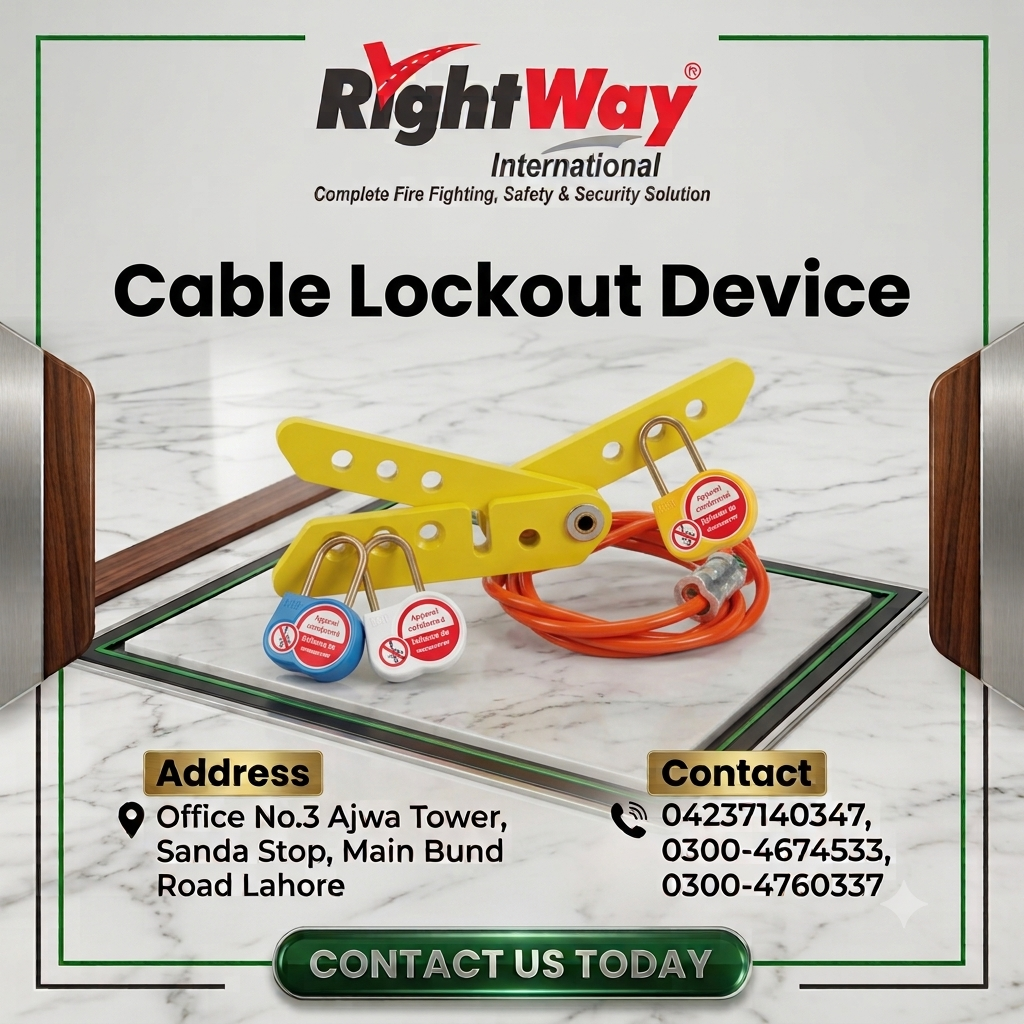
Lockout Scissors in Pakistan are an essential mechanical containment and administrative safety component of any facility energy control and hazard isolation program. Specifically, safety engineers design them to allow multiple technicians to attach their personal padlocks onto a single energy-isolating point—such as a circuit breaker handle, ball valve lockout device, or main electrical disconnect switch. By clamping its interlocking jaw onto an isolation device, lockout scissors prevent machinery from being energized until every team member finishes their assignment and removes their individual lock.
Consequently, industrial safety teams extensively implement lockout scissors across manufacturing plants, oil and gas refineries, power generation stations, chemical processing facilities, and heavy engineering complexes throughout Pakistan.
Importantly, these safety isolation tools reinforce workplace safety and prevent severe multi-source energy re-energization accidents during equipment maintenance, repairs, and complex servicing operations. Moreover, they support compliance with Occupational Safety and Health Administration (OSHA) 1910.147 LOTO standards, National Electrical Code (NEC) guidelines, ISO 45001 occupational health and safety frameworks, and local Pakistan industrial safety regulations.
Manufacturers construct modern lockout scissors using high-tensile vinyl-coated steel, spark-proof aluminum alloys, or non-conductive nylon and polycarbonate materials in high-visibility safety colors. Additionally, they feature interlocking jaw hooks, ergonomic scissor handles, multi-lock hole configurations, and pry-resistant rivets to deliver dependable performance in demanding industrial environments.
Benefits of Lockout Scissors
- Multi-Worker Energy Isolation: Enables up to six (or more when daisy-chained) authorized workers to secure a single energy point using individual safety padlocks.
- Individual Accountability: Guarantees that power cannot be restored to machinery until the final worker removes their safety padlock from the scissor handle.
- OSHA & ISO Compliance: Fully satisfies OSHA 1910.147 multi-person group lockout requirements for group equipment servicing and electrical isolation.
- Corrosion & Spark Resistance: Engineered with powder-coated steel, zinc-plated jaws, or non-sparking aluminum suited for high-humidity and explosive chemical environments.
- High-Visibility Hazard Alert: Features bright red, yellow, or orange vinyl-coated handles compliant with ANSI Z535 visual safety coding standards.
- Compact & Portable: Fits easily into technician tool belts, LOTO pouches, or localized maintenance kits for fast deployment across large facilities.
- Dielectric Safety Options: Non-conductive plastic and nylon versions prevent electrical arcing and short circuits during high-voltage maintenance.
- Cost-Effective Hazard Reduction: Simple mechanical design offers maximum physical energy blockage with minimal installation overhead.
Types of Lockout Scissors
- Steel Scissor Lockout Hasp: Constructed from heavy-duty vinyl-coated steel with hardened jaw hooks, ideal for rugged mechanical isolation on heavy industrial machinery.
- Aluminum Non-Sparking Hasp: Lightweight, corrosion-resistant aluminum scissor engineered specifically for volatile oil, gas, and petrochemical refinery environments.
- Dielectric Non-Conductive Hasp: Molded entirely from industrial nylon or polycarbonate to eliminate electrical conduction during electrical panel and switchgear lockout.
- Flexible Cable Lockout Hasp: Integrates scissor clamping action with a steel wire cable to loop through irregular or multi-point isolation setups.
- Dual-Jaw Size Scissor Hasp: Features two different jaw diameter openings (e.g., 1 inch and 1.5 inches) on opposite ends for versatile fitting across varying energy switch sizes.
- Heavy-Duty Extended Scissor Hasp: Designed with elongated handles to accommodate extra padlock capacity or extended reach into cramped control cabinets.
Common Lockout Scissor Components
Engineers construct modern lockout scissors using precision-engineered physical components:
- Interlocking Steel Jaws: Hardened hook jaws that clamp together into a closed loop around energy switches, valve handles, or lockout cables.
- Heavy-Duty Center Pivot Rivet: High-tensile stainless steel pin providing smooth scissor pivot action while resisting forced prying or tampering.
- Multi-Hole Scissor Handles: Ergonomic vinyl-coated or molded handle grips perforated with standardized shackle holes (typically 6 holes) to receive padlocks.
- Non-Conductive Vinyl Coating: Layer of high-dielectric rubberized coating that provides electric shock protection and enhanced grip for technicians.
- Anti-Pry Interlocking Pins: Overlapping safety teeth along the jaw rim that prevent unauthorized opening when locks are applied.
Common Uses in Pakistan
Technicians strategically deploy lockout scissors during multi-person servicing tasks in:
- Oil, Gas & Petrochemical Refineries: Multi-craft pipefitting and valve isolation on high-pressure gas headers and pumping stations.
- Textile & Apparel Mills: Electrical disconnect isolation during spinning frame repairs, loom overhauls, and boiler maintenance.
- Power Generation & Sub-Stations: Securing high-voltage circuit breakers, transformer disconnects, and switchgear panels during grid maintenance.
- Cement & Fertilizer Plants: Locking out main conveyor belt drives, rotary kilns, and chemical batch mixing machinery.
- Pharmaceutical & Chemical Processing: Multi-valve manifold isolation and reactor vessel cleaning protocol adherence.
- Automotive & Steel Assembly Facilities: Stamping press overhauls, robotic welding cell maintenance, and overhead crane power isolations.
Benefits Compared to Standard Improvised Methods
| Feature | Engineered Safety Lockout Scissors | Improvised Wire / Single Padlock Methods |
| Material Durability | High-tensile hardened steel, non-sparking aluminum, or heavy nylon | Flimsier copper wire, plastic zip ties, or soft hardware store chains |
| Legal & Audit Compliance | Fully compliant with OSHA 1910.147 and ISO 45001 LOTO rules | Non-compliant; incurs severe regulatory safety fines and operational citations |
| Group Accountability | Ensures every worker attaches an independent lock before work starts | Forces reliance on single-key handoffs, greatly increasing human error risks |
| Pry & Tamper Resistance | Interlocking jaw teeth and hardened center rivet resist mechanical prying | Easily cut with wire cutters or snips, creating immediate safety hazards |
| Visual Warning | High-visibility ANSI red/yellow coating communicates active hazard status | Lacks standard visual hazard coding, leading to accidental power restoration |
How Lockout Scissors Work
- Energy Isolation: The lead authorized technician shuts down the machine’s main power supply and moves the energy isolation device (e.g., breaker handle or valve lever) to the OFF/ISOLATED position.
- Jaw Clamping: The technician opens the lockout scissor jaws, loops them through the locking hole of the energy isolator (or lockout attachment), and clamps the jaws shut.
- Multi-Lock Application: Each worker assigned to the task passes their personal safety padlock shackle through one of the scissor handle’s perimeter holes and snaps it shut.
- Administrative Tagging: Workers attach personalized LOTO warning tags alongside their padlocks to display technician names, dates, and department details.
- Fail-Safe Containment: As long as a single padlock remains attached through any scissor hole, the handles cannot spread apart, the interlocking jaws remain locked shut, and the energy source cannot be turned back on.
- Safe Restoration: Once each worker completes their task, they remove their own padlock. When the final lock is removed, the lead supervisor opens the scissor jaws, removes the device, and safely re-energizes the system.
Group Lock Boxes
A group lock box functions as an indispensable administrative and physical safety barrier that coordinates multi-person machinery maintenance safely.
First, the authorized lead technician or shift supervisor shuts down all relevant energy sources across the target machine, ensures zero energy input, and applies primary lockout devices (such as valve lockouts and circuit breaker lockouts) to each isolation point.
Maintenance & Servicing Requirements
To remain operational and compliant with safety guidelines, lockout scissors require basic inspection and handling care:
- Pre-Shift Mechanical Checks: Inspect center pivot rivets and jaw alignment before every shift to ensure smooth closure without bending or lateral play.
- Jaw & Coating Audits: Verify that vinyl coatings on electrical lockout hasps remain intact without cuts, gouges, or exposed metal underneath.
- Corrosion Control: Keep metal scissors clean of industrial grease, corrosive acid splashes, and excessive dust, storing them in designated LOTO stations.
- Pivot Lubrication: Periodically apply dry-film lubricant to the center pin in outdoor Pakistani plant climates to prevent rusting or jamming.