




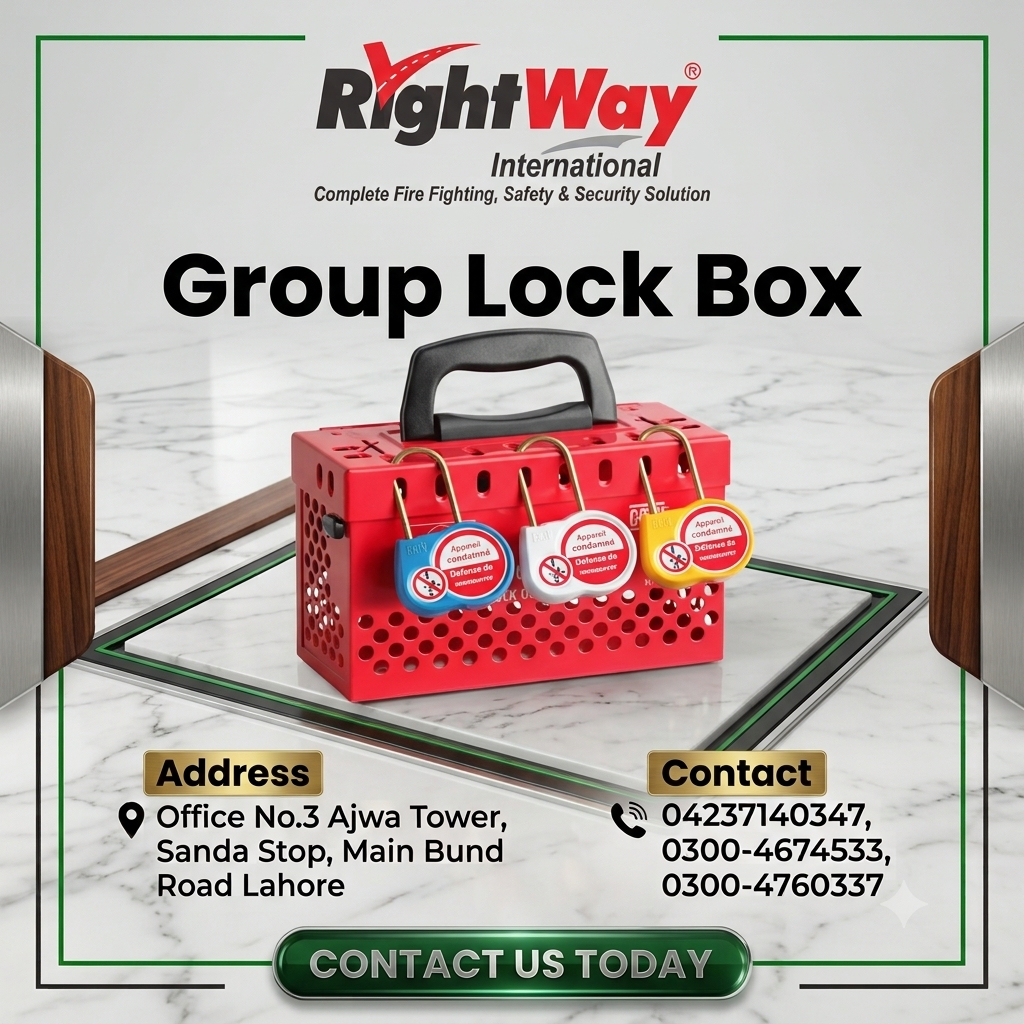
Group Lock Boxes in Pakistan are an essential mechanical containment and administrative safety component of any facility energy control and hazard isolation program. Specifically, safety engineers design them to secure multiple padlocks during complex, multi-person maintenance operations on hazardous machinery. By securely locking the keys of primary energy-isolating devices—such as circuit breaker lockouts, valve lockouts, and electrical disconnects—inside a heavy-duty metal enclosure, these specialized safety boxes prevent workers from accidentally re-energizing equipment while team members are still working.
Consequently, industrial safety teams extensively implement group lock boxes across manufacturing plants, oil and gas refineries, power generation stations, chemical processing facilities, and heavy engineering complexes throughout Pakistan.
Importantly, these safety containment units reinforce workplace safety and prevent severe multi-source energy accidents during major turnarounds, shutdowns, and complex equipment servicing. Moreover, they support compliance with
Occupational Safety and Health Administration (OSHA)1910.147 LOTO standards, National Electrical Code (NEC) guidelines, ISO 45001 safety frameworks, and local Pakistan industrial safety regulations.
Manufacturers build modern group lock boxes using heavy-gauge powder-coated steel, industrial-grade aluminum, or high-impact transparent polycarbonate featuring high-visibility hazard colors. Additionally, they incorporate ergonomic carrying handles, multi-lock perimeter slots, clear observation windows, and wall-mounting brackets to deliver dependable performance in demanding industrial environments.
Benefits of Group Lock Boxes
- Centralized Isolation Control: Safely houses all primary energy isolation keys in one secure location to prevent premature equipment re-energization during complex team tasks.
- Individual Worker Accountability: Allows every authorized technician to attach their personal safety padlock directly to the box, ensuring equipment cannot start until every worker finishes and removes their lock.
- OSHA LOTO Compliance: Fully satisfies OSHA 1910.147 multi-person Lockout/Tagout requirements for group servicing and complex mechanical maintenance.
- Weather & Environment Resistant: Built using corrosion-resistant powder-coated steel or rust-proof aluminum that withstands moisture, grease, oil, and harsh outdoor plant conditions.
- High-Visibility Safety Color Coding: Utilizes striking safety red, yellow, or industrial powder-coated finishes compliant with ANSI Z535 standards to command immediate visual attention on the shop floor.
- Secure Multi-Lock Capacity: Features perimeter lock holes (ranging from 10 to 20+ locking positions) to accommodate large crews of mechanical and electrical technicians.
- Portable or Wall-Mount Versatility: Easily transitions between a portable red safety lock box carried to remote valves and a fixed wall-mounted station in a central control room.
- Transparent Visibility Option: Incorporates clear polycarbonate viewing panels so safety supervisors can visually audit internal keys and tags without opening the enclosure.
- Global & Local Regulatory Compliance: Fully supports international OSHA, NEC, and ISO standards while meeting all local Pakistan industrial safety codes.
Types of Group Lock Boxes
- Portable Red Steel Lock Box: Heavy-gauge steel enclosure featuring a comfortable carrying handle and multiple lock holes, ideal for mobile maintenance crews across large plants.
- Wall-Mounted Group Lock Box: Stationary metal cabinet permanently installed near major electrical substations or assembly lines for quick shift-change access.
- Portable Window Lock Box: Features a clear polycarbonate front panel that allows safety auditors to visually verify enclosed keys without unlocking the unit.
- Aluminum Lightweight Lock Box: Corrosion-proof, non-sparking metal enclosure engineered specifically for hazardous, explosive oil and gas refinery environments.
- Combination Lock Box: Hybrid safety enclosure that integrates key locks with mechanical code dials for emergency administrative override capabilities.
- Compact Personal Lockout Box: Smaller portable container tailored for minor shift teams, contractor crews, or single-unit utility maintenance tasks.
Common Group Lock Box Components
Engineers construct modern group lock boxes using precision-engineered physical parts:
- Heavy-Gauge Metal Body: Powder-coated steel, stainless steel, or aluminum engineered for high structural durability, impact resistance, and long-term tensile toughness.
- Multi-Lock Perimeter Lid: Reinforced top rim featuring evenly spaced locking slots designed to accept multiple safety padlocks and lockout hasps simultaneously.
- Internal Key Storage Tray: Dedicated interior rack or hanging hooks to organize and separate keys corresponding to individual isolation points.
- Ergonomic Carrying Handle: Heavy-duty steel or molded plastic grip for effortless transportation of keys across large industrial yards.
- Transparent Inspection Window: Shatter-proof polycarbonate viewing screen for instant visual monitoring of internal keys and tags.
- Wall-Mount Keyholes: Rear mounting slots enabling secure permanent installation on plant walls, control room columns, or mobile maintenance carts.
Common Uses in Pakistan
Technicians strategically deploy group lock boxes during multi-person servicing tasks in:
- Oil, Gas & Petrochemical Refineries: Major turnaround maintenance on fractionating columns, pipeline manifolds, and high-pressure compressor stations.
- Manufacturing & Heavy Industry: Complex assembly line overhauls, massive stamping presses, and automated robotic welding cells.
- Power Generation & Utilities: Annual turbine overhauls, high-voltage switchgear maintenance, and electrical substation grid servicing.
- Chemical Processing Plants: Batch reactor cleaning, corrosive chemical line shutdowns, and multi-valve manifold isolation.
- Construction & Infrastructure: Large-scale civil engineering projects, site-wide power grid integration, and heavy plant commissioning.
- Textile & Composite Mills: Central utility room overhauls, massive spinning frame maintenance, and factory-wide electrical distribution updates.
Benefits Compared to Standard Improvised Methods
| Feature | Engineered Group Lock Box | Improvised Storage / Unsecured Key Ring |
| Material Durability | Heavy-gauge powder-coated steel or rust-proof aluminum | Flimsy metal lockboxes or open wire key rings that bend or break |
| Legal Compliance | Fully compliant with OSHA 1910.147 multi-person lockout rules | Non-compliant, inviting severe OSHA/audit penalties and citations |
| Team Accountability | Requires every worker’s lock to be removed before equipment unlocks | Allows single supervisors to hold all keys, inviting catastrophic human error |
| Security Integrity | Tamper-proof design prevents unauthorized key retrieval during work | Prone to lost keys, forced entry, or accidental key mishandling |
| Visual Warning | High-visibility safety colors and clear administrative structure | Lacks formal safety structure, creating confusion during shutdowns |
Lockout Tags
A lockout tag functions as an indispensable administrative safety barrier that communicates equipment status and warns workers not to restore power.
First, an authorized technician shuts down the target machine and ensures zero energy input. Before or during the attachment of a physical padlock, they fill out a lockout tag with their name, department, and the date.
Next, they thread the safety padlock shackle or a heavy-duty cable tie through the tag’s reinforced eyelet and secure it directly to the energy-isolating device (such as a valve handle or breaker switch) alongside their lock. Finally, the tag serves as an immediate visual warning to anyone approaching the machinery.
How a Group Lock Box Works
A group lock box functions as an indispensable administrative and physical safety barrier that coordinates multi-person machinery maintenance safely.
First, the authorized lead technician or shift supervisor shuts down all relevant energy sources across the target machine, ensures zero energy input, and applies primary lockout devices (such as valve lockouts and circuit breaker lockouts) to each isolation point.
Next, the supervisor places all the primary isolation keys inside the group lock box and closes the lid. Each member of the maintenance crew then attaches their own personal safety padlock and corresponding lockout tag directly through the perimeter locking slots of the box.
Finally, as long as even one technician’s padlock remains attached to the group lock box, the lid cannot be opened, the primary keys remain trapped inside, and the equipment cannot be re-energized. The box remains locked throughout the entire shift until every single worker completes their task, removes their individual padlock, and the supervisor finally retrieves the keys to restore power safely.
Maintenance & Servicing Requirements
To remain operational and compliant with safety guidelines, group lock boxes require basic tracking and handling care:
- Pre-Use Structural Checks: Inspect hinges, latches, and locking slots before every shift to ensure the lid closes flush and resists forced tampering.
- Storage Management: Keep portable lock boxes stored neatly in wall-mounted LOTO stations or designated safety tool cribs away from corrosive chemical splashes.
- Post-Task Key Audits: Ensure all internal key hooks, tags, and corresponding isolation numbers match plant schematics after every completed maintenance project.
- Hinge & Latch Lubrication: Periodically apply industrial-grade lubricant to moving hinges and locking brackets to prevent jamming in dusty or outdoor Pakistani plant climates.