




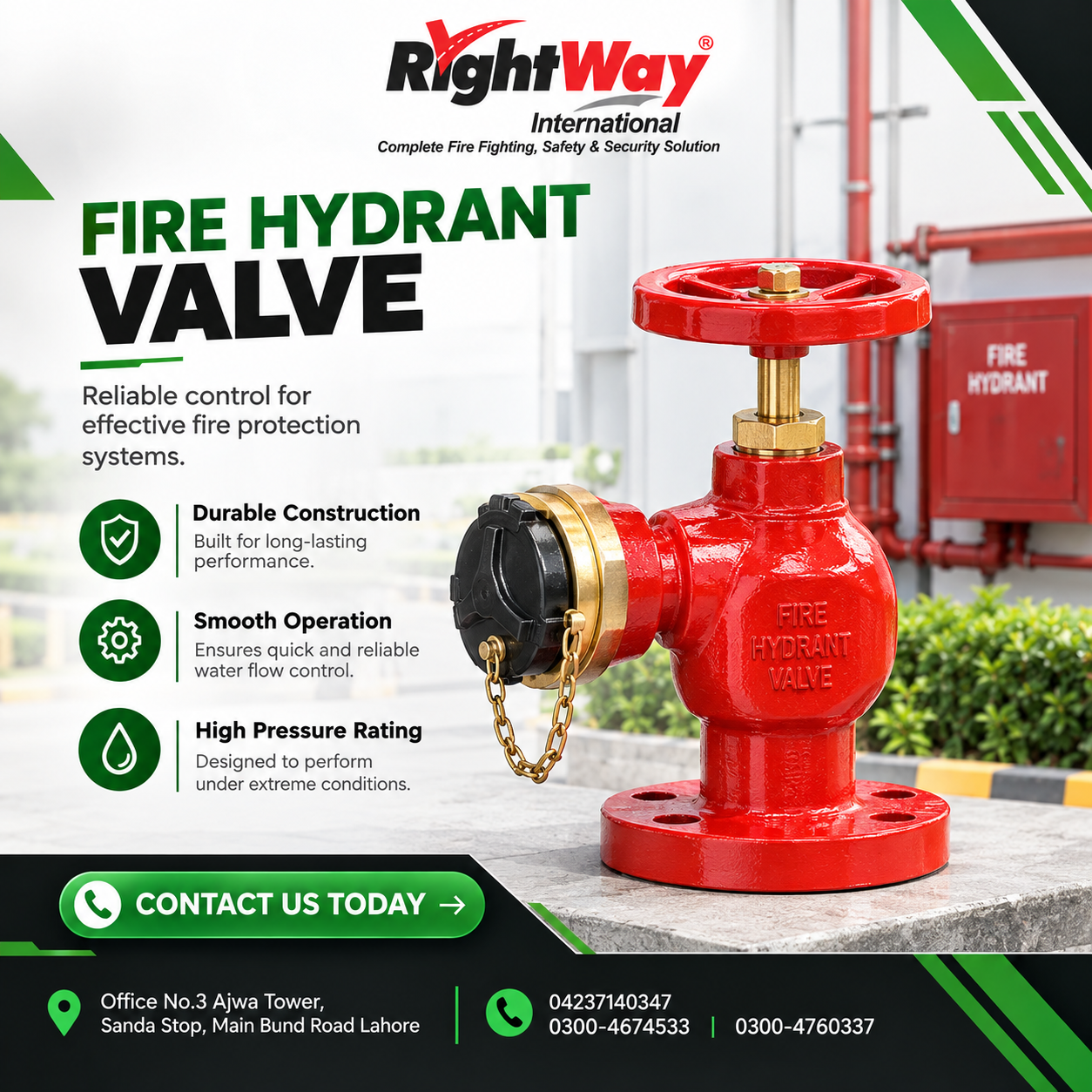
Fire Hydrant Valve: Types Uses Benefits & Buying Guide is an important component of a fire protection system. It controls access to firefighting water and allows trained personnel to connect fire hoses during an emergency. Because of this, fire hydrant valves commonly appear in factories, warehouses, commercial buildings, hospitals, hotels, shopping malls, schools, industrial facilities, and other properties that require dedicated firefighting water systems.
A properly selected valve can help control water flow and support an effective firefighting operation. Moreover, the valve must match the fire hydrant system, pipework, pressure requirements, hose connection, and applicable fire safety requirements.
This guide explains what a fire hydrant valve is, how it works, its types, uses, benefits, installation, maintenance, and buying considerations.
What Is a Fire Hydrant Valve?
A Fire Hydrant Valve is a valve used in a firefighting water system to control or provide access to pressurized water.
The valve connects to the fire water pipe network and provides a controlled outlet for firefighting equipment. When trained personnel open the valve, water flows through the connected hose or firefighting equipment.
Fire hydrant valves can have different connection sizes, outlet configurations, materials, pressure ratings, and operating mechanisms. Therefore, the correct valve depends on the requirements of the fire protection system.
Common applications include:
- Fire hydrant systems
- Landing valve systems
- Wet riser systems
- Dry riser systems
- Fire hose connections
- Firefighting water networks
- Industrial fire protection systems
- Commercial fire protection systems
How Does a Fire Hydrant Valve Work?
A fire hydrant valve controls the movement of water through a firefighting connection.
The valve normally remains closed when the system does not require water. During an emergency, trained personnel connect the appropriate fire hose and operate the valve.
Once the valve opens, pressurized water enters the hose. Firefighters can then direct the water toward the fire using a suitable nozzle or branch pipe.
The basic process works as follows:
- Locate the fire hydrant valve.
- Check that the valve and connection remain accessible.
- Connect the compatible fire hose.
- Make sure the connection fits correctly.
- Open the valve gradually.
- Allow water to enter the hose.
- Control the water flow as required.
- Direct the water toward the fire from a safe position.
- Close the valve after use.
- Inspect the valve and connection after operation.
Therefore, the valve provides controlled access to the firefighting water supply. The connected fire pump, water tank, and pipe network provide the pressure and water volume.
Where Are Fire Hydrant Valves Used?
Fire hydrant valves can support firefighting systems in many types of properties.
1. Factories
Factories may contain machinery, electrical equipment, combustible materials, chemicals, packaging, and production areas.
Therefore, a reliable fire water system can provide important protection. Fire hydrant valves allow authorized personnel to access the water supply through designated hose connections.
2. Warehouses
Warehouses often store large quantities of combustible goods and packaging materials.
As a result, fire hydrant valves can form part of the firefighting infrastructure around warehouse buildings.
3. Industrial Facilities
Industrial facilities may have complex fire risks and large operating areas.
Hydrant valves can provide firefighting water connections at designated locations throughout the facility.
4. Shopping Malls
Shopping malls contain shops, restaurants, storage areas, electrical systems, parking areas, and large numbers of visitors.
Therefore, fire hydrant valves can form part of the overall fire protection system.
5. Hospitals
Hospitals require carefully planned fire protection because they contain patients, medical equipment, electrical systems, staff, and visitors.
Fire hydrant valves can support the firefighting water network where the approved fire protection design requires them.
6. Hotels
Hotels can use fire hydrant valves as part of their firefighting water systems.
These valves may support fire hose connections in designated areas.
7. Schools and Universities
Educational buildings may contain classrooms, laboratories, offices, electrical equipment, and large occupied areas.
Consequently, fire hydrant valves can provide controlled access to firefighting water where required.
8. Residential Buildings
Large apartment buildings and residential developments may use hydrant and riser systems as part of their fire protection arrangements.
9. Commercial Buildings
Offices, retail buildings, business centers, and other commercial properties can use fire hydrant valves within their approved fire protection systems.
10. Construction Projects
Large construction sites can face temporary fire hazards from electrical work, hot work, fuel, packaging, and construction materials.
Therefore, suitable firefighting water arrangements can help improve emergency preparedness.
Types of Fire Hydrant Valves
Fire hydrant valves come in different configurations. The correct type depends on the application, installation arrangement, connection requirements, and fire protection design.
Single Outlet Fire Hydrant Valve
A single outlet fire hydrant valve provides one hose connection.
This design can suit systems that require one firefighting hose connection at a specific point.
Double Outlet Fire Hydrant Valve
A double outlet fire hydrant valve provides two hose connections.
As a result, trained personnel can connect multiple hose lines when the system design provides sufficient water flow and pressure.
Landing Valve
A landing valve provides a controlled water outlet for firefighting hoses.
These valves commonly appear in wet riser and fire hose systems, depending on the building’s fire protection design.
Angle Type Fire Hydrant Valve
An angle type fire hydrant valve changes the direction of the water outlet relative to the inlet.
This configuration can make hose connection and installation more convenient in certain applications.
Straight Type Fire Hydrant Valve
A straight type valve maintains a more direct flow path between the inlet and outlet.
The installer can select this arrangement when the pipe layout requires a straight connection.
Pressure Reducing Fire Hydrant Valve
Some fire protection systems require pressure control at specific outlets.
A pressure-reducing valve can help manage excessive pressure where the system design requires it.
The exact pressure-control arrangement should always follow the approved engineering design.
Flanged Fire Hydrant Valve
A flanged fire hydrant valve uses a flange connection.
This design can provide a robust connection to compatible fire protection pipework.
Threaded Fire Hydrant Valve
A threaded fire hydrant valve uses a threaded connection.
The thread type and size must match the connected equipment.
Main Components of a Fire Hydrant Valve
A fire hydrant valve contains several components that work together to control water flow.
Valve Body
The valve body forms the main structure and contains the internal water passage.
Manufacturers use different materials depending on the valve design and application.
Valve Disc
The disc controls the water passage inside the valve.
When the valve closes, the disc blocks or restricts water flow. When the valve opens, water can pass through the valve.
Valve Stem
The valve stem transfers movement from the operating mechanism to the internal valve component.
Handwheel
Many manual valves use a handwheel for operation.
Turning the handwheel opens or closes the valve according to the valve design.
Outlet Connection
The outlet provides the connection point for the fire hose or other approved firefighting equipment.
Cap
Some hydrant valves include protective caps.
The cap helps protect the outlet from dust, debris, and physical damage when personnel do not use the connection.
Gasket and Sealing Components
Sealing components help prevent unwanted water leakage from the valve and its connections.
Flange or Threaded Connection
The valve may use a flanged, threaded, or another approved connection method.
The installer must select the correct connection for the fire water pipe network.
Benefits of a Fire Hydrant Valve
A properly selected fire hydrant valve provides several important benefits.
Controls Firefighting Water
The valve allows trained personnel to control water flow from the fire protection network.
Provides Hose Connection
A hydrant valve provides a designated connection for a compatible fire hose.
Supports Emergency Response
A clearly identified and accessible valve can help authorized personnel connect to the fire water supply during an emergency.
Works With Fire Pump Systems
Fire hydrant valves can connect to systems supplied by fire pumps and dedicated fire water tanks.
Durable Construction
Suitable valves can provide long-term service when users select the correct material and pressure rating for the application.
Multiple Configuration Options
Manufacturers offer different outlet sizes, connection types, and valve configurations.
Therefore, designers can select a valve that matches the system requirements.
Supports Fixed Fire Protection Systems
Fire hydrant valves can work alongside:
- Fire hydrant pillars
- Fire pumps
- Fire water tanks
- Fire hoses
- Fire hose reels
- Fire nozzles
- Wet risers
- Dry risers
- Fire sprinkler systems
- Fire alarm systems
Fire Hydrant Valve and Fire Hydrant System
A fire hydrant valve represents one component of a complete fire hydrant system.
A typical fire hydrant system may contain:
- Fire water tank
- Main fire pump
- Jockey pump
- Diesel fire pump where required
- Fire water pipes
- Fire hydrant pillars
- Fire hydrant valves
- Landing valves
- Fire hoses
- Fire nozzles
- Branch pipes
- Pressure gauges
- Isolation valves
- Check valves
- Test and drain arrangements
Each component performs a specific function.
For example, the fire pump supplies pressure, the pipe network transports water, and the hydrant valve provides a controlled water connection.
Therefore, professionals should evaluate the complete system instead of selecting a valve based only on appearance or price.
Fire Hydrant Valve Installation
Proper installation helps the valve perform reliably during an emergency.
Before installation, professionals should check:
- Pipe size
- Valve size
- Connection type
- System pressure
- Water flow requirements
- Installation location
- Hose compatibility
- Accessibility
- Fire protection design
- Applicable standards
The valve should remain accessible and easy to operate.
Furthermore, installers should avoid locations where vehicles, equipment, stored materials, or construction activities can block access.
The installer should also ensure that the valve connects correctly to the fire water pipe network.
Fire Hydrant Valve Maintenance
Regular maintenance helps keep the valve ready for emergency use.
Technicians should inspect:
- Valve body
- Handwheel
- Valve stem
- Outlet connection
- Caps
- Gaskets
- Threads
- Flanges
- Seals
- Leakage
- Corrosion
- Physical damage
- Accessibility
Technicians should also operate valves according to the approved inspection and maintenance program.
If they identify leakage, corrosion, damaged components, or operating problems, they should repair or replace the affected parts promptly.
Fire Hydrant Valve Pressure
Pressure plays an important role in fire hydrant system performance.
However, the valve itself does not normally generate water pressure. Instead, the fire pump and water supply system provide the required pressure.
The valve must withstand the design pressure of the connected fire protection system.
Therefore, buyers should check the valve’s pressure rating before installation.
A professional fire protection engineer should also evaluate the complete system to ensure that the pump, pipework, valves, hoses, and outlets work together correctly.
Fire Hydrant Valve Safety Considerations
Proper operation and maintenance can improve the reliability of a fire hydrant valve.
Important safety practices include:
- Keep the valve accessible.
- Do not block the valve with vehicles or materials.
- Inspect the valve regularly.
- Check for leakage.
- Protect the valve from physical damage.
- Keep connections clean.
- Use compatible fire hoses.
- Check the operating mechanism.
- Maintain proper identification.
- Train authorized personnel.
- Follow the approved maintenance schedule.
During a fire, evacuation remains the priority.
Only trained personnel should attempt firefighting when conditions allow safe intervention.
How to Choose the Best Fire Hydrant Valve
Selecting the right fire hydrant valve requires more than comparing prices.
1. Identify the Application
First, determine where you will install the valve.
A factory, warehouse, hospital, commercial building, and residential project may require different configurations.
2. Check Valve Size
Select a valve size that matches the fire protection system and required water flow.
3. Check Connection Type
Confirm whether the system requires a threaded, flanged, or another connection.
4. Check Pressure Rating
Choose a valve that can safely handle the system’s design pressure.
5. Check Material
Consider the valve material according to the operating environment.
6. Consider Corrosion Protection
Outdoor and humid environments can increase corrosion risk.
Therefore, select suitable materials and protective finishes.
7. Check Hose Compatibility
The outlet connection must match the fire hose coupling used by the system.
8. Check Operating Mechanism
Make sure authorized personnel can operate the valve properly.
9. Verify Standards
Check the applicable fire safety standards, project specifications, and local requirements before purchasing.
10. Consider Warranty and Support
Finally, consider warranty coverage, spare parts, technical assistance, and after-sales service.
Fire Hydrant Valve vs Fire Hydrant Pillar
These two terms describe related but different equipment.
| Feature | Fire Hydrant Valve | Fire Hydrant Pillar |
|---|---|---|
| Main function | Controls/provides water outlet | Provides an outdoor hydrant assembly |
| Installation | Indoor or outdoor | Primarily outdoor |
| Hose connection | Yes | Yes |
| Valve mechanism | Main component | Incorporated into the assembly |
| Typical use | Hydrant/riser systems | Outdoor hydrant systems |
| Configuration | Various outlet types | Single, double, or multiple outlet |
| Connection | Threaded/flanged and others | Depends on design |
| System role | Water control/access | Outdoor firefighting access |
In simple terms, a hydrant pillar provides the external hydrant assembly, while a hydrant valve provides controlled access to the firefighting water.
Fire Hydrant Valve vs Fire Hose Reel
A fire hydrant valve and a fire hose reel both provide access to firefighting water. However, they have different designs and applications.
| Feature | Fire Hydrant Valve | Fire Hose Reel |
|---|---|---|
| Main function | Provides controlled water connection | Provides permanently mounted hose |
| Hose | Connected separately | Permanently attached |
| Location | Indoor or outdoor depending on system | Commonly indoor |
| Installation | Fire water pipe network | Building fire protection network |
| Operation | Trained personnel | Trained users |
| Coverage | Designated hydrant points | Local building areas |
Therefore, a building may use both systems as part of a broader fire protection strategy.
Fire Hydrant Valve Standards
Fire hydrant valves should comply with the requirements that apply to the specific project and jurisdiction.
Depending on the system, professionals may consider:
- NFPA requirements
- Applicable local fire regulations
- Building regulations
- Project specifications
- Water authority requirements
- Relevant product standards
- Fire department requirements
However, requirements can vary according to the building, system design, location, water supply, and application.
Therefore, always verify the applicable requirements before selecting or installing a fire hydrant valve.
Fire Hydrant Valve in Pakistan
Fire hydrant valves in Pakistan are used in many commercial, industrial, institutional, and residential fire protection projects.
Factories, warehouses, hospitals, hotels, shopping malls, offices, educational institutions, residential developments, and industrial plants may use hydrant valves as part of their firefighting water systems.
When purchasing a fire hydrant valve in Pakistan, buyers should consider:
- Valve size
- Connection type
- Pressure rating
- Material
- Outlet configuration
- Hose compatibility
- Corrosion protection
- Product quality
- Applicable standards
- Warranty
- Technical support
- Spare parts availability
Moreover, professional projects should use a properly designed fire protection system.
Qualified professionals should evaluate the water supply, fire pumps, pipe network, hydrant locations, pressure, flow, and firefighting coverage.
Common Mistakes When Using a Fire Hydrant Valve
Blocking the Valve
Materials, vehicles, or equipment can prevent access to the valve.
Therefore, keep the valve area clear.
Ignoring Leakage
Even a small leak can indicate a problem with the valve, gasket, seal, or connection.
Inspect and repair leaks promptly.
Selecting the Wrong Size
An incorrectly sized valve may not match the requirements of the fire protection system.
Always verify the required size before purchasing.
Using an Incompatible Hose
The hose coupling must match the valve outlet.
Therefore, check compatibility before installation.
Ignoring Corrosion
Outdoor valves can face moisture and environmental exposure.
Suitable materials and protective coatings can help reduce corrosion.
Poor Installation
Incorrect installation can affect valve operation and system performance.
Therefore, qualified installers should follow the approved design and installation procedure.
Neglecting Maintenance
A valve that remains unused for a long period can develop operating problems.
Regular inspection and testing can help identify these issues.
Buying Only on Price
The cheapest valve may not provide the required quality, pressure rating, compatibility, or durability.
Instead, compare specifications, quality, standards, warranty, and technical support.
Frequently Asked Questions
What is a Fire Hydrant Valve?
A Fire Hydrant Valve controls or provides access to pressurized water from a fire protection system and allows trained personnel to connect firefighting equipment.
What is the purpose of a Fire Hydrant Valve?
Its main purpose is to provide controlled access to firefighting water through a compatible hose connection.
Where are Fire Hydrant Valves used?
They are commonly used in factories, warehouses, hospitals, hotels, shopping malls, commercial buildings, industrial facilities, schools, universities, and residential developments.
How does a Fire Hydrant Valve work?
The valve controls water flow from the fire water pipe network. When an authorized user opens it, pressurized water flows through the connected fire hose.
Does a Fire Hydrant Valve create water pressure?
No. Fire pumps and the water supply system normally provide the pressure. The valve controls access to that water.
What are the types of Fire Hydrant Valves?
Common types include single outlet valves, double outlet valves, landing valves, angle valves, straight valves, flanged valves, threaded valves, and pressure-control configurations.
What is a Landing Valve?
A landing valve provides a controlled water outlet for firefighting hoses. It commonly forms part of wet riser or fire hose systems.
Can a Fire Hydrant Valve connect to a fire hose?
Yes. A compatible fire hose can connect to the valve outlet when the coupling and connection specifications match.
What pressure rating should a Fire Hydrant Valve have?
The required pressure rating depends on the design pressure of the fire protection system. Always select a valve that meets or exceeds the system requirements.
How often should a Fire Hydrant Valve be inspected?
Inspection frequency depends on the applicable standards, local requirements, system design, and maintenance program.
Can Fire Hydrant Valves be used outdoors?
Yes. Suitable valves can work in outdoor fire protection systems. However, buyers should select materials and protective finishes appropriate for the environment.
What is the difference between a Fire Hydrant Valve and a Fire Hydrant Pillar?
A fire hydrant valve controls or provides access to firefighting water, while a fire hydrant pillar generally refers to the complete outdoor hydrant assembly.
How do I choose a Fire Hydrant Valve?
Consider the valve size, connection type, pressure rating, material, outlet configuration, hose compatibility, applicable standards, installation environment, warranty, and technical support.
Are Fire Hydrant Valves important for factories?
Yes. They can provide controlled firefighting water connections within a properly designed industrial fire protection system.
Are Fire Hydrant Valves suitable for warehouses?
Yes. They can form part of a warehouse fire protection system when the approved design includes hydrant connections.
A Fire Hydrant Valve plays an important role in controlling access to firefighting water. It provides a reliable connection for compatible fire hoses and can support emergency firefighting operations.
However, the valve works as part of a complete fire protection system. Therefore, buyers should also consider fire pumps, water tanks, pipework, pressure, flow, hydrant pillars, hoses, nozzles, and other related equipment.
When selecting a fire hydrant valve, always consider the application, size, connection type, pressure rating, material, corrosion protection, hose compatibility, applicable standards, warranty, and technical support.
Furthermore, proper installation, regular inspection, and timely maintenance can help keep the valve ready for emergency use.
A correctly selected and maintained fire hydrant valve can become an important part of a reliable fire protection system for industrial, commercial, institutional, and residential properties.