




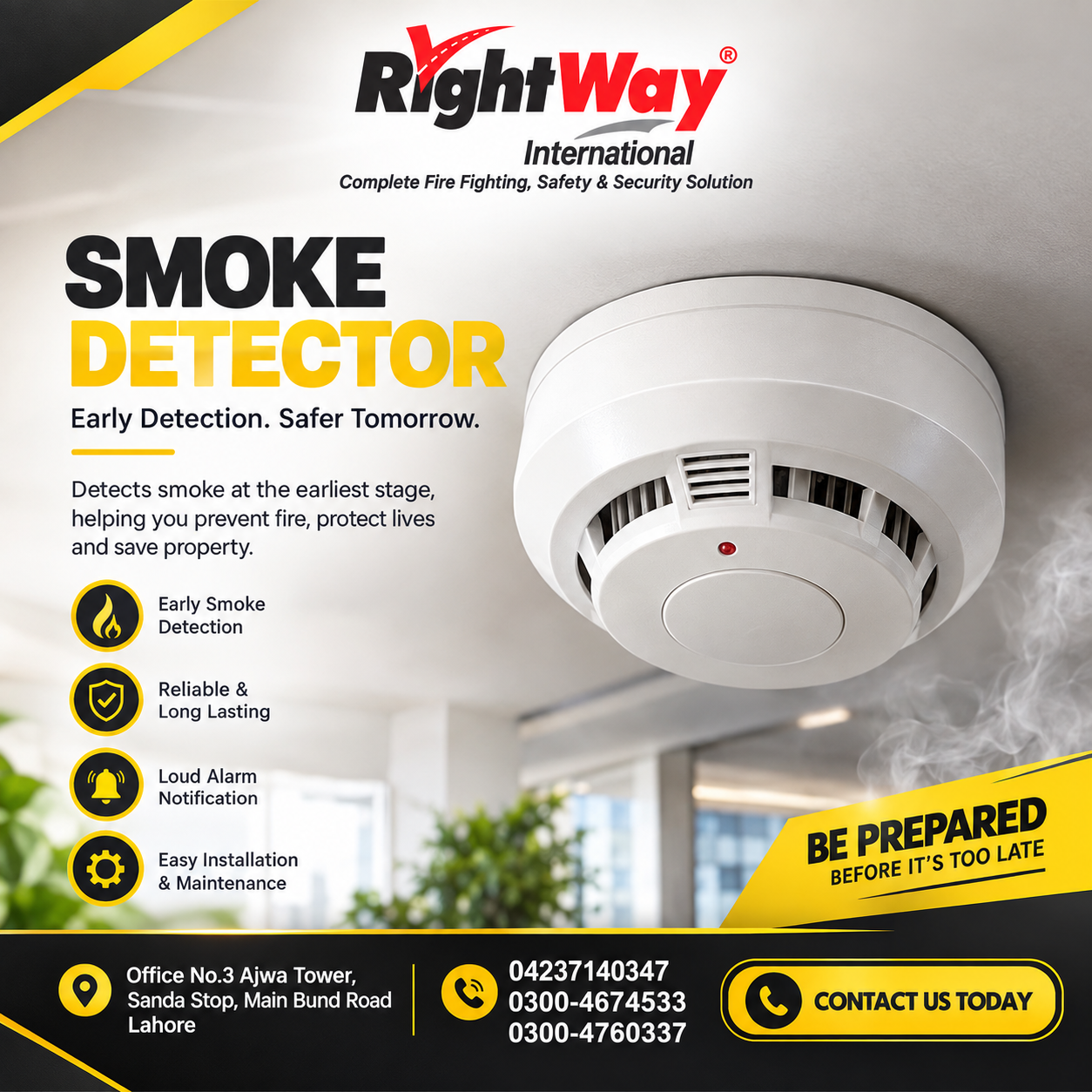
Importance of Smoke Detector lies in its ability to provide early warning when smoke from a developing fire is detected. Smoke detectors are essential fire safety devices designed to detect smoke particles and produce an audible alarm, giving occupants valuable time to respond, evacuate, and contact emergency services.
A fire can spread rapidly, especially in residential buildings, offices, warehouses, commercial facilities, hotels, schools, hospitals, factories, and other occupied spaces. In many situations, people may not immediately see a fire, particularly when it starts during sleeping hours or in an unattended room. A properly installed smoke detector can detect smoke at an early stage and alert people before the fire becomes more dangerous.
Smoke detectors are an important part of a complete fire protection strategy. They can work alongside fire alarm control panels, manual call points, fire alarm sounders, heat detectors, sprinkler systems, portable fire extinguishers, emergency lighting, and evacuation procedures.
However, smoke detectors do not extinguish fires. Their primary purpose is early detection and warning. The correct detector should always be selected according to the environment, expected fire hazards, building layout, and applicable fire safety requirements.
What Is a Smoke Detector?
A Smoke Detector is an electronic fire detection device designed to detect smoke particles in the surrounding air and provide an alarm when smoke reaches its detection chamber at a specified level.
Most smoke detectors contain a sensing chamber, electronic circuitry, alarm components, and a power source. When smoke enters the sensing chamber, the detector identifies the change in its environment and activates an alarm.
Depending on the type of detector, different sensing technologies may be used. Common types include:
- Ionization smoke detectors
- Photoelectric smoke detectors
- Optical smoke detectors
- Addressable smoke detectors
- Conventional smoke detectors
- Aspirating smoke detection systems
- Combination smoke and heat detectors
The appropriate type depends on the application and the fire risks present.
How Does a Smoke Detector Work?
A smoke detector continuously monitors the surrounding air for signs of smoke.
When combustion begins, smoke particles can spread through the surrounding area. These particles eventually enter the sensing chamber of the detector.
The detector’s sensing technology identifies the presence of smoke. If the detected smoke reaches the alarm threshold, the detector activates its alarm.
In a standalone smoke detector, this may produce a loud local audible alarm.
In a fire alarm system, the detector can send a signal to the fire alarm control panel. The control panel can then activate connected notification appliances, such as fire alarm sounders, bells, strobes, or other devices, depending on the system design.
Some systems can also transmit signals to monitoring stations or activate other approved fire safety functions.
The exact detection method depends on the type and model of smoke detector.
Why Is a Smoke Detector Important?
A fire can develop quickly, and people may not always notice it immediately.
For example, a fire may begin inside an electrical room, office, storage area, kitchen, bedroom, equipment room, or other enclosed space. Smoke may spread before flames become visible.
A smoke detector can provide an early warning by detecting smoke and activating an alarm.
This early warning can help occupants:
- Recognize a potential fire emergency
- Begin evacuation
- Alert other people
- Contact emergency services
- Follow the building’s emergency procedures
- Move away from smoke and dangerous areas
Early warning is particularly important at night when people may be asleep and unable to notice the early signs of a fire.
Main Benefits of Smoke Detectors
1. Early Fire Detection
One of the primary benefits of a smoke detector is early detection.
The detector can identify smoke before a fire becomes fully developed, depending on the fire characteristics, detector type, placement, and environmental conditions.
2. Provides an Audible Warning
When smoke is detected, the smoke detector can activate an audible alarm.
The warning can alert occupants that there may be a fire and that they should follow the appropriate emergency procedures.
3. Helps Protect People
Smoke can become dangerous during a fire.
A smoke detector provides an early warning that can give occupants more time to evacuate the building safely.
4. Useful During Sleeping Hours
People may not notice a fire while sleeping.
A properly installed smoke detector can provide an audible warning when smoke is detected, helping alert sleeping occupants.
5. Supports Fire Alarm Systems
Smoke detectors can form an important part of conventional and addressable fire alarm systems.
They can communicate with a fire alarm control panel and support coordinated fire alarm notification.
6. Helps Reduce Detection Delay
Without automatic detection, a fire may need to be discovered by an occupant before an alarm is raised.
A smoke detector can automatically monitor the protected area and provide an alarm when its detection threshold is reached.
7. Suitable for Different Applications
Different types of smoke detectors are available for residential, commercial, industrial, institutional, and other applications.
The correct detector can be selected according to the environment and expected fire hazards.
8. Supports Emergency Evacuation
An early alarm can help occupants begin evacuation procedures sooner.
This can be particularly important in larger buildings where people need additional time to leave safely.
Types of Smoke Detectors
Different smoke detection technologies are available for different applications.
1. Ionization Smoke Detector
An ionization smoke detector uses an ionization chamber to detect changes caused by smoke particles.
It can be responsive to certain types of rapidly developing flaming fires.
However, ionization detectors can be more susceptible to nuisance alarms from certain environmental conditions. Therefore, the detector should be selected and installed according to the intended application and manufacturer recommendations.
2. Photoelectric Smoke Detector
A photoelectric smoke detector, also called an optical smoke detector, uses light within a sensing chamber to detect smoke particles.
When smoke enters the chamber, it changes how light interacts within the sensing chamber, allowing the detector to identify the presence of smoke.
Photoelectric detectors are commonly used in many applications because of their detection characteristics.
3. Addressable Smoke Detector
An addressable smoke detector is connected to an addressable fire alarm system.
Each detector can have an individual address, allowing the fire alarm control panel to identify the particular detector or location that has entered an alarm condition.
This can be useful in larger buildings where identifying the affected location quickly is important.
4. Conventional Smoke Detector
A conventional smoke detector operates as part of a conventional fire alarm system.
The fire alarm control panel generally identifies the alarm by circuit or zone rather than providing the same individual device identification available from an addressable system.
5. Aspirating Smoke Detector
An aspirating smoke detection system actively draws air through a network of sampling pipes and transports the air to a highly sensitive detection unit.
These systems can be used in applications where very early smoke detection is required, subject to appropriate system design.
6. Combination Smoke and Heat Detector
Some detectors combine smoke detection with heat detection.
These devices can use more than one sensing method to identify fire conditions and may be selected for applications where combined detection is appropriate.
Where Are Smoke Detectors Used?
Smoke detectors can be installed in many buildings and areas where early fire detection is required.
1. Homes and Apartments
Residential buildings can benefit from smoke detectors in sleeping areas, hallways, living spaces, and other suitable locations.
Early warning is particularly important at night.
2. Offices
Offices contain electrical equipment, computers, cables, paper products, furniture, and other combustible materials.
Smoke detectors can provide early warning when smoke is detected.
3. Hotels
Hotels accommodate many people who may be unfamiliar with the building’s emergency exits.
Smoke detection and fire alarm systems are therefore important components of hotel fire safety.
4. Schools
Schools contain classrooms, offices, laboratories, storage areas, kitchens, and electrical equipment.
Appropriately designed smoke detection systems can help provide early warning to staff and occupants.
5. Hospitals
Hospitals require carefully designed fire detection and alarm systems because occupants may include patients who need assistance during evacuation.
Detector selection and system design should follow the applicable requirements for the facility.
6. Warehouses
Warehouses can contain large quantities of packaging, paper products, cardboard, textiles, plastics, pallets, and other materials.
Smoke detection can form part of a broader warehouse fire protection strategy.
7. Server and Equipment Rooms
Electronic equipment and electrical systems can create potential ignition sources.
Appropriately selected smoke detection can provide early warning in equipment areas.
For critical facilities, specialized detection and suppression systems may be appropriate.
8. Industrial Facilities
Factories can contain machinery, electrical equipment, production materials, chemicals, storage areas, and other hazards.
Smoke detection should be selected according to the specific industrial environment.
9. Commercial Buildings
Shops, offices, malls, restaurants, and other commercial facilities can use smoke detection as part of an integrated fire alarm system.
Smoke Detector vs Heat Detector
A smoke detector and a heat detector use different detection principles.
A smoke detector is designed to detect smoke particles.
A heat detector responds to a specified temperature condition or rate of temperature rise, depending on its design.
Smoke detectors can provide earlier warning for many types of fires because smoke may be produced before the surrounding temperature reaches the activation point of a heat detector.
However, heat detectors can be more suitable for environments where smoke detectors may experience frequent nuisance alarms, such as certain dusty, steamy, or smoky areas.
The appropriate detector depends on the environment and fire risk.
Smoke Detector vs Fire Alarm
A smoke detector is a detection device, while a fire alarm system is a broader system that can include multiple components.
A complete fire alarm system may include:
- Smoke detectors
- Heat detectors
- Manual call points
- Fire alarm control panels
- Sounders
- Bells
- Strobes
- Modules
- Emergency power supplies
- Monitoring interfaces
A smoke detector detects smoke and sends an alarm signal, while the fire alarm system processes the signal and provides notification according to the system design.
Smoke Detector vs Fire Sprinkler
Smoke detectors and sprinkler systems perform different functions.
A smoke detector provides early warning by detecting smoke.
A sprinkler system is designed to control or suppress a fire through the discharge of water or another approved extinguishing medium, depending on the system.
Therefore, a smoke detector should not replace a sprinkler system where sprinklers are required.
Using detection, alarm, suppression, and evacuation measures together can provide a more comprehensive fire protection strategy.
What Type of Fire Can a Smoke Detector Detect?
Smoke detectors do not classify fires in the same way as fire extinguishers.
Instead, they detect smoke produced by combustion.
The amount and characteristics of smoke can vary significantly depending on:
- Fuel type
- Fire growth rate
- Oxygen availability
- Burning temperature
- Ventilation
- Material involved
- Fire location
Some fires may produce significant smoke during early development, while other fires may produce different smoke characteristics.
Therefore, detector selection should consider the expected fire behavior and environmental conditions.
How to Install a Smoke Detector
Smoke detector installation should follow the manufacturer’s instructions and applicable fire safety requirements.
Step 1: Assess the Area
Identify rooms, corridors, sleeping areas, equipment spaces, storage areas, and other locations that require fire detection.
Step 2: Select the Correct Detector
Choose the detector type according to the fire hazard and environmental conditions.
Step 3: Determine the Mounting Location
Position the detector according to the manufacturer’s recommended spacing and installation requirements.
Smoke detectors are commonly installed on ceilings or suitable high positions because smoke generally rises during a fire.
Step 4: Avoid Obstructions
Ensure that walls, beams, ducts, equipment, decorative structures, or other obstructions do not interfere with smoke reaching the detector as intended.
Step 5: Connect the Detector
For system-connected detectors, connect the device according to the fire alarm system design and manufacturer’s instructions.
Step 6: Test the Detector
After installation, test the detector and verify that the alarm signal reaches the appropriate notification or control equipment.
Step 7: Document the Installation
Record the detector location, type, installation date, testing information, and maintenance requirements where appropriate.
Professional installation is recommended for larger or engineered fire alarm systems.
Where Should Smoke Detectors Not Be Installed?
Smoke detectors should not be installed without considering environmental conditions.
Certain locations may produce steam, dust, fumes, smoke, or other conditions that can cause nuisance alarms or affect detector performance.
Potentially unsuitable locations may include areas with:
- Excessive steam
- Heavy dust
- High humidity
- Frequent cooking fumes
- Strong airflow
- Industrial contamination
- Extreme temperatures
The manufacturer’s installation instructions should always be followed.
Where smoke detection is unsuitable, another detection technology, such as a heat detector, may be more appropriate.
Safety Precautions for Smoke Detectors
Correct installation, testing, and maintenance are important for reliable smoke detection.
Follow these precautions:
- Select the correct detector for the application.
- Follow manufacturer installation instructions.
- Install detectors at appropriate locations.
- Keep detectors unobstructed.
- Test detectors regularly.
- Keep sensing chambers clean.
- Replace damaged detectors.
- Replace batteries when required.
- Do not paint over smoke detectors.
- Do not cover the detector.
- Do not disconnect detectors without authorization.
- Investigate repeated nuisance alarms.
- Maintain fire alarm system records.
- Ensure occupants understand the alarm signal.
- Keep emergency exits clear.
- Maintain appropriate fire extinguishing equipment.
- Follow the building’s emergency evacuation procedure.
Maintenance of Smoke Detectors
Regular maintenance helps ensure that smoke detectors remain ready to detect smoke during an emergency.
Dust, dirt, insects, paint, construction debris, and other contaminants can affect detector performance.
A maintenance program may include:
- Visual inspection
- Functional testing
- Alarm testing
- Cleaning
- Battery inspection
- Battery replacement
- Wiring inspection
- Detector chamber inspection
- Fire alarm panel testing
- Fault monitoring
- Replacement of damaged units
- Maintenance documentation
The frequency of inspection and testing should follow applicable requirements, system specifications, and manufacturer recommendations.
Importance of Smoke Detector in Electrical Rooms
Electrical rooms contain switchboards, circuit breakers, cables, electrical panels, transformers, and other equipment.
Electrical faults, overheating, damaged insulation, loose connections, and equipment failures can potentially lead to fire.
An appropriately selected smoke detector can provide early warning when smoke develops.
However, detector selection must consider the environmental conditions of the electrical room.
For example, where dust, airflow, temperature, or other conditions could affect smoke detection, an alternative or specialized detection approach may be appropriate.
Importance of Smoke Detector in Server Rooms
Server rooms contain sensitive electronic equipment, power supplies, cables, batteries, and other electrical components.
A small fire can potentially cause significant equipment damage and operational disruption.
Early smoke detection can therefore be particularly valuable.
For critical server environments, specialized early-warning smoke detection or aspirating smoke detection systems may be considered as part of an engineered fire protection design.
Importance of Smoke Detector in Warehouses
Warehouses can contain large quantities of combustible materials.
Cardboard, packaging, pallets, paper, plastics, textiles, and other stored materials can contribute to fire growth.
Appropriate smoke detection can provide an early warning when smoke is detected.
However, warehouse protection should not rely on smoke detectors alone. Depending on the building and stored commodities, comprehensive fire protection may include sprinklers, hydrants, fire alarms, portable extinguishers, emergency lighting, and other systems.
Importance of Smoke Detector in Commercial Buildings
Commercial buildings can contain offices, shops, storage rooms, electrical rooms, kitchens, equipment areas, and public spaces.
Each area may have different environmental conditions and fire risks.
Therefore, detector selection should be based on the specific application.
A properly designed smoke detection system can help provide early warning and support the building’s overall emergency response plan.
How to Choose the Right Smoke Detector
Before purchasing a smoke detector, consider the following factors.
Detector Type
Determine whether a photoelectric, ionization, addressable, conventional, aspirating, or combination detector is suitable for the application.
Fire Risk
Consider the types of materials and potential fire scenarios present in the protected area.
Environmental Conditions
Check for dust, steam, humidity, temperature variations, airflow, fumes, and other environmental factors.
Compatibility
For fire alarm systems, make sure the detector is compatible with the fire alarm control panel and system architecture.
Sensitivity
For specialized applications, consider the detector’s sensitivity and manufacturer’s specifications.
Certification
Select products that meet applicable safety and certification requirements.
Installation Requirements
Review the manufacturer’s recommended spacing, mounting position, wiring, power requirements, and testing procedures.
Maintenance Support
Choose a reliable supplier that can provide technical support, testing, replacement, and maintenance assistance.
Importance of Smoke Detector in Pakistan
Fire safety is important across homes, apartments, offices, schools, hospitals, hotels, factories, warehouses, shops, commercial buildings, and industrial facilities throughout Pakistan.
Buildings may contain electrical equipment, combustible materials, cooking facilities, machinery, storage areas, and other potential fire hazards.
A Smoke Detector in Pakistan can provide an important early-warning layer by detecting smoke and activating an alarm.
For example, smoke detectors can be used in bedrooms, corridors, offices, electrical rooms, equipment rooms, storage areas, commercial facilities, and other suitable locations.
However, the correct detector should always be selected according to the environment.
A kitchen may require a carefully selected detection solution because cooking fumes can cause nuisance alarms. A dusty industrial environment may require a different detector technology. A critical server facility may benefit from specialized early-warning detection.
Therefore, fire detection should be designed according to the building’s fire risk, occupancy, environmental conditions, and applicable requirements.
Frequently Asked Questions About Smoke Detectors
What Is a Smoke Detector?
A smoke detector is a fire detection device designed to detect smoke particles in the surrounding air and activate an alarm when smoke reaches the detector’s specified alarm threshold.
Why Is a Smoke Detector Important?
A smoke detector is important because it can provide early warning of a developing fire, giving occupants valuable time to respond, evacuate, and follow emergency procedures.
How Does a Smoke Detector Work?
A smoke detector monitors the surrounding air. When smoke enters its sensing chamber and reaches the specified detection threshold, the detector activates an alarm or sends a signal to the fire alarm control panel.
What Are the Main Types of Smoke Detectors?
Common types include ionization smoke detectors, photoelectric smoke detectors, optical smoke detectors, conventional smoke detectors, addressable smoke detectors, aspirating smoke detection systems, and combination smoke and heat detectors.
Which Is Better: Photoelectric or Ionization Smoke Detector?
Neither technology should be considered universally suitable for every application. The appropriate detector depends on the expected fire characteristics, environmental conditions, applicable requirements, and manufacturer specifications.
Can a Smoke Detector Detect Heat?
A standard smoke detector is primarily designed to detect smoke rather than temperature. Heat detection is performed by heat detectors or combination devices designed for both smoke and heat detection.
Can a Smoke Detector Put Out a Fire?
No. A smoke detector provides detection and warning. It does not extinguish the fire. Fire suppression may require portable extinguishers, sprinklers, automatic suppression systems, or other appropriate equipment.
Where Should Smoke Detectors Be Installed?
Smoke detectors may be installed in bedrooms, corridors, offices, commercial spaces, equipment rooms, electrical areas, and other suitable locations according to the fire risk and applicable installation requirements.
Can Smoke Detectors Be Installed in Kitchens?
Smoke detectors may not always be appropriate directly inside areas where normal cooking produces smoke or steam because this can cause nuisance alarms. The detector type and location should be selected according to the manufacturer’s instructions and the specific environment.
How Often Should Smoke Detectors Be Tested?
Smoke detectors should be tested and maintained according to the manufacturer’s instructions, the fire alarm system requirements, and applicable fire safety standards.
Do Smoke Detectors Need Batteries?
Some standalone smoke detectors operate using batteries, while system-connected detectors may receive power from a fire alarm control panel or another approved power source. The power arrangement depends on the detector and system type.
What Happens When a Smoke Detector Detects Smoke?
A standalone detector may produce a local audible alarm. In an integrated fire alarm system, the detector can send a signal to the fire alarm control panel, which may activate sounders, strobes, or other connected devices.
Can a Smoke Detector Work Without a Fire Alarm Panel?
Yes. Standalone smoke detectors can provide local audible alarms without being connected to a fire alarm control panel. System-connected smoke detectors, however, are designed to operate as part of a fire alarm system.
Can Smoke Detectors Be Used in Warehouses?
Yes, smoke detection can be used in warehouses, but the appropriate detection method depends on the storage materials, ceiling height, environmental conditions, fire risk, and overall fire protection design.
Are Smoke Detectors Important for Electrical Rooms?
Yes. Smoke detectors can provide early warning of smoke caused by developing electrical fires when the detector is suitable for the environment and correctly installed.
Are Smoke Detectors Important for Server Rooms?
Yes. Early smoke detection can help identify developing fires in sensitive electronic environments. Critical facilities may require specialized detection systems based on an engineered fire protection design.
The Importance of Smoke Detector comes from its ability to provide early warning when smoke from a developing fire is detected.
Smoke detectors can help occupants recognize a fire emergency sooner, begin evacuation procedures, alert others, and contact emergency services. They are particularly valuable in areas where a fire could develop without immediate human observation.
Smoke detectors can be used in homes, offices, hotels, schools, hospitals, warehouses, server rooms, electrical rooms, factories, shops, commercial buildings, and many other suitable applications.
However, selecting the correct smoke detector is essential. Factors such as detector technology, fire risk, environmental conditions, installation location, system compatibility, certification, and maintenance requirements should all be considered.
Most importantly, smoke detectors should complement—not replace—fire alarms, fire extinguishers, sprinkler systems, emergency exits, evacuation procedures, emergency lighting, and staff training.
For businesses, property owners, and facility managers in Pakistan, properly selecting, installing, testing, and maintaining smoke detectors can strengthen early fire detection and contribute to a more comprehensive fire safety strategy.