




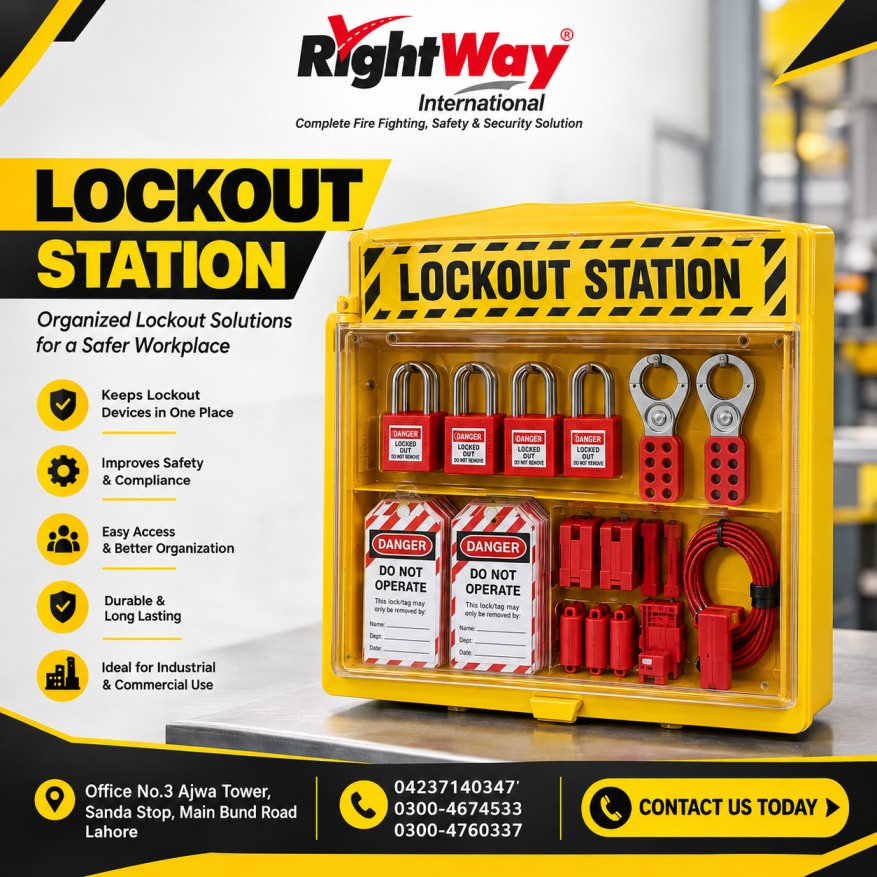
Importance of Lockout Station This is plays an important role in workplace safety. It helps workers organize and store Lockout/Tagout (LOTO) equipment in one central location. Workers use lockout stations during maintenance, repairs, and equipment servicing.
A lockout station keeps essential safety devices easy to access. These devices may include safety padlocks, lockout tags, lockout hasps, cable lockouts, and circuit breaker lockouts. Proper storage helps workers find the right equipment when they need it.
A well-organized lockout station also supports hazardous energy control procedures. It helps workers prepare for maintenance tasks and follow workplace safety rules.
Main Importance of Lockout Station
- Organizes Lockout Equipment: A lockout station keeps safety padlocks, tags, and other LOTO devices together in one place.
- Improves Equipment Accessibility: Workers can quickly find the required lockout devices before starting maintenance.
- Supports LOTO Procedures: A lockout station helps workers follow established Lockout/Tagout procedures.
- Helps Prevent Equipment Misuse: Clear organization helps workers select suitable lockout devices for different energy sources.
- Improves Workplace Safety: Easy access to safety equipment encourages workers to follow proper isolation procedures.
- Reduces Equipment Loss: Dedicated storage helps prevent lockout devices from getting misplaced.
- Saves Time During Maintenance: Workers spend less time searching for the safety equipment they need.
- Keeps Safety Devices Organized: Separate hooks, compartments, and holders help workers arrange different lockout products.
- Supports Hazardous Energy Control: A lockout station provides convenient access to devices used to isolate electrical, mechanical, hydraulic, and pneumatic energy sources.
- Promotes Safety Awareness: A visible lockout station reminds employees to follow workplace energy control procedures.
- Supports Different Lockout Applications: Workers can store devices for circuit breakers, valves, electrical plugs, and cables in the station.
- Improves Maintenance Planning: A designated storage area helps teams prepare the necessary LOTO equipment before starting a job.
Why Is a Lockout Station Important?
Workers often use different lockout devices to control hazardous energy during maintenance. Without proper storage, these devices can become difficult to locate. Workers may also waste time searching for the correct equipment.
A Lockout Station provides a central place to store essential safety devices. It helps maintenance teams keep their equipment organized and ready for use. Clear organization also makes it easier to identify missing or misplaced items.
However, a lockout station alone cannot prevent accidental equipment startup. Workers must still isolate hazardous energy and apply the correct lockout devices. They should also use personal safety padlocks and lockout tags according to the site’s approved LOTO procedure.
How to Use a Lockout Station Correctly
Follow these steps to maintain an effective lockout station:
- Choose a Suitable Location: Install the station in an accessible area near the relevant maintenance or equipment zones.
- Store Lockout Devices Properly: Arrange safety padlocks, lockout tags, hasps, and other devices in their designated places.
- Label Storage Areas: Use clear labels to help workers identify each type of lockout device.
- Keep Equipment Available: Maintain an adequate supply of the devices required for workplace operations.
- Inspect the Station Regularly: Check for damaged, missing, or worn lockout equipment.
- Train Employees: Teach authorized workers how to select and use the correct LOTO devices.
- Follow Approved Procedures: Ensure workers isolate hazardous energy and verify that the equipment is safe before beginning maintenance.
A Lockout Station helps organizations improve workplace safety and manage LOTO equipment efficiently. It keeps essential devices organized, improves accessibility, and supports maintenance activities. It also helps workers prepare for hazardous energy control tasks.
For better protection, combine a lockout station with suitable safety padlocks, lockout tags, isolation devices, and employee training. Always follow your facility’s approved Lockout/Tagout procedure. These practices help create a safer, more organized, and more efficient working environment.
Lockout Tags
Switching off equipment does not always provide enough protection. Another worker might restart the machine without knowing about ongoing maintenance. Someone might also reconnect the power supply or open a valve.
Lockout tags provide a visible warning in these situations. They tell workers that equipment must remain out of service. They also communicate important safety information to everyone in the work area. Read More