




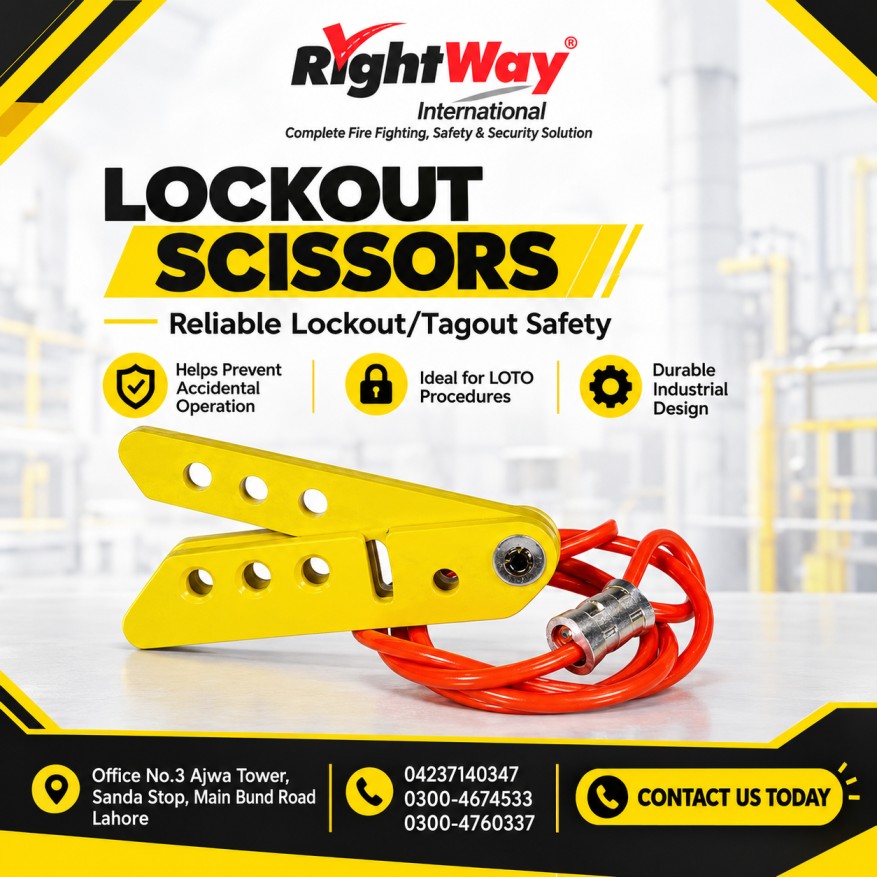
Importance of Lockout Scissors. Lockout Scissors play an important role in workplace safety. They are commonly used as Lockout/Tagout (LOTO) devices to help multiple workers secure equipment during maintenance, repairs, and servicing. These devices work with safety padlocks to prevent unauthorized operation of machinery or equipment while maintenance activities are in progress.
Lockout scissors, also known as lockout hasps, typically feature multiple holes for attaching personal safety padlocks. A worker can attach a padlock to the device after securing the appropriate energy-isolation point. When several workers need protection during the same maintenance task, each authorized worker can attach their own personal padlock.
A well-designed lockout scissor device helps maintenance teams coordinate their safety procedures. It supports hazardous energy control by allowing each participating worker to maintain personal control over their lockout protection.
Main Importance of Lockout Scissors
- Protect Multiple Workers: Lockout scissors allow several authorized workers to attach their personal safety padlocks to a single lockout point.
- Prevent Unauthorized Operation: They help prevent equipment operation while the required personal padlocks remain attached.
- Support LOTO Procedures: Lockout scissors form part of workplace Lockout/Tagout procedures for controlling hazardous energy.
- Improve Worker Safety: They help protect maintenance personnel from unexpected equipment startup when used correctly.
- Provide Individual Protection: Each worker can apply and remove their own personal padlock according to the approved procedure.
- Support Group Maintenance: They are useful when several employees work on the same machine or equipment.
- Control Access to Energy-Isolation Points: They help keep the relevant isolation point secured while workers perform maintenance.
- Improve Safety Coordination: Lockout scissors help teams coordinate lockout activities during equipment servicing and inspection.
- Offer Multiple Locking Positions: Their multiple holes accommodate several personal safety padlocks, depending on the device design.
- Support Industrial Safety: They can be used in manufacturing plants, workshops, factories, and other industrial environments.
Why Are Lockout Scissors Important?
During maintenance, equipment may expose workers to electrical, mechanical, hydraulic, pneumatic, or other hazardous energy. If someone operates the equipment unexpectedly, workers could suffer serious injuries.
Lockout scissors help address this risk by allowing multiple workers to secure an energy-isolation point with their personal safety padlocks. The equipment remains locked out under the approved procedure until the required locks are removed by their owners.
For example, when three technicians work on one machine, each technician can attach a personal padlock to the lockout scissors. This arrangement helps ensure that the isolation point cannot be unlocked through normal operation of the hasp while any personal padlock remains attached.
However, lockout scissors alone do not isolate hazardous energy. Workers must first shut down the equipment, identify all energy sources, apply suitable isolation devices, and verify that the equipment is safe before beginning work.
How to Use Lockout Scissors Correctly
Follow these steps for proper use:
- Identify the Energy Source: Determine which electrical switch, valve, or other energy-isolation point must be secured.
- Shut Down the Equipment: Follow the approved shutdown procedure before applying lockout devices.
- Isolate Hazardous Energy: Operate the appropriate energy-isolating device and apply the required isolation lock.
- Install the Lockout Scissors: Attach the device securely to the appropriate lockout point according to the manufacturer’s instructions.
- Apply Personal Padlocks: Each authorized worker attaches their own safety padlock to an available hole.
- Verify Safe Conditions: Confirm that hazardous energy has been controlled and that the equipment cannot start unexpectedly.
- Complete Maintenance: Perform the required work while maintaining the approved lockout protection.
- Remove Personal Padlocks: Each worker removes their own padlock after completing their work and following the site’s lock removal procedure.
- Restore Equipment Safely: Follow the approved procedure to remove isolation devices and return the equipment to service.
Where Are Lockout Scissors Used?
Lockout scissors are commonly used in workplaces that require multiple workers to participate in hazardous energy control procedures.
- Manufacturing Plants: Securing machinery during maintenance and repairs.
- Electrical Workshops: Supporting lockout procedures for suitable electrical isolation points.
- Industrial Facilities: Coordinating maintenance tasks involving multiple authorized employees.
- Construction Sites: Supporting equipment maintenance and servicing procedures.
- Power Plants: Helping manage lockout activities for relevant equipment.
- Oil and Gas Facilities: Supporting group lockout procedures during approved maintenance work.
- Mechanical Workshops: Helping secure equipment during inspection, adjustment, and repair.
Always select a lockout scissor device that matches the isolation point, working conditions, and number of personal padlocks required.
Benefits of Using Lockout Scissors
Lockout scissors offer a practical way to manage group lockout activities. They allow several workers to attach personal padlocks to a shared isolation point without requiring each worker to rely solely on another person’s lock.
They also help improve coordination, support accountability, and encourage consistent use of approved safety procedures. When combined with suitable lockout devices, safety padlocks, warning tags, and employee training, lockout scissors can contribute to a safer working environment.
Lockout Scissors are useful Lockout/Tagout safety devices that help multiple workers secure equipment during maintenance and repairs. Their multiple locking holes allow authorized employees to attach personal safety padlocks, helping maintain lockout protection until each worker has removed their lock according to the approved procedure.
For effective workplace safety, use suitable lockout scissors alongside approved energy-isolation devices, safety padlocks, lockout tags, and proper employee training. Always follow your facility’s Lockout/Tagout procedure and applicable safety requirements.