




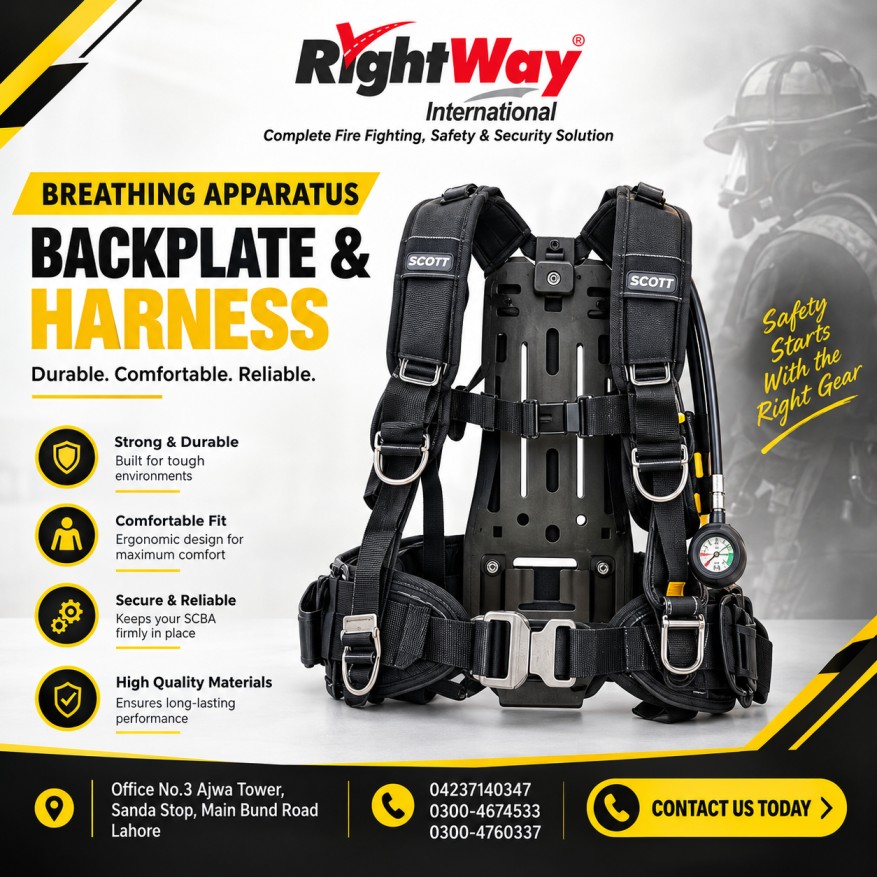
Breathing Apparatus Backplate & Harness plays an important role in respiratory protection, especially in firefighting, industrial safety, and emergency response. It supports the breathing air cylinder and helps secure the apparatus to the user’s back. Moreover, the harness helps distribute the equipment’s weight for improved carrying comfort.
Firefighters, rescue teams, and industrial workers use compatible backplate and harness assemblies with Self-Contained Breathing Apparatus (SCBA) systems. These systems provide an independent air supply for trained users working in hazardous atmospheres. However, the complete breathing apparatus must be suitable for the identified risks.
The backplate supports the cylinder and associated components. Meanwhile, adjustable shoulder straps, a waist belt, and buckles help maintain the equipment’s position. Depending on the model, the assembly may also include padding and cylinder-retention straps.
Therefore, organizations should select compatible equipment according to the manufacturer’s specifications and workplace safety requirements.
Main Types of Breathing Apparatus Backplate & Harness
1. SCBA Backplate and Harness
An SCBA backplate and harness supports a compatible breathing air cylinder and helps secure the apparatus to the user. Firefighters and emergency responders commonly use these assemblies during operations in hazardous atmospheres.
2. Lightweight Composite Backplate
A lightweight composite backplate uses engineered materials to reduce the weight of the supporting structure. As a result, it may improve carrying comfort during demanding operations. However, users should check the manufacturer’s specifications for strength and compatibility.
3. Ergonomic Backplate and Harness
An ergonomic backplate and harness includes design features intended to improve comfort and weight distribution. For example, adjustable shoulder straps, a waist belt, and padding can help users achieve a suitable fit.
4. Industrial Breathing Apparatus Harness
Industrial breathing apparatus harnesses support compatible respiratory equipment used in manufacturing, chemical processing, and maintenance. Depending on the system, the assembly may accommodate a breathing air cylinder and associated components.
5. Replacement Backplate and Harness
Replacement assemblies help maintain compatible breathing apparatus equipment. Over time, straps, buckles, and padding may wear out. Therefore, users should inspect these parts regularly and install only manufacturer-approved replacements.
Where Is a Breathing Apparatus Backplate & Harness Used?
Breathing apparatus backplate and harness assemblies support respiratory equipment across several industries. However, users must select a complete system that matches the identified hazards.
- Firefighting: Firefighters use compatible SCBA assemblies to carry breathing air cylinders during emergency operations.
- Emergency Response: Trained rescue teams use breathing apparatus in designated hazardous environments.
- Chemical Processing: Suitable SCBA systems support workers who need an independent breathing air supply.
- Industrial Maintenance: Workers use appropriate respiratory equipment during specialized maintenance tasks.
- Manufacturing: Compatible breathing apparatus systems support selected operations involving hazardous atmospheres.
- Confined-Space Operations: Trained personnel may use suitable SCBA equipment when workplace assessments identify respiratory hazards.
Consequently, employers should assess workplace conditions before selecting respiratory protection equipment. In addition, they should provide appropriate training and follow applicable safety procedures.
Benefits of a Breathing Apparatus Backplate & Harness
1. Secure Cylinder Support
The backplate provides a supporting structure for the breathing air cylinder. Furthermore, the cylinder-retention mechanism helps secure the cylinder in its intended position when correctly installed and maintained.
2. Improved Weight Distribution
The shoulder straps and waist belt help distribute the equipment’s load across the user’s body. As a result, a properly adjusted harness can improve carrying comfort during demanding operations.
3. Adjustable Fit
An adjustable harness allows users to adapt the equipment to their body size. Moreover, correct adjustment helps maintain the apparatus in its intended position during movement.
4. Durable Construction
Manufacturers use materials such as engineered polymers, composites, and metals, depending on the model. Therefore, users should check the product specifications to confirm that the assembly suits the intended working conditions.
5. Improved Mobility
A properly fitted assembly helps users carry breathing apparatus while walking, climbing, and performing assigned tasks. Nevertheless, users must follow their training and ensure the equipment allows safe movement.
6. Component Integration
Many assemblies include mounting points for compatible breathing apparatus components. These may include cylinder-retention systems, regulators, and hoses. However, users should connect only components approved for the specific system.
Main Components of a Breathing Apparatus Backplate & Harness
Understanding the main components helps users select and maintain their equipment correctly.
1. Backplate
The backplate forms the main supporting structure. It holds the cylinder-retention system and provides attachment points for compatible components.
2. Shoulder Straps
Shoulder straps help carry the apparatus on the user’s back. Additionally, adjustable straps allow users to position the equipment according to the manufacturer’s instructions.
3. Waist Belt
The waist belt helps stabilize the apparatus and distribute part of its weight. Therefore, users should adjust it correctly without restricting movement or breathing.
4. Cylinder Retention Strap
The cylinder-retention strap helps secure the breathing air cylinder to the backplate. Before use, check the strap and fastening mechanism for damage.
5. Buckles and Adjustment Points
Buckles and adjustment points allow users to tighten and position the harness. Consequently, damaged buckles or worn straps should be repaired or replaced according to the manufacturer’s instructions.
6. Padding and Support Sections
Some models include padding around the shoulder straps and back-contact areas. These features may improve comfort during extended wear, depending on the design.
How to Choose the Right Breathing Apparatus Backplate & Harness
Selecting the right assembly requires attention to compatibility, durability, and user fit.
1. Identify the Intended Application
First, determine whether the equipment will support firefighting, industrial work, or emergency response. This step helps establish the requirements for the complete breathing apparatus.
2. Verify SCBA Compatibility
Next, confirm that the backplate and harness are compatible with the SCBA model, cylinder, and associated components. Never combine equipment unless the manufacturer approves the configuration.
3. Check Materials and Construction
Evaluate the backplate material, webbing, buckles, and cylinder-retention mechanism. Furthermore, verify that the assembly meets the manufacturer’s requirements for the intended application.
4. Consider Fit and Adjustability
Choose a harness that allows suitable adjustment for its intended users. In addition, ensure that the shoulder straps and waist belt maintain the apparatus in the correct position.
5. Inspect Before Use
Examine the backplate for cracks or deformation. Similarly, check straps, buckles, stitching, and attachment points for wear or damage.
6. Follow Maintenance Instructions
Finally, clean, inspect, and store the equipment according to the manufacturer’s instructions. Replace damaged parts with approved components, and arrange qualified servicing when required.
Maintenance Tips for Breathing Apparatus Backplate & Harness
Regular inspection helps maintain equipment condition and supports safe operation.
- First, inspect the backplate for cracks, deformation, and visible damage.
- Next, check shoulder straps and waist belts for cuts, fraying, and excessive wear.
- Additionally, examine buckles and adjustment mechanisms to ensure they function correctly.
- Before use, verify that the cylinder-retention strap secures the compatible cylinder properly.
- Furthermore, check attachment points and associated components for looseness or damage.
- After use, clean and store the assembly according to the manufacturer’s instructions.
- Finally, remove defective equipment from service until it has been assessed and repaired as required.
Moreover, users should complete the prescribed equipment checks and training before operating a breathing apparatus in a hazardous environment.
Frequently Asked Questions
1. What is a breathing apparatus backplate and harness?
A breathing apparatus backplate and harness is a supporting assembly that helps users carry and secure a compatible breathing apparatus cylinder and associated components. It commonly forms part of an SCBA system.
2. What is the purpose of an SCBA backplate?
The backplate provides structural support for the breathing air cylinder and compatible apparatus components. In addition, it provides attachment points for the harness and cylinder-retention system.
3. Who uses breathing apparatus backplate and harness systems?
Firefighters, trained emergency responders, rescue teams, and industrial personnel use compatible breathing apparatus when their tasks require appropriate respiratory protection.
4. Which materials are used to manufacture SCBA backplates?
Depending on the model, manufacturers may use engineered polymers, composite materials, metals, or combinations of materials. Therefore, check the product specifications for exact construction details.
5. Is the backplate and harness compatible with every SCBA cylinder?
No. Compatibility depends on the apparatus design, cylinder dimensions, retention mechanism, and manufacturer’s approval. Always verify compatibility before use.
6. How often should I inspect a breathing apparatus harness?
Follow the manufacturer’s inspection schedule and applicable workplace procedures. Additionally, inspect the assembly before use for damaged straps, defective buckles, and cylinder-retention problems.
7. When should I replace an SCBA backplate or harness?
Replace or professionally assess the equipment when cracks, deformation, damaged straps, defective buckles, or other faults affect its safe function. Always use approved replacement parts.
8. Where can I buy a breathing apparatus backplate and harness in Pakistan?
Contact RightWay International to inquire about breathing apparatus backplates, harness assemblies, SCBA equipment, and related fire safety products. Before purchasing, confirm availability, specifications, and compatibility.
A Breathing Apparatus Backplate & Harness is an important component of compatible respiratory protection equipment. The backplate supports the breathing air cylinder and associated components, while the adjustable harness helps secure the apparatus and distribute its weight.
Therefore, organizations should prioritize compatibility, correct fit, regular inspection, and manufacturer-approved maintenance. Contact RightWay International to inquire about breathing apparatus backplates and harnesses, SCBA equipment, and industrial safety solutions in Pakistan.