




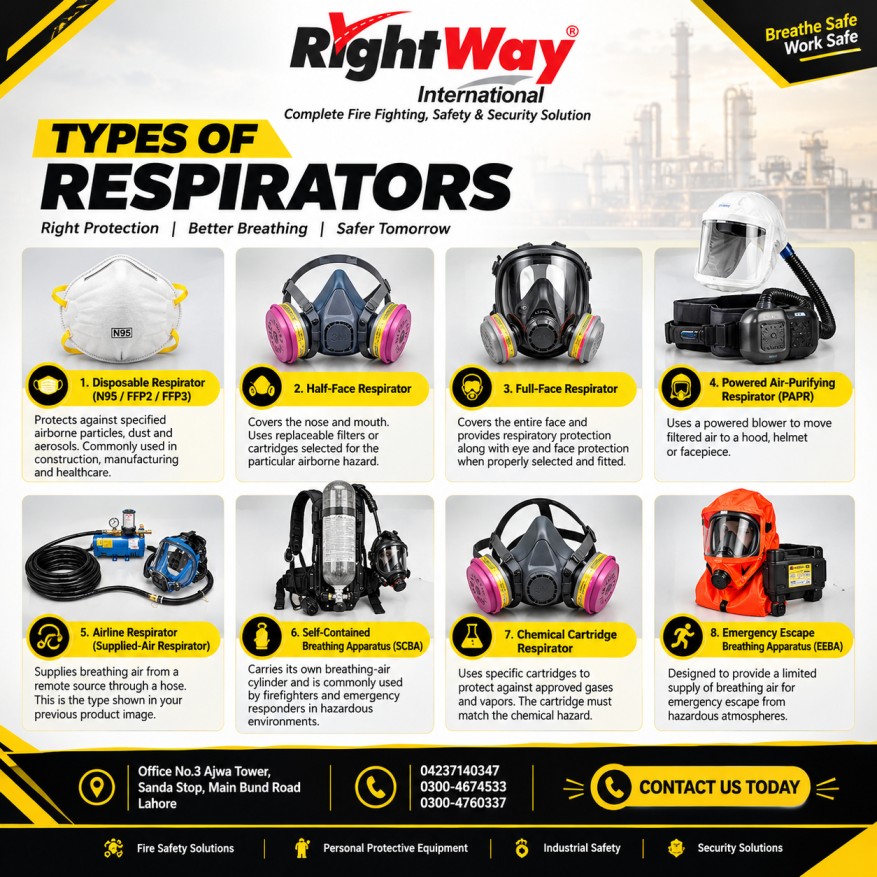
Types of Respirators Uses Benefits. Respirators play an important role in workplace safety by protecting workers from specific airborne hazards, including dust, fumes, harmful gases, vapors, and certain biological particles. Industries use different types of respirators depending on the working environment and the level of respiratory protection required.
For example, construction workers may need protection from dust, while chemical industry workers may require specialized respirators for particular gases or vapors. Similarly, firefighters and emergency responders may use supplied-air systems or Self-Contained Breathing Apparatus (SCBA) in hazardous environments.
However, not every respirator protects against every hazard. Therefore, employers must assess workplace risks and select equipment that meets the applicable safety standards.
Main Types of Respirators
1. Disposable Respirators
Disposable respirators, such as N95 and FFP2 models, filter specified airborne particles. Workers commonly use them in construction, manufacturing, healthcare, and other environments where particulate protection is appropriate. However, these respirators do not protect against every gas, vapor, or oxygen-deficient atmosphere.
2. Half-Face Respirators
Half-face respirators cover the nose and mouth. Depending on their design, they use replaceable particulate filters or chemical cartridges to protect against specified hazards. Moreover, users must select the correct filter or cartridge for the contaminant.
3. Full-Face Respirators
Full-face respirators cover the eyes, nose, and mouth. They can provide respiratory protection and eye protection when correctly selected and fitted. These respirators are commonly used in industrial applications involving suitable particulate, gas, or vapor hazards.
4. Powered Air-Purifying Respirators (PAPR)
PAPRs use a battery-powered blower to move air through suitable filters before delivering it to a compatible hood, helmet, or facepiece. Consequently, they can reduce breathing resistance compared with some non-powered respirators. However, they do not supply oxygen and are unsuitable for oxygen-deficient atmospheres.
5. Airline Respirators
Airline respirators supply breathing air through a hose connected to a suitable external air source. Industries may use them for approved painting, chemical processing, and maintenance operations. Furthermore, the air supply must meet applicable breathing air quality requirements.
6. Self-Contained Breathing Apparatus (SCBA)
SCBA carries its own breathing air cylinder, allowing users to operate without a continuous connection to an external air source. Firefighters and emergency responders commonly use suitable SCBA in hazardous environments. However, the equipment requires proper training, inspection, and maintenance.
7. Chemical Cartridge Respirators
Chemical cartridge respirators use cartridges designed for specific gases or vapors. They are suitable only when the contaminant is known, the cartridge provides the required protection, and the atmosphere meets the respirator’s operating limitations.
8. Emergency Escape Breathing Apparatus (EEBA)
Emergency escape breathing apparatus provides a limited supply of breathing air or another approved means of respiratory protection, depending on its design. Workers use it to escape from designated hazardous situations. It is not generally intended to replace respiratory equipment designed for routine work or firefighting entry.
Where Are Respirators Used?
Respirators support respiratory protection in many industries. For example:
- Construction: Helps protect against specified airborne dust and particles.
- Manufacturing: Supports protection from suitable industrial particulates and other identified contaminants.
- Chemical Processing: Provides protection against selected gases, vapors, or other hazards when the respirator is appropriate.
- Painting and Coating: Supplied-air systems or suitable cartridge respirators may be required, depending on the products and exposure conditions.
- Firefighting: SCBA helps firefighters breathe from a portable air supply in hazardous atmospheres.
- Marine and Industrial Maintenance: Specialized respiratory equipment supports approved tasks where workplace assessments identify respiratory hazards.
Therefore, employers should conduct a hazard assessment before selecting respiratory protection.
How to Choose the Right Respirator
Selecting the correct respirator requires careful consideration of several factors.
1. Identify the Hazard
First, determine whether the workplace contains dust, fumes, gases, vapors, or oxygen-deficient conditions. The type and concentration of the hazard influence the required equipment.
2. Select the Appropriate Respirator
Next, choose a respirator designed for the identified hazard. For example, a particulate filter does not automatically protect against chemical vapors, while an air-purifying respirator cannot supply oxygen.
3. Check Fit and Compatibility
Ensure that the respirator fits the user correctly and works with other protective equipment. Tight-fitting respirators generally require appropriate fit testing and a proper seal.
4. Verify Standards and Maintenance
Finally, check the equipment’s approvals, manufacturer instructions, filter replacement schedule, and inspection requirements. In addition, provide workers with suitable training and follow the applicable respiratory protection regulations.
Frequently Asked Questions
1. What are the main types of respirators?
The main types include disposable respirators, half-face respirators, full-face respirators, PAPRs, airline respirators, SCBA, chemical cartridge respirators, and emergency escape breathing apparatus.
2. What is the difference between an airline respirator and SCBA?
An airline respirator receives air through a hose from an external source, whereas SCBA carries its own breathing air cylinder.
3. Which respirator is suitable for chemical hazards?
The correct choice depends on the chemical, its concentration, and the workplace conditions. A suitable cartridge respirator or supplied-air system may be required following a proper hazard assessment.
4. Can an N95 respirator protect against gases?
No. An N95 respirator filters specified airborne particles but does not provide protection against gases or vapors.
5. How often should respirators be inspected?
Inspect respirators according to the manufacturer’s instructions and applicable workplace requirements. Check for damage, contamination, worn components, and expired or exhausted filters when relevant.
6. Where can I buy respirators in Pakistan?
Contact RightWay International to inquire about respirators and industrial respiratory protection equipment. Confirm product availability, specifications, and suitability for your application before purchasing.
Different types of respirators provide protection against different airborne hazards. From disposable masks to full-face respirators, airline systems, and SCBA, each type serves a specific purpose.
Therefore, organizations should assess workplace hazards, select compatible respiratory equipment, and follow proper fitting, training, inspection, and maintenance procedures. Contact RightWay International to inquire about respiratory protection and industrial safety equipment in Pakistan.