




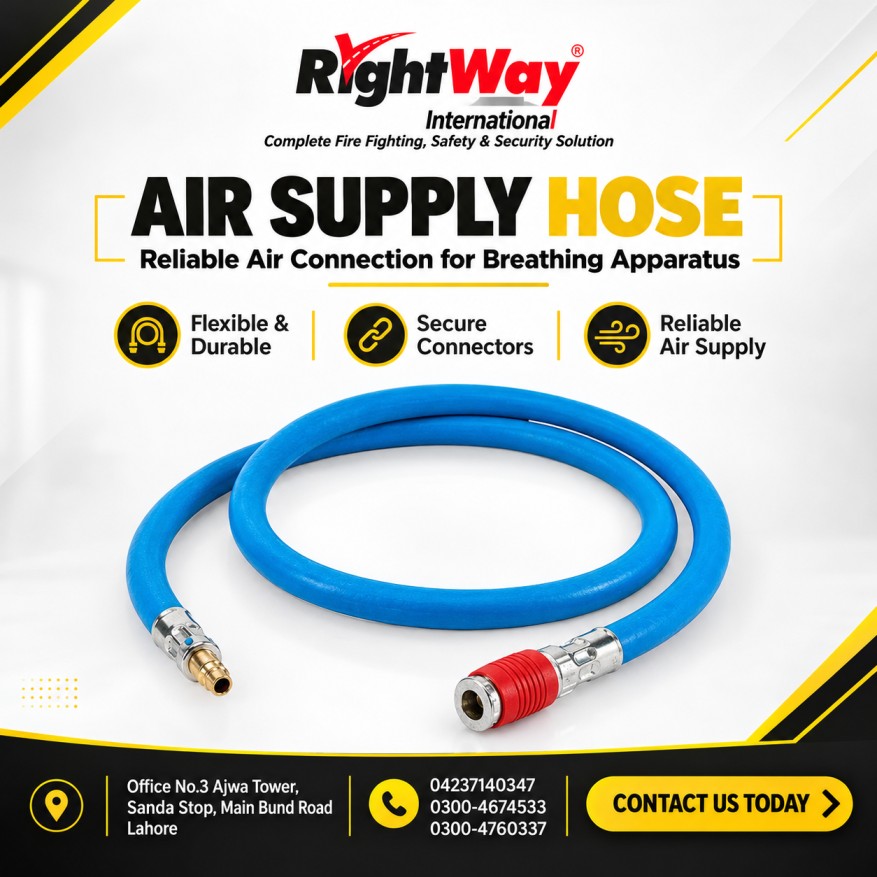
Air Supply Hose Types Uses. plays an important role in respiratory protection systems by delivering breathable air from a compatible air source to the user. Industries use these hoses with suitable airline respirators and breathing apparatus systems when workers require a continuous supply of breathable air. For example, applications may include industrial maintenance, chemical processing, manufacturing, and other specialized environments.
An air supply hose connects compatible breathing equipment to an approved air source. Depending on the system, the air source may include a breathing air compressor or a suitable breathing air cylinder supply. Moreover, the hose must meet the manufacturer’s requirements for air quality, pressure, length, and connection type.
However, not every compressed-air hose is suitable for respiratory protection. Ordinary industrial air may contain contaminants that can harm the user. Therefore, organizations should select a hose specifically approved for the intended breathing air system and follow applicable respiratory protection requirements.
Main Types of Air Supply Hoses
1. Airline Respirator Hose
An airline respirator hose delivers breathable air from a compatible air source to an airline respirator. Workers may use these systems for specific industrial tasks when the complete setup meets the identified respiratory protection requirements.
2. Breathing Apparatus Air Hose
A breathing apparatus air hose supplies air within a compatible breathing apparatus configuration. Its suitability depends on the equipment design, operating pressure, connectors, and manufacturer’s specifications. Therefore, users should verify compatibility before connecting it to respiratory equipment.
3. Flexible Air Supply Hose
A flexible air supply hose allows movement around work areas while maintaining the required connection to a compatible air source. In addition, its flexibility can help workers perform tasks more conveniently. However, users must prevent kinks, crushing, and damage that could restrict airflow.
4. High-Pressure Breathing Air Hose
Some breathing air systems require hoses designed for specified pressure ranges and operating conditions. These hoses must meet the manufacturer’s pressure and compatibility requirements. Never use a standard low-pressure hose in a high-pressure application unless it is specifically approved for that purpose.
5. Replacement Air Supply Hose
A replacement air supply hose helps maintain compatible respiratory equipment when the original hose becomes damaged or worn. Nevertheless, users should select a manufacturer-approved replacement with the correct fittings, length, material, and pressure rating.
Where Is an Air Supply Hose Used?
Air supply hoses support several applications involving compatible respiratory protection equipment. However, the complete system must match the identified hazards and working conditions.
- Manufacturing: Suitable airline respirators provide breathable air for selected industrial tasks.
- Chemical Processing: Compatible respiratory systems support workers in environments with identified airborne hazards.
- Industrial Maintenance: Air supply hoses connect approved respiratory equipment to a suitable breathing air source.
- Confined-Space Work: Depending on the risk assessment, trained workers may use suitable airline respiratory protection.
- Painting and Surface Preparation: Compatible airline respirators may be used when the application and equipment approval support the required protection.
- Emergency and Specialized Operations: Suitable breathing air systems support designated tasks that require an independent or remote air supply.
Consequently, employers should assess workplace hazards before selecting respiratory equipment. In addition, they should ensure that the breathing air source, hose, connectors, and respirator work together as an approved system.
Benefits of an Air Supply Hose
1. Continuous Air Delivery
A properly selected hose delivers air from a compatible source while the system operates within its specified conditions. As a result, it can support respiratory protection for tasks that require a remote air supply.
2. Flexible Movement
Flexible hose designs can help users move around their work area. However, workers must manage the hose carefully to prevent tangling, crushing, kinking, or accidental disconnection.
3. Secure Connections
Compatible fittings help connect the hose to the approved air source and respiratory equipment. Therefore, users should check the connectors before use and never force incompatible fittings together.
4. Support for Specialized Applications
Air supply hoses can support different industrial tasks when used with suitable respiratory equipment. Moreover, selecting the correct hose helps ensure that the system meets the application’s operating requirements.
5. Replaceable Components
Some systems allow users to replace damaged hoses or connectors. Consequently, regular inspections and manufacturer-approved replacement parts can help maintain equipment condition.
Main Components of an Air Supply Hose
Understanding the main components helps users select and maintain an appropriate hose.
1. Hose Body
The hose body carries breathable air between compatible system components. Its material and construction must meet the manufacturer’s requirements for the intended application.
2. Connection Fittings
Fittings connect the hose to the air source and respiratory equipment. In addition, the connector design must match the specific system to help prevent incorrect connections.
3. Couplings
Some hoses use quick-connect or other approved coupling systems. These components allow users to connect or disconnect equipment according to the manufacturer’s instructions.
4. Protective Outer Layer
Depending on the design, the hose may include an outer layer that helps resist abrasion and normal workplace wear. Nevertheless, users should inspect the hose for cuts, cracks, swelling, and other damage.
5. Seals and Connection Components
Compatible seals and connection components help maintain the integrity of the assembled system. Therefore, damaged or missing parts must be addressed before use.
How to Choose the Right Air Supply Hose
Selecting an air supply hose requires careful attention to compatibility, air quality, and operating conditions.
1. Identify the Application
First, determine whether you need a hose for an airline respirator or another approved breathing apparatus configuration. This step helps establish the required specifications.
2. Verify Air Source Compatibility
Next, confirm that the hose is suitable for the intended breathing air source. The source must deliver air that meets the requirements of the respiratory protection system.
3. Check Pressure Ratings
Always verify the hose’s approved operating pressure and the system’s pressure requirements. Moreover, never exceed the manufacturer’s specified limits.
4. Select the Correct Length
Choose a hose length that suits the work area and the equipment manufacturer’s requirements. An unsuitable length can create movement restrictions, entanglement risks, or other workplace hazards.
5. Check Connectors and Fittings
Ensure that the hose fittings match the intended equipment. In addition, inspect couplings and seals for wear, damage, or incorrect assembly.
6. Inspect Material and Condition
Finally, check the hose material, flexibility, and resistance to the expected workplace conditions. Replace damaged hoses according to the manufacturer’s instructions.
Air Supply Hose Inspection and Maintenance
Regular inspection helps maintain the hose’s condition and supports the safe operation of respiratory equipment.
- First, inspect the hose for cuts, cracks, abrasions, swelling, or other visible damage.
- Next, check connectors and couplings for wear, leaks, and secure attachment.
- Additionally, look for kinks, crushing, or blockages that could restrict airflow.
- Before use, verify that the hose is approved for the intended breathing air system.
- Furthermore, keep the hose away from sharp edges, excessive heat, and damaging chemicals unless its specifications permit exposure.
- After use, clean and store the hose according to the manufacturer’s instructions.
- Finally, remove defective equipment from service and replace it with an approved component.
Moreover, workers should follow the required inspection procedures and training for the complete respiratory protection system.
Frequently Asked Questions
1. What is an air supply hose?
An air supply hose is a flexible connection that delivers air from a compatible source to suitable equipment. In respiratory protection, it must be specifically appropriate for the intended breathing air system.
2. What is an air supply hose used for?
It supplies breathable air to compatible airline respirators and other approved breathing equipment. For example, industrial workers may use these systems during selected tasks that require respiratory protection.
3. Can I use a normal air compressor hose for breathing air?
No, not unless the hose and complete system are specifically approved for that breathing air application. Ordinary compressed air may contain contaminants, so the air source and delivery components must meet the applicable requirements.
4. What material is used for air supply hoses?
Materials vary by manufacturer and application. Depending on the design, a hose may use specialized polymers, rubber compounds, or reinforced construction. Always check the product specifications.
5. How do I choose the correct air supply hose?
Check the intended application, breathing air quality requirements, operating pressure, hose length, connector type, and compatibility with the complete respiratory protection system.
6. How often should I inspect an air supply hose?
Follow the manufacturer’s inspection schedule and applicable workplace procedures. In addition, inspect the hose before use and remove it from service if you identify damage or a suspected fault.
7. Can an air supply hose be repaired?
Repair is permitted only when the manufacturer allows it and the repair follows the specified procedure. Otherwise, replace the hose with an approved component.
8. Where can I buy an air supply hose in Pakistan?
Contact RightWay International to inquire about air supply hoses and compatible breathing apparatus equipment. Before purchasing, confirm availability, pressure ratings, connector specifications, and suitability for your application.
An Air Supply Hose is an important component of compatible respiratory protection systems. It delivers air from an appropriate source to the intended equipment, while suitable fittings help maintain a secure connection.
Therefore, users should prioritize breathing air quality, correct pressure ratings, equipment compatibility, and regular inspection. Contact RightWay International to inquire about air supply hoses, breathing apparatus accessories, and industrial safety equipment in Pakistan.