




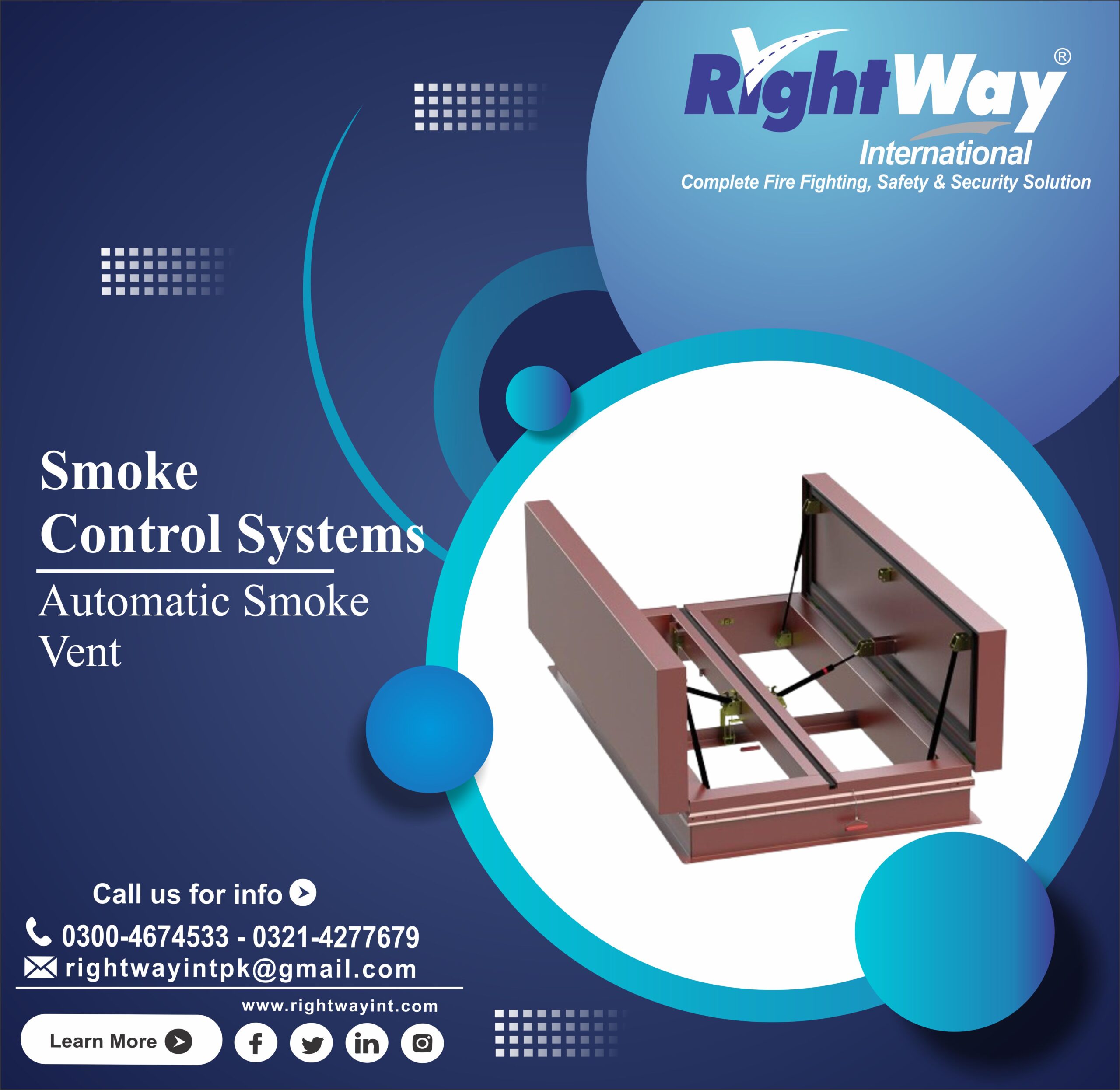
Automatic Smoke Vents Types Uses & Price in Pakistan. is a critical fire protection and ventilation system designed to release smoke, heat, and toxic gases from a building during a fire. These systems play a vital role in improving visibility, slowing fire spread, and providing occupants with valuable escape time.
Modern smoke vents are designed according to standards such as National Fire Protection Association and international building codes, ensuring safety, reliability, and performance in emergencies.
Smoke doors are supported and required under standards by the National Fire Protection Association.
What Is an Automatic Smoke Vent?
An Automatic Smoke Vent is a roof-mounted or wall-installed ventilation system that opens automatically when high temperatures are detected.
👉 It typically uses a fusible link mechanism that melts at a specific temperature (usually 165°F / 74°C), triggering the vent to open.
👉 This allows:
- Smoke to escape
- Heat to dissipate
- Firefighters to operate more safely
- Occupants to evacuate efficiently
Door Size & Key Specifications
📏 Standard Door Size:
- 60″ x 96″ (Large capacity double-leaf vent)
👉 This size provides extra clearance and higher airflow capacity, making it ideal for large buildings and high-ceiling structures.
Key Features of Automatic Smoke Vents
🔥 Automatic Activation
- Opens automatically during fire using heat-sensitive mechanisms
💨 Efficient Smoke Ventilation
- Removes smoke and hot gases quickly
🌧 Weather-Sealed Design
- Prevents water leakage and protects internal structure
🔇 Sound Rated Construction
- Reduces external noise (ideal for auditoriums & theaters)
🛡 Anti-Corrosive Material
- Long-lasting galvanized steel construction
🚪 Double-Leaf Door Design
- Larger opening area for maximum ventilation
How Does an Automatic Smoke Vent Work?
👉 Step-by-Step Process:
- Fire starts and temperature rises
- Fusible link melts at ~165°F (74°C)
- Latch mechanism releases automatically
- Gas springs push vent doors open
- Smoke and heat escape through the opening
- Fire intensity reduces and evacuation becomes safer
Core Components
🔹 Vent Doors (Double-leaf insulated covers)
🔹 Fusible Link Mechanism
🔹 Gas Spring Opening System
🔹 Steel Frame & Curb
🔹 Weather Gaskets
🔹 Hinges & Latching System
🔹 Insulation (Mineral Wool / Fiberboard)
Types of Automatic Smoke Vents
1️⃣ Standard Smoke Vent
- Heat-activated via fusible link
- Common for warehouses and factories
2️⃣ Acoustical Smoke Vent
- Soundproof with high STC & OITC ratings
- Ideal for theaters, auditoriums, studios
3️⃣ Electrically Operated Smoke Vent
- Integrated with fire alarm systems
- Opens via control panel signal
4️⃣ Pneumatic Smoke Vent
- Uses air pressure systems
- Suitable for industrial facilities
Advanced Design Features (60″ x 96″)
✔ Double-leaf doors for wider ventilation
✔ Thermally activated automatic unlatching
✔ 4″ mineral wool insulation
✔ Heavy-duty 14-gauge galvanized steel
✔ Weatherproof gasket sealing
✔ Supports heavy wind & snow loads
✔ Controlled opening with gas springs (up to 50,000 cycles)
Performance Ratings
📊 Sound & Safety Ratings:
- STC: 50 (high sound insulation)
- OITC: 46 (outdoor noise reduction)
- ISO 140-18 rainfall sound resistance
- UL 790 & UL 793 compliance
- Class A fire rating
Uses of Automatic Smoke Vents in Pakistan
Widely installed in:
🏭 Industrial factories
🏬 Shopping malls
🏢 Commercial buildings
🎭 Auditoriums & theaters
📚 Libraries & archives
🏥 Hospitals
🏫 Educational institutions
🧪 Laboratories
👉 Particularly useful in buildings where smoke control is critical for safety and asset protection.
Price of Automatic Smoke Vents in Pakistan
💰 Estimated Cost Range:
- Per unit: PKR 250,000 – 800,000
- Small installations: PKR 300,000 – 900,000
- Medium projects: PKR 900,000 – 2,500,000
- Large industrial setups: PKR 2,500,000 – 7,000,000+
👉 Price depends on:
- Size (e.g., 60″ x 96″)
- Material quality
- Acoustic rating
- Automation type (manual vs electric)
- Installation complexity
Benefits of Automatic Smoke Vents
✔ Improves life safety during fire
✔ Reduces smoke accumulation
✔ Enhances firefighter visibility
✔ Minimizes structural damage
✔ Prevents fire spread
✔ Provides automatic ventilation
✔ Protects against weather and corrosion
✔ Reduces external noise intrusion
Disadvantages
❌ Higher initial cost
❌ Requires proper installation design
❌ Regular inspection needed
❌ Limited effectiveness without proper fire planning
Importance in Fire Protection Systems
Automatic smoke vents are an essential part of modern fire safety systems and work alongside:
- Fire alarm systems
- Heat and smoke detectors
- Fire sprinklers
- Fire-resistant structures
👉 Safety Process:
Fire starts → Heat rises → Vent opens → Smoke exits → Visibility improves → Safe evacuation
Maintenance Tips
✔ Inspect fusible links regularly
✔ Check hinges and gas springs
✔ Ensure seals and gaskets are intact
✔ Test manual release mechanisms
✔ Conduct annual professional inspections
Pre-Action Fire Sprinkler System
A pre-action system is a fire suppression system where water is not immediately present in the pipes. Instead, water is released only after two-step verification:
- Fire detection system activates
- Sprinkler head opens due to heat
FAQs
1. What is an Automatic Smoke Vent?
👉 A heat-activated ventilation system that removes smoke and gases during a fire
2. Where is it used?
👉 Factories, malls, theaters, hospitals, and commercial buildings
3. What temperature activates it?
👉 Typically 165°F (74°C)
4. Is it necessary in Pakistan?
👉 Yes, due to increasing safety regulations and fire risks in modern infrastructure