




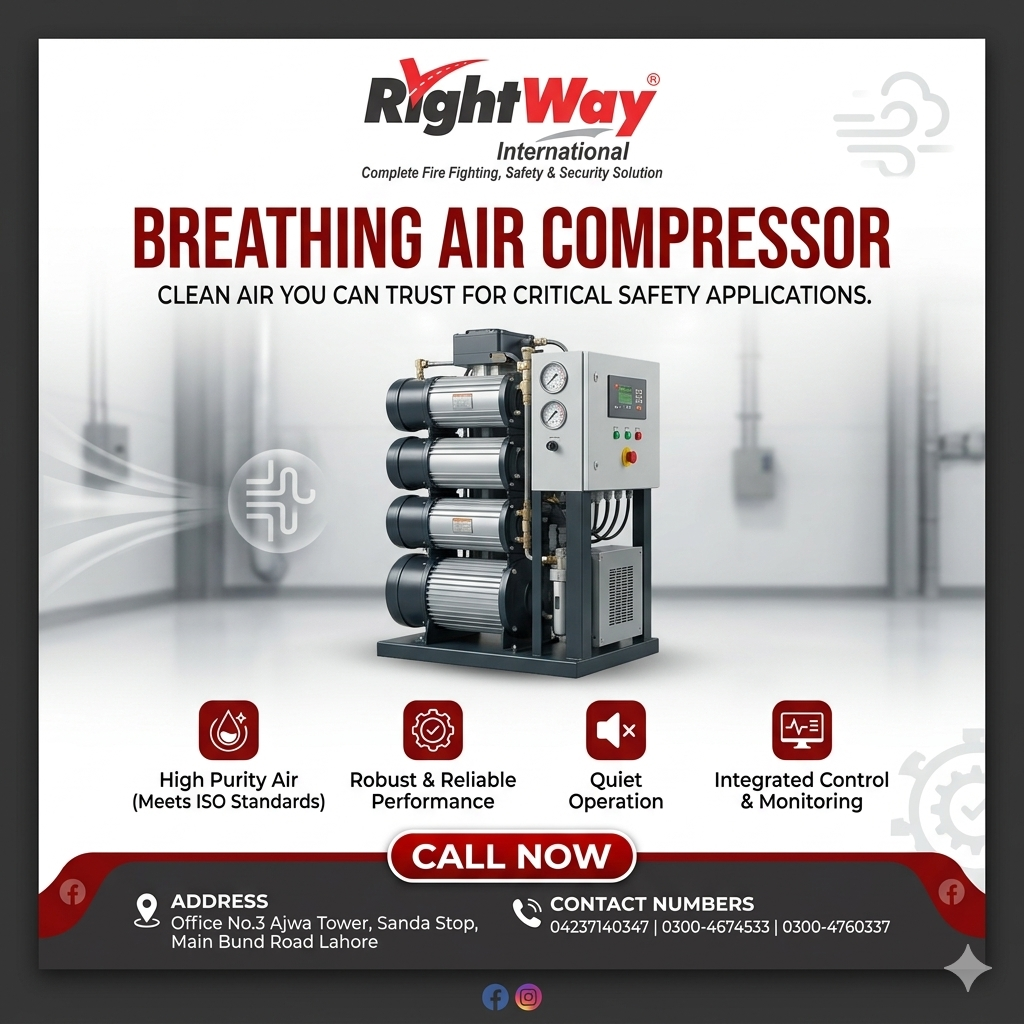
Breathing Air Compressor are specialized high-pressure air compression systems designed to produce clean, safe, breathable compressed air for respiratory protection equipment and industrial breathing applications. These compressors are essential for filling SCBA cylinders, SCUBA tanks, escape breathing apparatus (EBA), airline respirators, emergency escape systems, and industrial breathing air cylinders used in hazardous, oxygen-deficient, smoke-filled, toxic, and contaminated environments.
Breathing air compressors are widely used in firefighting departments, offshore platforms, chemical plants, oil and gas facilities, marine operations, mining industries, pharmaceutical manufacturing, diving operations, confined space entry, military applications, and emergency rescue services where high-quality breathable air is critical for worker safety and survival.
Because hazardous environments may contain toxic gases, smoke, airborne particles, chemical vapors, carbon monoxide, and oxygen-deficient atmospheres, breathing air compressors provide purified compressed breathing air that supports respiratory protection systems and improves workplace safety in dangerous industrial environments.
What Is a Breathing Air Compressor?
A Breathing Air Compressor is a high-pressure compressor system designed to compress, purify, and deliver breathable air that meets respiratory air quality standards for human breathing applications.
These compressors are commonly used to fill:
- SCBA cylinders
- SCUBA diving cylinders
- Escape breathing apparatus (EBA) cylinders
- Emergency escape systems
- Airline respirators
- Firefighter breathing systems
- Industrial respiratory equipment
- Confined space breathing systems
- HAZMAT respiratory protection equipment
- Emergency breathing air storage cylinders
Most breathing air compressor systems include:
- Multi-stage air compressor
- Air purification filtration system
- Moisture separator
- Carbon monoxide monitor
- High-pressure storage cylinders
- Air dryer system
- Pressure gauges
- Automatic shutoff controls
- Cooling system
- Breathing air quality monitoring system
Breathing air compressors support:
- OSHA respiratory protection compliance
- Safe breathing air production
- Firefighter respiratory safety
- Industrial respiratory protection
- Confined space safety programs
- Emergency response preparedness
- Diving air supply operations
- Hazardous atmosphere protection
- Toxic gas exposure prevention
- Industrial safety compliance programs
Because these systems produce purified breathable air, they significantly improve worker safety and respiratory protection in hazardous industrial and emergency environments.
Common Applications of Breathing Air Compressors
Industries use breathing air compressors for various respiratory protection and compressed air applications, including:
- Fire department SCBA cylinder filling
- SCUBA diving operations
- Offshore platform breathing systems
- Confined space entry operations
- Industrial emergency response
- Mining rescue operations
- Marine emergency breathing systems
- Chemical plant respiratory protection
- Pharmaceutical manufacturing safety
- Oil refinery maintenance operations
- Hazardous material response
- Emergency escape breathing systems
- Tunnel rescue operations
- Industrial shutdown procedures
- Military respiratory applications
- Wastewater treatment maintenance
- Power plant safety operations
- Toxic gas response operations
- Firefighter training facilities
- Industrial breathing air supply systems
Importance of Breathing Air Compressors in Industrial Safety
Breathing air compressors play a critical role in providing safe respiratory air for workers operating in hazardous environments.
Benefits:
- Produces clean breathable air
- Supports respiratory protection systems
- Prevents toxic gas inhalation
- Reduces airborne contaminant exposure
- Supports OSHA compliance
- Improves emergency preparedness
- Enables safe confined space entry
- Supports firefighter safety
- Enhances industrial worker protection
- Improves operational safety programs
How Breathing Air Compressors Work
Breathing air compressors compress atmospheric air and purify it through multiple filtration stages before storing it in high-pressure cylinders.
Step 1: Air Intake
The compressor draws ambient atmospheric air into the system.
Step 2: Multi-Stage Compression
Air is compressed through multiple compression stages to achieve high pressure.
Step 3: Cooling Process
Compressed air passes through cooling systems to reduce temperature.
Step 4: Moisture Separation
Moisture separators remove water vapor from compressed air.
Step 5: Air Purification
Filtration systems remove:
- Oil vapors
- Carbon monoxide
- Carbon dioxide
- Particulates
- Hydrocarbons
- Odors
- Toxic contaminants
Step 6: Air Quality Monitoring
Monitoring systems verify compliance with breathing air quality standards.
Step 7: Cylinder Filling
Purified compressed air is stored in SCBA, SCUBA, or breathing air cylinders.
Types of Breathing Air Compressors
Different industries require different compressor configurations depending on operational requirements and breathing air demand.
1. Portable Breathing Air Compressors
Portable systems designed for mobile emergency response and field operations.
Features:
- Compact design
- Easy transportation
- Field deployment capability
- Emergency response applications
2. Stationary Breathing Air Compressors
Fixed industrial systems used in large facilities and fire stations.
Benefits:
- High-capacity operation
- Continuous air supply
- Industrial-grade performance
- Automated operation
3. High-Pressure Breathing Air Compressors
Designed for filling high-pressure SCBA and SCUBA cylinders.
Advantages:
- High-pressure output
- Fast cylinder filling
- Reliable performance
- Advanced filtration systems
4. Oil-Free Breathing Air Compressors
Compressors designed without lubricating oil in the compression chamber.
Applications:
- Pharmaceutical manufacturing
- Food processing industries
- Cleanroom operations
- Medical breathing air systems
5. Diesel-Powered Breathing Air Compressors
Mobile systems powered by diesel engines for remote operations.
Common Uses:
- Offshore platforms
- Mining operations
- Disaster response
- Remote industrial sites
Technical Specifications
| Specification | Details |
|---|---|
| Equipment Type | Breathing Air Compressor |
| Air Quality | Grade D / EN12021 Breathing Air |
| Operating Pressure | 2216 PSI to 6000 PSI |
| Compressor Type | Multi-Stage High Pressure |
| Power Source | Electric or Diesel |
| Filtration System | Multi-Stage Purification |
| Application | Respiratory Air Supply |
| Compliance | OSHA, NFPA, NIOSH, EN12021 |
| Cooling System | Air-Cooled or Water-Cooled |
| Air Output | High-Pressure Breathing Air |
Key Features and Advantages of Breathing Air Compressors
High-Quality Breathing Air Production
Produces purified breathable compressed air for respiratory protection systems.
Advanced Filtration Technology
Removes contaminants, moisture, oil vapors, and toxic gases.
OSHA Compliance Support
Supports workplace respiratory safety requirements.
High-Pressure Cylinder Filling
Efficiently fills SCBA and SCUBA cylinders.
Reliable Industrial Performance
Designed for continuous industrial operation.
Portable and Stationary Options
Available for both mobile and fixed-site applications.
Emergency Response Support
Provides reliable air supply during emergencies.
Durable Industrial Construction
Built for harsh industrial and offshore environments.
How to Select the Right Breathing Air Compressor
Choosing the correct breathing air compressor improves safety, efficiency, and regulatory compliance.
1. Determine Air Demand
Evaluate the number of cylinders and air consumption requirements.
2. Verify Air Quality Standards
Ensure compliance with OSHA, NFPA, and EN12021 breathing air standards.
3. Select Pressure Capacity
Choose compressor pressure based on cylinder specifications.
4. Consider Portability Requirements
Select portable or stationary systems depending on operational needs.
5. Assess Environmental Conditions
Choose corrosion-resistant systems for marine or chemical environments.
Best Practices for Breathing Air Compressor Usage
- Inspect compressor systems regularly
- Replace air filters as required
- Monitor breathing air quality continuously
- Check moisture separators frequently
- Perform routine maintenance inspections
- Conduct air purity testing
- Maintain proper ventilation around compressors
- Train operators on safety procedures
- Follow OSHA respiratory protection standards
- Store cylinders safely after filling
Industries That Commonly Use Breathing Air Compressors
Fire Departments
Firefighters use compressors to refill SCBA cylinders during emergency operations.
Oil and Gas Industry
Workers rely on breathing air systems in hazardous gas environments.
Diving Industry
SCUBA diving operations require purified compressed breathing air.
Chemical Processing Plants
Chemical facilities require respiratory protection systems.
Mining Operations
Mining rescue teams depend on breathing air equipment.
Marine and Offshore Industry
Ships and offshore platforms use breathing air compressors for emergency response.
Pharmaceutical Manufacturing
Clean breathing air systems support controlled manufacturing environments.
Power Generation Facilities
Power plants use breathing air systems during maintenance shutdowns and emergencies.
Importance of OSHA Compliance for Breathing Air Compressors
OSHA respiratory protection standards require employers to provide safe breathing air for workers using supplied-air respirators and SCBA systems.
Proper breathing air compressor programs help organizations:
- Improve respiratory safety
- Reduce toxic exposure risks
- Improve emergency preparedness
- Support OSHA inspections
- Strengthen industrial safety programs
- Protect emergency response personnel
- Improve confined space safety
- Standardize respiratory protection procedures
- Reduce workplace respiratory injuries
- Improve industrial hazard management
Failure to maintain proper breathing air compressor systems may result in respiratory illness, toxic exposure incidents, OSHA penalties, operational shutdowns, and workplace fatalities.
Difference Between Breathing Air Compressors and Standard Air Compressors
| Feature | Breathing Air Compressor | Standard Air Compressor |
|---|---|---|
| Air Quality | Breathing Grade Air | Industrial Compressed Air |
| Filtration System | Advanced Purification | Basic Filtration |
| Respiratory Use | Yes | No |
| OSHA Compliance | Required | Limited |
| SCBA Cylinder Filling | Yes | No |
| Contaminant Removal | Extensive | Limited |
| Toxic Gas Protection | High | Low |
| Human Breathing Safety | Designed for Breathing | Not Suitable |
Frequently Asked Questions (FAQs)
What is a breathing air compressor used for?
It produces purified compressed breathable air for SCBA systems, SCUBA cylinders, airline respirators, and emergency breathing equipment.
Who uses breathing air compressors?
Firefighters, industrial workers, offshore personnel, divers, rescue teams, miners, and emergency responders commonly use them.
What standards apply to breathing air compressors?
OSHA, NFPA, NIOSH, and EN12021 standards regulate breathing air quality and respiratory protection systems.
What contaminants do breathing air compressors remove?
They remove moisture, oil vapors, carbon monoxide, hydrocarbons, particulates, and harmful gases.
Can standard air compressors be used for breathing air?
No. Standard air compressors typically do not provide breathing-grade purified air suitable for human respiration.
Why are oil-free breathing air compressors important?
They reduce contamination risks and improve air purity for sensitive industrial and medical applications.
Breathing Air Compressors are essential respiratory protection systems that improve workplace safety, support OSHA compliance, and provide clean breathable air for hazardous industrial and emergency environments. By producing purified compressed breathing air for SCBA cylinders, SCUBA systems, escape breathing apparatus, confined space operations, firefighting equipment, offshore emergency systems, and industrial respiratory protection applications, these compressors help reduce respiratory hazards, improve emergency response efficiency, and strengthen industrial safety programs.
Whether used in firefighting departments, oil and gas facilities, marine operations, mining rescue, chemical processing plants, pharmaceutical manufacturing, wastewater treatment facilities, diving operations, or industrial emergency response systems, breathing air compressors remain a critical part of modern respiratory protection and industrial hazard management.